Buyer Fit Snapshot
| Best fit | Laminated Poly Mailers with Logo projects where brand print, material claims, artwork control, MOQ, and repeat-order consistency need to be specified before quoting. |
|---|---|
| Quote inputs | Share finished size, material target, print colors, finish, packing count, annual reorder estimate, ship-to region, and any compliance wording. |
| Proofing check | Approve dieline scale, logo placement, barcode or warning zones, color tolerance, closure strength, and carton packing before bulk production. |
| Main risk | Vague material claims, crowded artwork, missing packing details, or unclear freight terms can make a low unit price expensive after revisions. |
Fast answer: Laminated Poly Mailers with Logo: Film, Print, MOQ, and Carton Packing should be specified like a repeatable production item. The safest quote records material, print method, finish, artwork proof, packing count, and reorder notes in one written spec.
Production checks before approval
Compare the actual filled-product size with the drawing, then confirm tolerance on folds, seals, hang holes, label areas, and retail display edges. Reserve space for logos, QR codes, warning copy, and material claims before decorative graphics fill the panel.
Quote comparison points
Review material grade, print process, finish, sampling route, tooling charges, carton quantity, and freight assumptions side by side. A quote is only useful when the supplier can repeat the same color, closure quality, and packing count on the next order.
Ship apparel, accessories, soft goods, or subscription kits long enough, and the package itself stops being background noise. Laminated Poly Mailers with logo do more than move a product from dock to doorstep. They protect the contents, carry a brand mark through the delivery chain, and shape a customer's first impression before the seal is even torn open. That outside surface is not a minor detail. It is often the first physical encounter a buyer has with the brand, and for e-commerce packaging it can do more persuasion than a dozen follow-up emails.
The appeal of laminated poly mailers with logo sits in a narrow but useful overlap: function, presentation, and cost control. A plain mailer can do the job. A laminated printed mailer can do the job while holding color better, resisting scuffs, and looking like someone actually planned the shipment. Brands comparing Custom Packaging Products with Custom Poly Mailers usually arrive at the same practical question. What survives transit, looks right in the customer's hands, and stays inside budget without burning material? For teams weighing Custom Printed Mailers against plain mailing bags or Branded Shipping Bags, the real test is less decorative than economic.
The smartest way to frame the choice is operational, not decorative. Laminated poly mailers with logo should earn their place by improving shipping efficiency, reinforcing recognition, and matching the contents without waste or overbuild. If they do not help the warehouse or the customer experience, they are just a shiny cost.
What laminated poly mailers with logo actually are
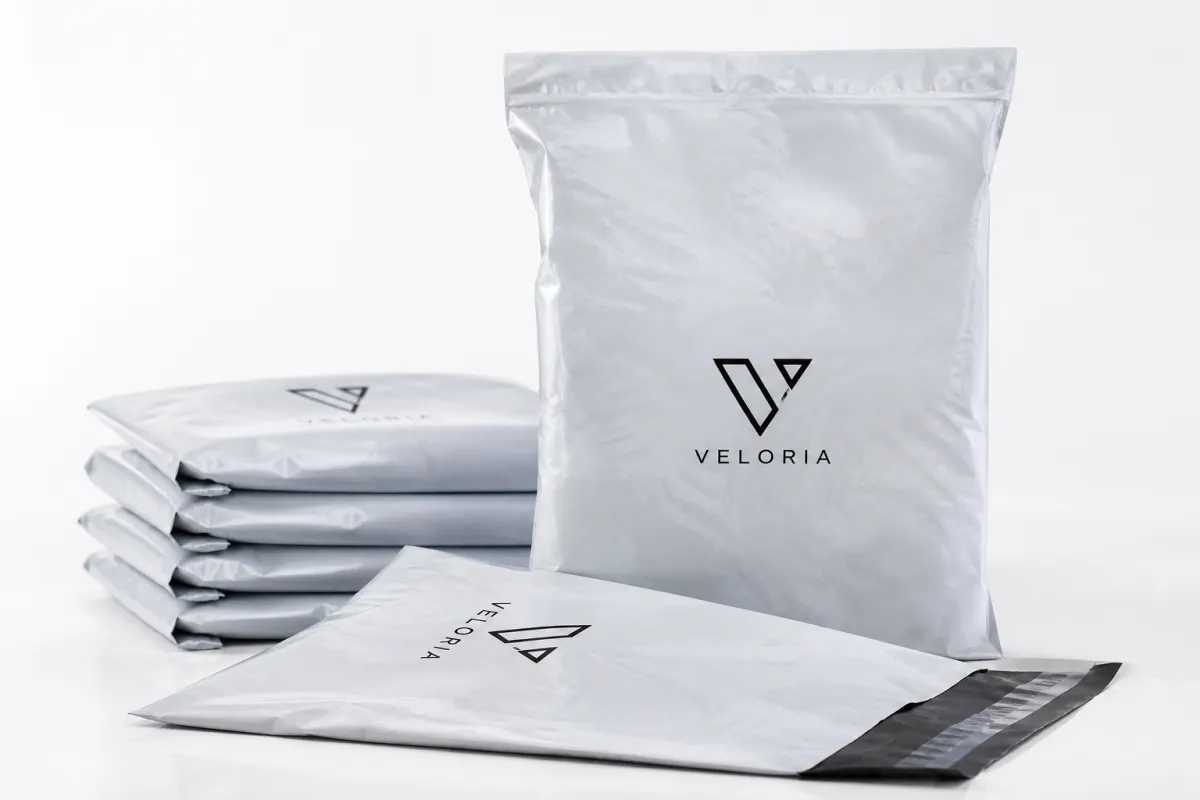
At the simplest level, laminated poly mailers with logo are flexible shipping bags made from plastic film layers, with an outer surface prepared for branding. The lamination adds a smoother, sharper-looking face that tends to hold ink better and hide handling marks better than a bare film. Buyers asking for laminated poly mailers with logo usually want one package to do three jobs at once: protect the item, display the brand, and survive sortation, vehicle movement, and porch drops.
That makes the format a strong fit for e-commerce packaging. Apparel is the obvious use, but leggings, socks, hats, lightweight shoes, cosmetics, accessory sets, promotional bundles, and other soft goods fit the profile too. If the product is flexible and not especially fragile, laminated poly mailers with logo can cut shipping weight compared with a carton. That matters when postage is under pressure and every unnecessary ounce gets expensive across hundreds or thousands of parcels. A two-ounce change sounds tiny until it touches a full quarter of outbound orders.
The brand value is practical, not just cosmetic. A clear logo helps workers and customers identify the shipment faster, which can reduce mix-ups in warehouses, apartment buildings, offices, and fulfillment centers where parcels pile up quickly. The package also builds recognition in motion. A mailer that already looks like the brand feels less like a shipping container and more like part of the product experience. Apparel brands know this instinctively, which helps explain why laminated poly mailers with logo show up so often in direct-to-consumer shipping.
A plain mailer only has to arrive intact. Laminated poly mailers with logo have to arrive intact and still look like they belonged to the brand all along.
There is a real difference between a bag that happens to be printed and one that was designed with lamination in mind from the start. A laminated surface can help white, black, metallic, and full-color artwork look more even. It can also give the mailer a more finished feel in hand. That matters to customers, but it matters to operations teams too. Scratched or faded packaging can trigger more complaints than many buyers expect, especially when the rest of the experience is polished.
For buyers, laminated poly mailers with logo usually make sense when the shipment is light, flexible, and not likely to be crushed. Heavy or angular contents need a different solution. If the item needs rigid edge protection, serious cushioning, or stack strength, a corrugated box may still be the better choice. For soft products that need efficient shipping and a stronger brand presence, laminated poly mailers with logo can sit in a very useful middle ground.
I have watched brands switch from plain poly mailers to printed laminated mailers and, almost immediately, the pickup area stopped looking like a generic back room. That is not a technical benefit by itself, but it changes how the team handles the shipment. Small psychological shifts matter in fulfillment. They are kinda invisible until they are not.
How laminated poly mailers with logo are made and printed
The process usually starts with film selection. Most laminated poly mailers with logo use polyethylene film or a related structure chosen for flexibility, puncture resistance, and seal strength. After that, the surface is prepared for printing, often by adding or bonding a layer that accepts ink more evenly. The lamination gives the artwork a cleaner finish, especially when the design uses bold logos, solid backgrounds, or fine text that needs to stay crisp after production.
Printing comes next. Flexographic printing works well for many packaging runs because it handles repeat orders efficiently and keeps large solid areas stable once the plates are set. Gravure can make sense at very high volumes where image consistency and tonal detail are critical, though the cylinder cost usually only pays off when the quantity is large enough. Digital printing is useful for shorter runs or changing graphics because it reduces some setup work, but the per-unit cost can rise as volume climbs. The right method for laminated poly mailers with logo depends on quantity, artwork complexity, color count, and how tightly the buyer wants the appearance controlled.
| Print method | Best fit | Typical strengths | Trade-offs |
|---|---|---|---|
| Flexographic | Mid to large production runs | Good repeatability, efficient on simple and solid artwork | Plate setup adds cost, small text needs careful proofing |
| Gravure | Very large runs with strong color control needs | Excellent image consistency and smooth tonal coverage | Higher tooling cost, usually not ideal for modest quantities |
| Digital | Short runs, versioned designs, test launches | Lower setup burden, fast design changes | Can cost more per unit at scale, print feel varies by system |
Once the art is approved, the bag is formed, sealed, and finished with the closure system. Many laminated poly mailers with logo use a peel-and-seal adhesive strip because it closes quickly without extra tape. Some include a second seal for returns. Others add a tear strip so the customer can open the bag without scissors. Small features, yes. Operationally, they change pack-out speed, line efficiency, and the feel of the unboxing moment.
Physical performance matters as much as branding. Thickness is commonly discussed in mils, and the right number depends on the contents. A thicker film usually resists tears, corner punctures, and seam stress better than a thin one. Seam strength, fold accuracy, and adhesive quality all shape how well laminated poly mailers with logo hold up through sortation and delivery. A bag can look beautiful online and still fail if the side seals are weak or the dimensions do not match the product.
Proofing should cover more than logo placement. Buyers need to check where the seal lands, whether the print clears the closure area, and whether the finished bag still fits the real product, not the ideal version from the spec sheet. Once the shipment is moving, the bag cannot make excuses for poor sizing. A package that was approved too fast has a way of collecting complaints in real life.
Transit conditions deserve attention too. Packages rub against conveyors, slide through bins, and sit under other parcels in delivery vehicles. A laminated surface helps the artwork resist scuffing, but it does not make the package indestructible. Heavy contents, sharp corners, and shifting items inside the bag can still cause failures if the structure was chosen only for appearance.
Testing helps separate theory from reality. The ISTA test standards are widely used to simulate distribution hazards, and they are useful when a brand wants to know how the mailer behaves under vibration, handling, and drop stress. Not every order needs lab validation. Some absolutely do, especially when the contents are valuable or the complaint rate has a habit of climbing. If a package has already been through one round of damage claims, the test budget is usually cheaper than the second round of reships.
How much do laminated poly mailers with logo cost?
Pricing starts with size. A small bag for a folded tee will not cost the same as a larger mailer for a hoodie or a kit with inserts. More material means more film, more print area, and more waste in converting. Thickness changes the number too. Heavier film costs more than light film, and the effect reaches beyond material alone. It can alter line speed, packing behavior, and shipping weight.
Print coverage is another major variable. A simple one-color logo on a white or neutral background is generally easier to produce than a full-bleed design with several colors, metallic accents, or dense coverage across the entire surface. More coverage means more setup, more color matching, and more inspection. Fine registration, gradients, and photographic images raise the technical bar as well, and that shows up in the quote.
Quantity changes the math in a way buyers sometimes underestimate. Setup costs do not vanish on a small order. Plates, prepress, proofs, machine setup, and first-article checks all happen whether the run is 5,000 pieces or 50,000. That is why lower volumes carry a higher unit price, while larger orders spread the fixed work across more mailers. For laminated poly mailers with logo, the difference between a test run and a production order can be large enough to change the economics of the packaging decision. A five-cent swing on 20,000 units is $1,000 before freight or rework ever enters the picture.
Here is a realistic way to think about pricing using a common apparel-sized mailer. These are broad working ranges, not factory quotes, because material grade, print coverage, and freight can move the number in either direction.
| Order size | Typical unit price range | What usually drives it | Buyer note |
|---|---|---|---|
| 1,000-3,000 pieces | $0.28-$0.55 each | Setup spread over a smaller run, more proofing attention | Useful for launches, but the per-unit cost is usually the highest |
| 5,000-10,000 pieces | $0.18-$0.35 each | Better scale, more efficient plate and press use | Often the sweet spot for growing e-commerce brands |
| 20,000+ pieces | $0.12-$0.25 each | Setup amortized across a larger run, more efficient material sourcing | Best if storage space and demand forecasting are under control |
Those ranges shift quickly when the design uses multiple colors, specialty finishes, or a heavier gauge film. Matte lamination, gloss lamination, metallic ink accents, and custom tear-strip features all add cost. Return seals, reinforced seams, and unusual dimensions can do the same by increasing waste on the converting line. Laminated poly mailers with logo rarely become expensive because of one single choice. The cost grows when several decisions stack on top of one another.
Freight belongs in the budget from the beginning. Bulk packaging takes space, and space costs money. The bags may not weigh much individually, but case-packed orders still add up. Overseas sourcing can lower unit cost while extending lead time and making inventory planning more demanding. Domestic sourcing can shorten transit, though freight per case can still matter if the order is small or the production point is far from the delivery location.
Storage matters too. A palletized order of laminated poly mailers with logo may look cheap per unit, then quietly occupy warehouse space for months. That footprint is not free. Some buyers save money by ordering enough to reduce reorders. Others tie up cash in inventory and end up sitting on old artwork longer than they should. The right balance depends on monthly volume, seasonality, and how often the brand changes its look.
If sustainability is part of the brief, cost can shift there as well. Recycled content, certified paper components, or source-reduction efforts may affect the pricing structure. The FSC organization is relevant when a packaging program includes paper-based components or printed collateral that needs chain-of-custody awareness. For poly mailers, buyers should ask exactly what a recycled-content claim means, how it is verified, and whether the package still performs without excess material.
The cheapest laminated poly mailers with logo are not always the least costly option over time. A thin bag that splits, a faded print job, or a mailer that is too loose for the product can lead to chargebacks, reships, and customer service work. Those costs rarely show up in the first quote. They show up later, usually after the packaging has already been approved.
Process and timeline: from artwork approval to shipment
The order path usually begins with the spec, not the artwork. A good supplier wants bag dimensions, thickness target, closure style, print count, and finish before diving into layout. Once those basics are set, the artwork team can prepare the dieline and place the logo, copy, and background graphics correctly. For laminated poly mailers with logo, that early clarity saves days later because it cuts down on redesign after the quote is already in motion.
Proofing is the next turn in the road, and it is where projects often gain or lose time. Low-resolution logo files trigger requests for vector art. Loose color directions lead to back-and-forth over whether the red should lean warm or cool. Ignoring the safe area brings the print too close to the seal or the edge fold. Clean files move faster. Messy files do the opposite.
A practical way to plan the schedule is to break it into four blocks: quote, proof, production, and freight. Quotes can arrive quickly when the request is clear. Proofs may move in a day or two if the files are ready. Production is where the schedule stretches, especially on large runs or during busy press windows. Freight then adds the final stretch, and the mode matters. Air is faster and more expensive. Ocean is slower and cheaper. Ground sits in the middle for domestic moves.
Here is a workable planning framework for laminated poly Mailers with Logo:
- Simple, repeat order: often 12-18 business days from proof approval to ship date, depending on press load and freight method.
- Custom print with new tooling: often 15-25 business days, since prepress and setup take longer.
- Large volume or highly detailed artwork: plan for 20+ business days and confirm whether inspections or packing steps add time.
Those are planning ranges, not promises. A holiday shipping wave, a tight factory calendar, or one missing artwork file can add days fast. A clean repeat order with pre-approved specs can also move faster than expected. The point is to confirm lead time before the product launch is locked, not after the date has already gone public. Nobody likes telling marketing that the mailers are still in prepress after the campaign is scheduled.
Late-stage revisions are a common source of delay. Move a logo after proof approval, change the bag size because the merchandise team updated the packout, or add a finish at the last minute, and the schedule usually shifts. That is true for laminated poly mailers with logo, and it becomes even more sensitive when custom colors or specialty finishes are involved. Packaging production does not reward indecision.
Inspection should stay in the process. A physical sample or pre-production proof is the best way to verify the feel of the bag, the seal action, and the clarity of the logo at arm's length. It also gives the warehouse team a chance to answer the questions that matter in practice: Does it fit the product with enough room? Does the adhesive hold? Can a packer close it efficiently without slowing the line?
That sample also tells you something about damage risk. If the surface scuffs too easily during normal handling, the final package may need a stronger finish or a different outer structure. A sample is not just a marketing exercise. It is a working test of how the package behaves in a warehouse, on a truck, and in the customer's hands.
Key factors to choose before you order laminated poly mailers with logo
Start with size. The mailer should fit the product with enough room to insert the item cleanly, but not so much extra space that the package looks loose or wasteful. A properly sized bag reduces movement inside and usually improves the visual balance of the shipment. For laminated poly mailers with logo, size affects both protection and placement. Change the dimensions after the artwork is designed, and the whole composition can shift.
Thickness and seam design come next. A thin mailer may be fine for a folded tee. A product with sharp edges, stacked pieces, or more weight in the hand may need a stronger seam and a heavier film. Some brands also want more opacity so the contents do not show through. That matters for premium apparel, private-label goods, and anything the brand does not want visible from the outside. Laminated poly mailers with logo should match the real product, not an idealized spec sheet.
Closure style has operational consequences. Peel-and-seal is simple and fast, which is why many fulfillment teams prefer it. Return seals can reduce friction if exchanges are likely. Tear strips make opening cleaner for the customer, though they need to be placed correctly so the package opens in a straight line instead of ripping sideways. The details sound minor until they are multiplied across thousands of shipments.
Brand presentation deserves its own pass. Matte tends to feel quieter and more premium. Gloss looks brighter and more energetic. Logo placement should match how the bag is handled in the real world. If the parcel is usually seen flat on a counter, one layout works best. If it is stacked in bins or shown upright in a fulfillment line, another layout may read better. For laminated poly mailers with logo, finish and placement should support the brand mood rather than fight the shipping process.
That mood can be minimalist, playful, premium, or operationally direct. A minimalist bag might use a single dark logo on a neutral background. A more expressive brand may use full-bleed color, patterns, or a repeated mark. Neither approach is automatically better. The right answer depends on the product category, the buyer, and the warehouse reality. If the package will face rough handling, a high-contrast logo with clean negative space often ages better than a busy graphic that depends on perfect registration.
A sustainability lens should stay practical. Ask whether the mailer uses recycled content, whether the claim is documented, and whether the design reduces excess material. Also ask whether the same product can ship with less packaging and the same damage rate. Material reduction is useful only if it does not create more returns. Laminated poly mailers with logo can support source reduction when the item truly does not need a box, but that decision should be based on transit performance and fit, not just a desire to use less plastic.
For teams comparing suppliers, use case matters more than generic packaging language. A lightweight top may need a different specification than a subscription kit with inserts. A two-piece apparel bundle may need more room than a single garment. A product that ships flat to retailers may need a different print layout than one going straight to consumers. The best laminated poly mailers with logo are the ones that match the actual shipping pattern.
Step-by-step guide to ordering laminated poly mailers with logo
Begin with a packaging audit. Measure the products in their actual folded or packed form, not just the dimensions listed on a product page. Check how much void space exists now, where damage occurs, and whether the current package is too loose, too tight, or too expensive. If you already ship in a generic mailer, compare complaint rates, return rates, and any signs of scuffing or puncture. Laminated poly mailers with logo should solve a real packaging problem, not create a decorative one.
Define the spec next. Choose bag size, thickness, closure type, print area, and finish. Make sure the spec fits the fulfillment method. If packers need to close hundreds of bags an hour, a fast peel-and-seal format matters more than a novelty feature. If the customer experience depends heavily on presentation, the finish and logo placement may matter more than a small change in film weight. The right laminated poly mailers with logo balance both sides.
Artwork needs to be prepared correctly. Use the supplier's dieline and keep the logo inside the safe zone. Confirm whether the artwork should read centered, aligned to the top edge, or shifted based on how the bag folds. Outline or embed all fonts properly, and use vector art whenever possible for sharp edges. If the package has reverse-side print or a return seal, build the design around both sides of the bag from the start.
Before production is approved, request a proof or sample. Look at it in actual light, not just on a screen. Check whether the logo sits where expected, whether the contrast is strong enough, and whether the bag still looks balanced once it is folded and filled. The check matters even more for higher-priced shipments, because the outer package becomes part of the perceived value. Laminated poly mailers with logo are easy to approve too early and hard to correct after the press starts running.
A useful approval checklist looks like this:
- Confirm bag dimensions against the actual packed product.
- Check print placement, bleed, and safe margins.
- Verify color expectations against the proof or sample.
- Review seal strength, opening method, and return feature if included.
- Approve only after the bag has been handled like a real shipment.
After approval, confirm the lead time and freight plan again. If the order supports a launch, build in enough margin for packing, transit, and any last-mile delay. If the launch date is fixed, communicate it early. Packaging timelines are much easier to manage when the supplier knows the deadline before production is booked.
For brands comparing paths, collect two or three quotes using the same spec. Then compare the unit price, setup fee, proofing terms, shipping cost, and expected lead time. The lowest quote on paper is not always the best one once speed, quality, and customer experience are factored in. Laminated poly mailers with logo need to perform in the real world, not just on the pricing sheet.
Common mistakes, expert tips, and next steps
The biggest mistake is buying on price alone. A very cheap mailer can look fine in a spreadsheet, then split in transit and erase the savings in one messy week. I have seen buyers focus on unit cost and forget damage, reships, and customer frustration. Laminated poly mailers with logo should be judged as a complete shipping system, not a line item.
Oversizing is another common error. A bag that is too large can look sloppy, move around more in transit, and use more material than necessary. It can also raise postage if dimensional weight comes into play. A bag that is too tight creates a different problem: seam stress, difficult packing, and a package that looks strained before it leaves the dock. Fit matters as much as print.
Some buyers skip sample approval because they assume the screen proof tells the whole story. It does not. Screen color, print finish, and bag structure can feel very different in hand. A sample is where you catch the practical problems: print that is too small, adhesive that feels weak, a closure that peels badly, or a logo sitting too close to the fold. For laminated poly mailers with logo, that step protects both brand and budget.
From the manufacturing side, clear orders produce better results. Tell the supplier how the mailer will be packed, whether it will be machine-packed or hand-packed, how it will be stored, and whether the goods have edges, corners, or moisture sensitivity. Those details help define the right film, the right seal, and the right finish. The more the supplier understands the real use case, the more likely the finished laminated poly mailers with logo will hold up.
A few practical habits usually prevent headaches:
- Keep the artwork simple if the budget is tight and the quantity is moderate.
- Match the film thickness to the product weight instead of using a generic target.
- Ask about transit scuffing if the mailer will sit in bins or move through rough handling.
- Plan inventory in batches if the brand changes designs often or has seasonal graphics.
- Check claims carefully if recycled content or other sustainability language will appear on the package.
If performance testing matters, ask whether the package should be checked against an ISTA method or a comparable internal drop and vibration test. That becomes especially sensible when the contents are sensitive, the shipment value is high, or the brand has recurring issues with crushed corners and torn seams. Not every order needs formal lab work. Some do benefit from a tighter test plan.
The next move is simple. Gather item dimensions, estimate monthly volume, collect artwork files, and ask for quotes against the same specification. Once those pieces are on the table, the differences between options become much easier to compare. Laminated poly mailers with logo are a packaging decision, but they are also a brand decision and an operations decision. The best choice satisfies all three.
If you want the short version, it is this: Choose the Right size, ask for the right finish, confirm the lead time, and do not approve production until the sample feels right in hand. That is how laminated poly mailers with logo become an asset in the shipping process instead of an expensive detour.
Frequently Asked Questions
What are laminated poly mailers with logo used for?
They are used to ship soft goods and lightweight products while adding branded presentation to the outside of the package. They work well for apparel, accessories, promotional kits, and e-commerce orders that do not need a rigid corrugated box.
Are laminated poly mailers with logo waterproof or tear-resistant?
The laminate and poly film can help resist moisture, scuffing, and everyday handling, but the exact performance depends on film thickness and seam quality. They are usually more durable than a basic thin mailer, yet they still need to be matched to the weight and shape of the product.
How much do laminated poly mailers with logo usually cost?
Pricing depends on size, thickness, print coverage, number of colors, finish, and especially quantity, since setup costs are spread across the order. Higher volumes usually reduce the per-unit cost, while small runs can cost more because plates, proofs, and machine setup still need to be covered.
What artwork files work best for laminated poly mailers with logo?
Vector files are usually best for logos and type because they stay sharp at production size and are easier to place accurately on the dieline. A clean dieline, clear color references, and high-resolution supporting art help reduce proof corrections and avoid surprises during printing.
What is the typical turnaround time for laminated poly mailers with logo?
Turnaround depends on artwork approval, production scheduling, order size, and freight method, so the full timeline should be confirmed before launch. If you need the mailers for a campaign or product drop, plan early enough to allow for proofing, production, and shipping without rushing the job.
For brands that want a package with real utility and a stronger shelf-to-doorstep impression, laminated poly mailers with logo are often a smart place to put the budget. They can protect soft goods, support the brand, and keep shipping efficient when the size, finish, and print method are chosen with care. If you treat laminated poly mailers with logo as both a packaging spec and a customer touchpoint, the result usually improves on both fronts and leaves fewer surprises on the dock. The cleanest takeaway is practical: spec the bag for the product, approve from a sample, and let the packaging do real work instead of hoping it will.


