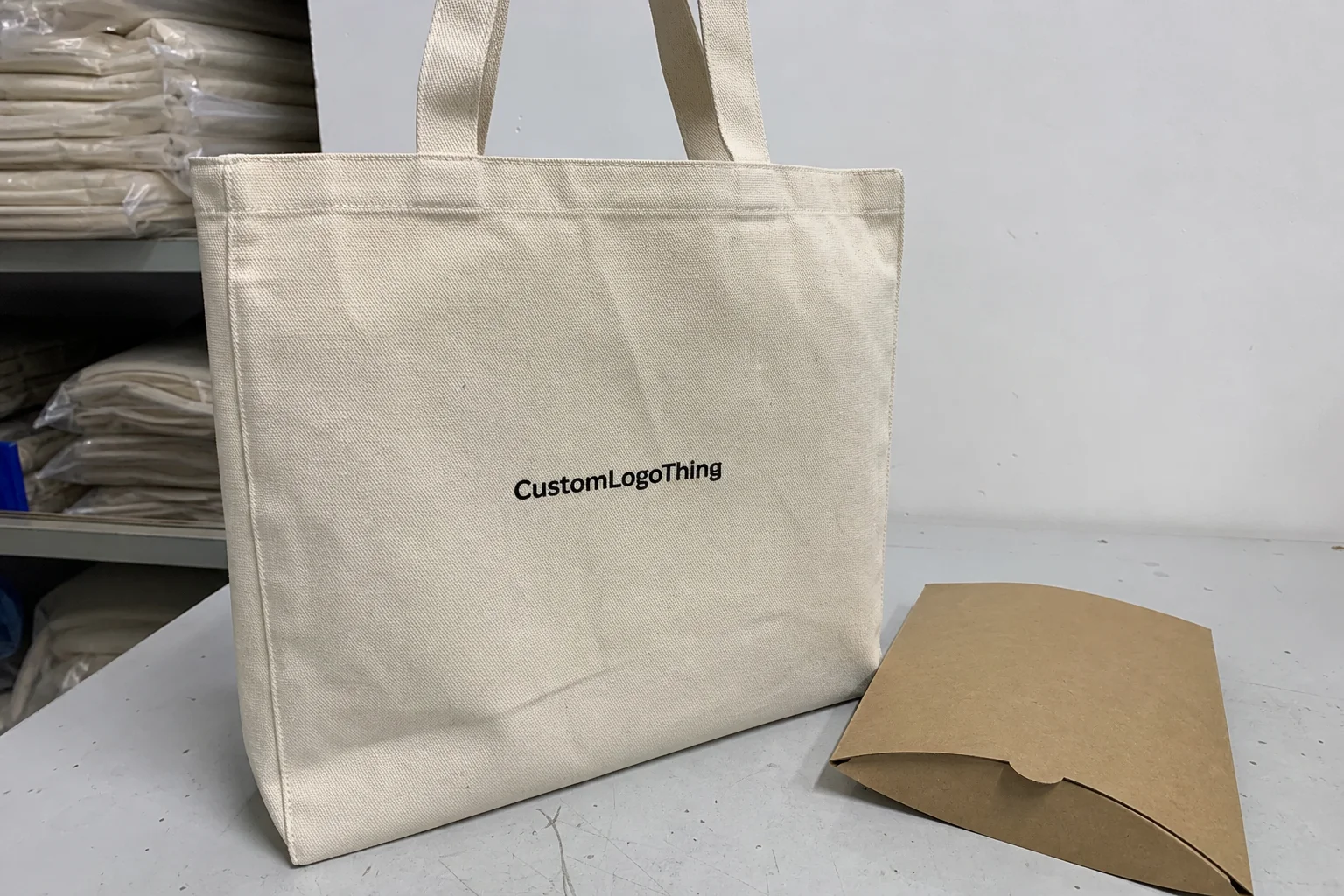
Large Personalized Tote Bags work when they are built for repeat use. A tote that carries groceries, folders, a laptop, or sample products without sagging will stay in circulation longer, which makes it more useful than a one-time giveaway.
The practical version is simple: enough volume, a print that stays readable, handles that feel comfortable, and materials that match the load. Miss one of those pieces and the bag still ships, but it will not perform the way a buyer expects.
That is why the details matter. Size affects carry comfort. Fabric affects print quality. Construction affects service life. At scale, those tradeoffs decide whether the bag becomes a working asset or dead inventory.
Why Large Personalized Tote Bags Get Used, Not Tossed
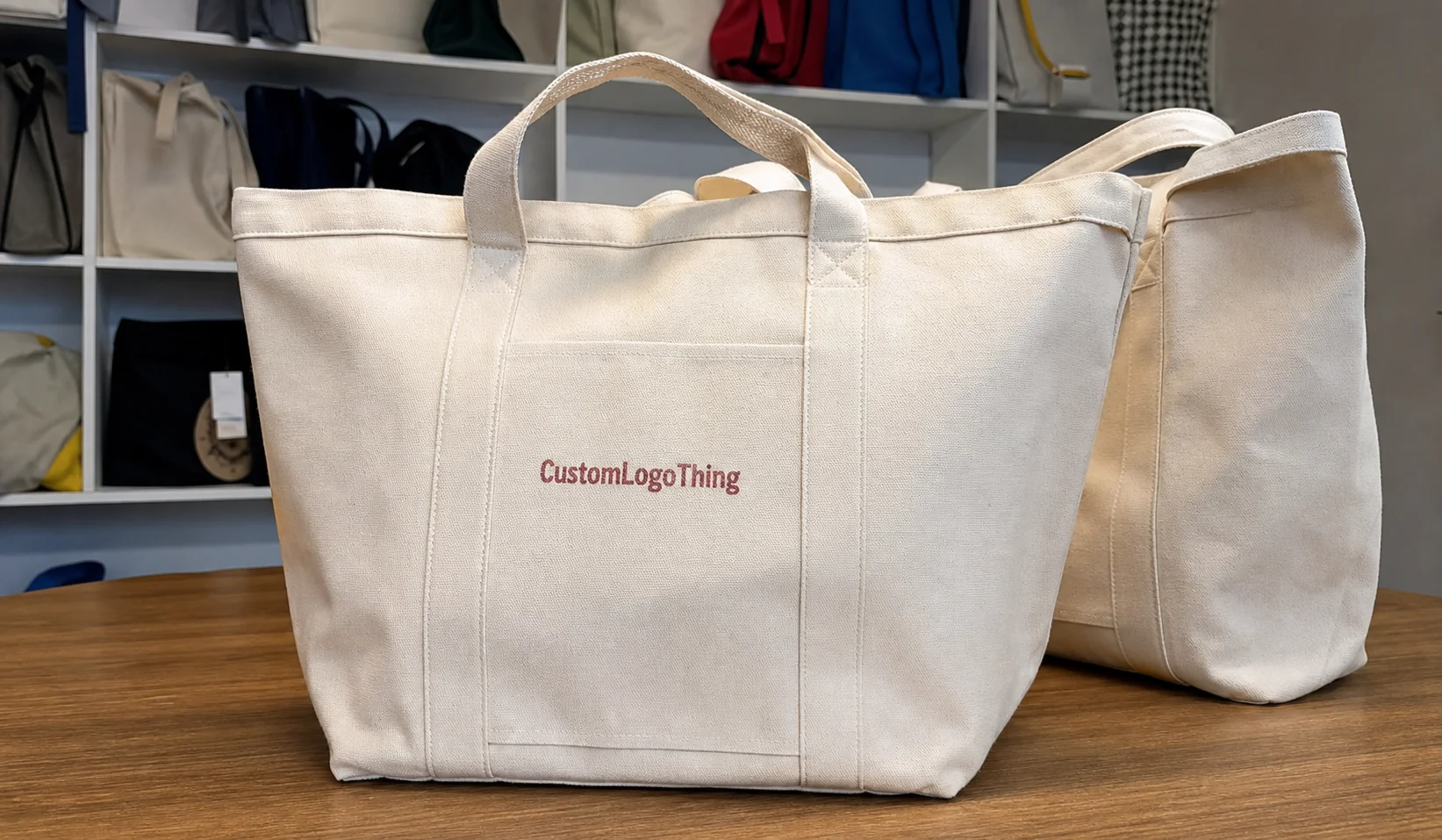
People keep a tote when it earns its place. That usually means it carries enough, feels sturdy enough, and looks clean enough to reuse. A large tote does that better than a small giveaway bag because it has room for real items instead of a brochure and a pen lost in the bottom.
In practice, “large” usually starts around 15 x 16 inches and goes up from there, with a 4 to 6 inch gusset making a real difference in usable volume. Without depth, the bag can look bigger than it is. With it, the bag holds shape and stays useful when loaded.
There is also a behavior advantage. A tote that moves from event floor to office to grocery store keeps showing up in public. That is more valuable than a single impression. The logo does not need to be flashy; it needs to survive handling and still read clearly from a distance.
Common uses are straightforward:
- Retail bags for customers who expect something sturdier than a thin carrier.
- Trade shows and events where attendees collect samples, catalogs, and handouts.
- Onboarding kits for employees, students, or conference attendees.
- Reusable giveaways that need to last longer than the event itself.
The best large tote is one people do not think about while using. If the handles feel good, the opening is wide enough, and the bag does not flop around, it gets reused. If it annoys people, it disappears fast.
How Material and Print Method Affect the Final Bag
Material choice determines most of the bag’s feel before artwork is added. A nonwoven polypropylene tote reads as practical and budget-conscious. Cotton canvas feels heavier and more substantial. Recycled PET sits in the middle, especially for buyers who want a sustainability story. Laminated PP gives structure and a smoother surface, but it can look stiff if the design leans too hard into coverage or brightness.
Each material behaves differently under print. A textured fabric can hide small flaws and soften the look. A smoother surface shows detail more clearly, but it also exposes weak artwork, poor registration, and muddy colors. If the logo depends on thin strokes or small lettering, that matters immediately.
For most bulk tote orders, the common options are nonwoven PP, cotton canvas, recycled PET, and laminated PP. Nonwoven PP is usually the lowest-cost route. Cotton canvas gives a more premium feel and handles simple graphics well. Recycled PET is useful when sustainability messaging is part of the buying decision. Laminated PP is better when the bag needs body and a sharper visual finish.
The print method deserves the same attention. A one-color screen print is still the most reliable choice for many tote runs because it stays crisp and cost-effective. Spot-color printing works when brand color accuracy matters and the design is simple. Process printing can handle more detail, but it is less forgiving on soft or porous materials. For smaller runs, digital or heat transfer can work, though the finish may not feel as integrated on a heavy bag.
If the artwork includes gradients, hairline type, or dense color overlap, request a proof at actual scale. A screen mockup does not show how the print will behave on fabric. Seams, folds, and gussets can change the look fast.
For buyers who need documentation, materials can also tie into sourcing and shipping considerations. If the tote includes paper components or packaging inserts, FSC chain-of-custody may matter: FSC. If the bags are packed into kits that will travel through multiple handling points, transport testing standards are worth discussing too. A common reference is ISTA, especially for shipments where damage would create avoidable rework.
Short version: fabric changes the hand feel, print method changes the artwork, and construction changes whether the bag feels cheap or useful.
Cost, MOQ, and Unit Pricing for Bulk Tote Orders
Pricing for large Personalized Tote Bags is driven by the same few inputs every time: bag size, material weight, number of print colors, handle construction, and packing requirements. Change one of them and the quote moves. Change three and the first quote is usually only useful as a starting point.
People often assume all large totes fall into one price band. They do not. A simple nonwoven bag with one-color print is a different product from a heavy canvas tote with reinforced stitching and a larger imprint area.
Typical unit pricing below is for one-color printing, excluding freight, quoted around 1,000 pieces. Smaller orders often run 30 to 80 percent higher per unit. Larger orders can bring the price down enough to make a different material choice worth considering.
| Material / Build | Typical Unit Price | What Moves the Price | Buyer Note |
|---|---|---|---|
| Nonwoven PP, 80 to 100 gsm | $0.55 to $1.20 | Bag size, handle length, print coverage | Best for high-volume events and short-term use |
| Cotton canvas, 8 oz | $1.10 to $2.40 | Fabric weight, stitching, print area | Good balance of durability and price |
| Cotton canvas, 12 oz | $1.80 to $3.60 | Heavier fabric, reinforced seams, larger gusset | Feels more substantial and holds shape better |
| Recycled PET | $1.20 to $2.80 | Material source, print method, finishing | Useful when sustainability messaging matters |
| Laminated PP | $1.00 to $2.20 | Laminate finish, structure, edge finishing | Strong visual impact, less soft in hand |
MOQ changes the math because setup work gets spread across fewer pieces. Cutting, sewing, printing, proofing, and packing all carry fixed labor. A low quantity does not remove those steps; it just makes each one more expensive per bag.
A quote often shifts after the first review for predictable reasons:
- Artwork cleanup if the file is low-resolution or has broken line work.
- Special inks such as metallic, puff, or exact-match spot colors.
- Custom sizing if the dimensions are outside a stock pattern.
- Rush timing if the schedule has to be compressed.
- Packing requirements if each tote needs folding, tagging, or individual polybagging.
The lowest quote is not the cheapest bag if freight, artwork cleanup, or a second proof appears later.
Compare vendors using the same specs: same dimensions, same fabric weight, same print count, same packing method, same delivery point. If one supplier looks cheaper because the quote left out freight or assumed a different bag size, the comparison is not useful.
Process and Timeline: From Artwork to Delivery
The production path is usually simple: quote, artwork review, proof, approval, production, inspection, and shipping. It only gets messy when decisions keep changing halfway through.
Artwork is the most common source of delay. A file can look fine on a screen and still be wrong for production. Low-resolution logos, missing fonts, vague color targets, and unclear placement instructions all slow things down.
A proper proof should show logo placement, finished dimensions, print colors, and any special details about handles, gussets, or closures. On a large tote, placement matters more than many buyers expect. If the artwork sits too low or too close to a seam, the bag can look off once it is filled and carried.
Lead times usually fall into a few broad ranges:
- Stock-style tote with simple print: often 10 to 15 business days after proof approval, before shipping.
- Custom size or heavier construction: often 15 to 25 business days after approval.
- Rush order: possible in some cases, but usually higher cost and less room for proof correction.
Shipping can move the total timeline more than people expect. Air freight saves time and costs more. Ocean or ground freight lowers shipping cost and does nothing to rescue a deadline that was already too tight. If the delivery date is fixed, leave enough room for proof changes and transit.
Lock the structure before fine-tuning the artwork. If the size, material, or handle length keeps changing, the proof process will churn. The buyer who finishes the spec early usually gets better pricing and fewer surprises.
Specs That Make the Bag Actually Useful
The best tote spec is the one that matches real use, not the one that looks tidy in a catalog. Dimensions, gusset depth, handle length, material weight, closure style, and stitching all affect how the bag performs once someone actually loads it up.
Start with size. A tote that is too narrow is awkward. A tote that is too tall without enough depth can tip over. For many buyers, a size around 16 x 15 x 6 inches works well, but only if it fits the item mix. There is no point in chasing a standard measurement if the bag needs to hold boxed samples or stacked folders that do not fit the shape.
Handle length matters more than it gets credit for. Short handles work for hand carry. Longer handles make shoulder carry easier, especially once the bag is full. For retail or conference use, a comfortable shoulder drop often decides whether the tote is kept or abandoned after one day.
Material thickness is the next tradeoff. Thin fabric lowers cost, but it can wrinkle, collapse, and feel disposable. Heavy fabric costs more, but it improves structure and usually prints more cleanly. If the bag is supposed to feel premium, the build has to support that claim.
These are the specs worth sorting first:
- Width, height, and gusset based on the items the bag must carry.
- Handle drop based on hand carry versus shoulder carry.
- Material weight based on whether the bag needs structure or lightness.
- Print area based on logo visibility from a distance.
- Reinforcement or closure if the contents are heavy or valuable.
There is a tradeoff here that does not change. A premium-feeling bag costs more. The cheapest bag gives up something structural. The right choice depends on whether the tote is being handed out once or expected to stay in rotation for months.
If the bag will be seen again and again, pay for structure before decoration.
Common Mistakes That Inflate Costs or Delay Production
Guessing is the most expensive habit in tote buying. A lot of orders start with a size chosen from a product photo instead of the items the bag actually needs to hold. That is how buyers end up with bags that are too shallow for folders, too narrow for boxes, or too tall to feel stable.
Artwork causes a second wave of problems. Tiny text, thin outlines, gradients, and crowded compositions can look fine in a brand deck and still print badly on fabric. Busy artwork does not automatically make the tote better. In many cases, it just increases the chance of cleanup, proof changes, or a result that looks muddy from three feet away.
Rush orders are another predictable trap. They raise costs, reduce flexibility, and leave little room for corrections. If the deadline is hard, the smartest move is usually to simplify the spec, not add extras and hope the schedule absorbs the mess.
Buyers also assume all large Personalized Tote Bags perform about the same. They do not. A lightweight nonwoven tote is fine for a short event and a poor choice for heavy merchandise. A cotton canvas tote carries more and looks better over time, but it is not the best answer if the goal is the lowest unit price and the fastest turnaround.
Watch for these avoidable cost traps:
- Ordering a size that looks right instead of measuring the actual contents.
- Adding extra print colors that do not improve visibility.
- Changing the spec after the first proof.
- Forgetting to include freight and packing in the comparison.
- Choosing a premium material for a one-day use case.
If the bag has a job, define the job first. That is the cleanest way to avoid overbuying the wrong thing.
Next Steps to Quote and Approve the Right Bag
Before asking for a quote, gather the information that actually affects pricing and feasibility. A vague request like “large tote, full logo, need it soon” forces too many assumptions and usually slows the process.
Send these details up front:
- Target use: event giveaway, retail sale, internal kit, or sample carrier.
- Approximate size: width, height, and gusset range.
- Quantity: the real number, not the hopeful one.
- Artwork file: vector preferred, with Pantone references if needed.
- Print colors: one-color, two-color, or full-color.
- Deadline: the date the bags must be in hand, not the date the order should begin.
- Packing needs: folded, tagged, bundled, or shipped to multiple locations.
If you do not know the right build yet, ask for two or three spec options. Compare a budget nonwoven version against a heavier canvas version. That makes the tradeoff visible fast and helps identify whether the real constraint is price, durability, or lead time.
Before production begins, review a proof that shows logo placement, print count, and finished dimensions. If the proof does not match the use case, stop there and fix it. A bad approval still produces a bad bag.
If you want large personalized tote bags that people keep carrying, the process is simple: define the load, choose the material, lock the dimensions, confirm the print, and approve the proof.
How do I choose the right size for large personalized tote bags?
Start with the items the bag needs to carry, then size the width, height, and gusset around that load. For events or retail, test with real products instead of guessing from a catalog image. Bigger is not always better if the bag becomes awkward to carry or expensive to ship.
What affects the cost of personalized tote bags the most?
Material choice, print colors, bag size, and order quantity usually have the biggest impact on unit price. Rush timing and custom finishing can raise the quote quickly. The cheapest quote is often the one that left out something important.
How long does production usually take for custom tote bags?
Standard orders move through proofing, production, and shipping in a normal lead-time window, while rush jobs compress each step. Artwork approval is the most common delay point. Final timing depends on quantity, print complexity, and whether the spec is already locked.
Can I print multiple colors on large tote bags?
Yes, but each added color can increase cost and make registration harder to keep clean. Simple artwork usually prints more reliably and is easier to repeat across a large run. If the design is detailed, request a proof before approving production.
What information should I send to get an accurate quote?
Send the target size, quantity, artwork file, number of print colors, and the date you need the order in hand. Include whether the bags need to be folded, packed a certain way, or shipped to multiple locations. Clear specs reduce back-and-forth and produce a better quote faster.