Buyer Fit Snapshot
| Best fit | Logo Mailing Bags Price projects where brand print, material claims, artwork control, MOQ, and repeat-order consistency need to be specified before quoting. |
|---|---|
| Quote inputs | Share finished size, material target, print colors, finish, packing count, annual reorder estimate, ship-to region, and any compliance wording. |
| Proofing check | Approve dieline scale, logo placement, barcode or warning zones, color tolerance, closure strength, and carton packing before bulk production. |
| Main risk | Vague material claims, crowded artwork, missing packing details, or unclear freight terms can make a low unit price expensive after revisions. |
Fast answer: Logo Mailing Bags Price: Real Costs, MOQ, and Options should be specified like a repeatable production item. The safest quote records material, print method, finish, artwork proof, packing count, and reorder notes in one written spec.
Production checks before approval
Compare the actual filled-product size with the drawing, then confirm tolerance on folds, seals, hang holes, label areas, and retail display edges. Reserve space for logos, QR codes, warning copy, and material claims before decorative graphics fill the panel.
Quote comparison points
Review material grade, print process, finish, sampling route, tooling charges, carton quantity, and freight assumptions side by side. A quote is only useful when the supplier can repeat the same color, closure quality, and packing count on the next order.
Logo Mailing Bags Price: Real Costs, MOQ, and Options
If you want branded shipping that looks sharp without paying carton money for a soft, light parcel, logo Mailing Bags Price is the number that actually matters. The catch is annoying but simple. You are never paying for just the bag. Size, film thickness, print coverage, quantity, freight, and artwork all tug on the final number. Ignore one of them and the quote gets weird fast.
From a buyer's point of view, branded mailers earn their keep pretty quickly. They remove the extra label step, make the parcel look intentional on arrival, and keep shipping weight low for apparel, cosmetics, accessories, and subscription kits. The cheapest quote is not always the cheapest landed cost. Freight, setup, proofing, and tiny reorder volumes can push logo mailing bags price higher than a cleaner spec with a larger run. That part gets people every time.
I have seen brands celebrate a low unit price and then wonder why the invoice landed way higher than expected. Usually it is because the quote was thin on details. Sometimes the bag spec changed after the first sample. Sometimes the art file was a mess. Sometimes the freight was just brutal. Packaging is not supposed to create extra jobs, and it definitely should not create extra headaches.
Logo Mailing Bags Price: What You Actually Pay For
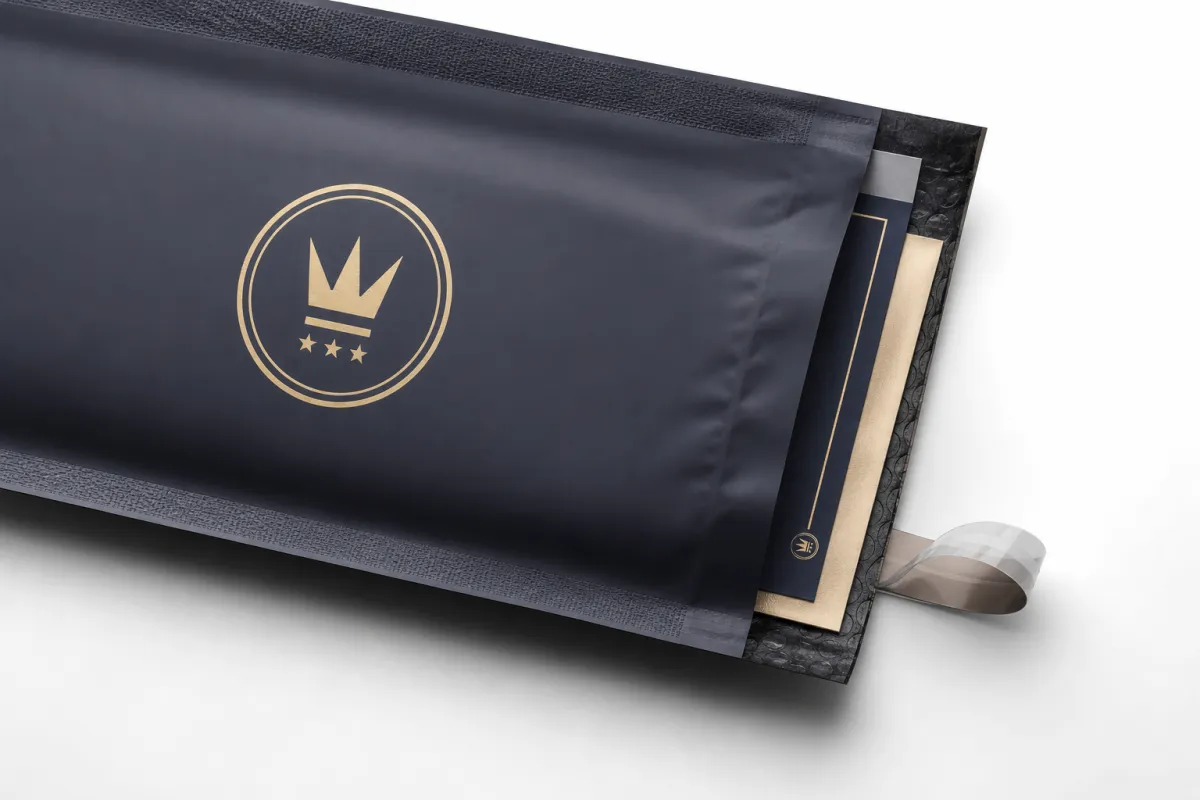
The first thing to understand about logo mailing bags price is that you are paying for material, printing, and handling, not just a sheet of film. A plain poly mailer looks simple from a distance. Once you move from stock to custom print, the cost shifts quickly. If you want a useful quote, separate the bag specification from the decoration specification. Otherwise you are comparing apples to a carton of oranges, which is somehow even more annoying.
Size changes the math right away. A 10 x 13 inch mailer uses less resin than a 14 x 19 inch mailer, and that shows up in logo mailing bags price. Thickness matters too. A 2.5 mil bag usually costs less than a 4 mil bag, but the thicker option tends to offer better puncture resistance, less stretch at the seal, and a more substantial feel in hand. Buyers shipping denim, hard-edged accessories, or multi-item packs usually pay more and are glad they did.
Print coverage is the next major lever. A small logo on a plain white or gray exterior is a different job from a full outside print with several brand colors, repeat patterns, or edge-to-edge coverage. If you are comparing logo mailing bags price between suppliers, check whether the quote covers a simple one-color mark or a full-surface design. Those are not the same product. Pretending they are is how budgets get blown up for no good reason.
The business case is straightforward. Branded mailers can replace extra labels, help the parcel stand out at delivery, and make even low-cost shipments feel deliberate. For direct-to-consumer brands, that matters. A good mailer often beats a larger carton, void fill, and another labeling step. logo mailing bags price should be judged against the labor and freight it removes, not against a bare plastic sack sitting in a vacuum.
Here is the blunt version: the cheapest quote is not always the cheapest landed cost. Freight can be ugly on small orders. Setup fees can hide inside the unit price. A reorder can jump if the first run was too small to absorb tooling and press time efficiently. Smart buyers compare logo mailing bags price on a landed basis, not just a factory line item.
A low unit price means very little if the bag ships weak, prints off-register, or lands after the launch date. Packaging is supposed to solve problems, not create a prettier spreadsheet.
There is also a real difference between a test order and a steady shipping program. A test run can tolerate a higher logo mailing bags price because you are validating the size and artwork. A repeat program should be built around the lowest stable unit cost that still protects the product. That is the cleaner way to think about it. No drama. Just sane buying.
What Custom Logo Mailing Bags Are Best For
Custom logo mailing bags are Lightweight Poly Mailers used for goods that do not need rigid crush protection. Apparel is the obvious fit. T-shirts, leggings, hoodies, socks, and scarves work well because they compress easily and do not need a corrugated box for routine parcel service. Cosmetics, accessories, soft goods, supplements, and subscription inserts fit too. For those categories, logo mailing bags price often beats carton-based packout by a mile.
The format wins where shipping efficiency matters. Mailers use less material than boxes, weigh less, and take up very little shelf space. That means packers move faster, storage is easier, and the parcel still looks clean when it reaches the customer. If your products ship every day, those small gains stack up. That is one reason logo mailing bags price gets so much attention from operations teams and procurement alike.
Most buyers end up in one of three lanes. The first is a plain exterior with a printed logo. The second is a fully printed exterior, usually for stronger shelf or delivery impact. The third is a co-branded or campaign mailer, which works for short runs, collaborations, seasonal drops, or retail events. More coverage and more color push logo mailing bags price upward. That is not mystery. That is ink, setup, and machine time.
Branded mailers are not right for everything. Fragile glass, sharp metal components, and products that need crush protection still belong in cartons or padded systems. I have seen brands force every item into a mailer because it looked cheaper on paper. That usually ends with damage claims and replacement costs that wipe out the original savings. If the product needs structure, buy structure. The bag is not gonna pretend to be a box and succeed for long.
If you are comparing options for a new line, think in use cases instead of packaging daydreams. A 3 mil mailer with a peel-and-seal closure is a good fit for a lightweight apparel drop. A 4 mil or co-extruded film may be better for heavier bundles or products with corners. That choice changes logo mailing bags price, but it also changes how the customer experiences the shipment. A bag that feels flimsy tells its own story, and not a flattering one.
For buyers who want to compare flexible packaging formats, it helps to check against Custom Poly Mailers in standard sizes before locking a final spec. Some brands find that a different width or seal style saves more than shaving another cent off the print.
Presentation still matters. Even low-cost shipping can look polished. A well-sized branded mailer gives you that without the weight penalty of a carton. That is one reason logo mailing bags price is often easier to justify than a full custom box program for apparel-heavy brands.
Specifications That Change Performance and Appearance
Spec sheets are where logo mailing bags price either makes sense or turns into noise. The bag may look simple from a distance, but the details underneath decide whether it feels cheap, works cleanly, or survives the parcel journey. If you are buying custom mailers, read film type, thickness, closure, opacity, and print area like a buyer. Not like a brand deck. Those little details are the whole ballgame.
Film type and thickness
Most custom mailers use polyethylene film, usually LDPE or co-extruded PE. LDPE is flexible and cost-effective. Co-extruded film can improve tear resistance and consistency across layers. Thickness is usually shown in mil or micron, and it matters more than new buyers expect. A 2.5 mil film can trim logo mailing bags price a little, but it also makes puncture resistance and privacy more dependent on careful packing.
For lightweight garments, 2.5 to 3 mil is often enough. For heavier clothing, multiple items, or parcels with sharper corners, 3.5 to 4 mil is safer. That thicker film raises logo mailing bags price, but it also lowers the chance of a split seal or a corner punching through. If you ship a lot of replacements, the thicker choice often pays for itself. I have watched that math play out more than once.
Opacity and finish
Opacity matters because customers do not want to see product shapes through the film. White or metallic-backed mailers improve privacy and usually feel more premium than a translucent gray bag. Matte and gloss finishes also change the perceived value. Matte can look more restrained and modern. Gloss can look brighter and more retail-like. Neither is magic. Both affect logo mailing bags price, especially when combined with full-coverage print.
There is a small but real branding effect here too. A mailer that hides the contents well can make even a basic shipment feel cleaner. A translucent bag can be fine for internal logistics, but for customer-facing delivery it can feel kinda unfinished. That is not a technical failure, just a presentation miss.
Closure and seal style
Peel-and-seal is the standard for most brands. It keeps packing fast and creates a clean closure. Some buyers ask for tamper-evident strips or dual-seal structures for returns or reuse. That makes sense for certain programs, but it adds cost and usually lifts logo mailing bags price a bit. If your team processes high daily volume, a reliable seal is worth more than a smaller quote that gums up the line.
Seal width is one of those boring details people skip until a bag opens in transit. Then it stops being boring. A stronger seal can save a lot of trouble, especially on heavier contents. That is the kind of thing a decent supplier should talk through early instead of waiting for the buyer to discover it the hard way.
Print method and ink count
One-color logo printing is the easiest path to a sane budget. It is also the best place to start if your branding is simple. Two-color print is still manageable. Full-color art, gradients, or very large coverage areas move the job into a different cost bracket, which is exactly where logo mailing bags price starts climbing. Flexographic printing is common for repeat runs; digital methods can help for shorter, faster orders, but they do not always win on unit cost at scale.
Here is a practical comparison buyers can use before asking for quotes:
| Spec Choice | Typical MOQ | Indicative Logo Mailing Bags Price | Best Fit | Tradeoff |
|---|---|---|---|---|
| 2.5-3 mil, one-color logo, standard size | 3,000-5,000 pcs | $0.08-$0.16 per unit at 5,000 pcs | Apparel, lightweight accessories | Lowest print complexity, less puncture margin than thicker film |
| 3-3.5 mil, two-color logo, standard size | 5,000 pcs+ | $0.12-$0.22 per unit at 5,000 pcs | Branding that needs more visual pop | Higher setup and press time |
| 3.5-4 mil, full exterior print | 8,000-10,000 pcs+ | $0.16-$0.30 per unit at 10,000 pcs | Retail-ready presentation, campaign mailers | Best appearance, but the logo mailing bags price rises fast |
| Thicker film, special finish, extra print coverage | 10,000 pcs+ | $0.20-$0.36 per unit at 10,000 pcs | Heavier parcels, premium brand presentation | More durable and polished, but not the cheapest route |
Those numbers are not a promise. They are a buying range. The real logo mailing bags price depends on exact dimensions, print area, packaging method, freight terms, and whether the supplier already has similar tooling. Still, those ranges give you a much better starting point than vague words like "competitive" or "budget-friendly."
If you want to compare specs the same way you would compare other packaging, test transit performance against the shipping lane, not just the sample table. Organizations like ISTA publish testing frameworks that help brands think beyond the quote sheet. That matters because a lower logo mailing bags price is useless if the bag fails in real parcel handling.
One more detail people miss: print placement. A logo centered on one face is cheaper than printing both sides or wrapping around seams and gussets. Misaligned artwork also costs time. Every extra proof cycle can add days and sometimes money. So yes, logo mailing bags price is partly a design decision, not just a procurement decision.
Logo Mailing Bags Price: MOQ, Setup, and Cost Drivers
MOQ is the biggest reason logo mailing bags price jumps around. Fixed costs do not vanish just because the order is small. Plates, setup, color matching, proofing, and press time all need to be absorbed somewhere. If you order 1,000 pieces, those costs sit on 1,000 bags. If you order 10,000, the same setup gets spread out in a way that makes the unit price far more sensible.
That is why low MOQ orders carry a premium. They are useful for testing artwork, checking sizing, or running a short campaign. They are not the cheapest long-term buy. In practical terms, a smaller run can land in the $0.18-$0.45 per unit range depending on size and print complexity, while a larger run with a standard spec may bring logo mailing bags price down into the $0.07-$0.20 range. Exact figures depend on the bag and the delivery country, but the pattern holds.
The biggest cost drivers usually show up in this order:
- Bag size - larger dimensions use more film and often more freight volume.
- Material thickness - thicker film costs more but improves durability.
- Print colors - every extra color adds setup and production complexity.
- Print coverage - one logo is cheaper than full coverage or edge-to-edge art.
- Packaging and counting method - boxed, bagged, or retail-ready packing affects labor.
- Shipping destination - freight can move the landed logo mailing bags price more than buyers expect on smaller orders.
That list is not theory. It is what turns a quote from fair to painful. A supplier can give you a low ex-factory number and still leave you with a bad landed cost once the cartons are packed and freight is added. The only honest comparison is total landed cost per piece, especially if the order is under 5,000 units.
There are hidden costs that need to surface early. Sample charges, color proofing, plate fees, artwork cleanup, and freight surcharges can all distort the headline logo mailing bags price. If the artwork file is weak, expect time to be spent cleaning it up. If the shipping lane is remote, expect the freight number to move. None of that is unusual. It is just packaging.
Here is the good news: there are practical ways to lower logo mailing bags price without making the bag look careless.
- Choose a standard size instead of a custom odd dimension.
- Use one or two print colors instead of full-color art.
- Limit print coverage to the main logo area.
- Raise the quantity if you have storage space.
- Keep the artwork clean so the proofing cycle stays short.
That last point matters more than people admit. Clean vector artwork saves time. Poor files eat time. Time turns into cost. Then the quote shifts and everyone acts surprised, as if packaging machinery runs on good intentions.
If the brand is still testing the design, a smaller order can be the right call despite the higher unit cost. If the artwork is settled and the packaging is part of a repeat fulfillment stream, a larger order almost always improves logo mailing bags price. That is the tradeoff. Test small when the decision is uncertain. Buy larger when the spec is stable.
Another useful lens is sustainability and waste. Poly mailers use less material than cartons for many products, and reduced packout weight can improve shipping efficiency. The EPA publishes broad guidance on waste reduction and recycling, which helps if your team is comparing packaging systems rather than staring at one line item. A lower logo mailing bags price is good. A lower overall packaging footprint is better.
One practical trick: ask for two or three quote options at once. Request a standard one-color version, a thicker-film version, and a slightly larger quantity version. That lets you see exactly how logo mailing bags price moves with spec changes instead of guessing. Most buyers save more that way than by arguing over a tiny discount on the first quote.
How the Ordering Process and Timeline Work
Ordering custom mailers should be boring in the best possible way. The process is easy when the buyer shows up prepared. A clean workflow protects logo mailing bags price from useless revisions and keeps the timeline from slipping. The less ambiguity you leave at the start, the less back-and-forth you invite later. That saves money, and it saves sanity.
Here is the normal path from quote request to delivery:
- Spec selection - choose size, film thickness, seal type, and print coverage.
- Artwork review - send a vector logo or editable file so the print team can check placement.
- Quote confirmation - compare MOQ, freight, and any setup costs tied to the spec.
- Proof approval - confirm color, layout, and final dimensions before production starts.
- Production - the factory prints, forms, seals, and packs the bags.
- Quality check - verify print alignment, seal consistency, and count accuracy.
- Shipping - move by air or sea depending on urgency and order size.
That sequence looks obvious. It is. That is exactly why people skip it and then ask why the quote is fuzzy. Buyers sometimes ask for the logo mailing bags price before they know the size, and the result is predictably messy. Lock the spec first. The quote gets useful much faster.
Timeline depends on order complexity. A straightforward one-color mailer with clear artwork often takes around 12-15 business days after proof approval. More complex print, special finishes, or a crowded production queue can push that out. Shipping is a separate clock. Air freight can be fast but expensive. Sea freight can be much cheaper on larger volumes but takes longer. That is reality, not a supplier excuse.
If you are planning a launch, prepare these items before requesting a quote:
- Logo file in vector format, ideally AI, EPS, or PDF.
- Target size or the dimensions of the product going inside.
- Estimated quantity for the first order and the likely reorder volume.
- Print color count and whether you want one side or both sides printed.
- Delivery destination and deadline.
Those five items can cut days off the buying cycle. They also make logo mailing bags price more accurate the first time. If the supplier has to guess size or artwork complexity, the quote will wobble. A precise brief gets a precise number. Amazing how that works.
For brands that care about transit durability, this is also the moment to talk about testing. Mailers are not usually tested like rigid cartons, but the parcel still has to survive the shipping lane. For mixed packaging programs, it helps to line up expectations with known transit methods from ISTA. Not every mailer needs formal lab testing, but the mindset is useful. Cheap logo mailing bags price should never come at the expense of shipping reliability.
There is a practical rule here: if the first order is for a launch, keep the spec simple and the artwork clean. If the second or third order becomes a steady monthly run, then optimize the unit cost. That usually improves logo mailing bags price over time without forcing the brand to gamble on an untested setup.
Why Buy Your Logo Mailing Bags From Us
At Custom Logo Things, the value should be obvious: clear specs, steady quality, and enough technical support that you do not need to become a packaging engineer just to place an order. Buyers do not need hype. They need a print result that matches the proof, a seal that holds, and a logo mailing bags price that makes sense on paper and in the warehouse.
Working with a direct manufacturer matters because it shortens the chain between quote and production. Fewer middlemen usually means fewer surprise markups and fewer chances for the spec to get mangled along the way. It also makes it easier to compare MOQ levels, color options, and print coverage without three layers of translation. That tends to improve logo mailing bags price and reduce the nonsense that comes with vague sourcing.
Repeat orders are where direct control really pays off. Once the size and artwork are locked, the second and third runs should behave the same way. Consistent print alignment, predictable seal strength, and controlled material selection matter more than a flashy first quote. A cheap sample that does not match the production run is not a win. It is a trap with a prettier face.
I have spent enough time around packaging quotes to know the usual failure points. The bag spec is assumed instead of confirmed. The freight line is added too late. The artwork file is a low-res screenshot. Then everyone is annoyed that the number changed. None of that is mysterious. It is just avoidable.
If you are evaluating Custom Poly Mailers, ask for the details that actually affect performance: film thickness, seal width, print method, and pack count. Those four items tell you more about logo mailing bags price than any marketing line ever will. And yes, it is worth asking for a sample or digital proof before committing. A ten-minute review can save a ten-thousand-piece mistake.
We also see a common buyer pattern: someone wants the lowest number, then discovers the quote excluded freight, skipped artwork cleanup, or assumed a thinner film than they can use. That is why a good supplier should make the landed logo mailing bags price easy to understand. No fog. No fake certainty. Just a clean, documented spec and a real number attached to it.
From a procurement angle, that approach is boring. From an operations angle, it is gold. Brands That Ship daily need packaging that behaves the same every time. The point is not to chase the cheapest possible logo mailing bags price. The point is to buy the right spec once, then reorder without drama.
Next Steps: Get the Right Quote and Order Plan
The fastest way to get a useful logo mailing bags price is to make the decision tree smaller. Pick the bag size, settle the print coverage, choose the film thickness, and decide how many units you actually need for the first run. If you are unsure, ask for two or three options side by side so you can compare cost, appearance, and MOQ without guesswork. That is usually better than asking for one "best price" and hoping it fits the brief.
If you are budgeting for a launch, start with a spec that protects the product and the brand. If you are budgeting for an ongoing shipping program, optimize the unit cost once the design is stable. That is how experienced buyers control logo mailing bags price instead of letting it control them.
Send the artwork and delivery details together. Not separately. Together. It keeps the quote accurate and saves time on both sides. If you want a fast way to move forward, gather your size target, quantity, logo file, and deadline, then request a sample or proof before production starts. That small step usually prevents expensive revisions later.
For most brands, the right answer is not the cheapest bag on paper. It is the bag that packs fast, ships cleanly, and lands at a sensible total cost. That is the real job of logo mailing bags price: helping you spend where it matters and skip the waste where it does not.
Once the spec is locked, the next order gets easier. That is the part people like. Stable pricing, predictable lead times, fewer surprises. Funny how packaging buyers tend to enjoy life more when their logo mailing bags price is clear the first time.
One final practical takeaway: if you are deciding between two mailers, compare landed cost, film strength, and print simplicity together. If one option saves a few cents but increases damage risk or slows packing, it is not the better buy. Pick the spec that keeps your shipment clean, your team moving, and your reorder math boring. Boring is good. Boring means the packaging is doing its job.
FAQ
What affects logo mailing bags price the most?
Bag size and film thickness usually move logo mailing bags price more than anything else. Print colors, print coverage, and whether both sides are printed also add setup and production cost. Quantity matters a lot because larger orders spread fixed charges across more bags, which usually improves the unit rate.
What is the usual MOQ for custom logo mailing bags?
MOQ depends on size, print method, and factory setup, so there is no single number that fits every order. Smaller runs are possible, but the unit price is usually higher because setup fees are not diluted. If the brand is testing a design, start with a lower MOQ; if the artwork is settled, order larger to reduce logo mailing bags price.
Can I lower logo mailing bags price without changing the logo?
Yes, often by choosing a standard size, reducing print coverage, or dropping extra finishes. Using one or two colors instead of a full multi-color print usually trims cost without hurting the brand. Ordering a larger quantity is the fastest way to lower logo mailing bags price if storage space is available.
How long does custom mailing bag production take?
Timeline depends on proof approval, artwork readiness, and the current factory schedule. Simple orders move faster than complex prints with multiple colors or special finishes. Shipping time is separate from production time, so buyers should plan for both when setting a launch date and checking the final logo mailing bags price.
Are printed logo mailing bags better than plain bags with labels?
Printed bags look cleaner and save packing time because there is no label application step. Plain bags with labels can work for small test runs, but they rarely look as polished at scale. For brands shipping daily, printed mailers usually win on speed, consistency, presentation, and overall logo mailing bags price value.


