The logo patch Beanies Unit Cost Breakdown is rarely what the first quote says. Once patch size, beanie gauge, stitch count, and application method are finalized, the number moves, sometimes by a little and sometimes enough to wreck a margin plan. Buyers sourcing merch drops, staff uniforms, school stores, or winter promo runs need the landed cost, not the prettiest line on a spreadsheet.
“If the quote does not separate blank beanie, patch production, application, packing, and freight, it is not a quote. It is a guess with a logo on top.”
Why the First Quote for Patch Beanies Is Usually Wrong
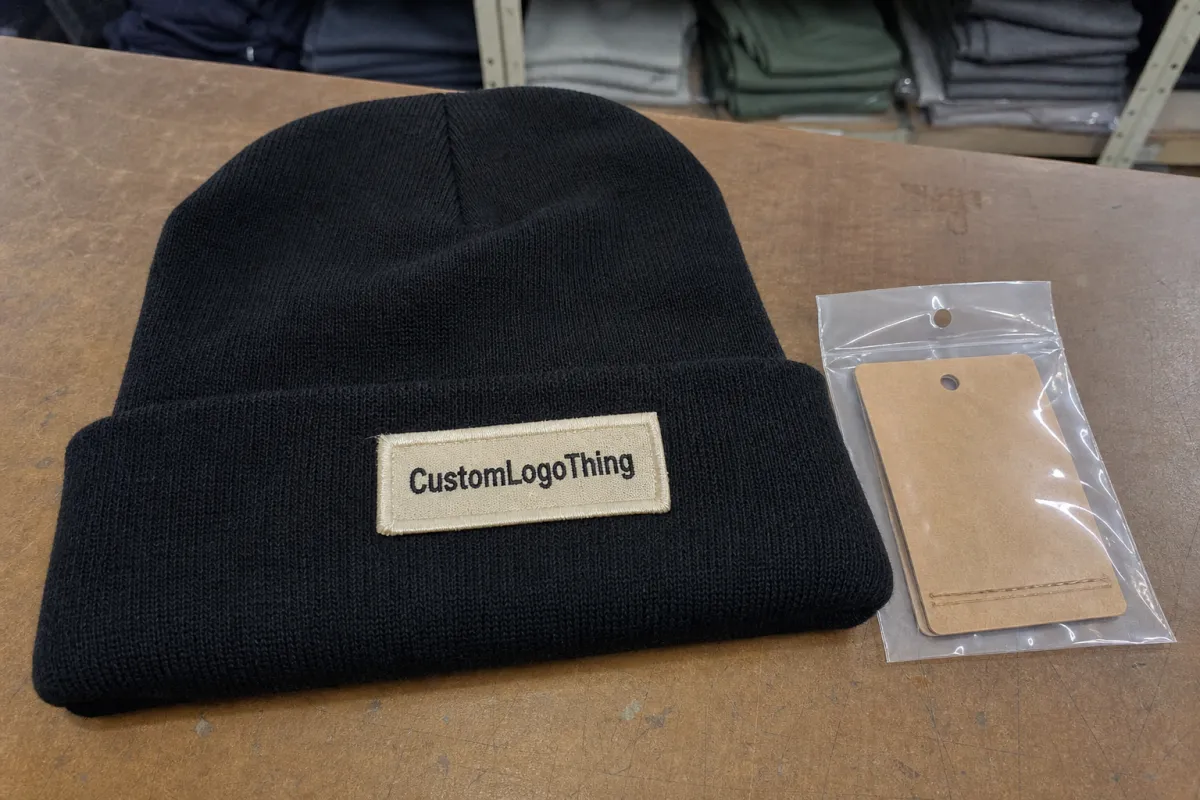
The first number usually assumes too much. Maybe the patch is quoted at a small size that looks fine on a mockup but not on an actual cuff. Maybe the art has been cleaned up before anyone checked stitch count, edge finish, or whether the smallest lettering can survive in a woven or embroidered patch. Then the buyer asks for a larger logo, a second color, or a thicker yarn body, and the unit cost rises the way it always does: quietly, then all at once.
A logo patch Beanies Unit Cost Breakdown changes fast because each piece has at least four moving parts: the blank beanie, the patch itself, the application labor, and the shipping side of the order. If the supplier only shows a single price, you do not know whether they included setup charges, packaging, or freight. That is where ugly surprises hide.
Buyers who care most about clean pricing are usually not hobby shoppers. They are ordering for a merch drop that needs margin, a uniform program that has to repeat, a school store that wants the same SKU next semester, or a winter promo run that has to clear in one season. In those cases, landed cost matters more than a low factory quote, because a cheap start can become an expensive arrival.
- Merch drops: margin is fixed before inventory lands.
- Staff uniforms: consistency matters more than chasing the lowest blank cost.
- School stores: reorders need the same patch size and color match.
- Winter promos: freight and turnaround can change the whole math.
In practice, the cheapest-looking quote often leaves out art cleanup, extra patch colors, thicker yarn, or a larger decoration area. That is not a small issue. A 500-unit order can swing by hundreds of dollars once those details are locked.
Beanie Body, Patch Type, and Decoration Choices
Start with the beanie body. A cuffed acrylic beanie is usually the cheapest base because it is simple to knit, simple to decorate, and easy to stack for packing. Slouchy styles feel softer and look more retail-friendly, but they usually use more yarn and can make patch placement less predictable. Ribbed or heavier-gauge knits hold shape better, which helps the logo read from a distance, but that extra structure usually adds cost. Recycled acrylic sits a step higher because the yarn and sourcing story tend to cost more.
The patch choice matters just as much. A woven patch is usually the cleanest answer for fine text and crisp lines. Embroidery adds texture and a classic look, but tiny details can get muddy. PVC and silicone look modern and hold shape well, though they can be heavier, more expensive, and more likely to trigger tooling fees. Leather feels premium, but it is not magic; it still has limits on tiny detail and can get expensive fast once you ask for debossing or complex edges.
| Patch Type | Typical Add-On Cost at 500 Units | Look and Feel | Best For | Watch-Out |
|---|---|---|---|---|
| Woven | $0.18-$0.45 | Flat, sharp, detailed | Small text, retail logos | Too much tiny copy gets lost |
| Embroidered | $0.25-$0.60 | Textured, classic | Simple marks, heritage branding | Fine lines can blur |
| PVC | $0.40-$0.90 | Bold, dimensional | Outdoor merch, tough-looking branding | Tooling fees and longer setup |
| Leather | $0.35-$0.85 | Premium, understated | Corporate gifts, lifestyle retail | Not great for fine text |
| Silicone | $0.45-$1.10 | Modern, tactile | Higher-end promo, fashion drops | Can feel heavy if oversized |
Cuffed beanies also give the cleanest decoration zone because the cuff creates a natural placement band. That is useful if the buyer wants the logo centered and readable without moving it too close to the edge. A larger cuff can support a bigger patch, but once the patch grows past the visual sweet spot, the beanie starts to feel more like a billboard than apparel.
Patch placement changes labor time too. A centered patch on a standard cuff is quick. A side placement, angled placement, or oversized patch usually adds handling time and raises the cost per piece. If the buyer wants the logo to read cleanly from six feet away, the decoration area needs to be planned before the quote is approved, not after.
Logo Patch Beanies Unit Cost Breakdown and MOQ
Here is the clean way to think about the Logo Patch Beanies unit cost breakdown: blank beanie cost plus patch production plus application labor plus packing plus freight allocation, then spread any one-time setup charges across the order. If the supplier cannot separate those pieces, you cannot compare quotes properly. A single all-in number feels easy, but it is lousy for decision-making.
At typical bulk pricing levels, the unit cost drops quickly as the order gets bigger because setup charges stop hurting so much. The same patch and same beanie can look expensive at 100 units and perfectly reasonable at 500. That is normal. The expensive part is often the setup, not the sewing.
| Quantity | Typical Cost Per Piece | What Drives the Price |
|---|---|---|
| 100 units | $4.50-$7.50 | High setup spread, lower production efficiency |
| 250 units | $3.50-$5.80 | Better spread, but MOQ still limits savings |
| 500 units | $2.60-$4.20 | Setup is diluted, packing gets more efficient |
| 1,000 units | $2.10-$3.60 | Strong bulk pricing and smoother production flow |
MOQ affects more than just price. A higher MOQ usually lowers cost per piece, but it also raises approval risk if the art is not final or the color match is not locked. If you are only testing a design, a smaller run can be safer even if the unit cost is higher. If you already know the beanie will reorder, the larger MOQ usually pays for itself.
One-time fees deserve a hard line in the quote. Typical setup charges cover digitizing, layout, or first-run prep. Tooling fees show up more often with molded PVC, debossed leather, or any patch style that needs a custom mold or die. Those fees should not disappear into the unit price, because they make repeat orders look cheaper than they really are.
A buyer should also ask how freight is handled. A $3.10 factory quote can turn into a $4.05 landed cost once cartons, domestic delivery, and final freight are added. That is not a small difference on a 1,000-unit run. It is the difference between margin and regret.
Artwork Specs That Keep Quotes Tight
Clean artwork keeps quotes honest. Send a vector file first: AI, EPS, or a clean PDF. A low-resolution JPG forces the supplier to guess, and guessing costs money. Add exact colors if you care about matching, because “close enough” is a terrible business plan when the logo sits on the front of a winter accessory.
Patch size is the next lever. A 2-inch woven patch and a 3-inch woven patch are not the same job. The larger version uses more material, can require more stitch detail, and may need a different edge finish. The same is true for text. If the smallest letter is too tiny to read in a 2-inch format, the factory will either simplify it or quote the higher detail version.
Thread count, stitch density, and edge finish all affect both appearance and unit cost. Denser stitching looks cleaner, but it takes longer. A merrow edge gives a classic patch feel, while laser cut or heat-sealed edges can suit different looks and different budgets. If you want a fast quote, do not send “make it premium.” Send the actual spec.
- Vector logo: AI, EPS, or editable PDF.
- Exact colors: Pantone references when color matching matters.
- Patch size: final width and height in inches or millimeters.
- Placement: centered, offset, or side placement on the cuff.
- Readable text: note any copy that must stay legible.
- Finish: woven, embroidered, PVC, leather, or silicone.
The classic re-quote trigger is a spec change after the first proof. Bigger patch. Different color count. Thicker yarn. A more visible placement. Suddenly the original price is gone, and everyone acts surprised. Nobody should be surprised. The quote was built on a different product.
Process, Turnaround, and Production Steps
The production path should be boring and predictable: quote, proof, sample, approval, production, quality check, packing, shipping. If a supplier skips any of those steps or blurs them together, the turnaround becomes a guess. That is how rush orders get messy.
- Quote: usually 1-2 business days once specs are clear.
- Proof: often 1-3 business days for layout and color review.
- Sample: commonly 5-10 business days, depending on patch type.
- Approval: same day if the buyer responds quickly.
- Production: often 10-18 business days after approval.
- Quality check and packing: usually 1-3 business days.
- Shipping: often 3-7 business days for domestic transit, longer if freight is international.
The slow points are predictable too. Artwork revisions eat time. Color approvals eat time. Sample sign-off eats time. If the buyer wants the fastest possible logo patch beanies Unit Cost Breakdown, the answer is not magic. It is simple specs and fast approvals.
Rush production is possible in some cases, but not every case. A simple woven patch on a standard cuffed beanie can move faster than a molded PVC patch with custom packaging. If someone promises a short lead time with complex specs, they are usually selling hope, not a schedule.
Before production starts, confirm the approval checklist:
- Final logo artwork and spelling
- Patch size and placement
- Color references
- Beanie style, gauge, and color
- Packaging choice
- Ship-to address and deadline
One missing approval can stall the whole run. Better to catch it before cutting or stitching starts.
Sampling, Quality Checks, and Reorder Consistency
Virtual proofs are useful, but they do not tell the full story. A physical sample shows how the patch sits on the cuff, how the beanie feels, and whether the logo reads the way the screen mockup promised. If the order is high-volume, retail-facing, or tied to a launch, a real sample is usually cheaper than fixing a bad run.
Quality checks should be direct. Look at logo placement first. Then check patch adhesion or stitching, stitch tension, yarn consistency, and color accuracy. A patch that looks great from three feet away but lifts at a corner will cause headaches later. So will a beanie color that looks right in daylight and wrong under warehouse lighting.
For shipped cartons, I like to see packaging specs tied to transit testing standards from ISTA. That does not mean every order needs lab testing, but it does mean the carton should be built for real transport, not just a photo on a desk. If the order includes paper inserts, care cards, or retail tags, FSC-certified paper is the cleaner baseline for buyers who need a credible materials story.
Reorder consistency is where a supplier earns trust. The second run should match the first on patch size, placement, yarn shade, and pack count. The easiest way to protect that is to lock a spec sheet after the first approval and save the exact patch file, thread callouts, and packing instructions. If the vendor cannot repeat the same job twice, they are not really selling a product. They are selling a surprise.
Packaging checks matter too. Retail units may need individual polybags, barcode labels, or size stickers. Corporate distribution may need carton marks and mixed-size boxing. Warehouse fulfillment may need clearer count verification than a simple master carton label. Those details change the real cost per piece, even if the beanie itself stays the same.
Why Buyers Reorder Our Patch Beanies
Buyers reorder because the process is predictable, not because the product is magical. The price stays readable. The MOQ is clear. The patch quality repeats. And nobody has to spend half a week untangling what was included in the original quote. That sounds boring. It is also profitable.
From a buyer’s point of view, the best supplier does not hide the ugly parts. Setup charges are called out. Packaging is listed plainly. Freight is treated like a real line item. Mixed-size planning is explained before production starts. That is how margin gets protected.
There are a few practical reasons procurement teams come back:
- Stable pricing: the blank beanie and patch cost do not jump without explanation.
- Clear MOQ: no fake low entry that turns into a surprise later.
- Repeatable patch quality: the second order matches the first order.
- Packaging options: bagging, labeling, and carton packing are spelled out early.
- Better planning: reorders can be forecast instead of guessed.
The cheapest order is not always the best order. A job that is priced honestly, packed correctly, and repeatable on the next run usually beats a bargain quote that forces expensive fixes. That is especially true for winter inventory, where timing matters and the shelf life of the product is short.
“A low first quote is nice. A repeatable second quote is what actually keeps the program alive.”
What to Send for an Accurate Quote
If you want a clean quote, send clean inputs. Quantity by size or color. Beanie body type. Patch style. Vector artwork. Final patch size. Target ship date. Destination address. That is enough to build a quote that means something.
The fastest way to compare quotes apples-to-apples is to make sure each one shows the same line items. Check setup charges, sample charges, packaging, freight, and any hidden minimums. If one quote includes polybags and the other does not, they are not competing numbers. They are different products.
- Quantity: split by size, color, or colorway if needed.
- Beanie spec: cuffed, slouchy, ribbed, or recycled acrylic.
- Patch spec: woven, embroidered, PVC, leather, or silicone.
- Artwork: vector file, exact colors, legibility notes.
- Placement: centered or offset, plus patch size.
- Timeline: target ship date and whether rush is required.
- Shipping: destination, carton requirements, and delivery method.
Ask for a spec sheet and ask for the approval timeline. If the logo has fine detail or tight color matching, request a sample before production starts. That one extra step often saves more money than it costs.
How do you calculate logo patch beanies unit cost per piece?
Start with the blank beanie cost, then add patch production, patch application labor, packaging, and freight. One-time setup charges should be separated from repeating per-unit costs so the quote is actually usable.
What MOQ gives the best price for logo patch beanies?
The best price usually starts once the run is large enough to spread setup costs across more units. A higher MOQ can beat a small order if you expect a reorder or need consistent retail pricing.
How long does logo patch beanie production usually take?
Most timelines depend on artwork approval, sample sign-off, and patch method, not just factory speed. Rush orders are possible in some cases, but they usually require simpler specs and fast client approvals.
Can I mix colors or patch styles in one beanie order?
Yes, but mixed options can raise unit cost if they create extra setup, sorting, or production changes. If you want the cleanest pricing, ask for a quote split by colorway or patch version.
What artwork do you need for an accurate logo patch beanies quote?
A vector logo, exact colors, patch size, placement notes, and target quantity give the cleanest pricing. If the art is low-resolution or has tiny text, expect a revised quote after proofing. Lock the specs first, then ask for the final logo patch beanies unit cost breakdown before you order.

