Subscription Logo Patch Beanies lead time gets complicated at the same places most teams underestimate: patch setup, approvals, and the handoff between blank inventory and decoration. A plain beanie is usually straightforward. Add a logo patch, a recurring ship date, and a subscriber window that must not slip, and timing becomes part of the product spec.
That matters because subscription programs do not tolerate drift. A retail order that lands a few days late may still be manageable. A box that misses its promised send date creates support tickets, churn, and extra cost that is hard to recover. The safest programs plan backward from the ship date, hold one approved spec, and leave room for sample review before production starts.
Recurring headwear works best when it is boring. Same body, same patch system, same placement, same paperwork. That is what keeps the boxes moving.
Why Subscription Beanies Slip When Patch Work Starts
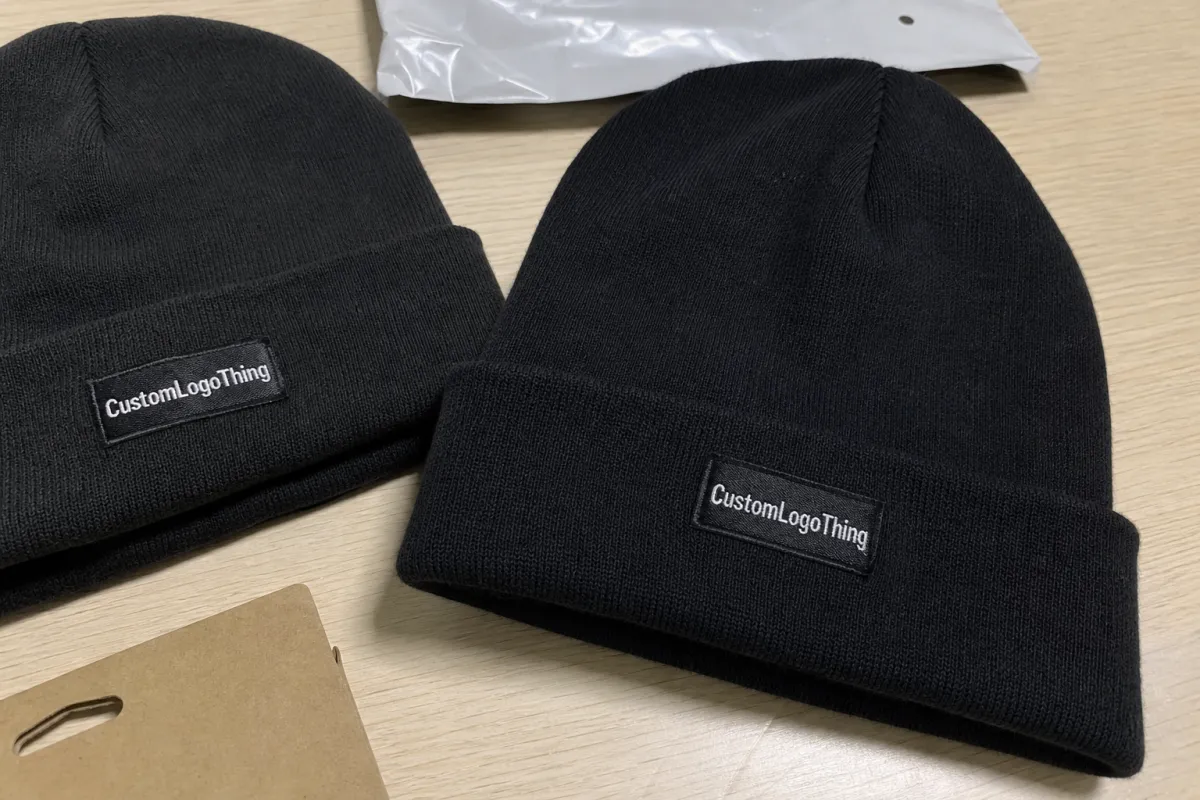
Blank beanies are often the easy part. Stock acrylic, a standard cuff, and a few core colors can be sourced quickly. The patch is where the schedule starts to stretch. It introduces artwork review, shape decisions, material selection, backing choice, and stitching or heat application. One small change here can trigger another proof, another sample, and another round of waiting.
For subscription work, the real issue is predictability. A brand can live with a slightly higher unit cost if the delivery date holds. It cannot absorb a missed subscriber window as easily. The impact shows up in retention and customer service, not just freight.
That is why the same style should usually repeat for several drops before anyone starts redesigning. One beanie body, one patch construction, one approved position on the cuff. Simple choices reduce variable lead time, and variable lead time is what makes scheduling ugly.
There is also a practical gap between the knit body and the patch supplier. A stocked beanie may be available in days, while a custom woven or embroidered patch can require artwork cleanup, thread matching, die-cutting, or an extra approval cycle. Those two clocks do not always run together, and buyers often assume they do.
How the Order Moves From Art File to Packed Carton
The production path looks simple on paper. In practice, it is a series of gates, and each gate can slow the next one if the details are incomplete. The cleanest orders arrive with an art file, a patch size, a placement note, a color reference, and a quantity tied to the subscription forecast.
- Artwork review. The supplier checks line thickness, logo clarity, and whether the design can hold at patch size.
- Patch specification. Choose woven, embroidered, faux leather, PVC-style, or another format that fits the brand. The patch type affects look, cost, and setup time.
- Beanie selection. Confirm knit style, cuff height, yarn weight, and base color. Stock bodies move faster than custom knit colors or specialty yarns.
- Placement approval. Left cuff, centered cuff, or side placement needs to be locked before sampling. A change here often means a fresh sample.
- Sampling. This is the check for size, color, hand feel, and how the patch sits once attached. Review it on the real beanie, not on a mockup alone.
- Production and packing. Once approved, the order moves through patch making, attachment, trim cleanup, inspection, folding, labeling, and carton packing.
The sample stage usually saves money, even if it feels like a delay. A sample that costs $60 to $150 is inexpensive compared with repeating a mistake across 2,000 units. Measure the patch against the actual beanie. Check proportion from a normal viewing distance. Confirm placement from the angle the customer will actually see.
If the program uses hang tags, inserts, belly bands, or retail outer packaging, those pieces need their own timing. Paper components can move quickly, but they still need print approval, trim confirmation, and a packing plan. For paper stock, recycled and FSC-certified options are common enough to source through standard packaging partners; FSC is a useful reference point for responsible paper sourcing. For boxes and transit protection, basic shipping-test logic inspired by ISTA methods helps reduce crushed corners and damaged cartons.
Lead Time, Process, and What Actually Delays Orders
Lead time is not one number. It is several smaller clocks added together. That is why two suppliers can quote different timelines for what appears to be the same product. One may count from approved art, another from the first sample, and another from stocked materials already in hand.
A practical breakdown looks like this:
- Patch production: 3 to 8 business days for simpler woven or embroidered patches, longer for custom shapes, dense stitching, or multiple color changes.
- Blank beanie sourcing: 2 to 7 business days if the body is stocked, more if the yarn color or knit style has to be reserved or created.
- Decoration and attachment: 2 to 5 business days depending on whether the patch is sewn, heat-applied, or placed in more than one position.
- Quality checks and packing: 1 to 3 business days for count verification, trim cleanup, fold method, and carton labeling.
- Transit: 2 to 7 business days domestically, and longer when freight crosses borders or hits a congested window.
Those are the mechanical pieces. Approval pauses can matter just as much. If art signoff sits for three days, the schedule slips three days. If the sample comes back with a color correction, another cycle begins. That is why subscription Logo Patch Beanies lead time should always include decision buffer, not just production buffer.
In practice, stock beanies with a simple patch often land in about 2 to 4 weeks from approved art to delivery. Custom patch shapes, specialty yarns, or heavier packaging can push that to 4 to 6 weeks or more. Peak seasons compress factory capacity and freight space at the same time, so fall, back-to-school, and holiday orders need extra margin.
The biggest delays are usually unglamorous: slow file review, unclear size references, or a request to “make it just a little bigger” after the sample is already built. That small adjustment can force a new proof and restart the clock.
Cost, Pricing, MOQ, and Unit Cost Tradeoffs
Price depends on more than the beanie itself. Patch type, stitch count, yarn weight, backing, packaging, and quantity all move the unit cost. A buyer who asks for a quote without those basics usually gets a vague answer back, because the supplier is guessing at half the inputs.
The tradeoff is simple. The cleaner and more standardized the build, the easier it is to keep costs down and timing stable. The more custom the look, the more premium it can feel. For a subscription box that sells on presentation, that difference can matter. For a program where warmth, fit, and repeatability matter more, a tighter spec often makes more sense.
| Option | Typical Unit Cost | Typical Lead Time | Best Fit | Main Tradeoff |
|---|---|---|---|---|
| Stock acrylic beanie + simple woven patch | $3.20-$5.25 | 2-4 weeks | Fast subscription sends, lower MOQ | Fewer texture and color options |
| Stock beanie + custom embroidered patch | $4.20-$6.40 | 3-5 weeks | Stronger texture and a more elevated feel | More sample review time |
| Premium knit body + specialty patch | $5.50-$9.00 | 4-6+ weeks | Retail programs or premium subscriber tiers | Higher MOQ and slower turnaround |
MOQ creates another layer of tradeoff. Stock decoration programs can sometimes start around 100 to 300 pieces, depending on the body and patch format. Custom patch runs often move closer to 300 to 500 pieces or more, because setup costs need to be spread across the order. A larger MOQ can reduce unit price, but it also ties up cash and raises inventory risk.
Ask for pricing in pieces, setup, sample charges, packaging charges, and freight separately. That makes clear what changes with volume and what does not. Repeat pricing should also be visible; a reorder is usually cheaper than the first run because the artwork and placement have already been approved.
Step-by-Step Plan for a Recurring Patch Beanie Drop
The best recurring programs do not rely on improvisation. They run on a short list of fixed decisions, then repeat them until something truly changes.
- Lock the forecast first. Confirm the expected quantity, audience, and ship date before requesting quotes.
- Freeze the creative direction. Approve the logo file, patch type, size, and color reference in one round.
- Order the sample early. Leave room for one correction if needed. The schedule usually slips here, not in production.
- Set a reorder trigger. Start the next quote cycle when 60 to 70 percent of inventory is committed.
Practical rule: if the drop date is fixed, the approval deadline should be fixed too. Put art cutoff, sample cutoff, and production cutoff on a shared calendar. That sounds basic because it is. Basic systems are the ones that hold up under pressure.
Every good recurring spec sheet should live in one place. Include the art file location, PMS or closest-match references, patch dimensions, placement image, carton count, ship-to address, and approval contacts. Do not spread those details across email threads and old spreadsheets. That is how easy orders turn into detective work.
This is the point where Subscription Logo Patch Beanies lead time becomes manageable. The process gets faster because the decisions stop changing. Stability is the real speed advantage.
Common Mistakes That Push Beanie Programs Back
Most delays are self-inflicted, which is good news because most of them can be prevented without changing the product.
- Treating art approval as a minor step. It is usually the biggest schedule risk in the order.
- Mixing too many SKUs. One beanie body, one patch size, one colorway keeps the program easier to repeat.
- Ignoring packaging details. Hang tags, insert cards, sticker seals, and retail wrap can take longer than the decoration itself.
- Ordering too tightly. If the forecast matches the exact subscriber count with no cushion, there is no room for replacements or late signups.
Another common trap is accepting a sample because it looks “close enough.” Close enough is not a production standard. If the patch sits too high on the cuff, or the logo is too small to read at normal viewing distance, the error repeats across the full run.
Seasonality deserves a separate warning. Fall orders stack up. Holiday orders stack up harder. Even a simple spec can slow down if the supplier is busy with everyone else’s calendar at the same time. A realistic schedule always assumes a crowded production season will be less forgiving.
Quality control should be visible, not implied. Check patch alignment, thread finish, trim cleanup, fold consistency, carton counts, and label accuracy before anything leaves the floor. If a supplier cannot describe how they inspect those details, the risk usually lands on the buyer later.
Expert Moves to Keep the Next Restock on Schedule
The strongest programs are not the flashiest. They are the ones that repeat cleanly and survive pressure. A good repeat setup does not need drama to look polished.
- Use one approved beanie body. One knit, one cuff style, one base color keeps the reorder math simple.
- Standardize the patch method. Woven, embroidered, faux leather, or PVC-style can all work, but the program should usually favor one primary construction.
- Keep a live spec sheet. Store the art file, patch dimensions, placement note, color reference, and supplier contacts in one place.
- Ask for a mock production calendar. Compare it against the actual send date before approval.
- Protect the reorder point. Start the next run before the current one feels urgent.
Designing around the schedule does not mean lowering standards. It means choosing materials and decoration methods that can repeat without constant adjustment. If the brand cares about sustainability, fewer insert layers and FSC paper stock can help reduce waste without changing the product itself. If the brand cares about customer experience, carton strength and clean packing matter more than decorative extras that arrive bent or crushed.
A program is fragile if every restock depends on a hero effort. Better to keep the build disciplined and the spec stable. That is what protects delivery timing over the long run, not the occasional rush order.
FAQ
How long is subscription logo patch beanies lead time for a first order?
Stock beanies with simple patches often move in about 2 to 4 weeks if approvals are fast and the blanks are available. Custom patch shapes, specialty yarns, or a sample revision can push that longer. The first order should always carry a buffer so one delay does not turn into a late subscriber shipment.
What changes the schedule the most?
Patch complexity is usually the biggest driver, especially when the design needs a custom shape, dense embroidery, or multiple colors. Slow artwork approval can delay the order just as much as production. Seasonal demand and freight distance also stretch the timeline, even when the initial quote looks normal.
Can I lower lead time without raising unit cost too much?
Yes. Keep the design simple, use one beanie body across the program, and stay on stocked materials where possible. Skipping custom packaging on the first run can also protect both timing and budget. That is usually the safest approach for a subscription launch or test.
What MOQ should I expect for recurring logo patch beanies?
Stock decoration programs can sometimes start around 100 to 300 pieces, while custom patch work often asks for 300 to 500 pieces or more. A larger MOQ usually lowers unit cost, though it also raises inventory risk if the subscription is still unstable. Ask for first-run pricing and reorder pricing separately.
When should I reorder so I do not stock out?
A practical trigger is when 60 to 70 percent of inventory is already spoken for, not when the last box is on the shipping dock. Start the quote and sample process before the final quarter of stock disappears. Add more buffer before holiday or seasonal peaks, because the whole market gets slower then.
Subscription Logo Patch Beanies lead time stays under control when the product spec, approval path, and reorder calendar all work together. The best results come from restraint: fewer changes, fewer handoffs, and fewer assumptions. That is what keeps the next shipment boring, on time, and easy to repeat.


