Getting a Logo Patches Supplier Quote for cosmetics brands is rarely just a pricing exercise. The quote is really a test of whether the decoration can survive real packaging conditions: carton rubbing in transit, sleeve compression on a fulfillment line, humidity in storage, and close inspection once the box reaches a customer’s hand. Beauty packaging is unforgiving that way. A patch that looks impressive in a mockup can still fail if the backing, edge finish, or substrate fit is wrong.
For skincare and cosmetics teams, a patch can do a disproportionate amount of work. It can elevate a seasonal gift set, make a limited launch feel intentional, or give a simple folding carton a more finished identity without requiring a full print overhaul. That makes it useful for brands that need visual impact but do not want to commit to expensive tooling or large inventory risk. The best quotes reflect that reality instead of treating every patch like the same object.
From a buyer’s point of view, the most useful suppliers are the ones that connect appearance to production constraints. They should be able to explain why one material reads more premium, why one attachment method is safer on coated board, and why a tiny logo detail may need simplification before sampling. If the quote only gives a number and not a path to a workable result, the order is not ready yet.
Why cosmetics packaging needs logo patches that look premium up close
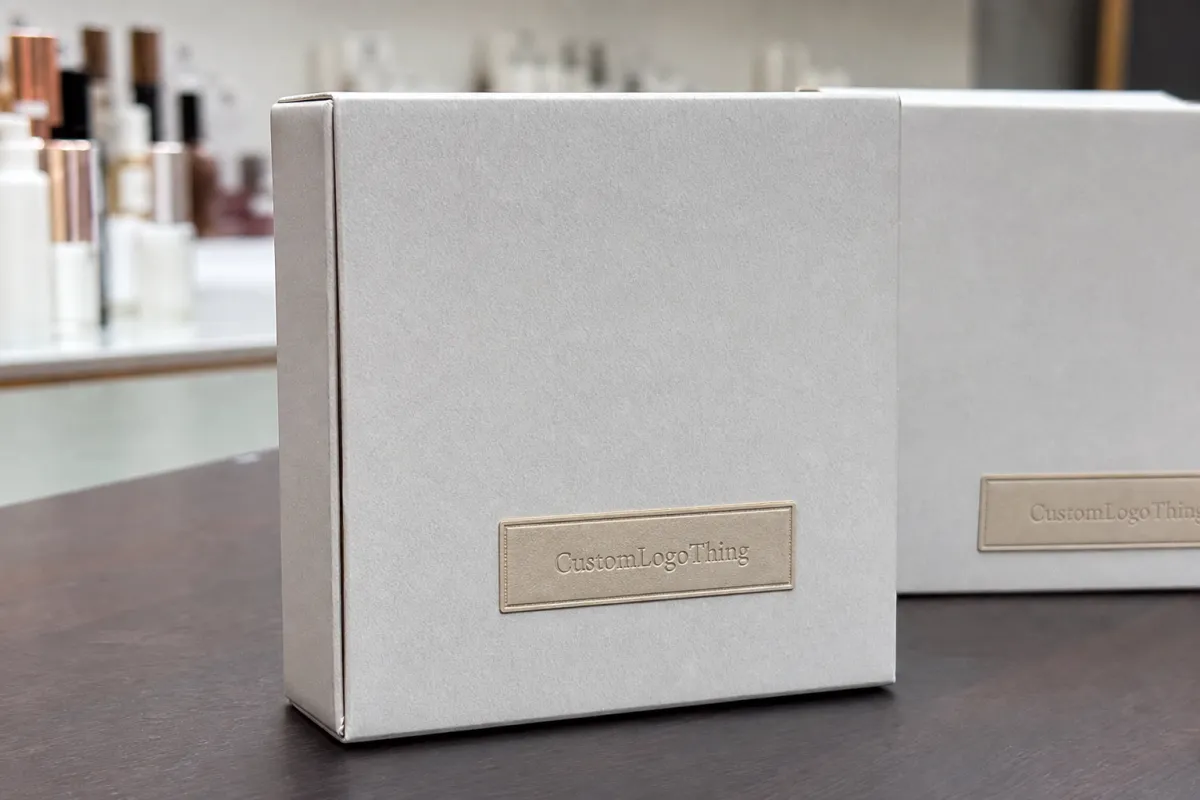
Cosmetics packaging gets judged at multiple distances. A shopper notices the box from across the aisle, but the real evaluation happens when the package is picked up, turned over, and photographed. That second layer of scrutiny is where patches either help the brand or expose a weak finish. Texture, alignment, and edge quality matter because beauty packaging is handled as a tactile object, not just a container.
That is one reason patches are used so often on secondary packaging rather than primary containers. A patch on a rigid presentation box, folding carton, sleeve, sample kit, or outer mailer can add structure to the brand story without changing the pack architecture. In other words, it gives you more visual and tactile value per square inch than another layer of print ink usually can.
They are especially useful for short-run launches and test programs. If a brand wants to trial a prestige look before committing to a wider release, a patch can create that effect with less financial exposure than embossing, specialty dies, or full structural redesign. That matters in beauty, where seasonal ranges and influencer kits often move on compressed timelines.
There is also a consistency benefit. A patch can help tie together different SKUs that do not share the same box size or shape. One serum may be packed in a rigid box, another in a sleeve, and a lip product in a smaller carton, but a repeatable patch language can hold the system together visually. The packaging feels planned instead of assembled.
“A patch should look like part of the package, not an afterthought glued on to fill space. If the finish feels detached from the substrate, customers register that faster than most brands expect.”
That is why a serious Logo Patches Supplier Quote for cosmetics brands should never be based on artwork alone. The supplier needs to know the package type, the finish, the run size, and how much handling the piece will see after packing. A patch that is beautiful but fragile is not a good solution for retail-ready beauty packaging.
Patch materials and finishes that match beauty and skincare branding
Material choice changes the message immediately. A woven patch reads differently from an embroidered one; faux leather sends a different signal from PVC; a soft-touch synthetic surface feels more restrained than a shiny metallic finish. For cosmetics brands, the right option depends on whether the product line leans clinical, prestige, artisan, natural, or giftable.
Woven patches are the safest choice when the logo includes fine text or tight line work. They hold detail well, provided the artwork is not overloaded with tiny elements. Embroidered patches create a richer, more tactile effect, but they suit larger shapes and simpler marks better than detailed wordmarks. PVC patches are useful where durability matters, because they resist wear and can hold dimensional detail well. Faux leather tends to work for higher-end skincare and gift sets, where the brand wants a refined but understated surface. Soft-touch synthetic materials can support a clean, modern look, particularly for clinical or minimalist branding.
Finish is just as important as the material. Matte surfaces usually suit skincare lines that want a calm, controlled visual language. Foil accents, metallic thread, and raised details fit prestige beauty more naturally, especially when the rest of the box already uses soft-touch lamination or heavier board. Natural and artisan brands often prefer textures that feel less engineered and more hand-finished. None of these choices is universally correct; the right answer depends on the total package.
Attachment method can change the outcome more than the decorative material itself. Adhesive backing is common on cartons, sleeves, rigid boxes, and outer wraps, but the adhesive must suit the substrate. A coating or laminate can reduce grab, especially on smooth surfaces. Heat-activated systems may work for some wrapped components, while sewn constructions are usually more appropriate for reusable textile items than for standard cosmetic cartons. Insert-mounted patches, where the piece sits in a pocket or window, can look very polished on presentation boxes, but the structure has to be designed for it from the start.
- Woven: good for detail, text clarity, and compact branding.
- Embroidered: stronger tactile effect, best for simpler marks.
- PVC: durable, dimensional, and suited to shipping-heavy packs.
- Faux leather: refined and premium for skincare and gifting.
- Soft-touch synthetic: modern, restrained, and clean.
Durability cannot be treated as a cosmetic extra. If the patch scuffs in transit, peels at the corners, or shifts after handling, the whole pack loses credibility. For beauty packaging, a small defect often reads as a larger quality problem because consumers compare the outer presentation with the product price immediately. A responsible quote should reflect how the patch will behave after packing, shipping, and shelf display.
Specification details to confirm before requesting a sample
Good quotes begin with usable specs. If a buyer sends only a logo image and asks for pricing, the supplier has to guess at size, shape, placement, backing, and material. That is how quotes drift and samples arrive wrong. A clean request should give the supplier enough information to price the real job, not an imaginary one.
The most useful request usually includes:
- Patch dimensions: width, height, and whether the shape is standard or custom die-cut.
- Backing type: adhesive, heat-activated, sewn, or insert-mounted.
- Material: woven, embroidered, PVC, faux leather, or another synthetic option.
- Color references: Pantone values, CMYK references, or a physical benchmark sample.
- Border style: merrowed edge, laser-cut edge, stitched border, or clean die-cut.
- Placement: lid center, front panel, sleeve flap, side panel, or mailer face.
Artwork format matters more than many teams expect. Vector files are the safest starting point because they preserve edge clarity and make production conversion easier. If the logo has micro text, thin strokes, or intricate internal shapes, some of those details may need simplification. That is not a defect in the supplier process; it is a normal production constraint. What looks crisp on a screen can fall apart in stitching, molding, or small-format printing.
Substrate compatibility needs to be confirmed early. Adhesion on uncoated board can differ from adhesion on laminated cartons or coated rigid boxes. Flexible mailers behave differently again. If the packaging will be exposed to humidity, cold storage, or a temperature swing during shipping, the supplier should know that before the sample is approved. Cosmetic packaging often moves through more environments than the buyer first expects.
Proofing should involve more than a flat artwork file. A practical approval path usually includes a digital mockup, a material swatch or sample, color confirmation, and a placement sign-off before mass production begins. That extra round of review is justified because the patch sits in direct relation to other visual elements. A subtle change in scale or color can alter the whole package.
There is also a compliance issue. Patches cannot interfere with batch codes, ingredient panels, regulatory marks, recycling labels, or other required copy. On beauty packaging, those details are not optional decoration. They affect traceability, retail acceptance, and in some markets, legal compliance. Placement should be checked against the final carton layout before the order is released.
For distribution and materials guidance, many buyers also reference ISTA for transport testing and ASTM for performance benchmarks that help frame packaging expectations.
Logo patches supplier quote for cosmetics brands: pricing, MOQ, and cost drivers
A strong Logo Patches Supplier Quote for cosmetics brands should explain what drives the price, not just list a final number. The biggest variables are material, patch size, number of colors, embellishment method, backing system, labor complexity, and whether custom tooling is required. Add foil, layered texture, or special edge work, and the price moves up accordingly. That is normal.
MOQ matters because setup costs are spread across the order. Smaller runs almost always carry a higher unit price, especially if the patch requires custom artwork conversion or a special production step. That does not mean low quantities are a mistake. For launch testing, retailer samples, or seasonal beauty kits, a smaller MOQ can protect cash and reduce inventory exposure. The trick is to compare the order against the commercial goal, not against a generic “best price” idea.
Typical quote components include:
- Unit price based on the quantity tier.
- Setup or artwork charge for file preparation and conversion.
- Sampling fee if a physical pre-production sample is required.
- Shipping cost based on weight, carton count, and destination.
- Special finish charges for foil, embossing, custom die cutting, or complex backing.
| Patch option | Typical cosmetic use | Relative cost | Best fit for |
|---|---|---|---|
| Woven patch with adhesive backing | Folding cartons, sleeves, sample kits | Moderate | Clean logos, good detail, balanced budgets |
| Embroidered patch | Gift sets, prestige packaging, seasonal boxes | Moderate to higher | Tactile branding and a softer premium look |
| PVC patch | Mailers, durable retail packs, shipping-heavy programs | Higher | Strong dimensional effect and wear resistance |
| Faux leather patch | Skincare, spa, upscale beauty | Moderate to higher | Refined, understated premium presentation |
| Paperboard medallion with print finish | Short-run promotions, limited editions | Lower to moderate | Budget-conscious campaigns with a clean graphic look |
Price comparison only makes sense with context. The lowest quote can become the most expensive choice if the patch lifts at the edges, shows color drift, or looks weak beside the rest of the pack. For cosmetics, presentation quality often matters more than a small per-unit saving. That is especially true for retail-ready boxes, media kits, and influencer mailers, where the outer pack is part of the product story.
A buyer should ask for tiered pricing at multiple quantities, such as 1,000, 3,000, 5,000, and 10,000 pieces. That reveals how unit cost falls with volume and makes it easier to forecast both a launch order and a repeat run. It also helps the team plan around changing demand, which is common in beauty. A formula that sells out unexpectedly can require a fast reorder, and the original quote should be able to support that conversation.
Production steps and lead time from artwork to delivery
Most patch orders move through the same sequence: inquiry, spec review, quote confirmation, artwork submission, proof or sample approval, production, quality inspection, packing, and shipment. The order is simple on paper. The schedule is not always simple in practice. One delay in artwork approval or substrate confirmation can push a beauty launch outside its window.
Lead time depends on complexity. A straightforward woven patch with standard backing may move faster than a multi-color embroidered design with custom shape work and tighter color matching. If the buyer asks for revisions after the first proof, the clock resets. Peak production periods can slow things further, which is why experienced packaging teams leave buffer time before a retailer deadline, a photo shoot, or a coordinated brand release.
Sampling and mass production are different milestones. A sample may arrive quickly, but final production still depends on approval, order volume, and the supplier’s queue. Cosmetic teams often need to separate those points clearly in their planning. “Proof approved” does not mean “finished cartons on the dock.”
Quality control should cover visual inspection, adhesion performance, and batch consistency. If the patch uses edge stitching, the supplier should check for loose threads and uneven tension. If it uses adhesive, the backing should be tested on the final substrate, not just on a generic board. If the finish includes foil or metallic detail, the color and reflectivity should be reviewed under normal ambient light, because inspection lamps can make a part look better than it really is.
Sustainability can also influence the final choice. If the patch is paired with recyclable cartons or FSC-certified board, the rest of the packaging system should support that message. You can review guidance at FSC and broader recycling resources through the EPA when evaluating material options across the pack.
In practice, the most common schedule problems are not caused by the patch itself. Late artwork changes, carton size revisions, and last-minute finish swaps create most of the disruption. If the layout shifts after proofing, the patch may need to be resized or repositioned. That is why the most reliable quote is based on stable specifications, not a rough concept that may still move.
How our packaging team supports brand consistency across beauty SKUs
Custom Logo Things works with brands that need one decorative element to hold together across several cosmetics SKUs. A lip balm carton, a serum box, a haircare sleeve, and a gift set may not share the same structure, but the packaging still needs one visual language. The patch becomes useful because it repeats well. It is a small piece, but it can anchor the wider identity system.
The practical approach is to look at the patch alongside the rest of the packaging program, including labels, rigid boxes, folding cartons, and inserts. That helps the final result feel coordinated instead of assembled from separate decisions. On repeat orders, consistency matters even more. A patch that shifts in color, size, or adhesion from one run to the next weakens the shelf presentation quickly.
Clear information saves time and reduces revision cycles. When the buyer sends usable artwork, packaging dimensions, a target quantity, and a realistic timeline, the supplier can recommend materials that match the brand without overspecifying the job. Sometimes the right answer is a simple woven patch rather than a more elaborate structure that will not read well at the intended size. A quote should help the buyer make a workable decision.
Reliability matters more than hype. Beauty packaging teams need steady output, consistent placement, and a supplier who understands that the patch has to survive production, transit, retail handling, and unboxing without losing its effect. If the branding system changes later, the quote should still be flexible enough to adjust to new artwork, new volume targets, or a different package format.
For examples of how finish and material choices affect presentation across pack types, our Case Studies page provides additional context. If you need direct support, you can always Contact Us with specs and reference images.
Next steps to request an accurate quote and move into production
If you want a practical logo patches supplier quote for cosmetics brands, send the supplier the inputs that actually determine cost and feasibility. That means logo artwork, target quantity, patch size, packaging surface, finish preference, and whether you need a sample before production. If the concept is still rough, say so clearly. A quote can account for assumptions, but only if the assumptions are visible.
Reference photos help more than many teams realize. A picture of the carton panel, rigid box lid, sleeve area, or mailer face shows the supplier where the patch will live and how much room is available. That usually produces a more accurate quote than artwork alone, because placement and scale influence both method and appearance.
Timeline should be explicit. If the order supports a launch, a retailer deadline, a photo shoot, or an influencer mailing, state the date and include freight time. If the job is a pilot run, say that too. If a reorder is likely, ask for tiered pricing so you can compare launch cost with replenishment cost without reopening the whole specification.
When the decision comes down to appearance, durability, and unit cost, ask for side-by-side material options. That comparison usually makes the trade-offs easier to see. For cosmetics brands, the cheapest path is not always the best one, but the most expensive one is not automatically the right answer either. The right patch is the one that fits the packaging system and survives the real handling it will face.
Send accurate artwork, confirm the packaging surface, define the quantity range, and request a logo patches supplier quote for cosmetics brands based on production-ready details. Better input leads to a better quote, and a better quote makes it easier to move from concept to a finished package that looks as composed as the product inside.
What should cosmetics brands include in a logo patches supplier quote request?
Include logo artwork, patch size, quantity, backing type, preferred material, and the packaging surface where the patch will be applied. Add color references, target launch date, and whether you need a sample or proof before production.
Which patch materials work best for premium beauty packaging?
Woven, embroidered, faux leather, and premium synthetic patches are often used when the goal is a more tactile, upscale look. The best choice depends on the packaging surface, brand style, and whether the patch needs to stay secure during shipping and retail handling.
How does MOQ affect pricing for cosmetics logo patches?
Lower quantities usually raise the unit cost because setup and labor are spread across fewer pieces. Higher volumes typically reduce unit cost, which helps when the same patch will be used across multiple SKUs or replenishment orders.
How long does production usually take after approval?
Timeline depends on material, complexity, and order size, but production generally starts after artwork and proof approval. Build in extra time if you need sampling, special finishes, or matching to another packaging component.
Can patches be applied to different cosmetic packaging types?
Yes, patches can be used on rigid boxes, cartons, sleeves, mailers, and some flexible packaging formats if the attachment method is compatible. The supplier should confirm substrate compatibility so the patch stays secure and looks clean through transit and retail display.


