Getting a Logo Patches Supplier Quote for chocolate brands is often the quickest way to lift shelf presence without rebuilding the whole packaging system. A small patch on a gift box sleeve, apron, tote, or retail display can sharpen the brand mark and make a product line feel more finished, usually at a fraction of the cost of a new carton structure, print plate set, or custom rigid box program.
That matters because chocolate launches rarely arrive with generous time buffers. Seasonal assortments, limited editions, staff uniforms, and event merchandise all need to look polished, but they do not always justify a complete packaging redesign. A useful Logo Patches Supplier Quote for chocolate brands should make comparison easy: patch style, minimum order quantity, backing, finish, lead time, and where the construction has limits.
The best quotes do more than list a unit price. They reveal whether the logo is suited to stitching, whether the surface can take heat or adhesive, and whether the brand’s desired finish is realistic at the requested size. That kind of information saves more time than a low number that later changes after proofing.
Why chocolate brands choose patches before a full packaging rebuild
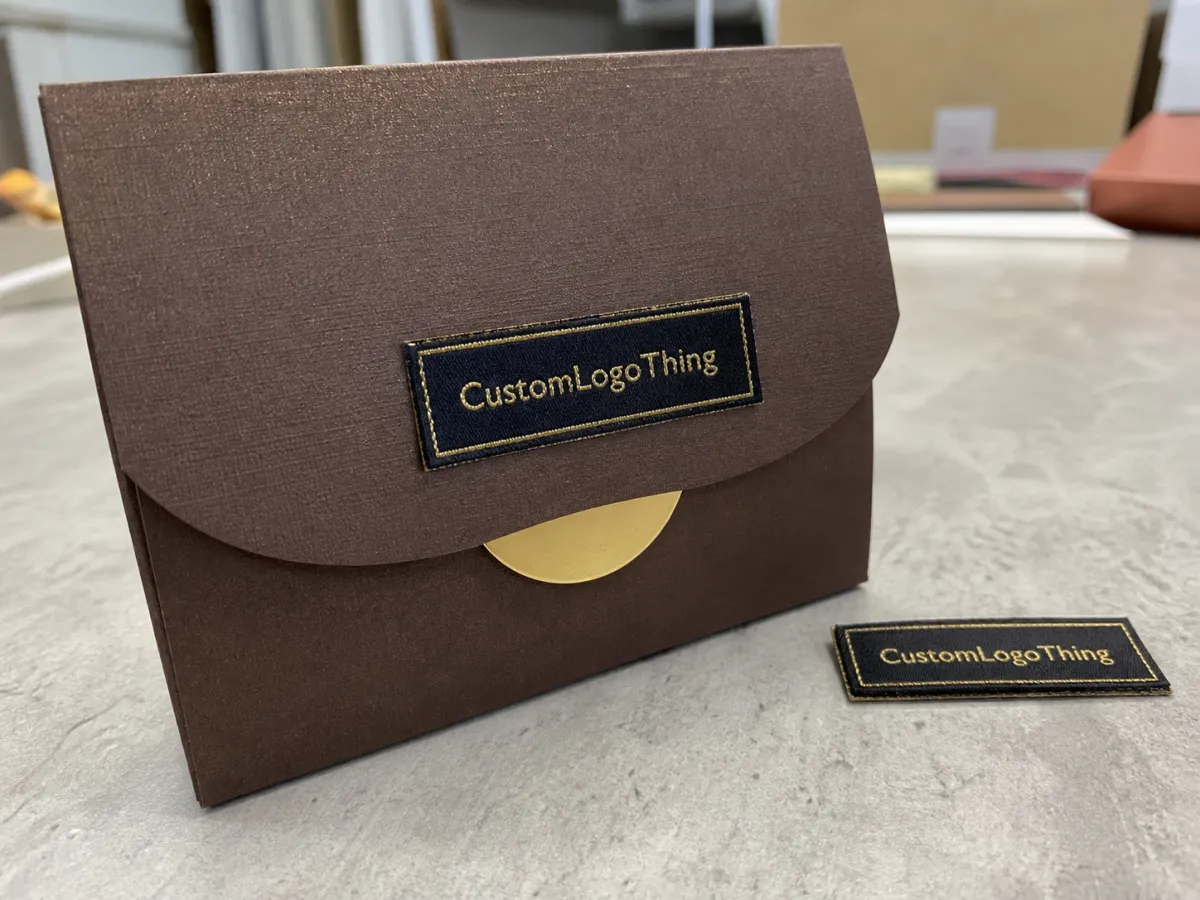
Branded patches solve a presentation problem quickly. If the box, sleeve, apron, or tote already works structurally, a patch can add a premium cue without changing the dieline, the carton specification, or the print schedule. Buyers often ask for a Logo Patches Supplier Quote for chocolate brands before moving into a more expensive custom packaging program because it is a lower-risk way to improve the look of the line.
For chocolate companies, the use cases are practical. Patches show up on gift boxes, subscription sleeves, retail staff aprons, canvas totes, reusable tins, and display pieces near point of sale. In each case the logo has to stay readable, the edges have to stay clean, and the attachment method has to survive handling, folding, stacking, and occasional wipe-downs.
There is another reason brands start here: patches can test the visual language of a product line before a larger spend is committed. If the goal is stronger brand recognition, a better unboxing moment, or a more polished retail cue, a patch gets there with less risk than reworking the whole package. The question is not whether the patch looks attractive on a monitor. It is whether it holds shape, keeps color, and still looks consistent across the full order.
“A patch earns its place when it improves legibility, durability, or the brand cue. If it does none of those, the spec needs another pass.”
That is the real decision behind a Logo Patches Supplier Quote for chocolate brands: decorative add-on, or branded component that supports premium positioning. Those are different buys. Good suppliers treat them differently in the quote.
There is also a practical supply-chain reason to start with patches. Carton programs often involve plate charges, print minimums, board approvals, and longer prepress cycles. A patch program usually has fewer upstream dependencies. That does not make it trivial, but it does mean a brand can test a look faster, especially when the packaging itself is already in motion.
Patch types that fit packaging, apparel, and retail merchandise
The best patch type depends on where it will live. A patch for a cotton apron does not need the same backing or edge treatment as a patch sitting on a paperboard sleeve. When buyers request a logo patches supplier quote for chocolate brands, the supplier should ask about the surface, handling, and expected wear. Those details matter more than the logo file alone.
Common patch constructions
- Woven patches work well for fine lines, small text, and neat logo edges. They are usually the safest choice when the artwork has detail and needs a crisp look.
- Embroidered patches give a textured feel and a more dimensional appearance. They suit retail apparel, staff aprons, and promotional items where tactile presence matters.
- PVC patches are durable, wipe-clean, and resistant to moisture. They can be useful for reusable items, but they often read as more industrial than artisan.
- Leatherette patches are often chosen for premium positioning because they feel upscale and pair well with restrained branding, dark substrates, and minimal graphics.
- Printed fabric patches work when the artwork includes gradients, tiny copy, or color variation that would be difficult to stitch.
- Chenille patches create a soft, textured look, but they are usually more decorative than practical for detailed chocolate branding.
Attachment method matters just as much as construction. Sew-on is dependable for apparel and tote bags. Iron-on can work for some fabric items, though heat sensitivity needs to be checked first. Velcro is useful for removable merch or reusable display pieces. Adhesive backing may suit some packaging applications, but it depends heavily on the substrate, storage conditions, and how often the item will be touched. For paperboard sleeves and boxes, many buyers prefer pre-application during finishing rather than relying on the end user to attach the patch later.
The intended surface changes the answer quickly. A cotton apron can accept a sew-on or heat-applied patch. A canvas tote usually tolerates more options. A paperboard gift box needs a lighter, cleaner approach, especially if the patch is part of the first impression. Reusable tins and display pieces can support more durable materials, but the visual tone still has to fit the chocolate brand rather than fight it.
Logo complexity also shapes the final result. Tiny serif type, thin outlines, metallic-thread effects, and tightly packed icons can all lose legibility if the patch is too small or the construction method is wrong. A buyer asking for a logo patches supplier quote for chocolate brands should expect the supplier to flag those risks early instead of pretending every logo works in every format.
There is a tradeoff many teams overlook: the most premium-looking patch is not always the most practical one. Embroidery can feel richer, but it may blur small copy. Printed fabric can preserve detail, but it can look flatter next to foil, embossing, or rigid packaging. Woven construction often lands in the middle, which is why it gets used so often for Chocolate Brands That want refinement without visual noise.
Artwork, size, materials, and finishing details
The cleaner the specification, the cleaner the quote. A supplier can price faster when the buyer sends final artwork, intended size, color count, and backing preference up front. That matters even more for a logo patches supplier quote for chocolate brands, because the patch may need to coordinate with packaging graphics, apparel, and seasonal campaign colors at the same time.
These are the fields that should be in the spec sheet:
- Final size in millimeters or inches
- Shape: round, rectangle, shield, custom contour, or die-cut
- Construction: woven, embroidered, printed, PVC, leatherette, or chenille
- Color count and whether Pantone matching is required
- Backing type: sew-on, iron-on, adhesive, Velcro, or no backing
- Border style: merrowed edge, laser-cut edge, stitched border, or clean cut
- Finish: matte, glossy, soft-touch, textured, or coated
For chocolate brands, sizes are usually modest. Apparel patches often fall in the 2 to 4 inch range, while display patches or gift-set accents can run larger if the logo needs room to breathe. Small patches can look refined, but once the type gets too tight, the brand mark starts working against itself. Negative space matters, especially next to foil wraps, ribbon, and busy box graphics.
Material choice influences both durability and presentation. Woven yarns can preserve detail better than embroidery when the logo is tight. Embroidery gives more texture but can obscure very small lines. Printed fabric is useful when artwork has gradients or photographic elements, though it is less tactile. Leatherette adds a premium feel, but the finish needs to be consistent if the program will repeat across retail seasons.
Color matching deserves a realistic conversation. Pantone references help, but thread, yarn, inks, and coated surfaces do not behave like digital screens. A proof on monitor may look slightly different from the final stitched or printed result, especially under warm retail lighting. That is why a strong logo patches supplier quote for chocolate brands should include artwork cleanup and proofing, not just a price line. If a brand has strict color standards, the supplier should say whether the requested match is straightforward or whether a close visual match is the realistic target.
Finish details also affect the final impression more than buyers expect. A clean border can make a modest patch feel deliberate; an uneven edge can make an expensive one look rushed. If the patch will sit on luxury packaging, the edge treatment deserves as much attention as the logo itself. Loose thread tails, inconsistent cut lines, and weak adhesive are the kinds of defects that stand out immediately on a premium food brand.
For reference, packaging teams often work within documented quality and materials frameworks such as Packaging Institute guidance and sustainability expectations from FSC when paper-based components are part of the program. The patch itself is a different component, but the same buyer mindset applies: define the spec, define the finish, and confirm the intended use before production starts.
How quote pricing, MOQ, and unit cost really work
Price depends on a handful of variables, and none of them are mysterious once you know what to ask. A logo patches supplier quote for chocolate brands usually moves up or down based on size, material, number of colors, backing type, border detail, and total quantity. The more intricate the build, the more labor and setup time it takes.
| Patch style | Typical use | MOQ tendency | Relative unit cost |
|---|---|---|---|
| Woven | Fine logo detail, packaging accents | Often moderate | Medium |
| Embroidered | Aprons, staff wear, gift sets | Often moderate to higher | Medium to higher |
| PVC | Durable merch, wipe-clean items | Often higher | Medium |
| Leatherette | Premium artisan branding | Often moderate | Medium to higher |
| Printed fabric | Complex artwork, gradients | Often lower to moderate | Lower to medium |
As a practical range, many small-run patch programs quote from roughly $0.35 to $1.25 per unit, depending on size and build, with setup fees or sample charges sometimes added separately. Larger runs can bring the unit price down, especially when the design stays consistent and the patch size does not change. Lower minimum quantities usually carry a higher per-piece cost because the setup gets spread over fewer units.
Buyers often forget to ask what is included. A quote may cover artwork cleanup, digital proofing, sample production, manufacturing, and basic packing. Shipping may be separate. Rush service may be separate too. If a quote looks unusually cheap, check whether one of those items is missing. A strong supplier will spell it out instead of hiding the real total until later.
MOQ is not just a pricing issue; it is a risk issue. If the quantity is too low, unit price rises and the program may lose its value. If it is too high, the brand is left with excess stock after the season passes. Chocolate brands feel that pressure more than most because product calendars are tied to holidays, shelf resets, and limited runs. A test order can be the sensible middle ground when the design has not been used before.
Seasonal flexibility matters. Holiday gifting, Valentine’s promotions, Easter assortments, and limited retail drops may each need slightly different quantities. In those cases, a small test run is often smarter than locking in a large run too early. It gives the buyer a chance to confirm color, feel, and attachment method before full volume is released.
If you want a cleaner comparison, ask for the same artwork in two or three options: woven with sew-on backing, embroidered with iron-on backing, and printed fabric with adhesive. That makes the pricing differences easier to judge, and it turns the logo patches supplier quote for chocolate brands into a useful internal approval tool rather than a loose estimate.
Production timeline, approvals, and quality checks
The production flow is usually straightforward, but delays happen when the front end is rushed. The normal path is inquiry, artwork review, quote confirmation, digital proof, sample or pre-production approval, manufacturing, quality check, and shipment. For a logo patches supplier quote for chocolate brands, the proof stage is where most schedule risk sits.
Typical lead times depend on complexity and order size. Simple woven or printed patches may move in about 10 to 15 business days after proof approval. More detailed embroidered or PVC orders often take 15 to 25 business days, and larger seasonal quantities can take longer. If sampling is required first, add time for the sample to be made, reviewed, and approved. That is not a problem if the timeline is planned honestly. It becomes a problem when the launch date is fixed and the proof sits unanswered for three days.
There are three common delay points: missing artwork, unclear color references, and slow approvals. A buyer who sends a low-resolution logo and asks the supplier to “make it premium” is almost always creating extra back-and-forth. The better approach is to send final vector art, the intended application, and any brand standards the patch has to follow.
Sampling is worth discussing early. A digital mockup is enough for many simple orders, especially when the logo is straightforward and the application is standard. A physical sample makes more sense when the patch will sit on premium chocolate gift packaging, be seen by retail buyers, or be used on a staff uniform where texture and weight matter. If the order is tied to a holiday launch, build in enough time for at least one revision cycle.
Quality control should be visible in the quote conversation, not only at the end. Ask how border accuracy is checked, how color drift is handled, and whether the production batch is inspected for loose threads, adhesive failure, edge fraying, or inconsistent sizing. For food-adjacent brands, presentation defects stand out faster than they do on generic merchandise. A small defect on a gift box or apron can feel bigger than the same defect on a plain promotional item.
Here is a simple milestone checklist that keeps the order moving:
- Submit artwork, quantity, and use case.
- Approve the quote and confirm the backing method.
- Review the proof for size, color, and border style.
- Approve a sample if the program needs one.
- Release production and confirm the shipping plan.
- Inspect the finished goods before deployment.
For shipments that will be packed with fragile gift items or stored as part of retail kits, standards such as ISTA testing principles can help inform handling, even if the patch is only one piece of the package.
What a good supplier should help you compare
A useful supplier does more than price the job. It should help the buyer understand what will actually work on the target surface, where the logo details are too fine, and whether the selected patch style fits the brand tone. That is the practical value behind a strong logo patches supplier quote for chocolate brands: not just a number, but a clear recommendation.
Consistency matters more than many teams expect. The patch on an apron should match the patch on a tote. The edge finish should stay clean from one run to the next. The backing should hold up under handling, folding, and storage. If the brand is using patches across retail, gifting, and staff wear, color repeatability and trim accuracy become as important as the initial look.
Packaging-adjacent concerns matter a great deal in chocolate. Clean presentation counts. No one wants a patch with loose threads, uneven borders, or a backing that lifts after one use. If the item is going onto a luxury gift box or a point-of-sale display, the finish has to feel deliberate. A good supplier will say when a detail is too small, a backing method is not suitable, or a production quantity is too low to support the best price.
There is also a difference between a quote that prices the item and a quote that helps you decide. The second one usually notes whether a logo needs simplification, whether a material swap would improve legibility, and whether a different backing would reduce returns or application problems. That is especially useful for chocolate brands, where the item is often part of a premium moment and the margin for visual error is small.
“The most useful quote is the one that tells you what not to do as clearly as it tells you what you can buy.”
That is the kind of practical help buyers should expect from Custom Logo Things. We focus on accurate specs, sensible material guidance, and dependable delivery instead of overpromising results that the construction method cannot support. If you want to compare patch options against real production constraints, our Case Studies page shows the kinds of brand-use scenarios we help customers evaluate, and our Contact Us page is the fastest route to a quote discussion.
What to send with your next request
If you want a useful logo patches supplier quote for chocolate brands, send the basics in one message and you will save yourself at least one round of clarification. Strong input leads to more accurate pricing and a more realistic lead time.
- Logo file in vector format if possible
- Preferred size or a rough size target
- Patch type if you already have one in mind
- Backing preference: sew-on, iron-on, adhesive, Velcro, or undecided
- Intended use: packaging, aprons, totes, gift sets, or displays
- Estimated quantity and whether repeat orders are likely
- Target delivery date or launch window
- Brand color references or Pantone targets if they matter
- Photos of the packaging or garment so scale and placement can be judged properly
If you are comparing premium and budget finishes, ask for two or three quote options. That is often the easiest way to see whether a more tactile patch truly earns its cost. A leatherette finish may suit an artisan chocolate line, while a woven patch may be the better choice for small text. If the same logo needs to appear on several product formats, say that up front so the recommendation matches the full program rather than one item in isolation.
Here is the simplest workflow: gather specs, request the quote, review the proof, approve the sample if needed, and lock the production slot. That sequence keeps the order moving and reduces the chance of disappointment when the finished patch arrives. If the logo, finish, and delivery window are already defined, a logo patches supplier quote for chocolate brands becomes a practical decision tool instead of a guessing exercise.
For brands working on seasonal packaging, there is one more useful habit: keep a record of what worked. If a woven patch on a Valentine’s sleeve held up well, note the size, backing, and approved proof file. If a heat-applied patch caused application issues on a certain fabric, record that too. Reuse of good decisions is one of the quiet ways brands reduce cost and avoid repeat mistakes.
FAQ
What should I include when requesting a logo patches supplier quote for chocolate brands?
Include your logo artwork, target size, patch type, backing preference, quantity, intended use, and required delivery date. If possible, add a photo of the packaging or garment so the supplier can recommend the best finish and attachment method.
Which patch type is best for chocolate brand packaging and merch?
Woven and printed patches work well for fine logo detail, while embroidered and leatherette styles create a more premium, tactile look. The best choice depends on whether the patch is for aprons, gift boxes, tote bags, or seasonal retail displays.
How does MOQ affect patch pricing?
Lower minimum quantities usually increase unit cost because setup and production prep are spread across fewer pieces. Higher quantities typically reduce unit price, especially when the artwork, size, and materials stay consistent.
How long does patch production usually take?
Lead time depends on patch type, order size, and proof approval speed. Simple orders can move in about 10 to 15 business days after approval, while more detailed custom builds often take 15 to 25 business days or longer.
Can I get a sample before placing a full order?
Yes. Many buyers request a digital proof first and a physical sample when the patch will be used on premium chocolate gift packaging or staff apparel. A sample is especially useful when texture, border detail, or color accuracy matters.
What is the most common mistake buyers make?
Sending artwork without specifying the use case. A patch sized for a tote bag may fail on a small box sleeve, and a backing that works on fabric may not suit coated paperboard. The quote gets better when the application is clear from the start.


