Logo Patches Supplier Quote for Tea Brands: Order Now
Need a Logo Patches Supplier Quote for tea brands? Compare materials, MOQ, pricing, lead time, artwork steps, and quality checks before ordering custom patches.
How Tea Brands Use Patches to Turn Soft Goods Into Shelf-Level Brand Assets
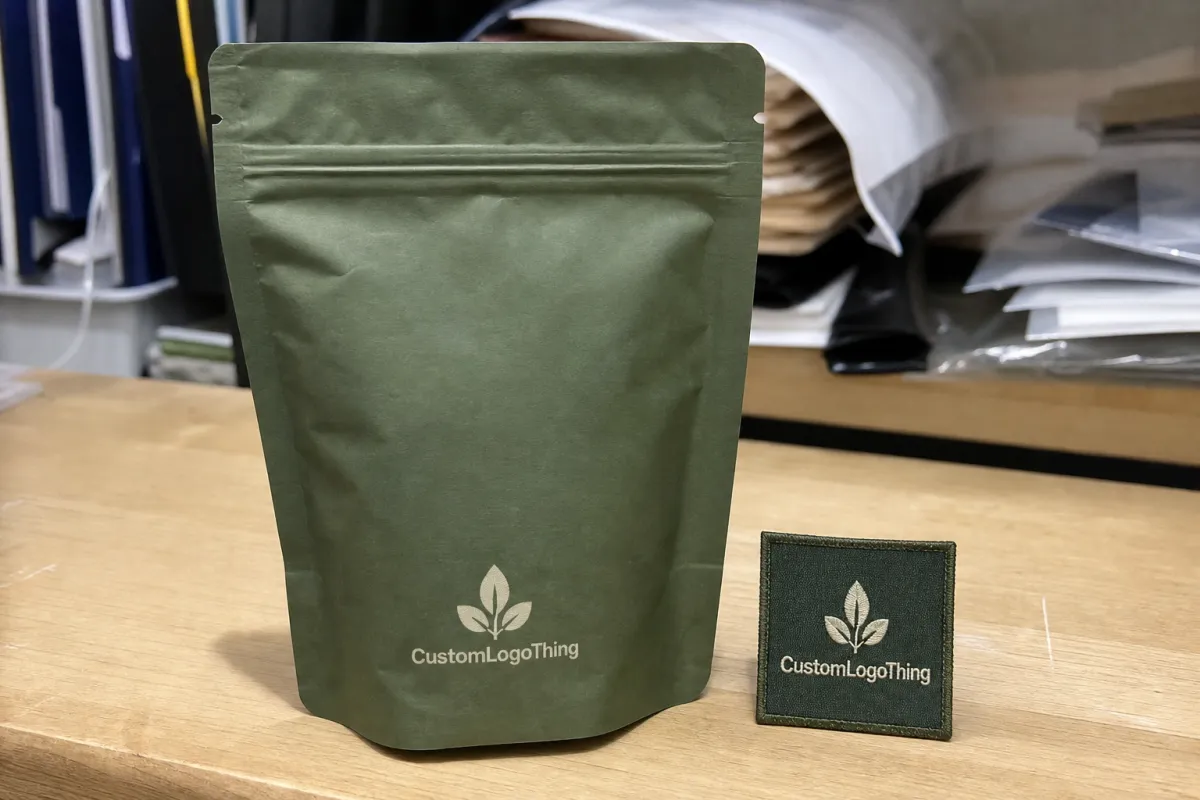
Tea buyers often remember texture before they remember claims. A stitched emblem on a canvas tote, a rubber patch on festival merch, or a faux leather mark on a linen pouch can make a beverage brand feel collectible before anyone reads the tasting notes. A Logo Patches Supplier Quote for tea brands helps buyers compare the production variables behind that feeling: material, size, backing, color, quantity, and delivery risk.
Patches are not limited to jackets. Tea companies use them on canvas tea totes, barista aprons, linen drawstring pouches, loyalty merch, launch kits, wholesale uniforms, caps, subscription box gifts, and small accessories bundled with samplers. That matters because tea has both a packaging challenge and a packaging advantage. The product is light, sensory, and repeatable, but the exterior presentation often has to justify a premium price before the first cup is brewed.
A patch adds dimension. Not magic. Dimension.
From a buyer’s point of view, the value is practical: durability, brand consistency, repeatable color standards, and scalable ordering. A tea company preparing 500 embroidered canvas pouches for a holiday sampler needs clear leaf detail, correct thread color, the right backing, and a delivery date that lines up with fulfillment. If the pouches are packed on Monday, patches arriving the following Friday are not “close.” They are late.
Simple labels still have their place. Woven labels can be subtle and economical, especially for interior seams or narrow pouch tabs. Embroidered, chenille, leatherette, PVC, printed, and woven patches do something else: they create a visible brand object. The difference is similar to a printed carton versus a rigid gift box with a textured label. Both carry a logo. Only one feels like it should be kept.
Practical rule: if the item will be handled repeatedly by staff, wholesalers, or retail customers, treat the patch as a brand component, not a decoration ordered after the main packaging is finished.
Logo Patches Supplier Quote for Tea Brands: What We Price
A useful logo Patches Supplier Quote for tea brands should show more than a unit price. It should define patch type, finished size, shape, artwork complexity, number of colors, backing, border style, quantity, packaging, shipping method, and sampling requirements. If those details are missing, the number may be fine for early budgeting, but it is not ready for production planning.
Unit cost usually drops as quantity rises because setup work is spread across more pieces. Embroidery digitizing, woven loom preparation, PVC mold setup, laser cutting, debossing files, and color approvals all contain fixed labor. A run of 100 patches carries those costs heavily. A run of 2,500 absorbs them better.
| Patch Type | Common Cost Drivers | Typical Buyer Use | Practical Quote Notes |
|---|---|---|---|
| Embroidered | Stitch count, thread coverage, size, border | Aprons, canvas totes, staff uniforms | Often efficient for 100-1,000+ pieces if artwork is not too detailed |
| Woven | Yarn density, small type, edge finish | Fine logo marks, small pouches, retail accessories | Better than embroidery for tiny lettering and thin leaf shapes |
| PVC | Mold complexity, color layers, 2D or 3D detail | Outdoor events, festival bags, waterproof gear | Higher setup sensitivity; useful for repeat programs |
| Leatherette | Material grade, debossing, laser detail, thickness | Premium gift sets, organic-positioned bundles | Strong visual fit for minimalist branding and earthy palettes |
| Chenille | Patch size, yarn height, felt backing, embroidery overlay | Limited drops, lifestyle merch, collegiate styling | Best for bold initials or icons, not micro-detail |
Pricing varies widely. A simple small embroidered patch may land around $0.80-$2.50 per unit at moderate quantities, while PVC, leatherette, or chenille designs can move higher depending on tooling, size, thickness, and color layers. Sampling may be billed separately. Freight can also surprise buyers, especially when patches are applied to bulky totes or aprons instead of shipped loose in compact bags.
MOQ depends on the production method. Small pilot runs can work for pop-up teas, seasonal samplers, event merch, and subscription box tests. Larger runs make more sense for national tea chains, wholesale kits, recurring staff uniforms, and reorderable retail accessories. Ask for quantity breaks at 250, 500, 1,000, and 2,500 pieces. Four price points usually tell a clearer story than one isolated quote.
For accuracy, send artwork, dimensions, quantity, backing preference, delivery ZIP code or destination country, and target in-hand date. A supplier can estimate from rough details, but a logo patches supplier quote for tea brands becomes useful only after the production variables are visible.
The cheapest patch can become expensive quickly. Colors shift. Edges fray. Adhesive fails. Cartons miss a launch window. Those are ordinary production risks when quote details are thin.
Patch Materials, Backings, and Finishes That Fit Tea Merch
Material choice should follow the application. A washable staff apron has different requirements than a gift pouch sitting on a retail table for three weeks. Many tea brands overspend on artwork complexity, then under-spec the backing. That is backwards. Attachment failure is more visible to the customer than a slightly simplified logo.
Common patch materials for tea brands
- Embroidered patches: Classic raised texture, strong for aprons, jackets, caps, and canvas bags. Best for bold marks, block type, and simple leaf icons.
- Woven patches: Better for fine logo detail, small lettering, and delicate botanical shapes. Useful where embroidered thread would look bulky.
- PVC patches: Flexible rubber feel with waterproof durability. A good fit for outdoor tea festivals, travel mugs, cooler bags, and rain-exposed merch.
- Chenille patches: High-pile, lifestyle-driven, and visually loud. Works for limited drops, club merch, and large initials, but not for tiny origin text.
- Faux leather patches: Strong for premium, organic, craft, or minimalist tea positioning. Debossed or laser-etched detail can look refined on linen and heavy cotton.
- Printed patches: Useful for gradients, watercolor label art, complex illustrations, and full-color artwork that cannot translate cleanly into thread or molded PVC.
Backing matters just as much as the face material. Sew-on backing is the safest choice for long-term durability, especially on staff apparel and washable aprons. Iron-on backing can work for simpler application, but fabric testing is wise. Adhesive backing should be treated as temporary, suitable for sample kits, event mockups, or light-use presentation. Hook-and-loop works for removable staff gear. Heat-press backing can improve production efficiency if the press settings match the textile.
Border options affect both appearance and durability. Merrowed edges suit standard circles, squares, rectangles, ovals, and shields. Laser-cut or hot-cut borders allow custom silhouettes around leaves, animals, mountains, seals, or teacup icons. Stitched borders add structure. Debossed borders on leatherette patches create a cleaner premium edge without adding thread.
Tea logos often contain more detail than a small patch can hold. Leaves have veins. Script typography gets thin. Circular seals carry origin claims. Some marks include animals, mountains, maps, steam lines, or hand-drawn botanicals. A good supplier should flag details that need simplification at 1.5 inches, 2 inches, or 3 inches. Not every logo element deserves to live on the patch.
Compliance is not only about regulations. It is also about use-case fitness. Apparel patches need comfort, wash durability, and abrasion resistance. Packaging-adjacent patches may prioritize texture, flatness, shelf presentation, and repeatable placement. If sustainability claims matter, ask about material origin, recycled content possibilities, and paper or polybag packing options. For paper-based packaging programs, the Forest Stewardship Council is a useful reference point for responsible fiber sourcing, even though patches themselves may involve textiles, rubber, or synthetics.
Artwork Specifications That Prevent Fuzzy Leaves, Lost Type, and Color Drift
Artwork is where many patch problems begin. Preferred files are vector AI, EPS, SVG, or production-quality PDF files. High-resolution PNG or PSD files may work for review, but they can slow quoting if the supplier has to recreate lines, clean up edges, or rebuild type. For a logo patches supplier quote for tea brands, vector artwork shortens the path from estimate to proof.
Tea branding has a specific translation problem. Thin serif type, tea leaf veins, circular seals, origin maps, watercolor washes, and delicate script can look beautiful on a box panel at 4 inches wide. Shrink the same art onto a 2-inch patch, then convert it to thread or PVC layers, and the hierarchy changes fast. The leaf becomes a blob. The tagline vanishes. The circle gets crowded.
Size discipline helps. Small patches need bolder lines, fewer colors, and limited copy. Larger patches allow more texture, secondary copy, layered borders, and dimensional effects. As a working guideline, tiny taglines such as “single-origin loose leaf blend” often belong on packaging, a hangtag, or an insert card rather than a small clothing label patch.
Proof details buyers should check before approval
- Finished patch width and height, shown in inches or millimeters
- Thread, yarn, PVC, print, or leatherette color callouts
- Border type, edge color, and final shape
- Backing method and application notes
- Spelling, accent marks, origin names, and certification references
- Scale compared with the final tote, apron, pouch, cap, or gift box
- Supplier warnings about small type, thin lines, gradients, or tight spacing
Color matching deserves close scrutiny. Pantone references, thread charts, yarn charts, PVC color chips, and approved physical samples reduce surprise differences between a brand guide and a finished patch. Exact visual matching is not always possible because thread, rubber, faux leather, and printed fabric reflect light differently. Matte PVC can look deeper than a coated paper label. Embroidery thread can shift under warm retail lighting. Leatherette debossing depends on shadow as much as pigment.
Most patch failures are visible before production if the proof is read like a manufacturing document, not a marketing mockup. Look at scale. Count colors. Question tiny text. Confirm backing. If the proof says hot-cut border and the buyer assumed merrowed edge, that mismatch should be caught before bulk production, not during unpacking.
Buyers comparing supplier quotes should also ask whether artwork editing is included, billed separately, or limited to minor adjustments. A recreated logo may cost less than a failed run, but it can add a day or more to the approval path.
Production Steps, Lead Time, and Approval Timeline
A clean order follows a clean sequence: inquiry, artwork review, material recommendation, formal quote, digital proof, optional physical sample, approval, bulk production, quality inspection, packing, and shipping. Skip steps and you may save a day. You may also lose a launch.
Timelines vary by patch type. Embroidered and woven patches can move quickly after proof approval, especially when shapes are standard and thread or yarn colors are available. PVC patches and custom-shaped products may require more tooling, mold preparation, or sampling time. Leatherette patches may move faster if the design uses standard material stock and straightforward debossing or laser detail.
Production time is not the same as in-hand date. Production time starts after proof approval and payment terms are set. In-hand date includes inspection, packing, freight, customs where applicable, delivery scheduling, and receiving. That distinction matters for tea brands working toward seasonal blends, farmers market openings, corporate gifting windows, subscription box packing dates, festival merch tables, and wholesale order deadlines.
Build backward. If a subscription box must be packed on the 18th, patches or finished goods should arrive several working days before that, not the morning of packing. If staff aprons need patches applied by a decorator, add that decorator’s queue time. If the patches ship loose to one location and totes ship from another, add coordination time. Small logistics gaps can eat the entire safety buffer.
Typical approval responsibilities
- Confirm final dimensions, not just “small” or “standard.”
- Approve colors using Pantone, thread chart, PVC, yarn, or material references where available.
- Check spelling, especially origin names, blend names, and certification language.
- Confirm backing: sew-on, iron-on, adhesive, hook-and-loop, or heat-press.
- Verify quantity, overage expectations, and packing format.
- Confirm ship-to address, receiving contact, and target in-hand date.
- Confirm whether patches are supplied loose or applied to finished goods.
Risk control is simple but not glamorous. Choose standard shapes. Use proven materials. Pick existing thread colors where exact matching is not critical. Reduce the number of backing types. Avoid launching a complex molded PVC patch and a new tote fabric on the same compressed schedule unless sampling is approved early.
For shipping-sensitive programs, packaging integrity matters too. Cartons should protect patches from moisture, crushing, dust, and mixed-count confusion. If finished goods travel through parcel networks or distribution centers, testing principles from groups such as the International Safe Transit Association can help teams think more carefully about transit risk, carton strength, and handling conditions.
If you need quote help before committing, send your files and launch timing through Contact Us. A practical logo patches supplier quote for tea brands should separate product cost, setup, sample charges, freight, and timing assumptions so one bundled number does not hide the real variables.
Quality Checks for Apparel, Aprons, Totes, and Gift Packaging
Quality is not one inspection. It is a chain of checks from artwork translation to final carton packing. The earlier the check happens, the cheaper the correction usually is.
Inspection should cover logo clarity, stitch density, woven detail, PVC color separation, edge finish, backing adhesion, patch thickness, shape consistency, size tolerance, color consistency, and count accuracy. On a 500-piece order, a 2 percent count shortfall means 10 missing patches. That may sound minor until those 10 pieces are tied to paid sampler sets or staff uniforms for an event.
Application testing is often underused. Iron-on and heat-press patches should be tested on the actual fabric where possible because cotton canvas, polyester blends, linen, denim, and coated textiles respond differently to pressure, dwell time, and temperature. A patch that bonds cleanly to cotton twill may lift on a coated tote. A heat setting that works on canvas may mark a delicate linen pouch.
Apparel durability has to survive real use. Staff aprons get washed. Sleeves rub against counters. Totes are folded, filled, and dragged through cars, markets, and storage rooms. For washable uniforms, sew-on or properly heat-pressed backing is usually safer than temporary adhesive. Ask how the patch should be laundered and whether the backing is suitable for the planned fabric.
Packaging and merch presentation need a different eye. Patches used on tea pouches, tote bags, or gift kits should sit flat, align cleanly, and feel intentional. A crooked patch can make a premium tea set feel discounted. A patch placed too close to a drawstring seam may pucker. A thick patch on a flexible pouch may distort the front panel and hurt shelf presentation.
For growing tea brands, batch consistency is revenue protection. If the first order becomes a recurring program, the supplier should retain production notes, color references, dimensions, approved files, and backing specifications. The second run should not restart from memory. Repeatability is what turns a seasonal merch experiment into a manageable branded goods program.
Ask for photos, production notes, or retained standards if you plan to reorder. You can also review broader brand application thinking through Case Studies, especially if patches are part of a larger promotional product or packaging-adjacent campaign.
Next Steps Before You Request Your Custom Patch Order
Before requesting a logo patches supplier quote for tea brands, gather the details that determine price, lead time, and risk. A vague request creates a vague quote. A precise request gives the supplier enough information to recommend the right material instead of defaulting to the cheapest option.
- Logo file: AI, EPS, SVG, or PDF preferred; high-resolution PNG acceptable for early review.
- Target size: width and height in inches or millimeters.
- Patch type: embroidered, woven, PVC, chenille, faux leather, printed, or open to recommendation.
- Quantity: include expected reorder quantity if the program may repeat.
- Backing: sew-on, iron-on, adhesive, hook-and-loop, heat-press, or undecided.
- Application material: cotton canvas, polyester apron, linen pouch, denim, coated tote, cap, or gift box.
- Intended use: staff apparel, retail merch, seasonal gift set, festival giveaway, subscription box, or wholesale kit.
- Target delivery date: distinguish desired ship date from required in-hand date.
- Shipping location: ZIP code or destination country.
- Sampling: state whether a physical sample is required before bulk production.
Send photos of the final application if you have them. A tote, apron, tea pouch, jacket, cap, or gift box photo helps the supplier evaluate scale, texture, and attachment method. A 2.5-inch patch may look right on a large canvas tote and oversized on a small muslin pouch. Scale is not abstract; it is visible.
Rank your priorities before asking for options. Lowest unit cost, fastest delivery, premium texture, wash durability, eco-positioning, exact color match, and repeat-order consistency do not always point to the same patch. A supplier can make better recommendations if the trade-off is clear.
Ask targeted questions: What is the MOQ? What changes the unit cost? Is sampling available? What file type is needed? Can the patch survive washing? What is the production lead time after approval? Does the quoted timing mean production time or in-hand delivery? Will patches ship loose, bagged by count, or applied to finished goods?
To avoid delays, submit vector artwork, approve proofs quickly, consolidate feedback, verify the ship-to address, and confirm application details early. If your team needs internal sign-off from marketing, operations, and retail, build that review time into the schedule. One unapproved color callout can hold an otherwise ready order.
The better quote is not always the lowest number. It is the quote that names the assumptions: product cost, setup cost, sampling, freight, estimated timeline, material limits, and attachment method. That is how a small patch becomes a controlled brand asset instead of a rushed accessory.
FAQ
What details do I need for a custom logo patches quote for tea brands?
Send your logo file, patch size, quantity, material preference, backing type, target delivery date, shipping location, and intended use, such as aprons, totes, caps, pouches, or gift packaging. If you are unsure about material, provide an application photo so the supplier can recommend embroidered, woven, PVC, leatherette, chenille, or printed patches.
What is the typical MOQ for logo patches for tea companies?
MOQ depends on patch type, size, and production method. Simple embroidered or woven patches may support smaller pilot runs, while PVC or custom molded patches often need higher quantities because tooling carries more setup work. Ask for price breaks at multiple quantities so you can compare launch-size orders against restock quantities.
Which patch type is best for tea brand aprons and tote bags?
Embroidered patches are strong for classic aprons and canvas totes, woven patches work well for fine logo detail, and leatherette patches fit premium or minimalist tea branding. For washable staff apparel, sew-on or properly heat-pressed backing is usually more reliable than temporary adhesive.
How long does a logo patch order take after quote approval?
Timeline depends on proof approval, sampling, patch type, quantity, and shipping method. Plan backward from your event, product launch, subscription box packing date, or wholesale delivery deadline, and confirm whether quoted timing means production time or in-hand delivery.
Can a logo patches supplier match my tea brand colors exactly?
A supplier can get close using Pantone references, thread charts, yarn charts, PVC color references, or approved physical samples. Exact visual matching may vary by material because thread, rubber, leatherette, and printed surfaces reflect light differently.


