Get a Logo Patches Supplier Quote for ceramic studios
Clay is not gentle. Buyers asking for a Logo Patches Supplier Quote for ceramic studios are rarely buying decoration alone. They are buying durability for aprons, work shirts, tote bags, staff jackets, workshop merch, and the branded gear that keeps appearing in class photos long after a product box has been recycled.
A handmade mug may sell for $40 to $80. The apron worn by the instructor may show up in 300 workshop photos, 40 social posts, and every open-studio event that follows. That imbalance is strange, but useful. The patch on the apron can carry more brand impressions than the packaging on the shelf.
Why a Patch Quote Starts With Clay, Heat, and Aprons
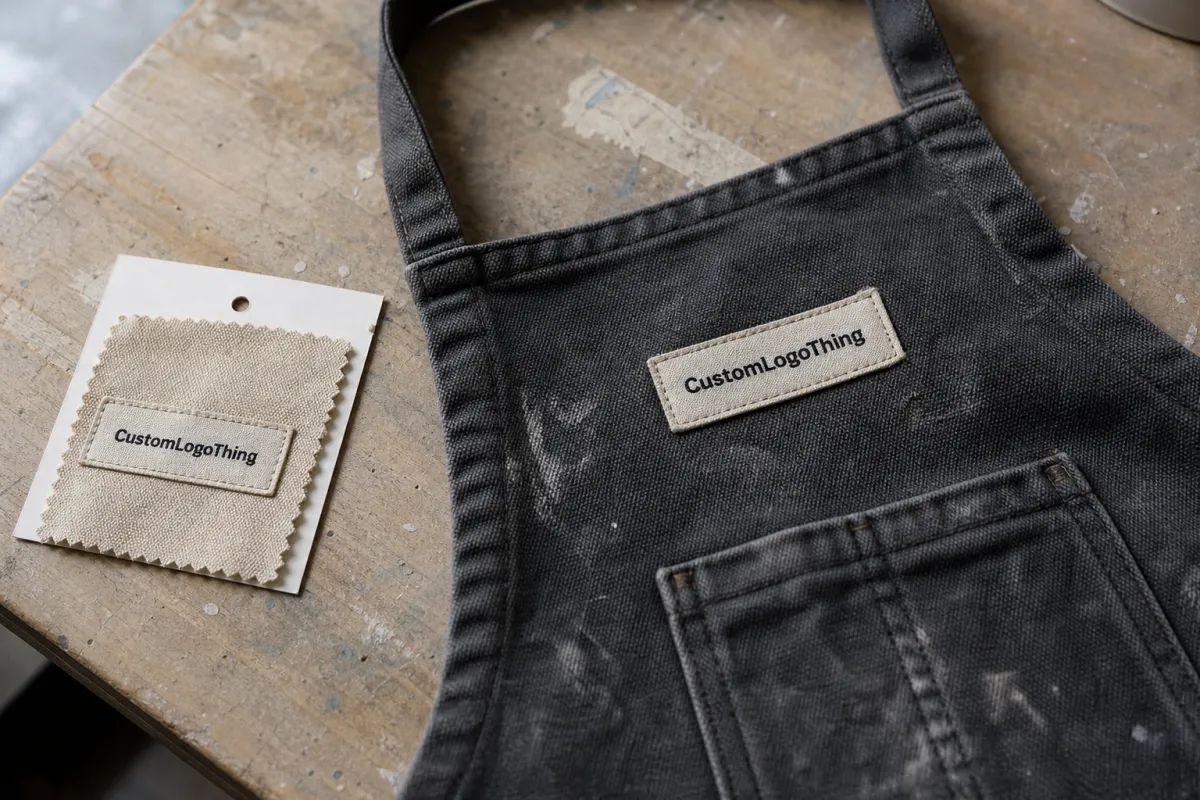
Ceramic studios are rough branding environments. Clay dust settles into fibers. Glaze splatter dries hard. Aprons are washed again and again. Kiln-side heat, water, friction from wedging tables, and constant bending can punish low-grade printed labels faster than many buyers expect.
That is why a serious patch quote should begin with use conditions, not just artwork. Will the patch go on a 10 oz cotton canvas apron? A lightweight poly-cotton smock? A tote bag sold at a maker market? A staff fleece worn during winter workshops? Each surface changes the right answer.
Patches give ceramic brands a tactile brand element without requiring a full cut-and-sew apparel program. Produce the patches separately. Stock them. Apply them to aprons, beanies, tote bags, work jackets, or packaging wraps as demand changes. That flexibility matters for studios running seasonal classes or testing merch in small batches.
Direct embroidery has its place. So does screen printing. Both are tied tightly to the garment at the time of production. A patch can be made once and used across five different products, provided the size, backing, and edge finish are chosen with care.
Practical rule: if the garment will be washed more than a few times, treat the patch as a workwear component, not a sticker with thread around it.
A useful supplier quote should give you patch type, finished size, backing, stitch or material detail, MOQ, unit cost, proofing steps, sampling choices, and estimated delivery. Inspiration is pleasant. A studio buyer needs numbers, tolerances, and a clear path from art file to finished patch.
Patch Styles That Fit Studio Aprons, Smocks, Totes, and Workshop Merch
The best custom patches for pottery studios usually fall into five groups: woven, embroidered, faux leather, PVC, and printed. Each has a different feel, tolerance for detail, wash behavior, and cost structure.
| Patch type | Best studio use | Strength | Watch point | Typical quote driver |
|---|---|---|---|---|
| Woven patch | Small chest logos, apron labels, cuff details | Sharp detail for maker marks and fine type | Flatter texture than embroidery | Size, thread colors, edge finish |
| Embroidered patch | Teaching staff uniforms, jackets, classic apron patches | Raised texture and strong visual presence | Fine linework may need simplification | Stitch density, size, fill coverage |
| Faux leather patch | Maker-market totes, beanies, premium merch | Earthy, tactile, retail-ready look | Wash planning and color contrast matter | Material grade, debossing, shape |
| PVC patch | Wet utility gear, splash-prone studio accessories | Water resistance and bold color blocks | Mold costs can affect small runs | Mold, color count, thickness |
| Printed patch | Illustrated logos, gradients, event merch | Handles artwork that thread cannot reproduce | Needs suitable fabric and print method | Print coverage, substrate, backing |
Ceramic brands often lean toward tactile materials for a reason. Their customers already value texture, handwork, glaze variation, and small imperfections. A flat generic label can feel disconnected from that buying experience. An embroidered patch on a heavy apron or a debossed faux leather patch on a tote feels closer to the object being sold.
Texture still has tradeoffs. Embroidered patches deliver dimension, but tiny hand-lettered type can close up if the lettering is under about 0.20 inches tall. Woven patches hold sharper detail and are often better for maker marks, kiln icons, clay-tool illustrations, and thin-line pottery logos. Faux leather patches can look premium, but the contrast between the debossed mark and the material color should be checked before a larger order.
Placement changes the specification. A 2-inch woven chest patch behaves differently from a 4-inch apron pocket patch. Common placements include apron chest, lower pocket, sleeve, beanie cuff, tote front panel, work jacket chest, and branded packaging wraps for limited releases.
For a reliable logo Patches Supplier Quote for ceramic studios, ask the supplier to recommend the patch style based on fabric weight, washing frequency, application method, and whether the patches will be sewn on by the supplier, applied by a garment decorator, or stocked loose for later use.
Artwork, Size, Backing, and Edge Specifications to Lock Before Ordering
Patch quotes get messy when the basics are missing. The core specification list is short: patch type, finished size, shape, quantity, thread or material colors, backing, border style, artwork file, and intended garment or accessory.
Size deserves more attention than it gets. For ceramic studio apparel, 2 to 2.5 inches works well for a chest patch on an apron or smock. A 3 to 4 inch patch is more visible on apron pockets, tote fronts, and jacket panels. Smaller woven labels, often under 1.5 inches wide, can work for side seams, cuffs, or minimalist merch.
Backing is not a minor choice. Sew-on backing is usually the strongest option for aprons that will be washed frequently. Iron-on backing can help with placement and short-run convenience, but heat, laundering, and fabric texture all affect performance. Adhesive backing is better for temporary placement or pre-positioning, not long-term workwear. Hook-and-loop backing makes sense for removable staff roles, rotating workshop patches, or event identifiers.
Edges affect both look and wear. Merrowed borders suit circles, squares, rectangles, and ovals. Laser-cut edges work for custom silhouettes. Heat-cut edges are common on woven patches. A stitched border can make a printed or woven patch feel more finished on retail merch.
Artwork is where pottery brands often meet production reality. Studio logos may include fine line drawings, handwritten type, clay tools, kiln silhouettes, or maker’s marks that were never designed for thread. Embroidery may require simplification. Woven patches can usually preserve more detail. Printed patches can reproduce gradients, illustration-heavy artwork, or tonal glaze-inspired graphics.
If color accuracy matters, provide brand references. Pantone references help, although thread, PVC, and faux leather do not always match coated paper exactly. For paper-based packaging components, standards such as FSC certification may also matter; the Forest Stewardship Council explains chain-of-custody principles for responsibly sourced paper and board. That does not certify a patch. It does matter if your studio wants coordinated hang tags, inserts, and wraps.
The purchasing lesson is blunt: the more clearly you define size, backing, and application method, the fewer quote revisions you need. Precision also lowers the risk of receiving a patch that looked clean on screen but fails on fabric.
Cost, MOQ, and Unit Price Factors for Custom Studio Patches
Patch pricing is rarely one flat number. Unit cost depends on quantity, size, construction method, color count, backing, border, artwork complexity, and whether the order includes sewing, sorting, or individual packaging.
For a basic 2.5-inch woven or embroidered patch, small runs can often sit in the rough range of $0.80 to $2.50 per unit, depending on quantity and details. Larger quantities may push that lower. Specialty faux leather or PVC patches can run higher, especially if tooling, custom material, debossing, or mold work is involved. These are planning bands, not guaranteed pricing; the final quote depends on the finished spec.
MOQ varies by patch type. A small ceramic studio might start with 100 to 250 pieces for staff aprons and workshop merch. A larger teaching studio, subscription pottery brand, or multi-location workspace may benefit from 500 to 1,000 units because setup costs spread across more pieces.
Here is the part many buyers miss. Embroidered patches rise in cost with stitch density and size. Woven patches can be efficient for detailed repeat orders because the same art can be run consistently once approved. Faux leather patches vary by material, debossing method, and whether the design needs metallic foil or contrast printing. PVC patches may involve mold fees, but they perform well in wet environments and on utility gear.
A first order may include digitizing, mold, proofing, or sample charges. Reorders are usually simpler if artwork, colors, backing, and dimensions stay unchanged. Ask whether setup files are stored and whether a reorder carries a lower administrative or setup cost.
Smart buyers request price breaks at 100, 250, 500, and 1,000 units instead of asking for one quantity. A quote should work as a decision tool. The lowest unit cost is not automatically the best value if the backing is wrong, the edge frays, or the logo loses contrast after washing.
Proofing Process, Production Steps, and Lead Time From File to Delivery
The production path is predictable when the request is complete: inquiry, artwork review, material recommendation, quote, digital proof, sample or pre-production confirmation, bulk production, quality check, packing, and shipping.
Send the useful information first. Vector artwork if available. Desired patch size. Quantity. Preferred patch type. Garment or accessory use. Deadline. Shipping destination. Brand color references. If the patch must fit an existing apron pocket, include the pocket dimensions. A 3.75-inch patch may sound modest until it crowds a narrow chest panel.
The proofing stage is not a formality. Review dimensions, colors, border, backing, logo placement, and any simplification of fine artwork. Check spelling. Check the maker mark. Check whether the registered trademark symbol, if used, will actually reproduce. Tiny details that look elegant in a PDF can become noise in thread.
Lead time depends on construction. Simple woven or embroidered patches often move faster than molded PVC or specialty leather options, especially if no physical sample is required. Sampling, custom dye matching, complex shapes, and shipping method all add time. A practical production window may be 10 to 20 business days after proof approval for many standard patch orders, with specialty work running longer.
The investigative pattern across many branded component projects is consistent: delays usually do not come from the machines. They come from unclear artwork, late approvals, missing shipping details, revised quantities, or last-minute changes to backing and size.
If your studio is planning a class launch, holiday market, gallery opening, or workshop merch drop, work backward from the event date. Build in time for garment application if patches are being sewn onto aprons or tote bags after delivery. If shipping cartons are part of a larger retail program, package testing standards from groups like the International Safe Transit Association are useful for understanding transit risk, especially for ceramic goods packed with branded inserts or merch.
A good Logo Patches Supplier Quote for ceramic studios should make timing visible. Ask what date production starts, what event triggers that start, and whether proof approval or sample approval controls the schedule.
Quality Checks That Matter in Clay-Dust, Wash, and Retail Settings
Ceramic studios notice different failures than fashion boutiques. Fraying edges. Weak adhesive. Poor color contrast against dark canvas. Stiff patches that buckle on flexible aprons. Illegible fine text. Corners that curl after laundering. These are not small defects if the patch sits on every instructor in the room.
Inspection should cover clean edge finishing, consistent thread density, accurate finished size, readable logo details, backing adhesion, color matching, and batch consistency. For woven patches, look closely at fine lines and small letters. For embroidered patches, inspect density and puckering. For faux leather, check deboss depth and contrast. For PVC, inspect color fill, edges, and flexibility.
Wash behavior deserves its own scrutiny. Aprons and smocks are often washed frequently because clay dust and glaze residue travel everywhere. Sew-on patches usually outperform adhesive-only options for long-term studio uniforms. Iron-on backing may still be useful as a placement aid before stitching, but relying on heat adhesive alone can be risky on textured canvas or heavily laundered garments.
Retail merch has a different job. A tote bag patch may prioritize shelf appeal and strong first impression. A teaching apron patch must survive bending, washing, wet clay contact, and friction from tools. One patch spec can sometimes serve both uses, but not always. This is where many brands oversimplify the decision: they pick the prettiest proof instead of the patch that fits the punishment.
Ask about packaging and sorting. Patches can be bulk packed, counted by style, separated by colorway, or prepared for an application team. If you order 300 black apron patches and 200 natural tote patches, labeled bags reduce decoration errors. Not glamorous. Still money-saving.
Supplier evaluation should be evidence-based. Request photos of previous patch work, confirmation of tolerances, material recommendations, and a clear statement on whether artwork is reviewed for production risk before payment. A supplier that flags tiny lettering early is doing you a favor.
How Custom Logo Things Supports Ceramic Studio Patch Orders
Custom Logo Things works with custom branded components across patches, clothing labels, tags, and packaging add-ons. For ceramic studios, that range matters because the brand rarely lives in one place. It appears on the apron, the tote, the hang tag, the care card, the box insert, and sometimes the limited-edition workshop badge.
The point is not to push one patch type. The point is to match the patch to the fabric, daily use, washing expectation, artwork detail, and budget. A fine-line maker mark may belong on a woven patch. A bold kiln icon may shine as embroidery. A premium studio tote may look better with faux leather. Wet utility gear may justify PVC.
Relevant options include embroidered patches, woven patches, faux leather patches, PVC patches, printed labels, woven labels, hang tags, and branded packaging add-ons. Coordinating these elements can reduce color drift, file confusion, and mismatched finishes across different vendors.
From a packaging buyer’s point of view, consistency is not vanity. If the apron patch is warm beige, the tote label is cool gray, and the hang tag uses a third version of the logo, the brand starts to feel assembled rather than designed. Using one supplier for related branded pieces can tighten that system.
Studios can request recommendations on size, backing, border, and quantity breaks before committing to production. If you already have artwork and a target use, send it through Contact Us and ask for a practical comparison, not just one price. A well-built quote should show the tradeoffs between budget, durability, and retail finish.
Next Steps: Build a Quote Request That Gets Accurate Numbers Fast
A complete quote request does not need to be long. It needs to be specific. Send the logo file, desired quantity, patch size, patch type, backing preference, garment or accessory use, deadline, shipping location, and any examples of the look your studio wants.
- Logo file: vector artwork is best, but a high-resolution image can start the review.
- Quantity: ask for breaks at 100, 250, 500, and 1,000 units if budget planning matters.
- Size: include width and height, or the available space on the apron, tote, or jacket.
- Patch type: woven, embroidered, faux leather, PVC, printed, or “please recommend.”
- Backing: sew-on, iron-on, adhesive, hook-and-loop, or mixed backing.
- Use case: staff aprons, workshop merch, market totes, jackets, beanies, or loose patches.
- Deadline: include the event date and the date patches must reach your decorator.
- Shipping location: country, state or province, and postal code are enough for early quoting.
Tell the supplier whether the patches will be sewn onto aprons, sold loose as merch, applied to totes, or used across multiple products. Application affects backing and durability recommendations. A patch sold loose can be finished differently from a patch that must survive weekly wash cycles on a clay-covered apron.
Ask for two or three quote scenarios: a budget option, a durable workwear option, and a premium retail option. That structure helps you compare real tradeoffs. For example, a woven sew-on patch may beat an embroidered patch for fine type, while a faux leather patch may create a stronger retail impression on a tote but require more caution around laundering.
If demand is uncertain, ask about reorders. Will setup files be saved? Can the same design be made in a smaller size later? What happens if the studio changes thread color, backing, or border? These details matter once a small pilot run turns into repeat workshop merch.
Approval habits matter too. Confirm the proof carefully. Check spelling and maker marks. Print the proof at actual size and hold it against an apron pocket or tote panel. Approve only when the patch works at real scale, not just on a bright screen.
For any buyer seeking a Logo Patches Supplier Quote for ceramic studios, the fastest path is one complete request that covers artwork, quantity, size, backing, deadline, and how the patches will be used. Send those details through Contact Us if you want pricing built around real production choices rather than a vague per-piece estimate.
FAQ
What should I include in a logo patch quote request for a ceramic studio?
Send your logo file, preferred patch size, quantity, patch style, backing type, garment or accessory use, delivery deadline, and shipping location. If you are unsure about the patch style, include photos of the apron, tote, jacket, or merch item so the supplier can recommend a suitable option.
Which logo patches work best for ceramic studio aprons?
Sew-on embroidered or woven patches are usually strongest for aprons that will be washed often. Woven patches are better for fine logo detail, while embroidered patches create a raised, textured look that suits bold marks and simple typography.
What MOQ should ceramic studios expect for custom logo patches?
MOQ depends on patch type, size, and production method. Many studios compare price breaks at several quantities rather than relying on a single number. A small studio can often start with a limited run for staff uniforms or workshop merch, then reorder once demand is proven.
How long does production take after approving a patch proof?
Lead time varies by patch type, sampling needs, quantity, and shipping method. Many standard woven or embroidered patch orders can move within a few business weeks after approval, while specialty materials, PVC molds, revisions, and custom samples can add time.
Can one supplier make patches, clothing labels, and packaging for a ceramic brand?
Yes. Using one supplier for patches, woven labels, hang tags, and branded packaging can help maintain consistent colors, finishes, and file handling. That is useful for ceramic studios selling both finished pottery and branded apparel or workshop merchandise.


