Your Treat Bag Looks Premium Until the Patch Feels Cheap
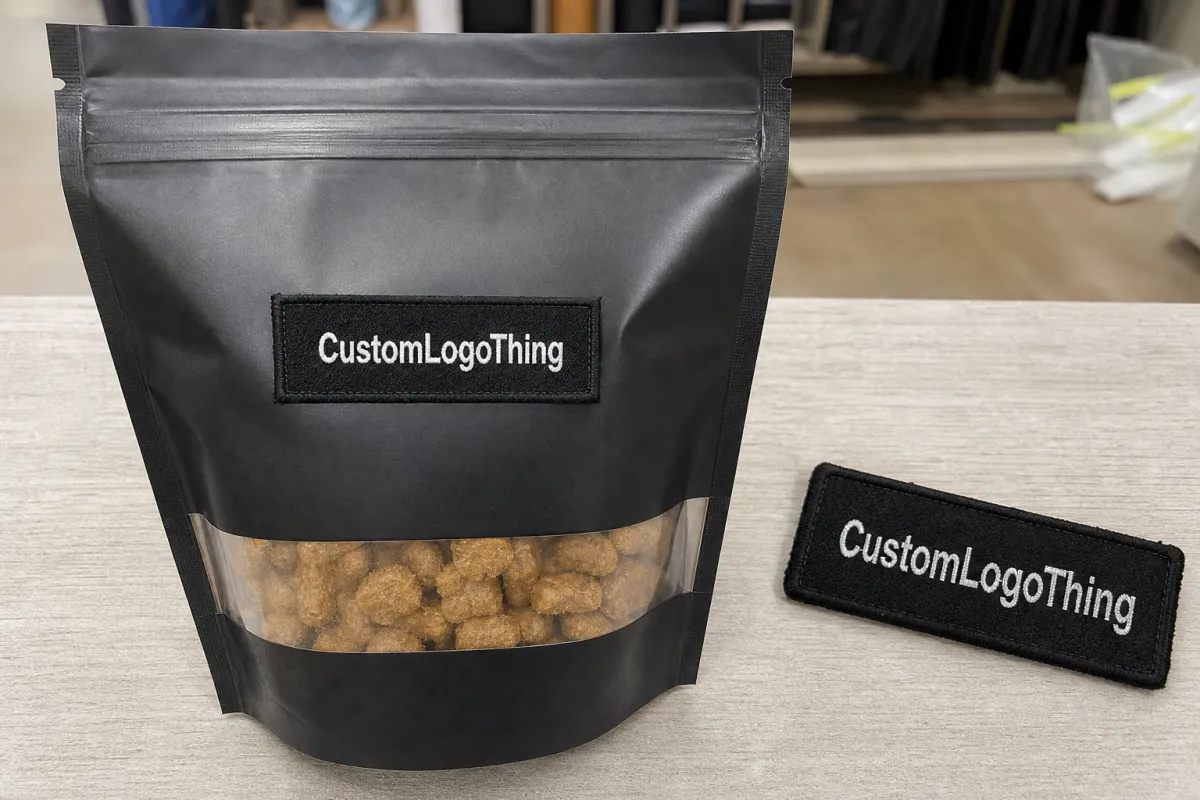
A pet treat brand can spend heavily on stand-up pouches, soft-touch film, bright dog photography, clean ingredient claims, and careful flavor naming—then lose the shelf impression with a patch that feels flimsy. Buyers searching for logo patches unit cost for Pet Treat Brands are rarely browsing casually. They are usually pricing a launch, retail refresh, holiday bundle, subscription insert, breeder pack, farmers market display, or buyer sample kit.
That is the correct starting point. Patches are not decoration for decoration’s sake. A custom logo patch can turn a plain cotton drawstring bag, dog bandana, apron, pouch, tote, or promotional item into branded packaging without forcing the brand into fully custom fabric production. Custom cut-and-sew can be strong for mature programs, but minimums and timelines often get unfriendly for smaller runs.
A patch sits in the useful middle. More tactile than a printed sticker. More durable than a paper hang tag. Usually cheaper than manufacturing every soft-good item from scratch.
There is also an inventory advantage, which is less glamorous and more valuable than most mockups. If a brand keeps one neutral cotton bag and orders three patch versions, it can build limited drops without sitting on 4,000 printed bags for a flavor that sells for six weeks. Less storage, less cash trapped in dead inventory, less regret. Lovely trio.
Practical rule: patches work best when the brand needs repeatable, durable, small-format branding. They do not fix a weak logo, confusing flavor hierarchy, or a product people do not want. Shocking, I know.
The buying decision starts with specifications, not vibes. Patch type, size, stitch complexity, backing, quantity, attachment method, and setup requirements all affect cost. A two-inch woven patch and a four-inch multi-color PVC badge are different projects, even if both technically carry the same logo.
Best Patch Types for Pet Treat Packaging and Merch
Pet Treat Brands usually end up choosing from five patch styles: woven, embroidered, PVC, leatherette, and printed fabric. Each has a different hand feel, cost range, durability profile, and best-use case. Choose based on where the patch will live, not only what looks good in a flat mockup.
Embroidered patches
Embroidered patches give the classic raised-thread look. They work well on canvas bags, staff aprons, dog bandanas, jackets, event uniforms, and premium gift packaging. The texture feels familiar and sturdy, which is why it keeps showing up in outdoor, heritage, and specialty retail categories.
The tradeoff is detail. Tiny ingredient text, narrow tagline scripts, miniature paw icons, and delicate mascot features can turn into thread soup fast. Most pet brands get better results with embroidered patches around 2–3 inches wide, bold lettering, and simplified shapes.
Woven patches
Woven patches are better for small lettering, clean line art, mascot faces, badge-style logos, and tighter detail. The design is woven with finer threads rather than stitched on top, so the patch is thinner and smoother than embroidery.
If your dog logo has facial features or your brand name uses a condensed typeface, woven is often the more practical choice. Woven patches are common for retail-ready accessories because they stay crisp without adding much bulk.
PVC patches
PVC patches are flexible, durable, wipe-clean, and strong for outdoor pet-adjacent products. Think dog walking kits, travel pouches, training bags, treat belts, rugged merch, and event gear that might meet crumbs, dirt, rain, or slobber.
The downside is tone. PVC can read sporty, tactical, or utility-driven. Perfect for some brands. Completely wrong for a handmade organic biscuit line with a soft natural palette. Different audience, different finish.
Leatherette patches
Leatherette patches fit rustic, farm-style, butcher-shop, premium natural, or heritage-inspired pet treat brands. They look good on canvas pouches, kraft-inspired gift sets, cotton bags, and higher-end bundles. Common decoration methods include debossing, laser etching, and printing.
The finish can feel warm and premium, but color options are narrower than woven or printed patches. Fine detail can also disappear if the deboss is too shallow or the logo is too delicate.
Printed fabric patches
Printed fabric patches are useful when full-color artwork, gradients, illustrations, or flavor-specific graphics matter. They are less dimensional than embroidery or PVC, but they reproduce complex artwork more easily.
If your packaging system uses watercolor dogs, detailed treat illustrations, bright seasonal artwork, or many flavor colors, printed fabric may give the closest visual match.
Match the patch to the item: reusable treat bags, burlap-style sacks, cotton drawstring bags, dog bandanas, staff aprons, retail display accessories, subscription inserts, or event merchandise. A patch that looks excellent on a black apron may look oversized, stiff, or odd on a small natural cotton pouch.
Food-contact rules still matter. Patches should sit on outer packaging, accessories, or secondary packaging, not directly against loose treats unless the full material stack has been reviewed. The FDA food contact substances guidance is not light bedtime reading, but it is the type of boring detail that keeps brands out of trouble.
Logo Patches Unit Cost for Pet Treat Brands by Quantity
Here is the price question everyone wants answered first. Fair. But Logo patches unit cost for pet treat brands is not one tidy number because size, style, quantity, backing, attachment, and artwork complexity change the math.
For planning, small simple woven or printed patches may land around $0.45–$1.25 each at higher quantities. Embroidered patches often run $0.80–$2.50 each. PVC and leatherette patches may sit around $1.20–$4.00 each, depending on mold, size, finish, and order volume. Lower quantities cost more because setup, digitizing, machine time, sampling, order handling, and quality checks are spread across fewer pieces. Math is rude, but honest.
| Patch type | Typical planning range | Common MOQ | Best use for pet treat brands |
|---|---|---|---|
| Woven patch | $0.45–$1.50 per piece | 100–300 pieces | Detailed logos, small text, mascot faces, clean retail branding |
| Printed fabric patch | $0.45–$1.25 per piece | 100–300 pieces | Full-color artwork, gradients, illustrations, seasonal graphics |
| Embroidered patch | $0.80–$2.50 per piece | 100–300 pieces | Canvas bags, aprons, bandanas, classic premium texture |
| PVC patch | $1.20–$4.00 per piece | 300–500 pieces | Outdoor kits, travel pouches, rugged pet merch, wipe-clean use |
| Leatherette patch | $1.20–$3.50 per piece | 100–300 pieces | Rustic, natural, butcher-style, farm-inspired premium bundles |
Many custom patch orders start around 100–300 pieces for simpler styles. Better bulk pricing usually appears around 500–1,000 pieces. If there is tooling, a custom PVC mold, unusual backing, attachment to another product, or retail kitting, the minimum may climb.
The main cost drivers are predictable:
- Patch size: a 1.75-inch patch uses less material and production time than a 4-inch badge.
- Detail level: complex embroidery costs more and can produce weaker results at small sizes.
- Color count: more thread, yarn, PVC, or print setup can raise cost per piece.
- Edge type: merrowed borders are efficient for simple shapes; laser-cut silhouettes add handling.
- Backing: sew-on is basic; iron-on, adhesive, hook-and-loop, and specialty backing add cost.
- Artwork cleanup: messy files need conversion. Nobody’s blurry screenshot is “basically vector.”
- Sampling and freight: physical samples and rush shipping improve confidence but affect the first order.
Setup fees matter most on the first run. Embroidery digitizing, woven artwork setup, PVC tooling, and leather debossing plates can push the first invoice higher than a reorder. Once the approved spec is on file, repeat orders are usually cleaner.
Loose patches and attached patches should be quoted separately. Loose patches cost less upfront, but the brand has to manage application. Pre-attached patches on bags, bandanas, aprons, or apparel add labor, yet they reduce assembly inconsistency. If the patch will appear in a retail kit, that consistency is not a luxury.
Smart buyers quote at least three quantities: 300, 500, and 1,000 units. That exposes the break points. Sometimes the difference between 300 and 500 is small. Sometimes it changes the project.
Specs That Change the Quote: Size, Backing, Edge, and Artwork
Before requesting pricing, collect the core specifications: patch dimensions, shape, material, color count, backing, border, application method, quantity, delivery location, and deadline. Without those details, a quote is mostly theater. Fun for nobody.
Common patch sizes for pet treat brands are practical rather than dramatic. Use 1.5–2 inches for small pouches, compact bandanas, or small promo items. Use 2–3 inches for drawstring bags, staff apparel, retail tote add-ons, and medium gift sets. Use 3–4 inches for larger kits, tote bags, event displays, or any format where the logo needs to be visible from a few steps away.
Border options
Merrowed borders are classic, durable, and efficient for circles, rectangles, shields, and simple badge shapes. Laser-cut or heat-cut borders work better for custom silhouettes: mascots, paw shapes, bones, irregular logos, scalloped badges, and specialty icons.
The cleaner the shape, the easier the quote. A logo shaped like a dog jumping through a biscuit ribbon with seven tiny cutouts may be charming. It may also be expensive and annoying to produce.
Backing options
Sew-on backing is the strongest long-term choice. It is best for reusable drawstring bags, bandanas, aprons, uniforms, and anything that will be washed or handled repeatedly.
Iron-on backing is simpler to apply, but the bond depends on fabric type, heat, pressure, and dwell time. Adhesive backing is usually best for temporary placement, presentation samples, or mockups. Hook-and-loop works for removable patches on kits, staff gear, or tactical-style pet accessories. No backing can be useful when a cut-and-sew vendor or decorator wants full control over attachment.
Artwork requirements
Vector files are preferred: AI, EPS, or clean PDF. High-resolution PNG files can work if the logo is sharp enough for conversion. Low-resolution screenshots create delays and often add cleanup charges.
If your logo includes thin gradients, tiny tagline text, delicate whiskers, or very small ingredient claims, simplify it before quoting. Especially for embroidery. A patch is small real estate; asking it to carry the entire brand book is unfair.
Color matching has limits. PMS references help, but exact matches vary across embroidery thread, woven yarn, PVC, leatherette, and printed fabric. A warm cream on a printed pouch may look slightly different as thread. That is normal. If color consistency is critical for retail buyers, request a physical sample or thread card confirmation.
Pet brands should also think beyond one logo patch. Flavor family color systems, organic or grain-free sub-brand markers, batch-style badges, limited-edition holiday patches, and event-only designs can make sense if the quantity supports them. But do not over-specify premium features customers will never notice. A $0.60 upgrade nobody sees is not branding. It is charity for your own ego.
If you want to compare how branded products can support a broader packaging system, reviewing real project formats in Custom Logo Things case studies can help connect patch choices to the full buyer experience.
Production Process and Timeline From Art File to Delivery
The production process is straightforward when the buyer provides usable information. It drags when the buyer sends a blurry logo, no size, no quantity, and a note saying “make it pop.” Yes, that is a real production problem.
A normal order moves through these steps:
- Quote request: buyer sends artwork, size range, quantity, patch type, backing, application surface, deadline, and shipping location.
- Artwork review: production checks detail level, color count, shape, and whether the design fits the selected patch method.
- Spec confirmation: buyer confirms dimensions, material, backing, border, quantity, and attachment plan.
- Digital proof: layout shows size, colors, border, backing, and general construction.
- Sample or pre-production approval: physical sample is reviewed when needed.
- Bulk production: patches are produced after approval.
- Quality control: count, color, edge, backing, registration, and finish are checked.
- Packing and shipping: patches ship loose or attached to the final product, depending on the order.
Standard proofing often takes 1–3 business days after usable artwork is received. Sampling may take 5–10 business days, depending on patch type. Bulk production commonly takes 10–20 business days after approval. Complex PVC molds, unusual silhouettes, tight color matching, retail kitting, or attached-to-product orders can add time.
Approvals need discipline. Check spelling, logo proportions, dimensions, thread or material colors, backing, border, quantity, and shipping details before signing off. If five people on your team need to approve the patch, build that delay into the schedule. Production should not be punished because the marketing manager’s cousin suddenly has feedback on the shade of beige.
Physical samples are smart for new logos, retail launches, distributor presentations, subscription box pitches, and larger production runs. A digital proof may be enough for simple reorders or low-risk promotional use. The more visible the patch is to a buyer, the more sampling makes sense.
Rush orders can be possible, but expect tradeoffs: fewer material options, higher freight costs, less room for revisions, and a greater chance that “perfect” becomes “good and on time.” Plan backward from the launch date. Add internal approval, patch production, shipping, product assembly, and the retail or event deadline. If your launch is on Friday and you approve art on Wednesday, that is not a rush order. That is a prayer.
Reorders are cleaner. Once setup is complete and the approved spec is on file, repeat runs usually move faster and produce more predictable unit cost. For that reason, evaluate patch pricing across the first order and the next likely reorder, not only the first invoice.
Quality Checks for Retail-Ready Pet Brand Patches
Quality for pet treat patches means the logo is clean, the color is consistent, the edge is secure, the backing is correct, the size is accurate, and the order arrives ready for assembly. That sounds basic because it is. Basic is where many orders fail.
Inspection points should include loose threads, uneven borders, poor registration, color drift, adhesive inconsistency, warped PVC, weak debossing, incorrect backing, and wrong quantities. A 3% shortage can wreck an assembly schedule if you are building 1,000 gift boxes and receive only 970 usable patches.
Durability depends on the use case. Patches on staff uniforms, reusable drawstring treat bags, or dog bandanas need stronger construction than patches used on one-time gift packaging. Sewn patches last longest. Heat-press and iron-on options can work well when matched to the right fabric and application settings. Adhesive patches are usually best for short-term use, presentation kits, or mockups.
The pet category is not gentle. Brand items may be handled around oils, crumbs, dog slobber, outdoor events, repeated transport, and retail restocking. Pretty but fragile is a bad plan. If the patch goes on an item that will be washed, rubbed, folded, or carried, say that before production. The right backing and border choice depends on the real environment.
If your team is attaching patches in-house, request application guidance. For heat-applied patches, confirm temperature, pressure, dwell time, peel method, and fabric compatibility. A typical heat press range might sit around 285–320°F for 10–20 seconds, but that depends on backing and fabric. Test first. Burning through a batch of cotton bags because someone guessed the press setting is an expensive little lesson.
Decoration is not compliance. Patches are branding elements, not substitutes for ingredient panels, net weight, feeding instructions, lot codes, guaranteed analysis, or required regulatory information. Use them to enhance secondary packaging, not to carry every legal claim. Tiny patch text is not where your guaranteed analysis belongs.
For shipping and handling performance, standards from organizations like ISTA can help brands think about packaging stress beyond the pretty front panel. If patches are part of a retail kit or shipper, they need to survive the path to the customer, not just look nice on a design board.
Pass/fail test: if the logo is recognizable at arm’s length, the edges are clean, the backing matches the application, and the patch survives normal handling, it is doing its job.
For brands comparing packaging presentation across multiple formats, reviewing custom logo project examples can help clarify which finish feels retail-ready and which one merely photographs well.
How to Get an Accurate Patch Quote Without Guesswork
A useful quote starts with useful inputs. Prepare the logo file, desired patch type, size range, quantity targets, backing preference, application surface, delivery location, and deadline. If you do not know the exact patch type yet, say so. A capable supplier can quote options if the goal is clear.
Send photos or links of the product the patch will go on: treat bag, drawstring pouch, dog bandana, tote, apron, box insert, event merch, staff uniform, or retail display accessory. Surface matters. A patch that works on heavyweight canvas may pucker, lift, or look oversized on a thin synthetic pouch.
Ask for a good-better-best quote:
- Good: an economical woven or printed patch with standard backing and a clean shape.
- Better: a retail-ready woven or embroidered patch with upgraded edge, stronger backing, or tighter color matching.
- Best: a premium PVC, leatherette, specialty embroidery, or attached-to-product option for gift bundles or buyer presentations.
This comparison keeps the conversation grounded. Chasing the cheapest number blindly is how brands end up with patches that technically exist and emotionally disappoint everyone.
If the patch will become part of an ongoing packaging system, quote reorders at the same time. Ask what changes after the first production run. Are setup charges removed? Does the price improve at 1,000 or 2,500 units? How long will the approved spec stay on file? These questions affect the real economics more than the first small order alone.
Choose sampling for retail launches, large orders, premium bundles, distributor meetings, subscription box partnerships, and anything presented to buyers. Skip sampling only when the risk is low: a simple reorder, internal event, or small promotional use where exact finish is not critical.
Confirm who handles attachment. The patch manufacturer may supply loose patches only. A cut-and-sew vendor may attach them. A local decorator may heat press or sew them. Your internal team may assemble gift kits. Each option affects labor, timeline, and quality control. Do not assume attachment is included unless it appears on the quote.
For the most accurate logo Patches Unit Cost for pet treat brands, send the real artwork, quantity range, patch size, backing choice, application surface, and launch deadline instead of asking for a generic price that will be wrong by lunch. Request options at 300, 500, and 1,000 units so your brand can see where the cost curve actually improves.
FAQs
What is the typical logo patch unit cost for pet treat packaging?
Most custom patches range from about $0.45 to $4.00 each, depending on material, size, quantity, backing, and artwork complexity. Woven and printed patches are often the most economical for detailed small logos. PVC, leatherette, and complex embroidery usually cost more, especially at lower quantities. For planning, Logo Patches Unit Cost for pet treat brands should be quoted by quantity tier, not treated as one flat number.
What MOQ should pet treat brands expect for custom logo patches?
A practical starting MOQ is often 100–300 pieces for simpler patch types. Better unit pricing usually appears around 500–1,000 pieces. If the patch needs a custom mold, specialty backing, attachment to another product, or separate retail kitting, the MOQ may be higher.
Which patch type is best for a natural or premium pet treat brand?
Woven patches work well for clean detailed logos and small text. Embroidered patches give a textured, traditional premium feel. Leatherette patches are strong for rustic, farm, butcher-style, handmade, or natural brand positioning. The best option depends on the product surface, logo detail, durability needs, and retail price point.
Can logo patches be applied directly to pet treat bags?
They can be used on outer packaging, drawstring bags, reusable pouches, gift bags, bandanas, totes, aprons, and other secondary packaging. They should not touch loose treats unless the full material and food-contact requirements are reviewed. Patches are best for branding, not for required ingredient, feeding, lot code, or compliance information.
How long does it take to produce custom logo patches for pet treat brands?
Digital proofs often take 1–3 business days after usable artwork is received. Samples may take 5–10 business days, depending on patch type. Bulk production commonly takes 10–20 business days after approval, with extra time for complex specs, attachment labor, mold work, color matching, or rush freight.


