Cheap patches get expensive fast. If you are comparing Logo Patches Unit Cost for tea brands, start with the patch itself: size, backing, border, color count, finish, and where it will live after delivery.
A $0.42 quote and a $1.10 quote may both be labeled “Custom Logo Patches.” They may not be the same product. One could include merrowed edges, iron-on backing, color matching, digitizing, and packing. The other may be a bare sew-on patch with a vague promise and a surprise invoice later. Very charming. Very avoidable.
Why tea brands pay more for the wrong patch spec
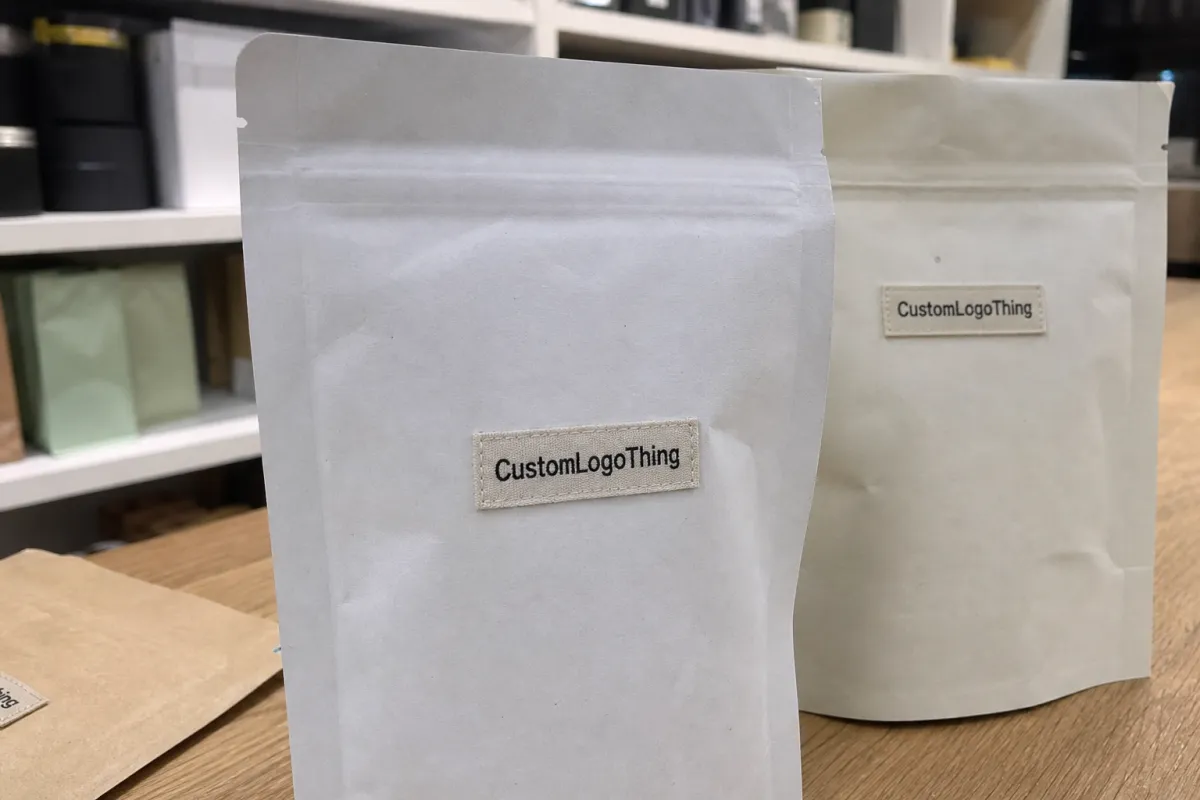
Tea brands use custom patches because they signal care quickly. A woven patch on a canvas sampler pouch feels more retail-ready than a flat screen print. An embroidered badge on a tasting-room apron gives staff a cleaner, more intentional look. A leather-look patch on a gift set can make a small-batch blend feel more expensive before anyone opens the box.
That is the appeal. The trap is ordering by price alone.
Most patch pricing problems start with a lazy spec. “Can you quote our logo?” is not enough. A real quote needs the patch size, style, color count, backing, border, shape, quantity, packing method, and deadline. Otherwise the supplier guesses, and the buyer compares guesses. That is how one vendor appears to be half the price when the quote simply left out backing, setup, or freight.
For tea brands, a small spec change can move the unit cost more than the artwork itself. A 2-inch woven patch with heat-cut edges might sit around $0.50-$0.95 per piece at 500 units. Move that to a 3.5-inch embroidered patch with dense fill, merrowed border, and iron-on backing, and the cost can rise to $1.20-$2.20 each. Add retail backing cards and individual polybags, and the invoice grows legs.
Buy the result, not the quote line. The right patch should look clean at normal viewing distance, survive its actual use, and reorder without rebuilding the file every time.
The target is not the lowest sticker price. It is repeatable quality at a margin the brand can live with. For Logo Patches Unit Cost for tea brands, compare cost against finish, durability, setup reuse, and application labor. If the patch will sit on staff uniforms, trade-show aprons, tote bags, or seasonal gift boxes, build the spec once and keep it stable.
Patch styles that fit tea packaging, uniforms, and merch
Patch style controls the look, the production method, and the price. No, they are not interchangeable. A fine-line botanical logo that works beautifully on a pouch label can turn into fuzzy soup if forced into dense embroidery at 1.5 inches wide.
Embroidered patches
Embroidered patches are the classic choice for uniforms, aprons, canvas totes, and merch. They have raised texture and a familiar retail feel. They work best for bold logos, simple icons, large letters, and shapes that do not rely on tiny detail. Typical cost per piece often runs $0.70-$2.50 depending on size, quantity, stitch density, backing, and border.
Embroidery has limits. Small serif type, thin leaf veins, delicate steam lines, and multi-tonal illustrations may blur once converted into thread. A supplier may recommend simplifying the mark, increasing the patch size, or switching to woven. Listen before assuming they are being difficult.
Woven patches
Woven patches are better for fine detail. If the logo has thin type, small leaves, line art, or compact copy, woven usually holds the design cleaner than embroidery. The surface is flatter and less dimensional, but it is often more flexible and easier to use on pouches or lightweight merch.
For many tea projects, woven is the practical middle ground: detailed enough for a refined brand mark, usually less costly than PVC, and cleaner at small sizes than embroidery. It is not luxurious in the same tactile way, but it often wins the readability test.
PVC patches
PVC patches are molded, flexible, and bold. They suit modern logos, outdoor merch, staff bags, subscription-kit accessories, and brands built around strong color blocks. They usually cost more because tooling fees may apply, especially for custom shapes or layered 2D/3D effects. Expect a broad range, often $1.50-$4.50 per piece at modest quantities, with setup or mold charges separate.
PVC is not the first choice for a soft botanical brand or a tiny serif wordmark. It is better for marks that can be expressed in clean, molded shapes.
Leather and faux leather patches
Leather and faux leather patches can work well for tea gift boxes, tote bags, premium aprons, and limited retail drops. They read warm and upscale. Debossing, embossing, laser engraving, foil, sewing holes, and edge finishing each affect cost.
Real leather costs more and may raise sourcing questions for brands with vegan, sustainability, or animal-free positioning. Faux leather is more consistent, usually easier to reorder, and better suited for programs that need predictable color and texture across batches.
| Patch style | Best use for tea brands | Typical strength | Common tradeoff |
|---|---|---|---|
| Embroidered | Aprons, uniforms, tote bags | Texture and classic brand feel | Small text can lose sharpness |
| Woven | Fine logos, sampler pouches, merch | Cleaner detail at small sizes | Flatter look than embroidery |
| PVC | Bold merch, bags, outdoor kits | Strong color and shape control | Higher tooling and bulk pricing thresholds |
| Leather/faux leather | Gift sets, premium totes, apron accents | Retail-friendly premium finish | Limited color and detail options |
Attachment method matters too. Sew-on backing is durable and predictable. Iron-on backing speeds application but may still need stitching for wash-heavy uniforms. Adhesive backing is fine for short promotions, sample boxes, or event kits, not long-term laundering. Hook-and-loop costs more but works for staff roles where patches need to change.
Material, backing, and size specs that change durability
Most tea brands land between 1.5 and 4 inches for logo patches. Chest patches on aprons often sit around 2-3 inches wide. Sleeve patches can be 1.5-2 inches. Tote bag patches can run 3-4 inches because the viewing distance is different and the bag has more surface area.
Size is not just visual. It changes stitch count, material use, border length, heat-press time, packing, and sometimes the production method. A 4-inch patch is not “just a little bigger” than a 2-inch patch. It can have several times the stitched or molded area. Math. Annoying, but real.
Stitch density affects appearance and price. Higher density gives better coverage on embroidered patches, especially over dark grounds, but too much density can make a patch stiff or puckered. For woven patches, thread count and weave detail determine how cleanly small elements reproduce. For PVC, raised levels and recessed areas act like color and mold complexity.
Border choices
Merrowed borders are thick, rounded, and common on embroidered patches. They look finished but work best on simple shapes: circles, ovals, shields, squares, and rectangles. Heat-cut borders are cleaner for custom shapes and woven patches. Laser-cut edges can work well for detailed outlines, but the edge quality must be checked carefully.
Thin borders may save money, but messy edges make a patch look cheap instantly. If a brand sells $18-$40 tins or premium sampler boxes, a fraying edge is a strange place to save four cents. That is fake economy.
Backing options
- Sew-on: Best for repeated washing, aprons, uniforms, and permanent tote applications.
- Iron-on: Faster application; common for merch and low-wash items. Test heat compatibility with the garment first.
- Adhesive: Useful for short-term packaging, sampler kits, and event giveaways. Not a laundry solution.
- Hook-and-loop: Good for staff uniforms, rotating roles, or modular event kits. Higher unit cost, faster swapping.
- No backing/stitch-only: Lowest-friction option for brands that already have a sewing partner or in-house finishing.
Durability questions should come before production approval. Will the color hold after washing? Will the border fray? Will the patch tolerate heat pressing? Does the adhesive bond to the actual pouch, box, apron, or tote material?
Application labor also belongs in the cost calculation. A patch that is five cents cheaper but takes twice as long to sew may not be cheaper once finishing is included. Iron-on backing can reduce application time, though heat, pressure, dwell time, and fabric composition all matter. Cotton canvas behaves differently from waxed canvas, nylon, coated paperboard, or synthetic apron fabric.
For packaging and shipping, brands can also look at general transit testing practices from ISTA, especially if patched items are part of a retail kit or subscription box that needs to survive handling. A patch can look perfect on the table and still scuff, curl, or shift in a box if the assembly method is wrong.
Logo patches unit cost for tea brands by style, MOQ, and spec
The number everyone wants: Logo Patches Unit Cost for tea brands usually drops sharply as quantity rises. Small runs carry more setup burden. Larger runs spread artwork prep, machine setup, material ordering, inspection, and packing across more units.
Many suppliers start custom patch orders around an MOQ of 100 pieces. Some will go lower, but the cost per piece often looks silly. Better bulk pricing usually appears at 300 to 500 pieces. If the patch will be reused across staff uniforms, tote bags, retail bundles, and recurring promotions, 500 pieces may be smarter than 100. If it is a one-time seasonal blend test, do not buy 1,000 just because the unit price looks friendly. Unsold branded stuff is not savings. It is storage with guilt.
| Patch type | Approx. cost at 100 pcs | Approx. cost at 300 pcs | Approx. cost at 500 pcs | Common extra costs |
|---|---|---|---|---|
| Simple woven, 2-3 in. | $0.95-$1.60 | $0.65-$1.15 | $0.50-$0.95 | Setup, backing, shape cut |
| Simple embroidered, 2-3 in. | $1.10-$2.10 | $0.80-$1.55 | $0.70-$1.35 | Digitizing, dense stitching, merrowed border |
| PVC, 2-3 in. | $2.40-$4.80 | $1.80-$3.60 | $1.50-$3.10 | Mold/tooling fees, color layers, hook backing |
| Faux leather, 2-3 in. | $1.50-$3.20 | $1.10-$2.40 | $0.90-$2.00 | Debossing die, foil, sewing holes, backing card |
These ranges are not universal. They depend on artwork complexity, supplier location, finish, inspection level, freight, and whether packaging is included. Still, they give a realistic starting point. Anyone quoting “premium custom patches” at rock-bottom pricing without asking for spec details is either skipping something or hoping the buyer does not ask.
Separate one-time costs from repeat costs. Embroidered patches may include digitizing or setup charges from $25-$75. PVC patches may include tooling fees or mold charges from $50-$200 or more, depending on complexity. Leather patches may need a die or deboss plate. Reorders should not repeat every charge unless the artwork, size, mold, or production method changes.
The biggest cost drivers are predictable:
- Quantity: 100 pieces cost more per unit than 500 pieces because setup is spread across fewer patches.
- Size: Larger patches use more material and machine time.
- Color count: More colors can mean more thread, molds, print steps, or material changes.
- Backing: Iron-on, adhesive, and hook-and-loop add cost and sometimes add application limits.
- Shape: Custom cuts usually cost more than simple circles or rectangles.
- Artwork cleanup: Tiny text, gradients, and detailed illustrations may require simplification or redrawing.
- Packing: Bulk packing is cheaper than individual polybags, hang cards, or retail-ready sets.
- Freight: Air shipping can protect a launch date but erase savings from a low unit price.
Ask for quotes at 100, 300, and 500 pieces. That one request shows the unit cost curve. It also exposes whether the supplier understands commercial buying or just wants to toss one number over the fence.
Production steps and lead time from art to shipment
Custom patches are not instant, even though the product is small. A normal order moves through artwork review, digital proof, sample or pre-production approval, mass production, inspection, packing, and shipment.
Proofs often take 1 to 3 business days after clean artwork is received. Production usually takes 7 to 15 business days after proof approval for standard woven or embroidered patches. PVC, leather, custom backing, retail cards, unusual packaging, or physical sampling can push that longer. Shipping adds its own clock, because apparently boxes do not teleport.
- Artwork review: Supplier checks file type, colors, line thickness, and whether the design can be produced at the requested size.
- Digital proof: Buyer reviews size, thread or material colors, border, backing, and shape.
- Sample approval: Physical sampling is recommended for premium packaging, retail uniforms, large-volume orders, and first-time suppliers.
- Mass production: Machines are set, materials are cut or stitched, and batches are produced.
- Inspection: Edges, color consistency, backing adhesion, loose threads, and count accuracy are checked.
- Packing and shipment: Patches are bulk packed, individually packed, or attached to cards depending on the approved spec.
Most delays are buyer-made. Blurry logos. “Can you make it pop?” comments. Five people approving the same proof. No final quantity. A last-minute color change after production files are ready. All of that adds days.
To move faster, send vector art in AI, EPS, SVG, or production-ready PDF format. Include Pantone references if color matters. Confirm the patch size and placement early. Approve the proof quickly, preferably within 24 hours. If patches are needed for a launch kit, tea festival, trade show, holiday set, or retail drop, work backward from the in-hand date and add buffer.
Quality-control checks should match the use case. For uniforms, test wash durability and edge fray. For pouches, test adhesion or stitch placement against the filled product so the patch does not pucker. For gift boxes, check scuffing, color transfer, and whether stacked boxes compress the patch. A patch is a small component, but it sits in a chain of materials. The weak link rarely announces itself politely.
For brands managing packaging compliance or sustainability claims, verify material claims before printing them on cards or product pages. If the broader packaging program uses certified paperboard or hangtags, sourcing references from FSC can help clarify chain-of-custody language. Do not add sustainability claims to patch cards unless the supplier can document them.
What tea brands should check before approving a supplier
A good supplier makes the quote boring in the best way. Clear spec. Clear MOQ. Clear setup charges. Clear production timeline. Clear shipping terms. Boring saves money.
Start with proof quality. The proof should show the patch at actual size, not just as a giant attractive rendering. Check whether the logo still looks sharp at normal viewing distance. A 2-inch patch on an apron is not viewed under a microscope, but the border, spacing, and main mark should read cleanly.
Ask for sample photos of similar patches. Better yet, request a physical sample if the patch is going on premium tea packaging, retail uniforms, subscription kits, or a limited drop. A sample charge of $25-$100 can be money well spent if the alternative is 500 mediocre patches staring at you from a carton.
Inspection language matters. Ask what tolerance applies to size, color, thread variation, and count. Small variations are normal in textile production, but loose borders, missing stitches, weak adhesive, obvious color mismatch, or badly trimmed edges should not be waved away as “custom character.” That phrase has done enough damage.
Look at communication. If the quote does not mention MOQ, backing, size, shipping, revision policy, or setup, ask. If the answer is vague, the project usually gets worse. Not always, but often enough that experienced buyers stop treating optimism as a sourcing strategy.
Good suppliers can explain options in plain language. You should not need a factory dictionary to buy a patch. If you want examples of how finished branded products are evaluated, the Custom Logo Things case studies are useful for seeing how spec choices affect the final product rather than just the quote.
Common mistakes that inflate patch cost and delay reorders
The first mistake is packing too much into a tiny patch. Small text, thin stems, gradients, watercolor effects, and shaded tea leaves may look lovely on a pouch label. At 1.75 inches in thread, they can turn into lint poetry.
If detail matters, choose woven. If texture matters, choose embroidery. If the shape and color blocking matter, look at PVC. If the product needs a premium handmade feel, leather or faux leather may fit. Forcing one style to do the wrong job is how the cost rises without improving the result.
The second mistake is changing artwork after proof approval. Revisions before approval are normal. Revisions after approval may trigger new setup, new sampling, wasted production time, and shipment delays. If several people need to approve the patch, collect their feedback before the proof is finalized. Wild concept, I know.
The third mistake is ordering too few. If 80 patches are needed for staff aprons today but the brand expects tote bags, holiday bundles, and trade-show uniforms within three months, pricing only 100 pieces may be short-sighted. Ask for 100, 300, and 500 piece pricing, then compare against real planned use.
The fourth mistake is making every version slightly different. A 2.25-inch patch for aprons, a 2.5-inch patch for totes, and a 2.75-inch patch for gift boxes may look organized in a spreadsheet, but each variation can create separate setup, inventory, and reorder confusion. Pick one or two sizes that cover most needs.
The fifth mistake is ignoring the base material. A patch that performs well on cotton canvas may not bond to coated paperboard or synthetic fabric. If it will be heat pressed, test the actual garment or pouch material. If it will be sewn, confirm whether the backing, patch thickness, and fabric layers fit the sewing equipment. Production problems often hide in the “small finishing detail” line.
Keep the design production-friendly. Fewer colors, cleaner shapes, stable sizing, and consistent backing reduce both cost and reorder friction. Brands that reorder easily usually did the boring spec work early.
How to request a quote that suppliers can price accurately
If you want a fast quote, send a complete request in one message. Do not make the supplier play detective. Include vector artwork, target patch size, style preference, backing choice, expected quantity, placement, and deadline.
A strong quote request looks like this:
- Logo file in AI, EPS, SVG, or clean PDF format
- Target size, such as 2.5 inches wide
- Patch style preference: woven, embroidered, PVC, leather, or faux leather
- Backing: sew-on, iron-on, adhesive, hook-and-loop, or no backing
- Border style: merrowed, heat-cut, laser-cut, or supplier recommendation
- Quantities to price: 100, 300, and 500 pieces
- Any one-time setup, tooling, sample, or packing requirements
- Final in-hand date and shipping destination
Ask for two or three spec options side by side. For example, compare a 2.5-inch woven patch with iron-on backing against a 2.5-inch embroidered patch with sew-on backing and a 3-inch faux leather patch for gift sets. That gives you a real buying decision instead of a vague “premium versus cheap” debate.
For transactional orders, the cleanest decision framework is simple: pick the patch that meets the use case at the best margin. Staff aprons need wash durability. Gift boxes need presentation. Tote bags need flexibility. Event giveaways need cost control. One patch style will not win every job, because packaging is rude like that.
Before approval, check the proof for color, border, backing, shape, and size. Ask whether setup charges repeat on reorder. Confirm lead time after proof approval, not from the first email. If you are comparing suppliers, save the final spec sheet so every quote is based on the same assumptions.
For tea brands comparing Logo Patches Unit Cost for tea brands, the useful next move is to compare real specs side by side: one cost-conscious, one balanced, and one premium. The right version protects the brand look, survives the job, and keeps margin intact. The wrong version saves a few cents and creates a box of patches nobody wants to use.
FAQ
What affects the logo patch unit cost for tea brands the most?
Size, quantity, backing type, production method, and number of colors usually move the price fastest. Woven and simple embroidered builds often cost less than complex PVC or leather options. Small runs also carry a higher unit cost because setup is spread across fewer pieces.
What MOQ should a tea brand expect for custom logo patches?
Many suppliers start around 100 pieces for standard custom patches. Better pricing often appears at 300 to 500 pieces because setup cost is spread out. Ask whether samples or pre-production approvals count toward the MOQ before ordering.
Which patch style is cheapest for tea-brand uniforms or merch?
Woven patches are often the best low-cost option when the logo has fine detail. Simple embroidered patches can also be economical if the design is clean and the size is controlled. PVC and leather usually cost more, but they can fit a premium retail look.
How long do logo patches take to produce and ship?
Artwork proofs often take 1 to 3 business days. Standard production usually takes 7 to 15 business days after proof approval, depending on style and quantity. Shipping time is extra and depends on the route, customs, and service level selected.
Can I lower logo patch unit cost without making the tea brand look cheap?
Yes. Reduce colors, keep the shape clean, avoid tiny text, and choose the right patch style for the job. Order a higher quantity only if the patch will actually be used again. Buying extra junk is not savings.


