On a shelf crowded with glossy cartons and predictable print finishes, a well-made patch can do something simple and valuable: it makes chocolate packaging feel intentional. For buyers evaluating Logo Patches Unit Cost for chocolate brands, that matters because the patch is not just decoration. It can lift a plain sleeve, turn a rigid box into a gift item, and support a higher retail price without adding heavy print coverage everywhere.
That tradeoff explains why packaging teams keep asking the same question in slightly different forms: what does the patch cost per piece, and what does it do for the brand? In confectionery, where presentation often signals quality before the first bite, unit cost has to be judged alongside tactile impact, MOQ, and repeatability. A patch that saves ink coverage may also create a stronger premium cue than a full-wrap print job.
The buyer’s job is not to find the prettiest component. It is to find the one that performs at a reasonable cost, survives distribution, and still looks consistent six months later when the reorder lands.
Why chocolate brands use logo patches to raise perceived value
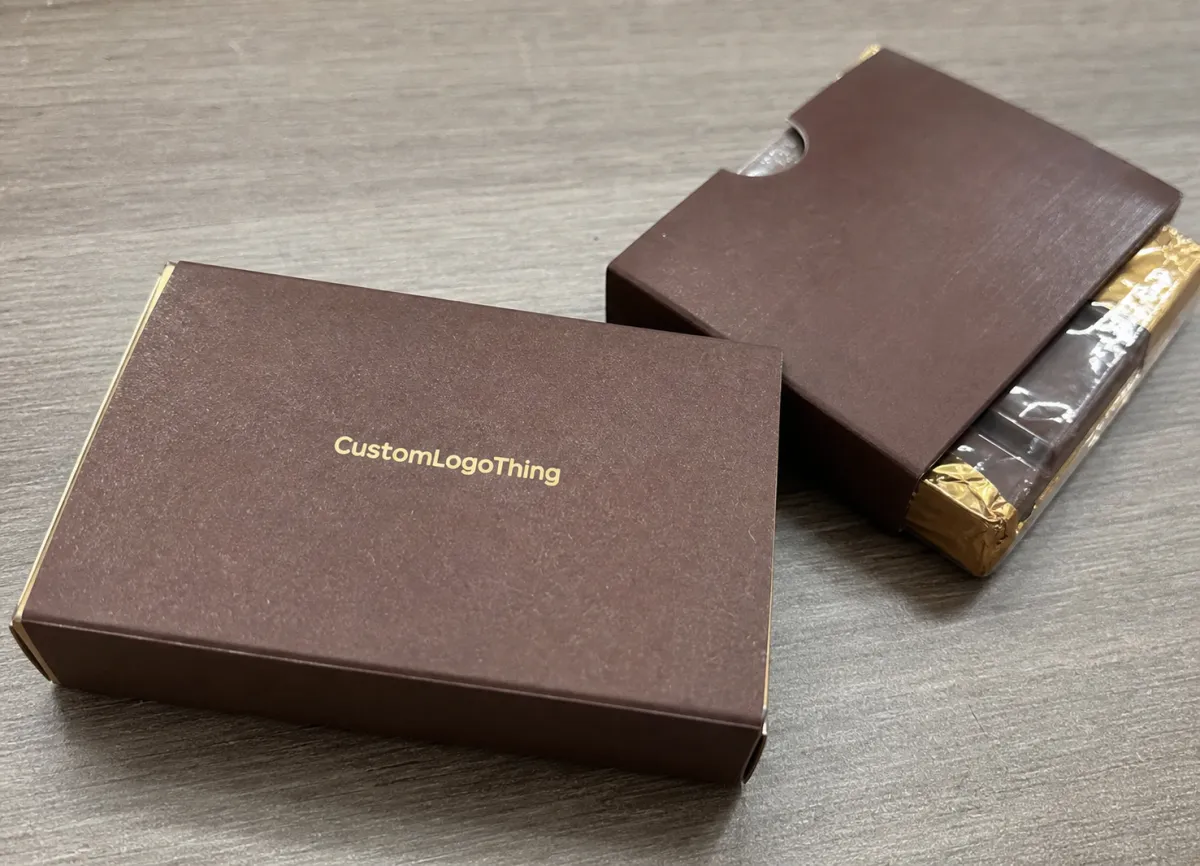
Chocolate is one of those categories where the package often sells the occasion. A tablet in a plain carton says “snack.” The same product in a rigid gift box with a textured logo patch says “present.” That visual shift matters for seasonal assortments, subscription chocolate, and limited-edition runs where shelf differentiation is everything.
From a packaging buyer’s point of view, logo patches are useful because they add dimension without forcing a full redesign. A flat sleeve with a woven patch can look more considered than a heavily printed board that still feels generic. The texture catches light differently. The hand feel changes. In retail, those small cues influence how shoppers read quality in the first three seconds.
There is also a practical reason brands use them. A patch can give marketing a premium cue while leaving the base carton simpler, which may reduce overall decoration complexity. That is not the same as lower total package cost in every case, but it can be a cleaner spend than adding foil, spot UV, embossing, and full coverage ink all at once.
In practice, brands use patches in a few specific ways:
- Gift boxes that need a premium finish without excessive print complexity.
- Seasonal assortment packs where a patch can distinguish a holiday range from the everyday line.
- Subscription chocolate packaging that benefits from collectible, repeatable brand cues.
- Limited releases where lower-volume decoration still needs to feel special.
For teams reviewing Logo Patches Unit Cost for chocolate brands, the real question is whether the patch improves perceived value enough to justify the price per piece. That is a packaging economics decision, not a decoration decision.
Patch styles, materials, and placement choices that affect unit cost
Patch style has a direct effect on unit cost, and the spread is wider than many buyers expect. A simple woven patch with limited colors may sit in a very different price band from a molded PVC piece or a layered embroidered badge. The visual effect matters, yes. So does construction complexity, edge finishing, and the method used to attach it to the package.
Here is the practical breakdown most chocolate packaging teams use:
- Woven patches - Good detail, cleaner edges, and usually a strong balance between appearance and cost efficiency.
- Embroidered patches - Textured and premium-looking, but higher stitch density can increase cost and production time.
- PVC patches - Durable and bold, often used when a more dimensional look is needed.
- Leatherette patches - Useful for artisanal or craft positioning, especially on reusable boxes or tins.
- Silicone patches - More tactile and contemporary, but typically more expensive than basic fabric options.
- Printed fabric patches - Best when artwork has fine color transitions or a photographic look.
The biggest cost drivers are not mysterious. Size, color count, stitch density, material thickness, edge style, and backing type all move the cost per piece. A 40 mm patch with two colors and a simple cut edge is not the same product as a 75 mm patch with eight colors, merrowed edging, and a specialty backing. Even if the design looks similar on a screen, the factory sees very different labor and tooling demands.
Placement changes the economics too. A patch on a box lid is one thing. A patch that has to be integrated into a sleeve line, reusable tin, outer wrap, or gift set insert is another. If the patch is applied during final assembly, labor adds up quickly. If it is supplied for manual application, you may save on equipment but spend more on packaging labor. That is why buyers should compare bulk pricing on the patch itself and the total applied cost.
There is no universal “best” material for chocolate packaging. For a premium seasonal box, woven or embroidered is often enough. For a reusable tin that will stay in a kitchen cabinet, PVC or silicone may be more durable. For a heritage or artisanal line, leatherette can fit the story. The supplier should help you map visual impact against unit cost, not push the same option for every pack format.
| Patch type | Typical fit for chocolate packaging | Relative unit cost | Key tradeoff |
|---|---|---|---|
| Woven | Gift boxes, sleeves, seasonal cartons | Moderate | Good detail at a controlled price |
| Embroidered | Premium gift packs, collectible editions | Moderate to high | Tactile finish, higher stitch cost |
| PVC | Reusable packaging, bold branding | High | Durable but typically pricier |
| Leatherette | Artisanal or luxury positioning | Moderate to high | Distinct feel, depends on substrate |
| Silicone | Modern premium packs, tins | High | Strong tactile effect, more setup complexity |
Logo patch specifications chocolate buyers should confirm before quoting
A quote is only useful if the spec is clear. Too many teams ask for pricing with vague instructions, then act surprised when the numbers move after proofing. If you want a reliable estimate for Logo Patches Unit Cost for chocolate brands, send the supplier enough information to remove guesswork.
At minimum, the request should include patch dimensions, artwork file, color references, intended packaging substrate, and preferred backing. If you already know whether the patch is going onto a carton, sleeve, rigid box, or tin, say so. A patch that sits on paperboard may need different adhesive behavior than one applied to coated board or a wrapped gift-box surface.
Food-brand buyers also need to think about presentation hygiene. The patch itself is not food-contact packaging, but it will sit near edible product and may travel through retail distribution. Ask for odor-free materials, clean finishing, and a construction that will not shed fibers or leave residue. If the package is going into a chill chain or a humid warehouse, that matters even more.
Artwork complexity is another hidden cost driver. Fine lines, gradients, tiny lettering, and small registration details can force a more expensive construction method. Sometimes a buyer wants a highly detailed logo that looks beautiful on screen but becomes too fragile or costly in a physical patch. That is why the supplier should review the art before quoting, not after.
“The cheapest quote is usually the one with the most assumptions buried inside it. For packaging buyers, clarity saves money twice: once in production, and once in avoided rework.”
Before approving a sample, ask about color tolerance, thread or print consistency, adhesive performance, and how the patch behaves under carton compression. If the patch is going through automated case packing or bulk shipping, it should hold up under pressure. And because metallics and dark tones can look different under store lighting than on a design monitor, sample review should happen under retail-like light whenever possible.
For standards-minded teams, this is also where reference points matter. Packaging suppliers often align testing and shipping assumptions with bodies like the International Safe Transit Association for distribution performance, even if your patch itself is small. That is smart. Small components still fail in transit.
One more check that gets overlooked: the substrate finish. A gloss-laminated carton, a soft-touch sleeve, and an uncoated kraft box all behave differently. Adhesives that hold well on one surface can lift on another, especially in cold storage or high-humidity transport. Ask for substrate-specific guidance rather than assuming a single adhesive answer will work everywhere.
Logo patches unit cost for chocolate brands: pricing drivers and MOQ
Now to the number buyers actually care about: Logo Patches Unit Cost for chocolate brands. The price is usually shaped by six variables more than anything else: material choice, patch size, color count, quantity, tooling fees, and application method. Miss one of those, and the estimate can move enough to affect the entire pack margin.
For a rough purchasing frame, a simple woven or printed patch at a moderate quantity may land around $0.18-$0.35 per unit before application, depending on size and artwork. More complex embroidered, molded, or silicone versions can move into the $0.40-$0.90+ range per unit, especially at lower quantities or with special finishes. Those are not universal numbers. They are practical market ranges that help teams sanity-check quotes.
MOQ is where many first-time buyers get surprised. Lower MOQ orders usually carry a higher unit cost because setup and production overhead are spread across fewer pieces. In other words, a small order may look cheap in absolute terms but expensive on a per-piece basis. A larger order often lowers the unit price, though it also raises inventory risk. That tradeoff has to be measured against launch timing and forecast confidence.
Complexity matters in ways that are easy to underestimate. A one-color woven patch and a six-color embroidered design are not priced by the same logic. Add layered textures, edge treatments, custom backing, or specialty shape cuts, and the quote changes again. This is why serious buyers request tiered pricing at multiple quantities. You need to see the break point where the unit cost drops enough to justify a bigger run.
Tooling can also distort the first quote. If the patch requires a new mold, die, or digitized stitch file, the upfront fee may be modest on a high-volume program but significant on a small seasonal order. A buyer who only looks at unit price can miss that entirely. Ask for the setup cost separately so the comparison is honest.
Here is a simple way to compare options before you issue a purchase order:
| Order scenario | Typical unit cost behavior | What to watch |
|---|---|---|
| Low MOQ trial run | Highest cost per piece | Setup charges and tooling fees are spread thinly |
| Mid-volume seasonal run | Moderate cost per piece | Usually the best balance for gift packaging |
| High-volume standard line | Lowest unit cost | Check storage, forecast risk, and reorder stability |
Do not stop at sticker price. If the manufacturer applies the patch before shipment, you need total landed cost, not just the patch quote. That includes setup charges, application labor, packaging integration, and freight. A patch that looks cheaper on paper can become the more expensive option once assembly is included.
If you want a more accurate benchmark, compare three quotes: a preferred spec, a lower-cost alternative, and a premium version. That three-point view tells you where value actually sits. It also makes internal approval easier because marketing can see what a design upgrade really costs in cents, not just in adjectives.
For buyers who want evidence beyond a quote sheet, reviewing Case Studies can help frame how packaging decisions affect appearance, lead time, and repeat order consistency. Numbers matter, but repeatability matters just as much.
Process and lead time from artwork approval to delivery
The production path is usually straightforward, but there are several places where projects lose time. First comes artwork review. Then the supplier creates a digital proof, confirms material and backing, and, for more complex styles, produces a sample or strike-off. Once that is approved, mass production starts, followed by quality control and shipment.
That sequence sounds simple. It rarely is. Delays usually come from unclear artwork, last-minute color changes, or a bottleneck between brand, design, and operations teams. If the marketing team signs off on a bright metallic accent while operations is still checking carton compatibility, the clock keeps running. For launch-driven chocolate brands, that can become expensive fast.
Typical lead time depends on construction and order size. Simple designs may move in roughly 10-15 business days after proof approval. More complex molded or multi-layer patches often need 15-25 business days, and that is before transit. Rush options exist, but they usually add cost and reduce flexibility on sampling.
If the packaging is high-value or tied to a seasonal launch, ask for a pre-production sample or at least a sample photo before the full run starts. That small step can prevent a large mistake. One color mismatch can be enough to make a holiday run look off, and the cost of correcting a finished pack is always higher than the cost of a careful approval stage.
Shipping also changes the final timeline. Air freight can rescue a launch, but it eats margin. Ocean or consolidated ground freight is cheaper, but only if the schedule allows it. If patches are being delivered with cartons, labels, or outer packaging, confirm whether they will ship together or separately. Consolidation can save money. It can also create a delay if one component slips.
For brands concerned with environmental claims or recycled packaging, the material chain should be documented. If your broader package includes FSC-certified board, ask whether the patch supplier can support relevant documentation for the rest of the pack system. You can check resources through FSC when your packaging program needs traceability and claims discipline.
Build in a buffer for correction cycles. Even a straightforward patch can lose several days if the color chip is approved late or the backing spec changes after sampling. That is why experienced buyers keep a firm approval calendar instead of treating decoration as a last-minute detail.
How to compare suppliers on quality, compliance, and repeat order stability
The best supplier is not always the lowest quote. A reliable partner gives you repeatable color accuracy, consistent stitch or mold quality, and proofing that does not require endless chasing. For chocolate brands, that matters because seasonal packaging often comes back every year, and small visual drift can weaken shelf recognition.
Ask to see examples of packaging applications, not just generic patch samples. A patch that looks fine as a standalone swatch may behave differently when attached to coated board, laminated sleeves, or rigid box stock. You want to know how the supplier handles a real application, not an isolated sample card.
Documentation matters too. Food-adjacent brands should request material declarations, adhesive notes, and any packaging compatibility guidance the supplier can provide. Even when the patch is not in direct contact with food, you still need confidence that inks, finishes, or adhesives will not create odor, staining, or migration concerns near the product.
Repeatability is especially important for reorders. If you launch a holiday box this season and repeat it next year, you need the patch to look the same. Not similar. The same. A small drift in red tone or edge finish can be enough to make the line look inconsistent. That is a brand problem, not just a production problem.
- Ask for batch consistency details, especially if the design uses multiple colors or layered components.
- Confirm re-order archives so the supplier can match prior specs without rebuilding everything from scratch.
- Check response speed during proofing, because slow communication is often a warning sign.
- Review transit assumptions against standards such as ISTA test logic if your pack is shipping through multiple channels.
In practical terms, stable supply chain performance can matter more than shaving a few cents off the unit price. A cheaper patch that misses a launch date has no real value. If the brand promise depends on a holiday shelf window or a subscription ship date, timing is part of quality.
Also ask how the supplier handles correction claims. If a patch batch arrives with color drift or adhesive failure, does the factory replace, credit, or require the entire lot to be returned? The answer reveals more about working risk than a glossy sample ever will.
Best next steps to lock in pricing and place the right order
If you want the cleanest quote, prepare a one-page spec sheet. Include artwork, dimensions, quantity bands, packaging format, intended attachment method, and target launch date. That one document will reduce back-and-forth and give the supplier enough detail to quote accurately the first time.
Then ask for three versions of the same job: preferred spec, lower-cost alternate, and premium option. That comparison makes logo patches unit cost for chocolate brands easier to evaluate because you can see exactly what each upgrade adds. Sometimes the premium option is worth it. Sometimes the middle spec gets you 90% of the impact for a much better cost per piece.
Before placing the order, confirm MOQ, sample timing, approval deadlines, and shipping terms. If the patch is being attached before shipment, ask how the supplier calculates setup charges and whether there are separate tooling fees. Those details belong in the quote, not in the fine print after approval.
Align the patch with the product architecture. Everyday retail lines should usually favor straightforward, cost-controlled construction. Seasonal gift packaging can justify a more tactile finish. Limited editions can absorb a higher patch cost if the marketing value is strong enough. The right answer depends on the role of the pack, not on the patch alone.
If you are still comparing routes, gather current artwork and packaging dimensions now. Send them to the supplier with quantity bands and your launch window. That is the fastest way to get a serious, comparable quote—and the smartest way to buy logo patches unit cost for chocolate brands without surprises.
FAQ
What affects logo patch unit cost for chocolate brands the most?
Material, size, color count, and construction method usually drive the biggest price differences. MOQ matters because setup costs are spread across fewer or more units. Attachment method and any pre-application labor can raise the landed unit cost.
What MOQ should chocolate brands expect for custom logo patches?
MOQ varies by patch style and supplier capability, but simpler constructions usually allow lower starting quantities. More complex shapes, colors, or finishing methods often need higher minimums. Ask for tiered MOQs if you want a cheaper trial run first.
Which patch type is best for premium chocolate packaging?
Woven and embroidered styles often work well for gift boxes and seasonal runs because they feel tactile and upscale. PVC and silicone can suit durable reusable packaging, while leatherette can create a more artisanal look. The best option depends on budget, shelf presentation, and packaging material.
How long does it take to produce custom logo patches for a chocolate launch?
Timing depends on artwork approval, sampling, and production complexity. Simple designs move faster; multi-layer or molded options usually take longer. Build extra time for proofing if the launch date is fixed.
Can logo patches be applied directly to chocolate boxes or sleeves?
Yes, depending on the backing and packaging substrate. Adhesive, sew-on, and heat-applied methods all have different compatibility limits. Confirm the material before ordering so the patch stays secure in transit and on shelf.


