Why wedding boutiques often see better payback from logo patches than printed tags
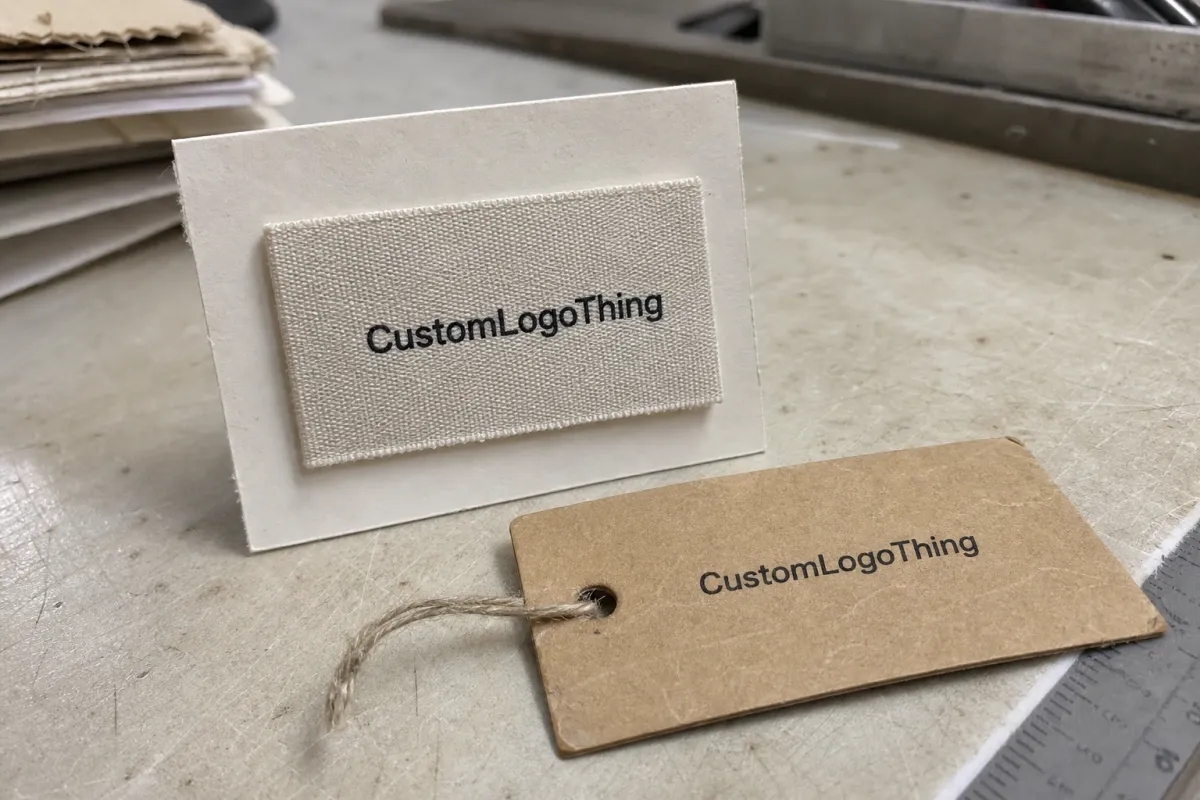
A bridal boutique orders robes, garment bags, keepsake boxes, or thank-you gifts and wants each piece to feel deliberate. That is where Logo Patches Unit Cost for wedding boutiques becomes more than a sourcing line. It becomes a margin question. A patch stays visible, survives handling, and keeps carrying the brand after a printed tag has creased, faded, or been discarded in the packing rush.
The useful comparison is not patch versus no patch. It is patch versus the many cheaper details that disappear. A woven badge on a robe cuff can make a low-cost item read as retail-ready. A printed tissue insert may look tidy in a mockup, but once it is folded into a bag or box, it rarely holds the same visual weight. Brides notice texture and placement quickly, and so do the stylists and coordinators who handle the product before it reaches them.
What often gets missed is the real landed cost. The unit price is only one part of the calculation. Setup charges, wasted pieces, application labor, and occasional rework can change the math enough to make a “cheap” patch the more expensive option. A patch that peels, frays, or shifts color after a few washes is not a savings. It is a replacement order waiting to happen.
In bridal retail, that matters because presentation and repeatability shape perception. A small branded finish can help a robe bundle feel coordinated, or make a client gift feel custom without requiring a full custom package. The effect is subtle, but the economics are not. If a boutique can use one patch spec across robes, tote bags, and soft garment covers, the branding cost becomes easier to forecast and easier to defend.
“In bridal retail, the smallest visible detail often carries the most brand weight. A patch that stays aligned, color-accurate, and clean-edged can do more for perceived value than a louder packaging upgrade.”
The buying question is simple: which style gives the lowest real Logo Patches Unit Cost for wedding boutiques after material, application method, and production loss are included? The answer changes by use case, but the process for finding it does not.
Patch styles and materials that fit bridal retail packaging
Not every patch style belongs in a bridal setting. Some look too industrial. Some feel too casual. The best choice depends on whether the patch is going on robes, tote bags, garment bags, staff uniforms, or packaging accessories. For wedding boutiques, restraint usually wins over decoration.
Woven patches are often the strongest option when the logo includes fine lines, script typography, or small type. The weave captures detail better than many embroidery builds and creates a flatter surface. That matters on packaging and gifts, where the patch should feel polished rather than bulky.
Embroidered patches bring texture and a traditional hand. They suit logos with bold shapes and larger lettering, or brands that want a tactile finish that reads classic rather than minimal. The tradeoff is that very small details can blur, and the edge profile is usually thicker than a woven equivalent.
PVC patches produce a molded, modern appearance. They are durable and easy to wipe clean, which makes them practical for tote bags and staff items. On softer bridal packaging, though, they can feel a little hard-edged unless the brand already uses a contemporary design language.
Faux leather patches work well for a quiet-luxury look. A debossed or lightly printed logo on ivory, blush, taupe, or charcoal synthetic leather can feel elevated without much visual noise. The logo needs to be simple, because fine detail does not always transfer well on this substrate.
Satin-finish patches are less common, but they can suit presentation boxes, robes, and insert cards when the brand wants a gentler sheen. The surface can look refined, though it also needs careful handling during application and packing because it is more prone to snagging than woven or PVC options.
| Patch style | Best use case | Typical visual effect | Cost tendency |
|---|---|---|---|
| Woven | Robes, garment bags, small logos | Flat, detailed, polished | Mid-range |
| Embroidered | Staff uniforms, tote bags, bold branding | Textured, classic, visible | Mid to higher |
| PVC | Totes, accessories, wipeable items | Modern, molded, durable | Mid-range |
| Faux leather | Gift packaging, robes, soft-branding themes | Soft, upscale, minimal | Mid-range to higher |
| Satin-finish | Presentation boxes, robes, inserts | Gentle sheen, feminine, refined | Varies by print and finish |
Three production choices shape the final look more than many buyers expect: stitch density, edge finishing, and backing type. Dense stitching improves coverage but raises machine time. Merrowed borders look finished, yet a laser-cut or clean-cut edge can suit a modern bridal brand better. Backing choice can matter even more than the face material if the patch is going onto delicate fabric.
The quiet truth is that bridal brands usually do better with low-contrast, well-proportioned marks than with high-energy graphics. Tone-on-tone branding, minimal line art, and neutral shades often outperform louder color builds because they feel intentional without demanding attention. The goal is not to shout. It is to make the item feel complete.
Logo patch specifications that change fit, durability, and unit cost
A buyer can only compare quotes accurately when the spec is fixed. If one supplier quotes a 2.5-inch woven patch with heat-seal backing and another quotes a 3-inch embroidered patch with sew-on backing, the prices do not mean the same thing. They are not comparable, even if the line items look similar.
The core specification list is straightforward:
- Size — usually measured in inches or millimeters
- Shape — round, square, rectangle, arch, or custom contour
- Material — woven, embroidery, PVC, faux leather, satin-finish
- Color count — one-color, two-color, full color, or metallic thread accents
- Border type — merrowed, laser cut, embroidered edge, or printed edge
- Backing — sew-on, iron-on, adhesive, hook-and-loop
- Attachment method — applied by the boutique or by the supplier
Size affects material usage and production time. A move from 2 inches to 3 inches can shift the pricing band, especially if the logo contains thin type or multiple elements. The increase may look small on paper, but it often means more machine time and a larger surface area to inspect for defects.
Shape matters too. Simple geometric shapes usually create less waste and require less tooling complexity. Custom contour cuts look elegant, though they can add setup costs if the edge needs special handling. A boutique with a minimalist logo may save money by using a rounded rectangle or tidy oval instead of a fully custom outline.
Color count is another cost driver. Every additional color may increase digitizing effort or machine time, particularly in embroidered builds. Script logos with gradients, metallic effects, or tiny nested details are harder to reproduce cleanly. If a supplier recommends simplifying the artwork, that is usually a practical production warning, not a rejection of the design.
Backing choice affects labor, compatibility, and durability. Sew-on backing is usually the safest for delicate or heavily laundered fabrics. Iron-on can reduce application time, but it does not suit every textile. Adhesive backing is convenient for temporary uses or packaging inserts. Hook-and-loop adds flexibility, but it also adds thickness and cost.
Quick spec checklist for quotes: exact size, preferred shape, artwork file type, number of colors, intended fabric, backing style, quantity, and whether supplier application is required. Add a target deadline too. That one line often saves a day or two of back-and-forth.
For buyers comparing Logo Patches Unit Cost for wedding boutiques, the spec sheet is the control document. Without it, bulk pricing can look attractive while the true landed cost climbs later.
Logo patches unit cost for wedding boutiques: pricing, MOQ, and quote factors
This is the section most buyers want first. The unit cost varies widely, but there are still realistic ranges. For simple woven or embroidered patches at moderate quantity, a boutique may see pricing around $0.30 to $1.20 per piece. Specialty finishes, unusual backing choices, or very low quantities can push that higher. When the order is small, setup and digitizing matter far more than the patch itself.
MOQ, or minimum order quantity, is often the first friction point. A supplier may set MOQ at 100, 300, or 500 pieces depending on patch style and production method. A lower MOQ usually means a higher unit cost because setup, digitizing, and machine prep are spread across fewer units. A higher MOQ can improve pricing, but it also increases upfront spend and inventory exposure.
The main pricing drivers are predictable:
- Quantity — the biggest lever on unit cost
- Patch size — larger pieces use more material and time
- Design complexity — fine detail and more colors raise production effort
- Backing type — sew-on is often simpler than specialty adhesive or hook-and-loop
- Shipping destination — freight and customs can change landed cost
There are also costs that do not show up cleanly in the first quote. Tooling fees may appear if the patch needs a special mold or a custom border. Digitizing fees may apply for embroidery artwork. Sample costs are sometimes credited against a final order, but not always. Rush production can raise the total by a noticeable margin because it moves the job ahead of standard scheduling. If the boutique wants application services, labor is added on top of production.
The better comparison is cost per usable piece, not just base price. A quote at $0.42 per patch can become more expensive than a $0.51 quote if the lower-priced option requires extra labor, has a higher defect rate, or needs a separate finishing step. That is the trap. Paper savings can disappear fast once the order reaches the packing table.
| Order size | Simple woven patch | Embroidered patch | What usually changes |
|---|---|---|---|
| 100–250 pcs | $0.85–$1.60 | $0.95–$1.80 | Higher setup impact, fewer savings |
| 500 pcs | $0.45–$0.95 | $0.55–$1.05 | Better spread of setup charges |
| 1,000+ pcs | $0.30–$0.70 | $0.40–$0.85 | Stronger bulk pricing, lower unit cost |
These ranges are not fixed prices. Artwork complexity, color count, border style, and shipping lane can push them up or down. They are still useful for planning, because if a quote lands far outside them, it deserves a second look.
Tiered quotes are the cleanest way to test the cost curve. Ask for pricing at 250, 500, and 1,000 pieces. Sometimes the biggest drop happens early; sometimes it comes only at higher volume. A buyer should not guess where the threshold sits.
For Logo Patches Unit Cost for wedding boutiques, the landed number is the one that matters. Base price is only the first line in the math.
Production steps, lead time, and approval checkpoints before you order
Patch production looks simple from the outside. It rarely is. The standard workflow runs through artwork review, spec confirmation, proofing, sample approval if needed, production, packing, and shipment. Each step can move quickly or stall depending on how complete the brief is.
Lead time often sits around 10 to 20 business days after proof approval for standard runs, though the exact timeline depends on patch type and quantity. If the design needs digitizing, a new mold, or color matching, the schedule extends before production even starts. Add shipping time on top. International freight can be fast or slow depending on lane, customs, and carrier capacity.
Good approval checkpoints prevent expensive back-and-forth later:
- Confirm the logo file quality, ideally vector artwork
- Check exact size in inches or millimeters
- Approve color references or thread matching
- Confirm backing and attachment method
- Review border style and shape
- Approve the proof before release to production
If the patch uses a delicate script logo, a metallic thread accent, or a soft neutral shade, sample review becomes more valuable. Small visual shifts can change the look of the finished piece. That is especially true for wedding boutiques, where brand presentation is part of the product.
Rush orders are possible in many cases, but they usually raise unit cost. Planning ahead protects margin. For seasonal bridal demand, it makes sense to place orders before showroom refreshes, bridal show dates, and client gifting windows. If the boutique is launching robe bundles or proposal kits, the order should arrive early enough to leave room for a reproof if needed.
One practical rule: build in at least one extra week beyond the quoted timeline if the patches are tied to a sales event. Packaging work has a habit of exposing problems right before launch, and the worst time to discover a size issue is when the goods are already scheduled for packing.
How to compare suppliers on quality control, sampling, and repeat orders
Price matters. So does the consistency behind the price. For wedding boutiques, poor patch quality shows up quickly: loose edges, off-color thread, uneven cuts, or adhesive that does not hold. Those defects weaken the premium feel in a way customers can see immediately.
Compare suppliers on proof quality, material consistency, communication speed, and willingness to explain tradeoffs. A low quote with vague answers is not a bargain. It is a risk. Ask for actual product photos, not only polished mockups. Real samples reveal border finish, thread tension, and shape accuracy more reliably than a rendering ever can.
Quality checkpoints worth asking about include:
- Edge sealing to prevent fray or lift
- Adhesion testing for iron-on or adhesive backings
- Stitch cleanliness in embroidered builds
- Color variance control across repeat batches
- Defect tolerance standards for acceptable variation
Sampling matters more when the patch will sit on premium retail packaging or client-facing gifts. One weak batch on robes can change the feel of an entire collection. Buyers should ask whether sample cost can be credited against the final order. That is common, but not guaranteed.
Repeat orders deserve attention too. Good suppliers store specs, artwork, and approved proofs, which shortens reorder cycles and stabilizes pricing. That helps with seasonal inventory and recurring gift programs. The boutique benefits from faster reorders, but only if the supplier records the correct logo version and the exact backing spec.
For process discipline, shipping-related testing guidance from the International Safe Transit Association and broader packaging references from the Institute of Packaging Professionals are useful. They do not choose the patch for you, but they reinforce the value of transit protection, documentation, and repeatable control points.
Repeat business is where supplier discipline matters most. Stable specs and clean records reduce the chance of drift. That is a real advantage when a boutique wants the same look across seasons instead of a new surprise every reorder.
Next steps to request the right quote and order with confidence
If you want a usable quote, prepare the file and the brief before you ask. Start with the logo artwork, then choose patch material, size, shape, backing, and quantity. If the boutique uses more than one application point, separate the use cases. A robe patch and a garment bag patch may need different specs.
Then collect two or three quotes with identical requirements. If the specs differ, the price comparison is weak. The best buyers compare like for like and ask for tiered pricing at multiple quantities. That makes the unit cost curve visible instead of guessed.
If the design contains script, thin line art, or metallic thread effects, ask for a digital proof or sample before bulk production. It is cheaper to catch a sizing issue on a proof than to discover it on 1,000 finished pieces. That is basic risk control, not overcaution.
Plan the reorder cycle around promotions, bridal suite openings, and gift bundle launches so stock does not run out mid-campaign. A boutique that loses branded inventory loses consistency, and inconsistency is costly in a premium category.
The decision rule is straightforward: choose the patch that balances brand impact, durability, and actual landed unit cost. Not the lowest quote. Not the fanciest sample. The one that works across the fabric, the schedule, and the margin target.
For wedding boutiques comparing logo patches unit cost for wedding boutiques, that is the real win: a branded detail that looks elevated, holds up in use, and stays inside budget.
FAQ
What affects logo patch unit cost for wedding boutiques most?
Quantity usually has the biggest effect because setup charges are spread over more pieces. Material, size, color count, and backing type also move the price. Rush timing and custom sampling can add to the final landed cost.
What is a typical MOQ for custom logo patches?
MOQ depends on patch style and production method. Simpler woven or embroidered patches often allow lower minimums, while specialty materials or finishes may require a higher starting quantity. Ask for tiered pricing so you can see the difference between minimum and larger runs.
Which patch type is best for wedding boutique products?
Woven patches work well for fine logo detail and a clean, premium look. Embroidered patches suit brands that want texture and a classic finish. Faux leather or satin-finish options can fit bridal packaging when the brand wants a softer, elevated presentation.
How long does production usually take for custom logo patches?
Standard lead time depends on proof approval, material choice, and quantity. Design complexity and sampling can extend the timeline before production begins. Rush orders may be possible, but they usually raise the unit cost.
Can I get a sample before placing a full order?
Yes, sampling is smart when the logo has fine detail, small text, or color-sensitive branding. A sample helps confirm size, backing, material feel, and overall finish before bulk production. Ask whether the sample cost can be credited toward the final order.


