For apparel buyers, Logo Patches Unit Cost for apparel retailers is not a decorative line item. It is a margin decision, a QC decision, and sometimes a launch-date decision. Get the patch spec right and you control branding cost, keep placement consistent, and avoid the slow, expensive drift into rework and replacements that eats into profit.
Patches are often cheaper than buyers expect, especially compared with custom embroidery on every garment panel or print methods that need different handling across fabric types. The trick is knowing which patch style fits the product, what really changes the unit price, and where suppliers bury extra charges. The headline number is rarely the whole story. It is usually the part that looks best because it is incomplete.
From a retail sourcing standpoint, the goal is straightforward: pay for a decoration method that looks clean, holds up, and stays predictable across volume. If one patch can cover jackets, caps, bags, and workwear without redesigning each item, the operational savings start to matter. Fewer variables mean fewer mistakes. Less chaos in production also means fewer awkward conversations after goods land.
Why patches can cost less than other branding methods
Branding cost is more than the decoration line on a purchase order. It includes application labor, scrap risk, remake risk, and the awkward little surprises that show up when a print or embroidery spec behaves differently across fabrics. That is one reason Logo Patches Unit Cost for apparel retailers can look attractive even when the patch itself is not the absolute cheapest decoration item on paper.
A patch offers repeatability. Put the same patch on denim, fleece, canvas, or a cap and the brand mark stays consistent. That matters for assortments with multiple SKUs and different base materials. Instead of reworking the art or changing stitch density and thread counts per item, the retailer standardizes one branded component and moves faster. That kind of consistency is not glamorous, but it protects margin.
There is also a durability angle. A patch can outperform some printed branding methods when garments are washed repeatedly, rubbed in transit, or worn in demanding conditions. For workwear and outdoor apparel, a failed decoration is not just a cosmetic issue. It can become a return, a complaint, or a replacement. Those costs can dwarf a small difference in cost per piece.
For buyers comparing options, the right question is total landed cost. That includes patch price, application method, freight, any setup charges, and the cost of mistakes. If you are choosing between patches, embroidery, woven labels, or heat transfers, compare the whole program. The cheapest quote is often not the cheapest outcome.
Practical rule: if branding must survive repeated wear, stay aligned across many SKUs, and keep color detail clean, patches are often the safer budget choice than decorating each garment from scratch.
Patch types, materials, and construction that change unit cost
Not all patches are priced the same. Some are built for a premium feel, others for speed, detail, or abuse. The cheapest-looking option on a sample board is not always the cheapest to make, and the fancy one is not always worth the spend. Buyers should match the patch construction to the product line, not to the mood board.
Common patch formats and what they mean for price
Embroidered patches are the classic option. They use thread to create raised texture and work well for simple logos, heritage branding, and casual apparel. They usually sit in a moderate price band because the process is established and materials are common. For bold logos with limited color counts, they are often the most practical choice.
Woven patches handle finer detail than embroidered versions because the threads are tighter and flatter. They are useful for smaller logos, fine text, and cleaner graphic edges. That extra detail can raise production complexity, but they often look sharper on retail garments where the logo must stay legible at a small size.
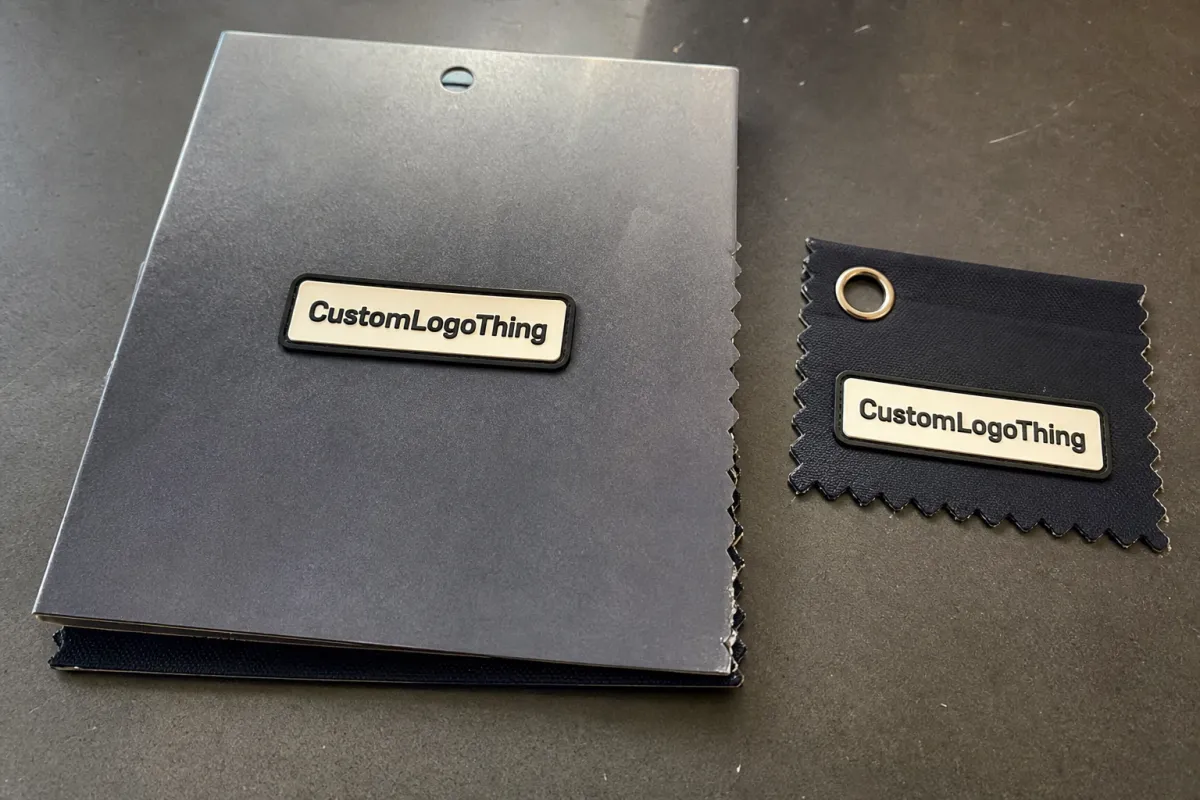
PVC patches are usually pricier because the tooling and molding process adds cost, but they offer strong color separation, weather resistance, and a premium tactical or outdoor look. They work well for jackets, backpacks, and heavy-duty apparel. They are not the best answer for every brand, because overengineering a hoodie logo still happens more often than it should.
Leather patches can be natural, PU, or embossed styles. They are common on denim, workwear, and premium basics. Pricing depends on the material type, embossing complexity, and backing. They can feel elevated, but they are not always the best choice for heavy laundering. If the garment will be washed often, ask questions before approving the spec.
Chenille patches are bulky and textured, often used for varsity, fashion, or premium statement pieces. They cost more because of the thicker construction and extra finishing steps. They look strong when a brand wants a tactile, fashion-forward effect. They are not the budget option, and pretending otherwise usually creates bad procurement decisions later.
Sublimated patches work well for detailed art, gradients, and full-color graphics. They can be efficient for complex artwork because they avoid high stitch counts. The tradeoff is feel and finish: the hand is different, and the result depends heavily on fabric and backing choice. Use them when image detail matters more than traditional texture.
| Patch type | Typical retail use | Relative unit cost | Best for |
|---|---|---|---|
| Embroidered | Casual apparel, caps, uniforms | Low to medium | Bold logos, classic texture |
| Woven | Fashion retail, smaller logos | Low to medium | Fine detail, clean edges |
| PVC | Outdoor, tactical, bags | Medium to high | Durability, color separation |
| Leather | Denim, workwear, premium basics | Medium to high | Texture, elevated branding |
| Chenille | Varsity, premium fashion | High | Thick texture, statement branding |
| Sublimated | Detailed graphics, color-rich art | Low to medium | Artwork detail, gradients |
The main cost drivers are usually size, stitch density, border type, backer, and the number of thread colors or molded details. A patch with tight embroidery, merrowed borders, a specialty adhesive backer, and six colors will price very differently from a simple 2-inch woven patch with a flat heat-seal back. That sounds obvious. Yet buyers still compare quotes as if those details were cosmetic rather than cost-bearing.
If your assortment spans fashion retail and workwear, do not assume one patch type fits everything. Fashion buyers usually care more about look and feel. Uniform buyers care more about wash resistance and consistent application. Outdoor brands care about weather and abrasion. The best unit cost is the one tied to the right use case, not the lowest sticker price.
Specifications retail buyers should lock before quoting
Before anyone can give a serious quote, the specs need to be locked. If they are not, the quote is basically a guess with a logo attached. That is how Logo Patches Unit Cost for apparel retailers gets distorted before the order even starts.
Start with the basics: finished size, shape, artwork complexity, border type, backing type, and how the patch will be attached. Sewing, heat seal, Velcro, pin, or peel-and-stick all change the production path. Some options are faster. Some are more durable. Some look convenient until they start peeling after a wash cycle.
Placement matters too. A chest patch on a jacket should be the same size and position on every unit. If the patch is too large, it overwhelms the garment. Too small, and the brand loses impact. That is not just an aesthetic issue. Larger patches also mean more material, which can nudge the unit cost upward.
Color standards need to be defined early. If the buyer wants exact PMS matching, say so before quoting. If the art is full-color and detailed, ask what proof format will be used before production is approved. Vector files usually speed up approvals. Raster logos with fuzzy edges, missing fonts, or broken outlines create delays and can add prep time. Prep time is not free.
Spec details that change the quote fast
- Size: A 2-inch patch and a 4-inch patch are not remotely the same price.
- Shape: Simple circles and rectangles are cheaper than custom die-cut edges.
- Thread colors: More colors usually mean more labor and more complexity.
- Backing: Sew-on is usually simpler than specialty adhesive or hook-and-loop.
- Artwork detail: Tiny text and dense graphics increase stitch count or mold complexity.
- Application method: Heat seal, stitch, or combination backing changes the final cost.
Common mistakes are predictable. Oversizing the patch because it looked good on screen. Switching backing after sampling because someone changed their mind. Sending artwork without clean vector files. Approving a sample and then asking for a color adjustment that changes the whole production run. All of those create rework, and rework is just expensive confusion.
Quality-oriented buyers usually ask for samples or digital proofs before approval. That is not overkill. It is basic risk control. If a patch must survive repeated washing, confirm the construction against your care requirements and test expectations. For textile and branding programs, standards from groups like ISTA can help frame shipping and handling risk, while brands that care about packaging materials may also check FSC if any paper-based inserts or cartons are involved.
Logo patches unit cost: pricing, MOQ, and volume breakpoints
Here is the part buyers actually want: numbers. The honest answer is that logo patches unit cost for apparel retailers depends on patch type, size, complexity, and volume. But there are useful ranges, and they help separate a real quote from a wishful one.
For standard retail-quality patches, rough pricing often lands in these bands:
- Simple woven or embroidered patches: about $0.18-$0.45 per piece at larger volumes, depending on size and detail.
- Mid-complexity embroidered or woven patches: about $0.35-$0.75 per piece when artwork, edge finish, or backing adds labor.
- PVC, leather, or chenille patches: often $0.60-$1.80+ per piece, depending on construction and finish.
Those are working ranges, not promises. Smaller runs will sit higher. Specialty finishes will sit higher. Custom packaging will sit higher. Freight can move the landed cost enough to matter, especially for a launch or seasonal assortment.
MOQ changes the math quickly. A patch with a $45-$120 setup burden can look cheap at 5,000 pieces and awkward at 100 pieces. On smaller orders, the setup charges and any tooling fees are spread over fewer units, so the unit cost rises. That is why many suppliers quote a lower per-piece price at 500 or 1,000 pieces than they can offer at 100. The machine did not get cheaper. Fixed cost just got divided differently.
Here is a simplified way to think about volume breakpoints:
- 100-300 pieces: useful for testing, but unit cost is usually the highest.
- 500 pieces: often the first level where bulk pricing starts to look sensible.
- 1,000 pieces: a common sweet spot for retailers balancing inventory risk and cost per piece.
- 5,000+ pieces: usually where larger savings show up, especially on repeat styles.
From a margin standpoint, the best savings usually come from standardization. Choose common sizes like 2 inches, 2.5 inches, or 3 inches. Keep the color count controlled. Avoid specialty backers unless the garment truly needs them. Batch multiple SKUs into one production window if the art family is similar. That reduces changeovers and can improve bulk pricing.
Do not chase the lowest unit cost if it creates dead inventory. A patch order that saves $0.06 per unit but leaves you with the wrong size, wrong backing, or wrong pack-out is not a savings. It is a warehouse problem with a discount attached.
Example price logic: a 2.5-inch embroidered patch with simple sew-on backing might quote around $0.28-$0.42 at 1,000 pieces, while a PVC version of similar size might be closer to $0.75-$1.20 depending on mold detail and finish. Same logo. Very different production path. That is why buyers should never compare pricing without matching the spec line by line.
Process and lead time from artwork to finished cartons
The production flow is straightforward, but the delays are predictable too: inquiry, quote, artwork review, proof approval, sampling if needed, production, QC, shipment. The cleaner the input, the faster the output. Production teams rarely slow down for fun; they slow down when information is missing or contradictory.
For standard orders, lead time is often 7-20 business days after proof approval, depending on patch style, quantity, and factory load. Simple embroidered or woven patches usually move faster than PVC, leather, or custom-backed options. If you need heat-seal backing, hook-and-loop, or special pack-outs, expect extra time.
Sampling can add several days or more if physical approval is required before mass production. That is common for new programs, premium collections, and anything tied to a fixed launch date. For seasonal retail, build in a cushion. Not because suppliers are automatically slow, but because late artwork changes are very good at breaking schedules.
Where timelines slip
- Artwork arrives in low resolution or non-vector format.
- Retail team changes color or size after proofing.
- Backing choice changes after sample approval.
- Freight is booked too late for the launch calendar.
- Holiday shipping congestion hits the final carton move.
Packaging discipline helps. Ask for a proof that shows size, border, backing, and placement details clearly. If the patches will ship with retail packaging or inserts, confirm carton counts and outer box specs before production. A small error in pack-out can create a larger headache than the patch itself.
If transit damage or pack integrity matters to your brand, reference shipping test expectations early. Groups like ISTA publish standards that help buyers think more clearly about distribution risk, especially when products move through multiple handling points before store delivery.
How to compare vendors without getting trapped by low quotes
Low quotes are not automatically bad. They are just suspicious until you know what is included. Comparing vendors correctly means matching every major spec: size, material, construction, backing, finish, quantity, packaging, and shipping terms. Otherwise the cheaper quote may simply be missing half the cost.
Ask for unit price at multiple quantities. Request the setup fee separately. If molding is involved, ask whether tooling fees are one-time or repeated after revisions. Confirm whether samples are free, credited back, or charged. If a supplier says “sample included,” check whether that means a standard sample or a custom one that quietly adds cost later. Buyers get trapped by that wording more often than they should.
The quote should show:
- Unit price at each MOQ tier
- Setup charges and any mold or tooling costs
- Sample cost and sample lead time
- Production lead time after approval
- Shipping terms and carton pack-out
- Exact patch spec: size, backing, finish, and artwork method
Quality control is part of cost control. Misaligned branding, crooked borders, weak adhesive, or inconsistent color can create rework, refunds, or markdowns. If a vendor’s price is slightly higher but proofing is clear and production history is stable, that can still be the lower-risk buy. Retail margins do not care about ego. They care about consistency.
If you need multiple SKUs, ask whether the vendor can batch them into one production run. Sometimes similar art across styles can share part of the setup, which can reduce overall cost. That is not magic. It is basic production efficiency.
Next steps for ordering patches that protect retail margin
If you want better pricing, get specific before requesting a quote. Gather the artwork in vector format, choose the patch type, lock the size, pick the backing, and define the quantity tier you actually need. Then ask for tiered pricing so you can compare logo patches unit cost for apparel retailers across realistic volume breakpoints.
Order a sample or digital proof before volume if the program is new, seasonal, or premium. That small step reduces the chance of bad surprises once production starts. It also makes internal approval easier, which is useful when several people suddenly have opinions about a 2.5-inch logo.
A simple decision checklist helps:
- Which patch style fits the product line?
- What MOQ makes sense for sales velocity?
- What lead time do we need for launch?
- Does the patch need washing, abrasion, or weather resistance?
- What is the target landed cost, not just unit price?
For most apparel retailers, the smartest buy is not the cheapest patch. It is the patch that matches the garment, fits the order volume, and keeps the landed unit cost under control without creating quality problems later. Request a Quote with full specs, compare line by line, and make the supplier price the exact item you need. That is how you get accurate numbers instead of fantasy math.
Bottom line: protect margin by making the quote specific, testing before scaling, and keeping logo patches unit cost for apparel retailers tied to the real product spec rather than hope.
What affects logo patches unit cost for apparel retailers the most?
Patch type, size, stitch count, and number of colors usually drive the biggest price changes. MOQ matters because setup fees are spread across fewer pieces on smaller orders. Backing choice and finishing details can also raise or lower the final unit price.
Are embroidered or PVC patches better for retail apparel margins?
Embroidered patches are often more economical for simple logos and classic apparel branding. PVC patches cost more, but they hold fine detail and fit premium or outdoor product lines better. The right choice depends on brand positioning, not just the cheapest unit price.
What is a normal MOQ for custom logo patches?
Many custom patch orders start around 100 to 300 pieces, but real cost efficiency usually improves at 500 or more. Higher volumes typically unlock lower per-piece pricing and better packaging options. Small test runs are possible, but expect a higher unit cost.
How long does production usually take after approval?
Standard lead time is often 7 to 20 business days after proof approval, depending on style and quantity. Complex constructions, special backers, or sampling can extend the schedule. Shipping time is separate, so retailers should plan ahead for launch dates.
Can I reduce the unit cost without hurting patch quality?
Yes. Simplify the design, reduce thread colors, keep sizes standard, and use a common backing. Order in larger quantities when possible to spread setup costs. Ask for tiered pricing so you can compare volume breakpoints before placing the order.