For gift set brands, Logo Patches Unit Cost for gift set brands is rarely the number that decides a purchase. The real issue is whether a $0.30, $0.55, or $1.20 patch makes the whole set feel more considered at first touch. That is a different buying problem from hunting the lowest line item on a spreadsheet.
A small branded patch can do something a larger rigid treatment often cannot: it gives the hand something to register. Buyers see it, touch it, and decide—often in seconds—whether the set feels premium. That tactile signal is why smart teams compare unit cost, cost per piece, and perceived value together.
If you are comparing logo patches unit cost for Gift Set Brands across suppliers, the best quotes are the ones that make the production spec explicit. Size, stitch count, backing, edge finish, and order volume can swing pricing more than many buyers expect. A one-color change or custom backing layer can move the economics faster than a small artwork tweak.
Why logo patches can lift perceived packaging value
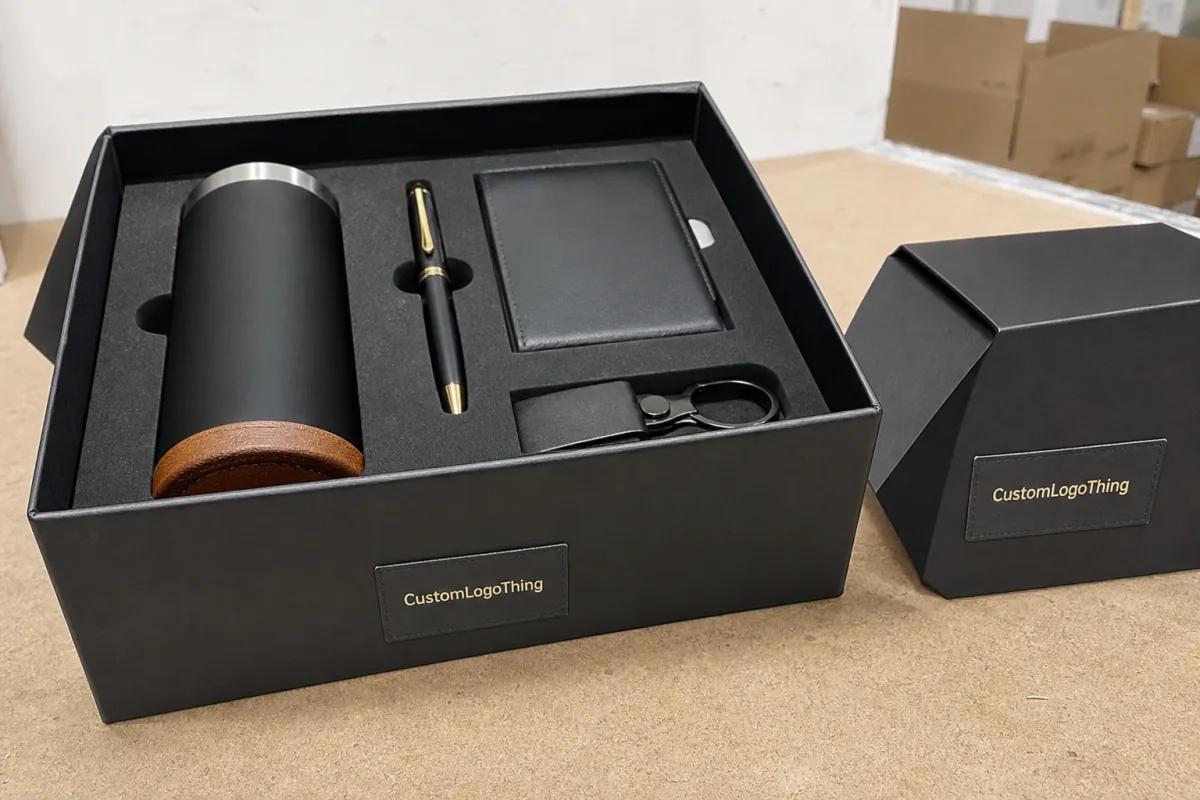
A gift set does not need expensive structural packaging to look premium. That is the first misconception. A well-made patch on a pouch, sleeve, wrap, or carry case can make a mid-tier pack look designed on purpose rather than assembled from leftover parts. For many brands, that is a better trade than overspending on embossing, oversized inserts, or a rigid box that adds weight without adding much feel.
Here is the practical part: patches are visible at the point of first contact. Foil stamping can look sharp, but a patch adds texture. Embossing can signal craft, but a patch gives the hand a surface to notice. That matters because buyers often read tactile variety as quality, even when the actual packaging spend is modest.
From a margin standpoint, the goal is not the cheapest embellishment. It is the lowest-cost treatment that still signals value. A patch costing $0.30 to $1.20, depending on size and construction, can outperform a more expensive print upgrade if it changes how the set is perceived on shelf, in a gift box, or during unboxing. That is why Logo Patches Unit Cost for Gift Set Brands deserves the same attention as carton pricing or insert pricing.
Gift set brands also use patches as a visual system across multiple SKUs. A travel kit, a robe bundle, a cosmetic pouch, and a holiday set can share the same logo treatment while changing the substrate underneath. That consistency reduces design drift and helps retail teams recognize the line faster. It also keeps procurement cleaner because one artwork family can support several products.
Small spec changes matter. A 2.5-inch woven patch with merrowed edges, heat-cut shape, and adhesive backing will not price the same as a 4-inch embroidered patch with dense stitch fill and a sew-on finish. The difference may look minor in a rendering. It is not minor in production.
There is also a hidden benefit for brands under pressure to control packaging spend: patches can shift part of the premium effect from expensive structure to visible surface detail. That is useful when the core pack must stay lightweight for shipping, or when the brand wants a reusable item that outlasts the initial purchase occasion. The patch becomes a small, repeatable signal of quality.
Patch types, materials, and attachment options
Patch type is the first major cost fork. It also changes the brand message. Some finishes look technical. Others look artisanal. A few read as rugged and washable. For gift sets, that selection should follow the product story, not the logo file alone.
Embroidered patches are a common choice when a brand wants texture and a classic premium feel. They work well for logos with solid shapes and limited fine detail. Dense stitching can raise the price, especially on larger patches or designs with multiple fill areas. The upside is a familiar, tactile finish that tends to photograph well.
Woven patches suit sharper artwork and finer lines. They usually capture detail better than embroidery because the weave can support tighter definition. If the logo has thin type, small icons, or simplified gradients, woven is often more practical. In many quotes, this is where the cost per piece becomes easier to control because the construction can be more efficient for detailed art.
PVC patches bring a modern, rubberized look. They are useful on reusable pouches, travel goods, and items that need wipe-clean performance. They are typically more durable against abrasion than some textile options, but they do not suit every brand aesthetic. Some gift brands want softness and restraint, not utility.
Leather and faux-leather patches send a more elevated, understated signal. They work well for heritage styling, premium wellness kits, and gift boxes with natural or muted graphics. Actual leather can push price up and may create sourcing or sustainability questions. Faux-leather can be more controlled on both cost and consistency, though the grain, edge behavior, and aging will differ from genuine leather.
Chenille patches are less common in gift packaging, but they can be effective for fashion-led assortments or youth-oriented bundles. They carry a tactile, varsity-style appearance. That style is niche, though. It should support the brand story, not distract from it.
Printed patches are useful when artwork is too detailed for embroidery or when budget is tight. They can deliver a low setup burden, but the finish may feel flatter than stitched constructions. For some launch programs, that is acceptable. For others, it weakens the presentation too much to justify the savings.
Attachment method matters just as much as patch type. A sew-on patch usually feels permanent and premium. An iron-on option can reduce labor, but it depends on substrate heat tolerance and proper application. Adhesive backing is fast, yet not always ideal for long-term durability. Velcro adds flexibility for reusable items. Clip-on or removable systems have their place, though they are less common in typical gift set packaging.
| Patch type | Typical look | Best fit | Cost tendency |
|---|---|---|---|
| Embroidered | Textured, traditional | Apparel sleeves, pouches, heritage gift sets | Medium to higher with dense stitch fill |
| Woven | Clean, detailed | Fine logos, compact brand marks, retail-ready sets | Often efficient for detail-heavy art |
| PVC | Bold, molded | Travel kits, reusable cases, utility-led packs | Medium, depending on mold complexity |
| Leather / faux-leather | Understated, premium | Beauty, wellness, luxury gifting | Medium to premium |
| Printed | Flat, graphic | Budget-sensitive launches and detailed art | Often lowest on simple specs |
If the goal is a strong unboxing moment, the attachment should suit the intended use. A patch on a reusable wash bag needs different durability than one applied to a sleeve that ships once and is discarded. The same logo can be executed in very different ways depending on washability, abrasion resistance, and whether the item will be folded during shipment.
Specs that change the final unit cost
Quotes for Logo Patches Unit Cost for gift set brands are usually built from a small set of inputs. Miss one, and the estimate changes later. Size, color count, stitch density, border finish, backing type, and order quantity are the core variables. Everything else tends to sit downstream of those decisions.
Size is obvious, but it is still one of the biggest cost drivers. A 2-inch patch generally costs less than a 4-inch patch because material area, stitch time, and defect exposure all rise with scale. If the logo can live comfortably in a smaller footprint, the price usually improves.
Color count affects both production time and the risk of variation. Fewer colors usually mean simpler setup and fewer thread changes. Fine-line artwork, gradients, or tiny copy can make the patch more expensive because the factory has to translate that detail into a manufacturable construction.
Stitch density matters more than many buyers realize. A dense embroidered fill can look premium, but it can also increase machine time and raise the chance of puckering if the substrate is not stable. Woven options can sometimes capture detail without the same stitch burden, which is why detailed logos often price better in woven form.
Edge finish changes look and durability. A merrowed border gives a classic framed feel. Heat-cut edges can suit custom shapes. Laser-cut or die-cut finishes may improve silhouette control but can add process steps. When the patch shape is unusual, tooling fees or extra setup charges may also come into play.
Backing type is a quiet cost lever. Sew-on is usually the most straightforward. Iron-on adds adhesive layers and application assumptions. Velcro, adhesive, or specialty backings raise complexity because the factory must control both the patch and how it will be fixed to the item. If the patch has to stick to coated fabric, cardboard, or a mixed-material pouch, the testing burden goes up.
Buyers should also think about the packaging context
A patch is not a standalone decoration. It sits inside a wider packaging system. If the gift set folds, ships flat, or includes multiple components, the patch has to survive handling without curling, peeling, or distorting the brand mark. That is especially true on reusable items and soft goods.
One simple rule works well in sourcing: fewer colors, simpler outlines, and standardized sizes usually reduce unit cost most reliably. That does not mean every set should look minimal. It means the brand should spend complexity where it changes the presentation, not where it only adds manufacturing friction.
For brands that compare several vendors, ask whether the quote includes sampling, revisions, and final inspection. If one supplier includes proofing and another does not, the cheaper line item may not be the better deal. Tooling fees and setup charges can erase the apparent savings if they are hidden until later.
Artwork quality can also make or break the quote. Vector files with clean outlines reduce ambiguity, while low-resolution logos tend to create back-and-forth that slows approval. A factory can work from a sketch, but the price usually reflects the extra translation work. That is why clean files and clear measurement references often save more money than a forceful negotiation over pennies.
Logo patches unit cost for gift set brands: pricing and MOQ
Pricing becomes much clearer once quantity is introduced. That is where logo patches unit cost for gift set brands usually starts to behave like a standard procurement problem instead of a design discussion. The first 100 or 300 pieces often carry the weight of setup. As volume rises, the cost per piece drops because those fixed costs are spread across more units.
MOQ matters because patch production is not only about material. It is about machine setup, art translation, sample approval, and process control. A low-MOQ run can be ideal for a test launch, but it almost always carries a higher unit cost than a replenishment order. That is normal. Buyers should expect it.
Here is a practical quote framework that helps compare vendors fairly:
- Sample cost — digital proof, physical sample, or both
- Production cost — the main unit price at the ordered quantity
- Decoration cost — any special finishing, backing, or packing step
- Freight — domestic or international shipping
- Duty or import fees — if applicable to the route
That structure matters because a low quote can hide secondary costs. A patch quoted at $0.24 may become $0.41 landed once sample charges, freight, and packaging are added. A higher quoted number may actually be cleaner if it already includes proofing or carton packing. For procurement teams, landed unit cost is the number that deserves the final review.
Below is a realistic way many buyers evaluate pricing bands for custom patch programs.
| Pricing band | Typical order profile | Common features | Cost signal |
|---|---|---|---|
| Economy | Higher volume, simple logo, limited colors | Standard size, basic backing, fewer finishing steps | Best for cost control, not maximum detail |
| Mid-tier | Balanced volume, moderate detail, brand-forward finish | Better edge work, refined stitching or weaving | Often the strongest value for gift sets |
| Premium | Lower volume or complex art with elevated presentation | Special backings, custom shapes, denser construction | Higher unit cost but stronger presentation impact |
To compare apples to apples, verify the same patch dimensions, same attachment method, same thread or weave density, and same approval standard. Two quotes can look similar while hiding major differences. One may use a simplified art interpretation. The other may build the logo more faithfully. That distinction matters in gift sets, where the packaging element is often the first thing a customer sees.
For buyers managing multiple SKUs, standardization is the easiest way to keep pricing under control. If three gift sets can share one patch size and one backing method, the factory has less changeover, the quote becomes more stable, and replenishment is easier later. It also makes inventory planning less messy, which matters more than it sounds when launch windows are tight.
For broader packaging economics, the same logic applies across the pack. See our Case Studies for examples of how specification choices affect final packaging spend and launch timing.
Honestly, the cheapest quote is not always the smartest buy. If the lower-price patch arrives with inconsistent edge finish or poor color matching, the brand often pays more in rework, delays, or downgraded presentation. That is a bad trade when the patch is visible on every unit.
Process and lead time from artwork to packed cartons
The workflow is usually straightforward, but each step affects schedule. First comes artwork check. Then the digital proof. Then, if requested, a sample or pre-production version. Only after approval does bulk production begin. After that, inspection and packing close the loop. If the supplier is also carton-packing or kitting, add another step for final assembly.
Lead time depends on complexity. A simple woven patch with final artwork and a standard backing may move through production faster than a dense embroidered patch with custom shape and specialty finish. As a practical range, many orders land around 12 to 15 business days after proof approval, while more complex builds can stretch longer, especially when sampling is involved. If the supplier needs to source a special backing or mold, expect additional time.
Revisions are where schedules slip. A change to logo size, border style, or backing can add days because the factory may need a new proof or sample. Fast approvals usually save more time than a rush request. Buyers sometimes focus on accelerating production when the real bottleneck is internal sign-off.
Gift set brands face a few recurring timing risks:
- Seasonal spikes that crowd the line
- Multi-SKU assortments with different patch specs
- Late artwork changes from marketing or licensing teams
- Coordination with cartons, inserts, and outer shipper timing
Before production starts, confirm dimensions, Pantone targets, attachment method, and final use case. If the patch is meant to be sewn on after arrival, say so. If it must arrive finished and ready to apply, that changes the build. Clear instructions remove ambiguity, and ambiguity is what causes both delay and rework.
For brands that need packaging standards alignment, it can also help to check shipping and durability expectations against recognized test methods such as ISTA for transport testing. Not every patch needs full lab verification, but packaging that travels with a gift set should be evaluated against real handling conditions rather than a desk sample alone.
Lead time also depends on how much of the decision has already been made before the quote request goes out. A supplier can price faster when size, backing, and artwork complexity are clear. A vague brief tends to produce a cautious estimate, then a round of revisions, then more delay. In practice, clarity is a production shortcut.
Quality checks, durability, and packaging fit
A patch can be cheap and still be wrong. Or it can be well-priced and still damage the whole presentation if the details are off. Quality control is not glamorous, but it decides whether the unit cost is actually justified.
The checks that matter most are basic, and that is exactly why they are missed. Confirm color accuracy against the approved file or Pantone target. Check edge clean-up so threads, cuts, or mold lines do not show. Review stitching consistency across the run. Test adhesive strength if the patch uses a sticky backing. Measure shape consistency so every piece lands the same way on the final item.
Fit is not cosmetic. It changes how the pack reads. A patch that sits flat and centered makes the whole gift set feel more finished. A slightly crooked patch, or one that overlaps a seam, can make the item look rushed even if the materials are good. In packaging, alignment is a quality signal.
If the patch sits on a wearable or reusable item, test it against the actual use condition. That may mean handling, folding, vibration during shipping, or even laundering. Not every gift item needs wash testing, but if the patch is attached to a fabric piece that will be reused, the wear profile should be treated seriously. Materials that fail after one cycle undermine the perceived value you paid for.
Sample inspection should also include the final packaging layout. A patch may look fine on a flat proof and still clash with a label, hang tag, or insert once assembled. If the brand mark competes with other visual elements, the presentation gets noisy. Simpler is usually stronger.
If sustainability is part of the brief, make sure the patch material and backing align with the broader packaging claim. If a brand is asking suppliers for FSC-certified paper components, for example, that does not automatically apply to the patch itself. Standards matter where they are real. For paper-based elements, the Forest Stewardship Council is the right reference point. For the patch, the conversation may be about material choice, reusability, or replacement rate instead.
In practice, the smallest defects create the most expensive headaches. A thread tail on a woven patch, a slightly misaligned heat cut, or a backing that lifts at the corner can trigger a larger presentation issue once the whole gift set is packed. That is why inspecting one random sample is not enough for a visible branding element. Buyers should ask how the factory checks the first pieces, the middle of the run, and the packed cartons before shipment.
“The strongest patch spec is usually the simplest one that still gives the gift set a premium first touch.”
Next steps to lock in a quote and launch production
To get a useful quote, send the supplier a clean spec pack. Include the logo file, target size, preferred material, backing type, order quantity, and photos showing where the patch will be applied. If the patch is part of a pouch, box sleeve, or travel case, show the surface. Application context changes the recommendation.
Ask for two quote options. One should be optimized for unit cost. The other should prioritize presentation. That gives the brand a real comparison instead of a false choice between “cheap” and “good.” In many cases, the middle option is the one that protects margin and still looks sharp on shelf.
Before approving artwork, confirm the MOQ, sample cost, lead time, and freight terms. Ask whether setup charges are included or separate. Ask whether the quoted cost assumes one round of proof changes or several. Small details like that can decide whether the landed number stays inside budget.
- Send final logo artwork in a usable vector format.
- State the target patch size and application surface.
- Choose the patch type and backing method.
- Request unit pricing at two or three volume tiers.
- Approve the digital proof only after checking dimensions and color.
- Request a sample if the patch is a major visual feature.
- Schedule production around the gift set launch date, not the other way around.
The fastest route to lower logo patches unit cost for gift set brands is usually spec simplification, not aggressive haggling. Reduce color count where possible. Standardize size. Match the backing to the actual application. Those choices cut friction at the factory and improve the odds that the quoted number is the landed number.
For packaging teams buying on margin, that is the real win: a patch that lifts presentation without creating surprises later. If the spec is disciplined, logo patches unit cost for gift set brands stays predictable, the MOQ is easier to manage, and the finished set looks like it was designed with intent rather than assembled at the last minute.
What affects logo patches unit cost for gift set brands the most?
Quantity, patch type, size, color count, and backing method usually have the biggest impact. Complex artwork and custom shapes can raise setup and production costs. Shipping and sample approvals can also change the landed unit cost.
Which patch type is most cost-effective for gift set packaging?
Woven patches often work well when the logo is detailed and the brand wants a clean finish. Embroidered patches are strong for texture and a premium look, but can cost more with dense stitching. The most cost-effective option depends on the required look, not just the lowest quoted number.
What is a typical MOQ for custom logo patches?
MOQ varies by material, size, and factory process. Lower MOQs usually mean a higher unit price because setup costs are spread across fewer pieces. Buyers should confirm MOQ early so the order matches launch volume and budget.
How can gift set brands lower patch pricing without hurting presentation?
Use fewer colors, a standard size, and a simpler outline. Choose the backing that fits the application instead of defaulting to the most expensive option. Ask for pricing at two or three volume tiers to find the best balance of cost and quality.
How long does production usually take after artwork approval?
Timing depends on the patch type, order size, and whether a sample is required. Standard orders move faster when artwork is final and specifications are clear. Changes after proof approval can extend the schedule, so buyers should confirm details before production starts.