Luxury Clothing Hang Tags Supplier Private Label Buyers Need
If you sell premium apparel, the luxury Clothing Hang Tags supplier private label brands choose is not a minor vendor decision. It shapes the first physical impression of the product before a customer ever feels the fabric. A hang tag can signal precision, care, and price position in a way that photography alone cannot.
That matters because the tag is often the first proof that the brand has thought through the details. Stock weight, edge finish, typography, hole placement, and string choice all tell a story. From a packaging buyer’s point of view, the tag is a low-cost asset with an outsized effect on perceived value, much like premium carton design on a shelf.
Why luxury hang tags change how private label apparel is perceived
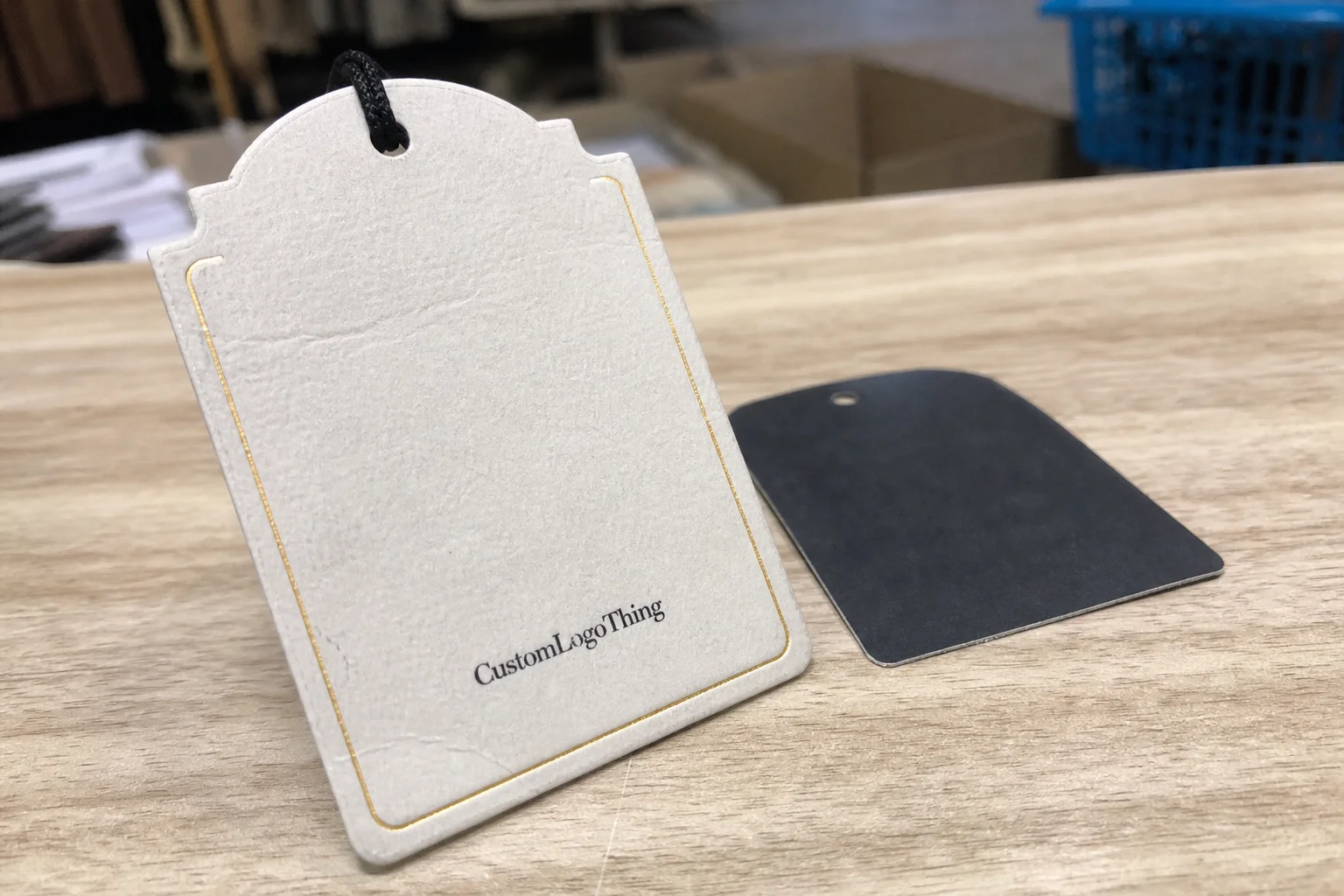
A hang tag is small, but the signal is large. Buyers often notice the paper stock, print clarity, and finish before they study the garment label or seam construction. That first tactile read can raise or lower the perceived price bracket in seconds. For a private label brand, that is a practical advantage, not just a design preference.
Private label hang tags are custom-branded tags produced for apparel sold under a brand’s own name rather than a manufacturer’s label. In the premium space, they do more than display size or price. They support positioning, reinforce collection identity, and create consistency across tops, denim, knitwear, and outerwear. A luxury clothing hang Tags Supplier Private Label teams rely on should understand that consistency matters across seasons, not only on a single print run.
Luxury tags differ from standard retail tags in a few obvious ways and a few subtle ones. Heavier board, textured papers, soft-touch lamination, foil, embossing, and more careful die cutting all lift the result. Even the attachment method matters. A waxed cotton cord feels different from a plastic fastener. That difference may seem small, but in premium apparel it changes the total presentation.
Think of the tag as part of the packaging system. It should sit comfortably beside tissue, inserts, garment bags, and branded cartons. Brands that already use Custom Labels & Tags often find that a coordinated tag spec makes the entire line feel more deliberate, even if the production cost only moves a few cents per unit.
How private label hang tag sourcing works from brief to delivery
The sourcing flow is usually straightforward, but small gaps in the brief can create expensive rework. A supplier typically starts with an inquiry, then moves into specification review, quoting, sampling, proof approval, production, finishing, packing, and shipping. If the artwork is complex or the finish is premium, the proof stage can become the schedule bottleneck.
To quote accurately, the supplier needs the basics up front: dimensions, stock preference, print sides, color count, finish, quantity, attachment type, and packaging preference. If the brand wants tags packed in sets by SKU or folded in a specific direction for in-store use, that should be stated early. A good luxury Clothing Hang Tags supplier private label buyers can trust will also ask about tolerance on color matching, barcode placement, and whether the tag must carry care or compliance text.
- Artwork: print-ready file, logo usage, and type hierarchy
- Specs: size, thickness, corner shape, hole position
- Finish: matte, soft-touch, foil, emboss, spot UV, edge paint
- Assembly: string, twine, loop pin, or plastic fastener
- Packing: bulk packed, sorted by SKU, or packed with inserts
Domestic production usually shortens communication loops and can reduce freight uncertainty. Overseas production may offer stronger unit economics at higher quantities, but it also adds time for proof shipping, transit, and customs coordination. In both cases, the supplier adds value by catching problems early: missing bleed, too-small type, a barcode that will not scan cleanly, or a hole position that conflicts with the garment silhouette.
Luxury tag materials, finishes, and branding details that matter
Material choice does most of the heavy lifting. A 350gsm coated card can work for straightforward premium presentation, but a textured paper or 400gsm specialty board often creates more depth in hand. Recycled stock can still feel high-end if the fiber quality is good and the print treatment is disciplined. Soft-touch lamination adds a muted, velvety feel, while uncoated textured papers feel more editorial and less glossy.
Finishing is where premium tags either look intentional or overworked. Foil stamping adds contrast, but too much foil can make the tag look busy. Embossing and debossing are subtle, and they often age better than heavy ink coverage. Spot UV can be useful for a logo or pattern, though it should be used sparingly on apparel tags because reflections can distract under retail lighting. Rounded corners reduce wear in transit. Edge painting can be striking, but only if the color is aligned with the brand palette and the carton system.
Branding details need equal care. Logo placement should respect the garment scale. Typography should remain readable at actual size, not just in a mockup. QR codes can link to care guidance or collection pages, but they must be printed at a scannable size. If the tag includes care instructions, origin copy, or legal text, those lines should be checked by someone who understands both the garment category and the destination market. A supplier that also supports Custom Labels & Tags can usually keep tag language and garment labeling aligned.
Fastening is part of the brand story too. Twine feels more artisanal. A black loop pin is cleaner and faster on line assembly. Plastic fasteners are efficient for high-volume retail, but they can read as less premium unless the rest of the system is tightly controlled. For luxury apparel, the attachment should match both the garment weight and the shelf presentation.
For brands working on recycled or FSC-certified stock, ask for documented proof rather than a verbal claim. The FSC site explains certification standards and chain-of-custody basics. If your tags need to survive packed cartons, transit vibration, or distribution-center handling, the testing language from ISTA is useful for thinking about how printed components hold up in the wider packaging system.
One practical buyer rule: if the paper feels luxurious but the cut is rough, the whole tag reads cheap. If the print is perfect but the hole tears under light tension, the problem shows up at the store floor, not in the proof.
Cost, pricing, and MOQ factors that shape your quote
Pricing is driven by a few core variables: quantity, stock, size, print sides, color count, and finish complexity. In practice, the biggest jump usually comes from premium finishing rather than the artwork itself. A simple black logo on thick board can be economical. Add foil, embossing, and edge paint, and the price rises quickly.
MOQ matters because setup costs are spread across the run. Smaller orders often carry higher per-tag pricing even if the design is straightforward. That does not mean a small run is a bad idea. It just means the economics are different. For seasonal capsules, influencer drops, and test collections, a shorter run may be the smarter move if it protects cash flow and avoids overprinting.
| Option | Typical spec | Indicative unit cost at 5,000 pcs | Best for |
|---|---|---|---|
| Value premium | 350gsm card, 1-color print, matte varnish | $0.06-$0.12 | Clean branding, tighter budgets |
| Mid-tier luxury | 400gsm textured stock, 4-color print, soft-touch lamination | $0.14-$0.24 | Most private label apparel lines |
| Top-tier finish | 450gsm specialty paper, foil, emboss, edge paint | $0.28-$0.60 | Premium capsules and statement pieces |
Hidden costs are easy to miss. Custom die creation may add $30-$120 depending on complexity. Variable data such as SKU-specific numbering or barcode changes can also raise setup time. Packaging inserts, banding, polybagging, and split shipments all affect the final quote. A brand that asks for tiered pricing usually gets a better view of the tradeoffs, especially if the supplier provides budget, mid-range, and premium scenarios side by side.
The sharpest quotes usually come from buyers who already know what can be standardized. A single tag size across a collection, with only the colorway or product name changing, lowers file prep and reduces waste. The more a team changes from SKU to SKU, the more likely it is to pay for extra setup, proofing, and packing labor.
A tag does not need to be the most expensive item in the box to look expensive. It needs to be consistent, tactile, and readable at retail distance.
Production steps and turnaround: what to expect at each stage
Once artwork is approved, the schedule moves through a predictable chain: digital proof, material confirmation, print run, finishing, trimming, inspection, and packing. The proof stage matters most because it determines whether the supplier is building the exact file or interpreting it. The fewer assumptions at that stage, the fewer surprises later.
Turnaround depends on the finish and the route. A straight printed tag on standard board may move in 8-12 business days after proof approval. Add foil or embossing and it may stretch to 12-18 business days. Rush orders are possible, but they usually cost more and may limit stock choices. Shipping is often the hidden variable, especially for overseas orders, where freight can matter more than print time.
For brands planning retail launches, influencer seeding, or seasonal delivery windows, buffer time is not optional. Build time for internal approvals, file corrections, and carton packing. If the tags travel with other packaging components, apply the same discipline you would use for cartons, mailers, or carton inserts. For that broader context, the packaging guidance from packaging.org can be useful for teams that want better packaging vocabulary without drifting into theory.
One practical rule: never plan around the fastest quoted date. Plan around the date you can tolerate if one proof round slips by two days. That is how private label teams avoid expensive overnight freight and avoid opening a box of finished tags that no longer match the launch calendar.
Inspection should happen at more than one point. The first check should catch file issues before print. The second should verify color, trim, and finish after production. The last should confirm count and pack-out before cartons leave the facility. Missing ten tags in a 1,000-piece carton does not sound dramatic until a warehouse team opens the box the week before launch.
Choosing a luxury clothing hang tags supplier private label brands can trust
If two quotes are close, compare the supplier’s process rather than the headline price alone. Proof accuracy, finish consistency, communication speed, and reorder stability matter more than a small per-unit difference. The better supplier should be able to repeat the same tag six months later without visible drift in paper tone, foil placement, or trim quality. That is especially important for a luxury clothing hang tags Supplier Private Label brands use across multiple collections.
Ask for physical samples, not just images. A photo cannot tell you whether the stock feels flimsy, whether the edge cut is clean, or whether the foil sits sharply on the paper. A real sample also helps you judge whether the tag suits the garment. A heavy knit with a delicate, glossy tag can feel off. A minimalist shirt with a rough uncoated tag can feel underdeveloped. The sample reveals that mismatch quickly.
Brands should also standardize where possible. One core tag system, with modular changes for SKU, collection name, or colorway, lowers complexity and speeds up reorders. If you need different tag sizes across categories, keep the structure consistent so the brand still feels unified. That is where a supplier with disciplined file control and repeat-order documentation becomes more valuable than a cheaper vendor with a wider promise list.
Good suppliers are transparent about tolerances, packing counts, and replacement policy. They will tell you whether the tag count is exact or has a standard variance, whether the string color can shift slightly across batches, and how they handle defects discovered after delivery. That level of clarity is one reason many buyers prefer to source the full suite through Custom Labels & Tags instead of stitching together multiple vendors for tags, labels, and inserts.
Another practical test is reorder behavior. The first order can be clean because everyone is watching closely. The real measure is whether the supplier can repeat the item without re-educating the whole team. If a vendor cannot locate the final approved file, cannot explain the prior stock choice, or treats every reorder as a new project, the apparent savings disappear fast.
Next steps for placing a smarter private label hang tag order
Start with the inputs you already control: brand assets, garment list, target quantity, preferred finish tier, and any compliance text. If the project is not fully defined, request quotes with assumptions noted clearly. That is better than forcing a supplier to guess. A clean brief usually produces a cleaner print result.
Shortlist suppliers by capability, not just price. Ask whether they can handle textured papers, soft-touch lamination, foil, embossing, and SKU-specific sorting. Ask for sample photos only as a first filter; then request physical samples before approving production. If the supplier struggles to provide a sample pack quickly, that is a useful signal in itself.
Finally, lock the spec into a reusable file. Store the size, stock, finish, attachment method, packing count, and approved artwork together. That one document can save hours on the next reorder and protect the look of the line across seasons. If you are building a longer-term program, the right luxury clothing hang tags supplier private label brands choose should feel less like a print shop and more like a production partner for brand consistency.
That spec file should also include what not to change. Buyers often focus on the visible details and forget the quiet ones: paper grain direction, hole diameter, cord length, and whether the tag was packed face-up or face-down for faster line assembly. Those small choices do not sound glamorous, but they are the details that keep private label programs orderly.
What should I ask a luxury clothing hang tags supplier private label brands can trust?
Ask about materials, finish options, MOQ, proofing steps, sample availability, and whether they can repeat the same spec without drift. Also confirm turnaround, freight method, replacement policy, and how they handle color matching if your brand palette is strict.
How much do private label luxury clothing hang tags usually cost?
Cost depends on quantity, size, stock, print complexity, and premium finishes such as foil or embossing. Smaller orders usually cost more per unit because setup is spread across fewer pieces. A tiered quote makes it easier to compare a lean version, a mid-tier version, and a premium version before you commit.
What is the typical turnaround for custom luxury hang tags?
Most orders move through proof approval, production, finishing, inspection, and packing before shipping. Straightforward tags can move in roughly 8-12 business days after approval, while premium finishes or custom shapes often need 12-18 business days. Shipping time should always be added on top of production time.
Which materials work best for premium private label apparel tags?
Textured paper, thick coated card, soft-touch laminate, and specialty papers are common choices. The best option depends on the garment type, the visual direction, and whether the brand wants a subtle or bold tactile feel. Heavier stock usually feels more expensive in hand.
How can I avoid mistakes when ordering custom hang tags for a clothing brand?
Use print-ready artwork, check spelling carefully, and approve a real sample or a carefully color-managed proof before production. Confirm that hole placement, string type, and tag size suit the garment. For repeatable results, document the final spec so every reorder stays aligned with the original standard. That is the difference between a one-off print job and a reliable luxury clothing hang tags supplier private label program can grow with.