Introduction: Why Premium Garment Packaging Changes the Sale
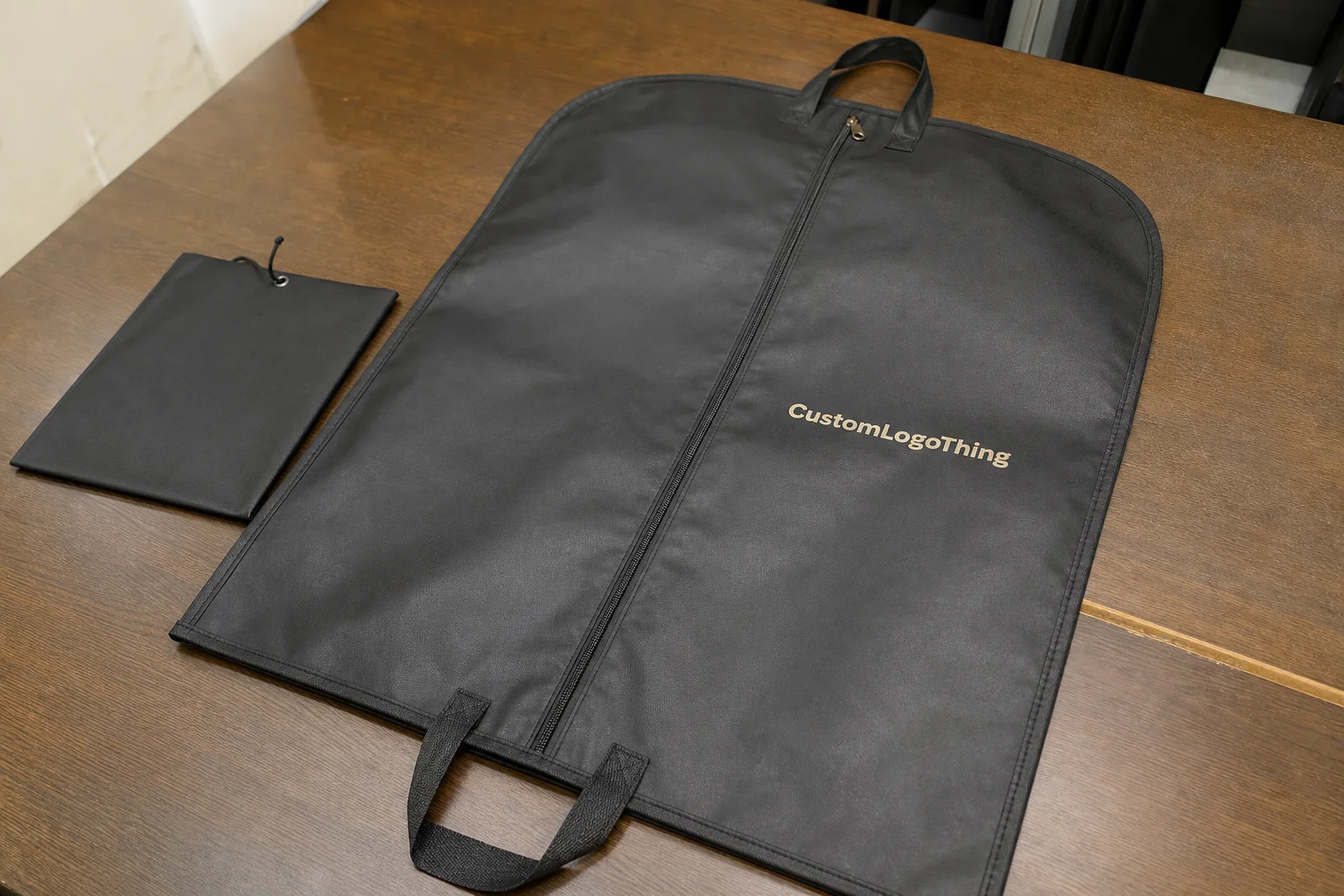
luxury Custom Garment Bags are easy to dismiss as a finishing touch, but they influence both presentation and product condition. The customer touches the bag first. Then they judge what it says about the garment inside. That sequence matters in apparel, where a wrinkled hem, a dusty lapel, or a flimsy cover can change the perceived value in a single glance.
From a packaging buyer’s perspective, this category sits between apparel protection and branded packaging. It is not just a cover, and it is not purely decorative. The best version preserves shape, keeps dust off, reduces handling damage, and still looks like it belongs with the price point of the product.
That combination is harder to execute than many teams expect. A bag can look strong in a mockup and still fail in the rack room if the zipper catches, the hanger opening is too narrow, or the film collapses around a structured shoulder. In premium apparel, those flaws are visible immediately. There is little room for “good enough.”
For buyers comparing luxury Custom Garment Bags with standard covers, the main question is whether the bag supports the brand promise. If it does, it becomes part of the product experience. If it does not, it becomes a visible compromise that can undercut the garment before anyone wears it.
How Premium Garment Bags Work for Protection and Branding
A well-made garment bag has two functions. It protects the item from dust, friction, light moisture, and handling during transport or storage. It also communicates the brand in a way that feels consistent with the apparel inside. Those functions can conflict. Better protection usually means more material, stronger seams, and heavier hardware. More branding usually means more print coverage and more finish decisions. The balance has to be intentional.
Small construction choices often make the biggest difference. A zipper closure changes the sense of quality more than a buyer may expect. So does a hanger opening that gives room for broad shoulders instead of pinching them. Gusset depth matters for long coats and gowns. Without it, the garment compresses against the bag and picks up creases where the hem or sleeve needs space.
Transparent windows can be useful in stock rooms or multi-item retail environments, where quick identification saves time. Opaque panels usually feel more elevated in luxury settings because they create a cleaner visual field and hide operational clutter. That does not make one option better across the board. It just means the choice should match the use case.
Package branding becomes more effective when the print, color, and finish are restrained enough to support the product rather than compete with it. A small logo on a matte surface can feel refined. A glossy bag with heavy print coverage can feel more promotional. The difference is not subtle once the bag is in hand.
Here is the comparison many buyers miss:
- A basic polyethylene cover can protect against dust and light handling, but it usually does little for presentation.
- A laminated custom bag often feels more substantial, holds print more cleanly, and drapes better on a rack.
- A heavier reusable cover can justify a higher price when the bag is meant for travel, repeated handling, or long-term storage.
That last point matters in real operations. If the bag is awkward to use, staff stop treating it as part of the system and start working around it. A premium garment bag should reduce friction for the team, not create more steps at the counter or in the back room.
Key Material, Size, and Finish Factors to Evaluate
Material choice drives the feel, print quality, durability, and price. Polyethylene remains common because it is economical and versatile, but premium buyers also look at EVA blends, laminated films, and heavier reusable constructions. Each behaves differently. Some are soft and flexible. Others hold a firmer silhouette and resist wrinkling. The right answer depends on whether the bag is meant for short-term retail use, long-term storage, or repeated travel.
Thickness is one of the easiest specs to misread. A thinner film can be fine for light dust protection, but if it is too thin, the bag feels fragile and may tear at stress points. A heavier gauge usually improves hand feel and snag resistance, though it can also add stiffness. For structured garments, that stiffness is not always a downside. A bag that holds shape can help a tailored piece look better on the rack and during transit.
Size should be based on the actual garment, not an estimate. A suit cover is not a gown cover, and a coat bag is not a bridal sleeve. Measure from hanger point to hem, then account for shoulder width, flare, and closure clearance. If the hem is pressed against the bottom seam, wrinkles show up quickly. If the bag is too large, the garment shifts around and loses the clean silhouette that premium apparel depends on.
Finish is more than surface preference. Matte tends to read quieter and more restrained. Gloss feels cleaner and more retail-forward. Frosted film sits between the two, giving partial visibility without exposing everything inside. Embossed texture, metallic accents, and reinforced seams all affect both appearance and performance. A finish that looks luxurious in a sample can feel too slick, too stiff, or too fragile once production starts.
Useful features to consider
- Zipper style: smooth-running zippers reduce snagging and improve repeat use.
- Hanger opening: wider openings help with structured shoulders and thicker garments.
- Venting: small vent holes can help limit trapped moisture in storage.
- Window panels: useful for identifying garments in stock rooms or busy retail operations.
- Branded inserts or cards: useful for care instructions, return notices, or brand storytelling.
For brands with broader packaging programs, garment bags should be specified alongside other branded packaging, not treated as a separate afterthought. A consistent visual language across the bag, tags, boxes, and inserts makes the whole presentation feel more deliberate. That consistency is often what people remember, even if they do not analyze it explicitly.
| Material / Build | Typical Feel | Strengths | Best Fit |
|---|---|---|---|
| Basic PE garment cover | Light, functional | Low cost, simple dust protection | Volume storage, short-term use |
| Laminated custom bag | Cleaner, more substantial | Better print surface, improved drape | Retail packaging, branded presentation |
| Reusable heavier-gauge cover | More structured, more durable | Repeated handling, better long-term value | Luxury apparel, bridal, coats, suits |
Cost, Pricing, MOQ, and What Actually Drives Unit Cost
Pricing for luxury Custom Garment Bags usually comes down to five variables: material grade, bag size, print complexity, closure style, and order quantity. Buyers often focus on unit price alone, but that can hide the real economics. A slightly more expensive bag may reduce damage, keep garments cleaner, and avoid rework at the store level. Those savings do not always show up in the quote, but they show up in operations.
For budgeting, ranges are more useful than false precision. A simple custom run in a standard size might land around $0.18-$0.28 per unit at 5,000 pieces, depending on the film type and print coverage. Heavier builds, specialty finishes, better hardware, or more complex artwork can move the number up quickly. Smaller orders usually cost more per unit because setup time is spread across fewer units.
MOQ matters because a boutique and a national chain do not buy the same way. A small bridal store may accept a higher per-unit price if the minimum order is manageable. A larger apparel brand usually wants pricing tiers at multiple volumes. Dry cleaners and hospitality accounts often care more about repeat handling, durability, and how the bag looks after several uses than about the lowest possible unit cost.
There are hidden costs worth checking early. Setup fees, plate costs, proofing rounds, color matching, and freight can change the total budget. Freight is easy to underestimate because garment bags are bulky relative to their weight. A quote that looks competitive on paper can feel much less attractive once carton size and shipping method are included.
| Cost Driver | How It Affects Price | Buyer Takeaway |
|---|---|---|
| Material thickness | Heavier gauge usually costs more | Ask whether the added weight improves function, not just appearance |
| Print coverage | Full coverage costs more than a small logo | Keep the design intentional and avoid wasted ink area |
| Closure hardware | Zippers and reinforced hangers increase cost | Spend where the bag receives the most handling |
| Order volume | Higher quantities usually lower unit price | Ask for tiered pricing across several quantities |
The most useful comparison is not cheapest versus most expensive. It is whether the bag performs well enough to justify the unit cost in the actual environment. A sample that feels weak in hand almost never gets better in production. The reverse is also true: a solid sample often signals fewer problems later.
Production Steps and Lead Time: From Artwork to Delivery
The production flow is usually straightforward on paper: brief, specs, artwork prep, proofing, sampling, approval, production, quality check, shipment. In practice, delays tend to come from incomplete files, late approvals, color changes, or hardware requests that need extra sourcing. Garment bags are not especially complex compared with some packaging categories, but they do depend on exact dimensions and print accuracy. Small mistakes become visible immediately.
Lead time depends on the level of customization and the supplier’s production schedule. A repeat order with a locked spec usually moves faster than a new build with revised dimensions, new printing, and a different closure. Standard runs are more predictable. Rush orders usually cost more because they compress production and inspection windows.
The cleanest orders usually share a few traits: confirmed dimensions, print-ready files, a clear material spec, and prompt sample approval. Those basics sound procedural, yet they remove a surprising amount of risk. A one-centimeter size error can change how a gown hangs. A late color revision can push delivery by days or weeks. Neither issue shows up until the order is already moving.
Quality control should be specific, not vague. Ask how the supplier checks zipper function, seam strength, print placement, and dimensional consistency. For apparel packaging, defects are not abstract. If the bag is crooked, cracked, badly aligned, or too short, the customer sees it before the garment gets any attention.
For teams already managing custom printed boxes, inserts, or other branded packaging, the same approval discipline applies here. Verify the artwork. Confirm the spec sheet. Review the sample in hand. That process takes longer than approving a screen image, but it prevents the kind of mistakes that are expensive to hide later.
Step-by-Step Guide to Specifying the Right Bag for Your Use Case
Step 1: define the garment and the use environment. A one-time bridal gown needs different protection than a suit that travels weekly. Seasonal coat storage sits somewhere in between. The more often the bag is moved, folded, or reopened, the more the build needs to tolerate handling.
Step 2: decide what the brand should communicate. Some buyers want quiet luxury. Others want stronger logo visibility. A few want the bag to function almost like a retail display piece. That choice changes print placement, contrast, and finish. A restrained design often feels more expensive than a loud one, especially for tailored clothing and formalwear.
Step 3: measure the garment properly. Start at the hanger point and measure to the hem. Then check shoulder width, flare, and gusset depth. For long gowns, the lower section matters as much as the top opening. If the bag is too shallow, the garment folds where it should not.
Step 4: match material and closure to handling conditions. If the bag will be shipped, stored, and reused, pay more attention to seam strength, zipper quality, and tear resistance. If it stays mostly in-store, finish and print clarity may matter more than long-distance durability. The spec should follow reality, not aspiration.
Step 5: request a sample and test it under actual conditions. Zip it. Hang it. Fold it if folding is part of the workflow. Check it under store lighting. A bag that looks polished on a screen can look very different in warm retail light or in a back room with harsh overhead fixtures. Testing the physical sample usually reveals the real trade-offs.
“A premium garment bag should protect the garment first and present the brand second. If it does both well, buyers remember it for the right reasons.”
That balance is the point. Not every order needs the same material, same closure, or same level of visual restraint. The right spec depends on the garment, the handling environment, and the level of customer expectation. When those three things are clear, the bag usually comes together more cleanly.
Common Ordering Mistakes That Undercut Premium Results
The first mistake is buying on price alone. Low-cost bags can look acceptable in a digital proof and still feel flimsy in hand. The second is choosing the wrong size. A bag that is too short compresses the garment. A bag that is too wide lets the item move around and lose shape. Either problem can make a premium garment feel under-packaged.
Overdesign is another common issue. Too many graphic elements, too much ink, or overly dense branding often make the bag look crowded rather than elevated. In luxury retail packaging, restraint usually performs better than excess. The logo has more impact when the rest of the surface is not fighting for attention.
Storage and handling conditions are also easy to underestimate. Humid back rooms, repeated folding, and regular travel expose weak seams quickly. If the bag is expected to be reused, it should be built for repeated stress rather than for a single presentation moment.
Skipping sample approval is one of the most expensive shortcuts. A digital proof cannot show zipper feel, seam behavior, or how the bag hangs in real life. It also cannot show whether the transparency level, finish, or color balance reads correctly under practical lighting. The sample stage is where many problems become obvious enough to fix.
Expert Tips for Better Results, Longer Bag Life, and Cleaner Branding
Keep branding restrained unless the product strategy clearly calls for more visibility. Premium usually reads as confident, not loud. For luxury Custom Garment Bags used with formalwear, tailored suits, and coats, a cleaner logo treatment often looks more intentional than a full-surface graphic.
Match the finish to the garment category. Bridal and formalwear often benefit from softer, more elevated surfaces. Tailoring and outerwear may need stronger structure and more practical features. If the finish conflicts with the garment inside, the package feels mismatched even when the print is technically correct.
Ask for a material sample together with the print proof. That combination tells you more than a spec sheet alone. Hand feel, stiffness, and visual weight all affect how the bag reads on the rack and in the customer’s hands. A surface that feels too slick or too brittle usually signals trouble before production starts.
Think beyond the store. If the customer will travel with the bag or keep the garment for long-term storage, the design should handle repeated use and folding. Reusable styles often justify the extra cost because they extend the life of the bag and keep the branding visible longer.
It also helps to create a reorder spec sheet and keep it current. Record the approved size, material, thickness, print details, zipper style, and artwork file. That small step avoids a lot of inconsistency across seasons. Consistency is one of the simplest ways to make branded packaging feel controlled instead of improvised.
For buyers comparing luxury custom garment bags with other premium presentation options, the strongest results usually come from clear specs, practical sampling, and a design that serves both protection and image. If the bag fits the garment, survives the handling environment, and looks aligned with the brand, it earns its place without calling attention to itself.
FAQ
What makes luxury garment bags different from standard garment covers?
Premium bags usually use heavier materials, better closures, and cleaner finishing. They also place more emphasis on branding, reuse, and presentation instead of relying on dust protection alone.
How do I choose the right size for custom garment bags?
Measure the garment from hanger point to hem, then allow space for movement and closure clearance. Shoulder width, hem flare, and gusset depth all matter if you want the bag to preserve shape rather than compress it.
What affects pricing the most for custom garment bags?
Material thickness, print complexity, bag size, closure hardware, and order quantity usually have the biggest effect. Setup, sampling, and freight can also shift the total budget more than buyers expect.
How long does production usually take for custom garment bags?
Lead time depends on artwork approval, sampling, material availability, and production schedule. Repeat orders with a locked specification are usually faster than fully customized runs.
Can luxury custom garment bags be reused for travel or storage?
Yes, if the build is strong enough. Reusable designs need durable seams, a reliable zipper, and material that can handle repeated folding and handling without breaking down quickly.


