Magnetic Gift Box Wholesale: Order Custom Rigid Boxes
A premium product can arrive undamaged and still lose value in the first three seconds. With magnetic gift box wholesale packaging, that opening moment is engineered: the lid lifts cleanly, the magnets catch with a controlled pull, and the product sits square in a fitted insert instead of rattling around like an afterthought.
That matters for cosmetics, jewelry, apparel accessories, candles, electronics, gourmet food gifts, influencer kits, VIP event packaging, holiday programs, and corporate gifting. In those categories, the box is not background material. It protects the product, signals price position, and gives fulfillment teams a repeatable packing format across 500, 5,000, or 50,000 units.
Why Magnetic Gift Box Wholesale Orders Solve More Than Presentation
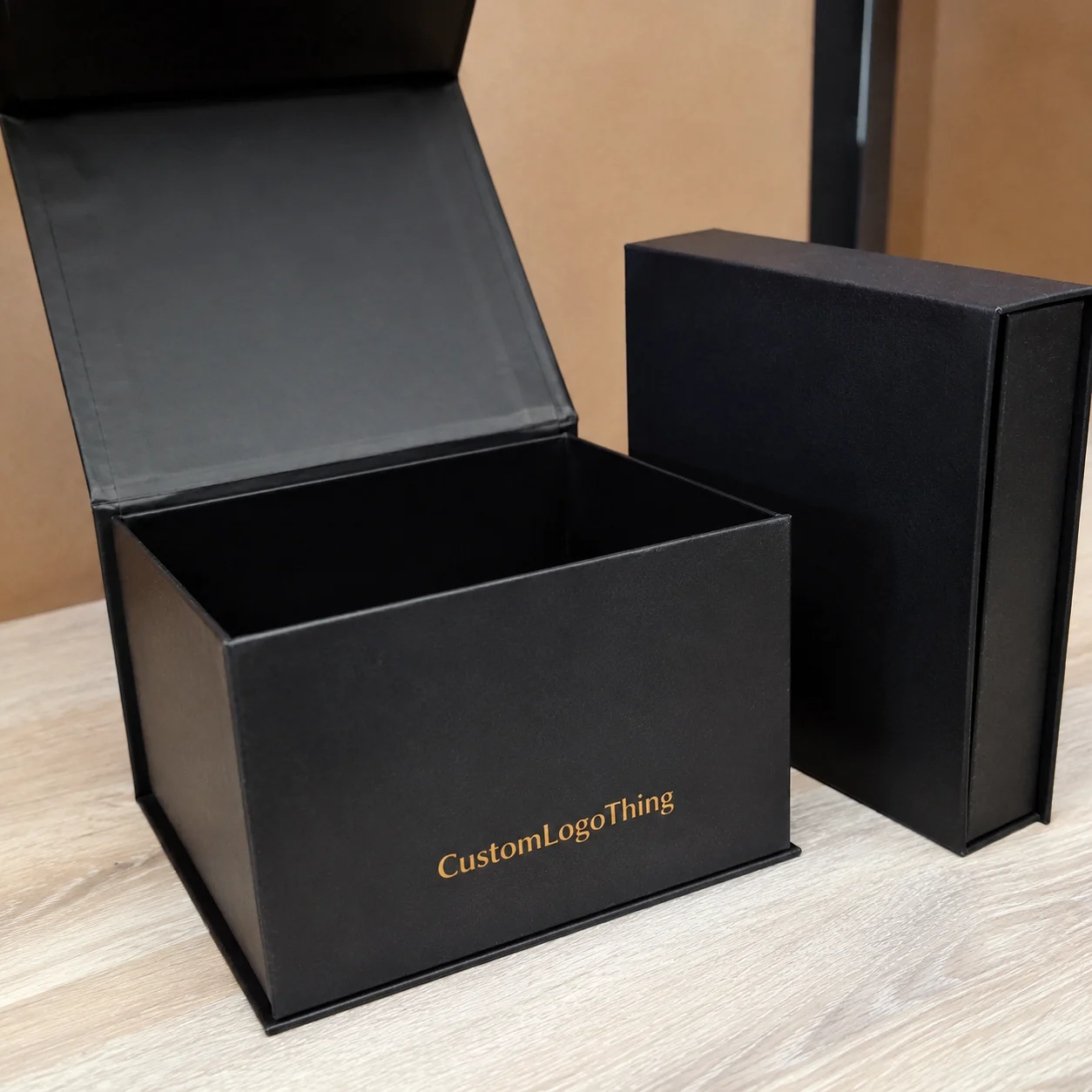
Buyers usually start with appearance. They want a box that feels substantial, photographs well, and supports the brand before the customer touches the product. Fair enough. Presentation sells.
The stronger reason to buy wholesale Magnetic Gift Boxes is control: product position, closure feel, shelf consistency, freight packing, and labor after delivery. A good rigid box reduces the number of tiny decisions made on a packing line. That is not glamour. It is operational value.
Magnetic rigid boxes often replace several small packing steps. No ribbon tying. No tape tab. No separate sleeve unless the product needs one. The lid and base are built from rigid board, usually grayboard or chipboard, then wrapped with printed paper, specialty paper, textured stock, or laminated art paper. Magnets are hidden under the wrap, so the customer sees a clean front panel instead of exposed hardware.
From a buyer’s point of view, that simplicity is useful. A distributor wants boxes that stack evenly in master cartons. A retail team wants the same front-facing logo position on every unit. A subscription program wants staff to load product quickly without correcting crooked presentation in every pack-out. A corporate gifting team wants a premium opening experience without asking temporary labor to handle delicate decorative steps.
The real supplier comparison is not just “Who can print my logo?” A better comparison includes board thickness, insert material, magnet count, finish durability, MOQ, sample process, packing method, freight method, and how clearly the supplier handles artwork approvals. Custom Logo Things can review those details through its Wholesale Programs process so the quote matches the packing job, not a vague idea of a luxury box.
Packaging floor rule: if the box has to be corrected by hand during fulfillment, the structure is not finished yet. A good magnetic box should guide the product into position and close the same way every time.
Rigid Box Construction, Magnet Closure, and Insert Options
A standard magnetic rigid box starts with board. Most custom projects use rigid grayboard in the approximate 1.5 mm to 3.0 mm range, depending on box size and product weight. Smaller cosmetic kits and lightweight accessories may feel right with lighter board. Glass jars, electronics, multi-piece gift sets, and heavier retail kits usually need thicker board so the lid does not flex and the corners do not crush under normal handling.
The wrap paper does a different job. It carries the print, color, texture, and finish. Common choices include 128 gsm to 157 gsm art paper for printed wraps, uncoated specialty paper for a natural feel, and textured stock for minimalist luxury packaging. Lamination adds scuff resistance and changes the hand feel, but it can also affect recyclability. Make that decision early if sustainability is part of the brief.
Box style changes both price and packing behavior. Book-style magnetic boxes are popular because they open like a hardcover and show the product immediately. Collapsible magnetic boxes can reduce freight volume because they ship flat and pop into shape, although they require more care during final assembly. Shoulder-neck rigid boxes create a stepped reveal and can include magnetic flaps in selected designs. Two-piece rigid gift boxes can also use magnetic accent closures where the structure supports it.
Insert choice is one of the biggest functional decisions. EVA foam gives dense cushioning and a crisp cavity cut, often used for bottles, tools, electronics, and fragile kits. Paperboard platforms are lighter, usually more recyclable, and work well for cosmetics, apparel accessories, and promotional kits. Molded pulp can support sustainability goals and hold irregular shapes, though tooling cost and surface texture need review. PET or PVC trays give visibility and structure but add plastic content. Fabric-lined inserts suit jewelry and high-touch luxury goods, especially where a soft surface protects polished finishes.
Magnet performance needs practical testing, not guesswork. Too weak, and the lid feels loose. Too strong, and the customer has to fight the box open or the wrap can stress near the closure. Many designs use two magnets at the front flap, but larger boxes may need more contact points. Lid alignment, spine clearance, finger access, insert height, and product weight all affect the final feel.
If the box will be shipped directly to consumers, ask whether the structure can be evaluated against common transit expectations such as ISTA packaged-product test concepts from ISTA. Not every magnetic gift box needs formal lab testing. A lightweight retail presentation box and a glass candle kit moving through parcel networks are not the same risk.
Custom Print, Finishes, and Branding Details Buyers Should Specify
Most wholesale Magnetic Closure Gift Boxes are decorated through a combination of printed wrap paper and post-print finishing. Offset printing is the common choice for full-color production because it gives stable color across longer runs and handles detailed artwork well. Digital printing is useful for prototypes or very short sample needs, but it may not match the final production method exactly. Spot color matching helps brands with strict identity systems, especially if the logo depends on a Pantone reference rather than a general CMYK build.
Finish selection should match how the box will be handled. Matte lamination gives a calm retail look and reduces glare. Gloss lamination makes color appear brighter and is easier to wipe, though it can show scratches under strong lighting. Soft-touch film adds a premium tactile feel, but dark soft-touch boxes can mark during rough handling unless anti-scratch film is specified. Varnish can add controlled sheen without fully changing the paper surface.
Decoration adds character. It also adds setup.
Foil stamping needs a die and careful pressure control. Blind embossing raises the board surface without color. Debossing presses artwork into the panel and works well for subtle logos. Spot UV and raised UV create contrast on printed areas. Metallic ink can support shine without the raised edge of foil. Ribbon pulls, fabric tabs, printed interior panels, and branded tissue can improve the reveal, but each one affects assembly time and quote structure.
Artwork should be production-ready, not just visually attractive. Send vector logo files whenever possible, ideally AI, EPS, or press-ready PDF. Include bleed, safe zones near folds, barcode placement, warning copy, country-of-origin markings, and retailer-required symbols. For inserts, provide product drawings or measured samples. Cavity dimensions need tolerance. A 50 mm bottle is not always 50 mm across the cap, label seam, shoulder, and base.
Buyers often underestimate how early branding affects engineering. Foil areas need flat, supported surfaces. Magnet placement can limit where heavy embossing belongs. Wrap direction affects visible seams. Board thickness changes the dieline. Interior graphics may need adjusted orientation if the box opens from the long side instead of the short side. For custom rigid boxes, the cleanest prepress work happens when branding, structure, insert, and finish are discussed before the dieline is locked.
Specifications to Confirm Before You Request a Quote
A quote is only as accurate as the specification behind it. “I need a black magnetic box with a logo” is a starting point, not a buying spec. A stronger request includes inside dimensions, outside dimension limits, product weight, product count, presentation orientation, insert type, closure style, shipping method, retail display needs, and whether the finished box must fit inside a mailer, master carton, pallet pattern, or existing warehouse slot.
Measurements deserve extra care. Inside dimensions protect product fit. Outside dimensions affect freight cartons, shelf planning, pallet count, and storage. Insert dimensions need to account for product tolerances, finger access, and removal force. If the product is a jar, measure the cap, shoulder, label, and base. If it is apparel, measure the folded size after compression, not the size on a design sheet.
Material specifications should be written plainly. A useful request may say: 2.0 mm rigid grayboard, 157 gsm printed art paper wrap, matte lamination, two front magnets, paperboard insert, and FSC-certified paper preferred if available. Some buyers need recycled content or FSC claims for retail or corporate responsibility goals. If that is part of the project, say it before sampling. FSC information can be checked through the Forest Stewardship Council, and the supplier should be able to explain what claim, if any, can appear on the packaging.
- Size: inside length, width, and depth, plus any outside size limit for cartons or shelves.
- Weight: product weight per box, total kit weight, and expected stacking conditions.
- Insert: EVA, paperboard, molded pulp, plastic tray, fabric-lined platform, or no insert.
- Closure: book-style flap, collapsible magnetic panel, shoulder-neck feature, or specialty structure.
- Compliance: food-contact separation, Prop 65 labeling if relevant, children’s product concerns, and export carton marks.
Quality-control checkpoints should be part of the conversation before production begins. Look for square corners, clean wrap edges, consistent magnet pull, no bubbling under lamination, accurate foil registration, secure insert fit, and master cartons packed to prevent crushed edges. If the box will ship through parcel networks, ask about edge protection, carton strength, and whether the product needs an outer corrugated shipper.
One caution: magnetic closure does not make a rigid gift box a shipper. Many magnetic boxes are presentation packaging first. They may still need tissue, a sleeve, a protective mailer, or a corrugated outer carton depending on product weight and sales channel.
Pricing, MOQ, and Unit Cost Drivers for Magnetic Boxes
Price depends on more than quantity. Dimensions, board thickness, box style, magnet count, print coverage, finish complexity, insert material, packing method, and freight destination all move the number. A small paperboard insert may add modest cost. A flocked EVA insert with multiple cavities, foil logo, soft-touch film, and printed interior can change both unit price and production time.
Custom rigid magnetic boxes often have higher MOQs than folding cartons because they involve board cutting, wrap setup, magnet placement, finishing, and hand-assembly steps. Exact minimums depend on specification, but custom structures become more economical as quantity rises. A pilot run may support launch testing, while a reorder or annual forecast usually gives procurement a better unit cost.
Ask for price breaks at realistic quantities: 500, 1,000, 2,500, 5,000, and 10,000 units, if those numbers match the sales plan. The goal is not always the lowest unit cost. Cash flow, storage space, launch risk, and freight timing matter. For some brands, ordering 2,500 units with a clear reorder plan is smarter than filling a warehouse with 10,000 boxes before demand is proven.
| Cost Driver | Lower-Cost Direction | Premium Direction | Buyer Note |
|---|---|---|---|
| Board thickness | 1.5 mm to 2.0 mm for light products | 2.5 mm to 3.0 mm for heavy kits | Match thickness to product weight, not just hand feel. |
| Insert material | Paperboard platform or folded tray | EVA foam, molded pulp tooling, or fabric lining | Insert cost can rival decoration cost on complex kits. |
| Finish | Matte or gloss lamination | Soft-touch, anti-scratch, foil, embossing, spot UV | Each process may add setup and approval time. |
| Freight | Collapsible boxes or optimized master cartons | Fully assembled boxes with protective packing | Assembled rigid boxes ship a lot of air. |
There are practical ways to reduce cost without making the box feel cheap. Standardize one box size across multiple SKUs. Use one insert platform with different cavities. Keep foil stamping to one panel instead of wrapping it around several edges. Choose a paperboard insert when the product does not need foam cushioning. Avoid oversized empty space, because extra board, wrap paper, freight volume, and storage all cost money.
A clean quote should separate sample fee, dieline or tooling cost, plate or setup charges, bulk unit price, insert cost, packing cost, freight, duties if applicable, and domestic delivery. That separation helps procurement compare suppliers fairly. A low unit price can become expensive if freight, inserts, or tooling are buried until later. For magnetic gift box wholesale orders, transparency prevents budget surprises after artwork approval.
Production Steps, Lead Time, and Approval Timeline
The order path is straightforward when the inputs are ready. First, confirm the box goal: retail shelf, ecommerce shipper, event handout, subscription kit, or corporate gift. Then gather product dimensions, product weight, artwork, quantity, delivery location, and target in-hand date. From there, the supplier can create a dieline, prepare a quote, issue a digital proof, produce a sample if needed, manufacture, inspect, pack, and ship.
Lead time depends on the structure and approval path. Dieline complexity, sample revisions, specialty paper availability, foil die preparation, insert tooling, seasonal capacity, freight method, and customs clearance can all change the schedule. A simple printed book-style magnetic box with a paperboard insert will usually move faster than a multi-cavity EVA kit with foil, debossing, soft-touch film, and a custom molded tray.
The sample stage has two common forms. A white dummy sample checks structure, size, lid movement, insert fit, and product position. It may have no print at all, and that is fine because its job is mechanical. A printed sample checks color, finish, logo placement, magnet feel, interior graphics, foil registration, and unboxing presentation. If the project has a hard retail launch date, do not skip the mechanical check just to save a few days. A wrong insert cavity discovered during bulk packing is far more expensive than one extra sample revision.
- Confirm goals, quantity, delivery location, and target date.
- Measure products and share photos, drawings, or physical samples if available.
- Approve structure, insert direction, and decoration method.
- Review dieline and digital proof for artwork, copy, barcode, and fold placement.
- Approve white dummy or printed preproduction sample.
- Begin bulk manufacturing, inspection, packing, and shipment.
Internal approval time is the hidden delay. Legal copy, retailer barcodes, warning language, country-of-origin statements, and seasonal campaign artwork often need more than one department to sign off. Build that into the calendar. The cleanest wholesale box projects are the ones where product samples, final or near-final artwork, target delivery date, and freight preference are shared before the first quote is issued.
For carton integrity, buyers can also ask whether the shipping plan follows common corrugated and distribution practices. ASTM and ISTA references may apply depending on the sales channel, product fragility, and parcel requirements. Not every gift box needs formal lab testing, but heavier glass sets, electronics, and direct-to-consumer shipments deserve a more serious transit discussion than a lightweight retail display box.
Next Steps to Place a Clean Wholesale Box Order
Start with the facts. Send product dimensions, product weight, quantity, delivery ZIP code or destination port, artwork files, preferred finish, insert requirements, and target in-hand date. If you have photos of current packaging, competitor references, retail display rules, or a sample you like, include those too. Those details shorten discovery and reduce revision loops.
Custom Logo Things can help at the quote stage by reviewing box style, recommending board and insert choices, flagging cost-saving opportunities, preparing dielines, and aligning decoration methods with the buyer’s budget and brand position. If your team already works through structured purchasing, the Wholesale Programs page is a practical place to frame quantities, reorder expectations, and packaging needs before the order moves into sampling.
Decide early which priority matters most. Lowest unit cost usually points toward standardized sizing, simpler finishes, and efficient freight packing. Premium finish may justify soft-touch film, foil, embossing, or fabric-lined inserts. Faster turnaround may require available materials and fewer decoration steps. Sustainability may favor FSC paper, molded pulp, or paperboard inserts instead of foam and plastic trays. Launch-date certainty may mean approving a white dummy before waiting on a fully printed sample.
A complete specification package leads to a faster quote, cleaner sample approval, and fewer surprises during bulk production. For magnetic gift box wholesale packaging, the most useful information is also the least glamorous: measurements, weights, artwork status, finish direction, quantity, packing method, and delivery target. Get those right, and the premium opening moment has a much better chance of surviving production, freight, fulfillment, and the customer’s hands.
FAQs
What is the usual MOQ for custom magnetic gift boxes wholesale?
MOQ depends on size, structure, insert choice, print method, finish, and packing method. Custom rigid magnetic boxes usually require higher minimums than simple folding cartons because they involve setup, wrapping, magnet placement, finishing, and assembly. Buyers should request price breaks at several quantities so they can compare a smaller launch order against a lower-cost reorder volume.
How do I get accurate pricing for wholesale magnetic closure gift boxes?
Provide inside dimensions, product weight, order quantity, artwork, insert type, finish preferences, shipping destination, and target delivery date. A useful quote should separate unit price, tooling or setup, sample cost, insert cost, packing, freight, and delivery charges so procurement can compare suppliers on the same basis.
Can magnetic rigid gift boxes be made with recyclable materials?
Yes, many projects can use paper-based rigid board, recyclable wrap paper, soy-based or low-VOC inks, and paperboard or molded pulp inserts. Some premium films, plastic trays, foam inserts, and laminated finishes may reduce recyclability, so sustainability goals should be stated before the dieline and material plan are finalized.
How long does production take for custom magnetic gift box bulk orders?
Lead time depends on sampling, artwork approval, material availability, finishing processes, insert tooling, production capacity, inspection, and shipping method. Projects move faster when product samples, final artwork, quantity, finish choices, and delivery requirements are confirmed before sample production begins.
What information should I send before ordering magnetic gift boxes in bulk?
Send product dimensions, product weight, quantity, logo and artwork files, preferred box style, insert requirements, finish choices, delivery location, and deadline. If available, include photos of the product, existing packaging, retail display requirements, and any compliance or labeling requirements.