For streetwear brands, packaging is not filler. It is part of the product. The right bag affects how a drop photographs, how it feels in hand, and how much abuse it survives before the customer opens it. That is why the Matte Zipper Bags for streetwear labels moq guide matters: the finish, material, size, and Minimum Order Quantity all need to line up before the run is approved.
Matte finishes do a lot of quiet work. They reduce glare, make logos easier to read, and help garments look cleaner under harsh lighting. That matters for tees, fleece, caps, and folded sets. A good bag should not steal attention from the product. It should frame it and make the whole package feel deliberate.
There is also a practical side. Streetwear buyers reorder often, switch colorways, and run tight launch schedules. If the packaging spec is vague, the next order can drift. If the spec is tight, the same bag can support multiple drops without surprise cost jumps or last-minute artwork fixes.
Why Matte Finishes Sell Better on Streetwear Drops
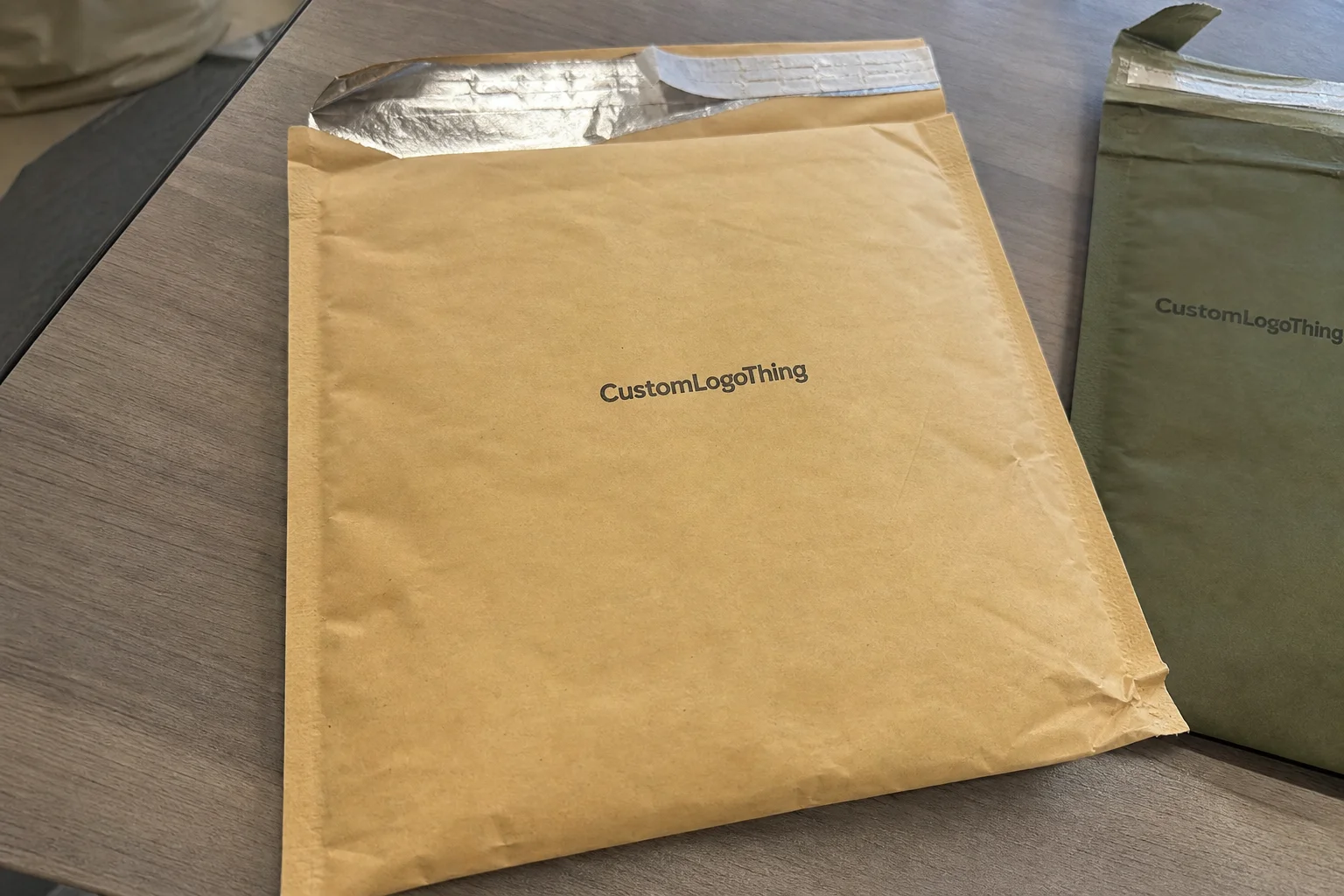
Glossy packaging can look loud in a mockup, then turn messy in real light. It throws reflections, hides fine type, and makes photos harder to control. Matte surfaces are calmer. Logos sit flatter. Small copy stays readable. The bag looks more consistent across product shots, phone flash, retail shelving, and hand delivery.
That matters because packaging often gets seen before the garment does. On social-first launches, the customer may only interact with the bag in a story post or a quick unboxing clip. If the packaging looks cheap, the brand reads cheap. If it looks considered, the product feels more complete.
The pricing logic is straightforward. Packaging is usually a small line item compared with the garment cost, but it can change the perceived value of the entire order. A matte bag can make a $40 tee feel like a finished retail item instead of a folded shirt in a plastic sleeve. That effect is subtle, but it shows up in customer perception, gifting appeal, and how the brand presents itself on repeat orders.
Packaging takeaway: the bag is doing two jobs at once. It protects the product and it sends a signal about the brand. If either job fails, the customer notices.
Matte also helps consistency across content. A streetwear team shooting multiple colorways usually wants the same visual field every time. With matte, the background stays out of the way. That makes it easier to keep product photography, ecommerce listings, and launch graphics aligned.
For brands already using Custom Labels & Tags, the outer bag should match the same design logic. The more the packaging system feels connected, the more intentional the collection appears. That is not a luxury detail. It is part of the brand presentation.
One caveat: matte does not automatically mean premium. A badly printed matte bag still looks bad. The finish only works if the film, zipper, artwork, and dimensions are all chosen with the actual garment in mind.
Matte Zipper Bags for Streetwear Labels: Material and Closure Options
Material choice affects opacity, stiffness, seal strength, and the way the bag feels after repeated handling. For streetwear packaging, the common structures are LDPE, CPP, and multi-layer films with a matte treatment or matte lamination. They are not interchangeable. Each one changes the look and the cost.
LDPE matte bags are flexible and usually easier to pack in bulk. They work well for soft goods and accessory packs. CPP-based bags feel crisper and hold a flatter face, which helps if the brand wants a cleaner shelf presentation. Multi-layer builds can improve structure and print appearance, but they usually push the unit cost up.
Zipper choice matters just as much. A standard reseal zipper is enough for many garments. It keeps dust out, allows the bag to be reused, and gives the customer a cleaner opening experience. Higher-spec zippers can feel smoother and more secure, but they also affect tooling and MOQ. If the zipper is stiff, misaligned, or weak at the corners, the whole package feels cheap no matter how good the print is.
Optional features should be tied to function, not decoration. A hang hole helps with retail display. A tear notch makes opening cleaner and more consistent. A gusset gives extra room for hoodies, heavyweight tees, or a packed set with a card insert. Add them only when they solve a real packing problem.
| Option | Typical Use | Packaging Impact | Cost Effect |
|---|---|---|---|
| LDPE matte with reseal zipper | Tees, light fleece, accessories | Flexible, easy to pack, clean visual field | Lower unit cost and easier MOQ entry |
| CPP or multi-layer matte film | Premium drops, sharper shelf presentation | Crisper feel, flatter appearance, better print stability | Higher material and setup cost |
| Matte bag with gusset | Hoodies, layered sets, thicker folds | More depth, less compression, better fit | Usually increases unit cost |
| Matte bag with hang hole | Retail display and hanging storage | Improves merchandising utility | Small cost increase, useful in retail |
Film thickness is a real decision, not a line item to leave until the end. Too light, and the corners can split or the zipper edge can feel flimsy after a few open-close cycles. Too heavy, and the bag can become overbuilt for the garment and push pricing up without improving performance. For many streetwear runs, the useful range is somewhere in the middle, often around 60 to 120 microns depending on size and load, but the exact spec should follow the packed product, not a guess.
Print coverage also changes the final result. Full coverage on a matte base gives a strong brand block and usually looks more intentional on camera. Partial print can lower cost, but sparse artwork can feel unfinished if the layout is not disciplined. Soft-touch finishes can work, though they are not a universal upgrade. They add texture and a premium feel, but only if the brand wants that visual language.
Size, Thickness, and Print Specs That Prevent Reorders
Most packaging problems start with sizing that was estimated instead of measured. The bag gets sized against a flat garment, not the real folded product with a tag, tissue, sticker pack, or insert card. Then the first shipment lands and the zipper is under stress, the corners bulge, or the item slides around inside the bag. That is not a factory mystery. It is a spec problem.
The right way to size a bag is to measure the final packed item. That means the garment folded the way it will actually be packed, with all inserts included. A tee packed with a card is not the same as a tee packed bare. A fleece set is not the same as a single shirt. If the product has irregular thickness, measure the thickest point, not the flattest one.
Thickness needs the same discipline. A thinner film lowers unit cost, but the trade-off is real. It can puncture easier, crease more sharply, and lose that clean look after handling. The seal width matters too. A weak seal line is one of the fastest ways to turn good artwork into a bad package.
Print specs should be locked before quoting. Bleed, safe area, barcode placement, zipper clearance, and seal exclusion zones need to be clear from the start. If the design has small type, ask for real proofing at the actual size. Tiny copy that looks fine on a screen can become illegible once it is printed on matte film.
Color is another place where repeat orders go wrong. Matte surfaces usually read slightly softer than glossy ones, so a reference that was approved on a different substrate can mislead the team. For repeatable logo work, specify Pantone targets where consistency matters and keep the approved sample as the benchmark. Do not rely on memory six months later. That is how colors drift.
Spec checklist that saves time
- Folded garment dimensions, not flat garment dimensions
- Film thickness and seal margin
- Zipper width and closure style
- Bleed, safe area, and barcode position
- Pantone references for repeat color work
- Any hang hole, gusset, or tear notch requirements
A second issue is reorders. If the first run works, document the exact bag dimensions, material build, print setup, and approval file. Small memory-based edits create waste. Packaging is not forgiving of “close enough.”
Cost, Pricing, and MOQ Drivers Buyers Should Watch
MOQ is driven by setup, not just a supplier’s mood. Size, film structure, print count, zipper style, and finishing all affect how efficient the run is. A standard matte zipper bag with a clean layout will usually support a lower minimum than a custom-shaped bag with multiple print passes and a special closure.
Buyers should break pricing into components instead of comparing a single number on a quote. Raw material, printing, tooling, setup charge, finishing, and freight all matter. A quote with a low unit price can still be expensive if the tooling fee is high or if the bag requires extra prep before the run.
The rough pricing pattern usually looks like this:
| Order Size | Typical Unit Cost Range | What Usually Happens |
|---|---|---|
| 1,000–2,000 pcs | $0.28–$0.55 | Higher setup charges, less room to spread tooling fees |
| 3,000–5,000 pcs | $0.18–$0.32 | Better balance between MOQ and cost per piece |
| 10,000+ pcs | $0.12–$0.24 | Bulk pricing improves, especially on standard sizes |
These are directional ranges, not promises. A thicker film, more print colors, a full-coverage layout, or a custom zipper can move the number quickly. Freight can also erase a “cheap” quote if the order is packed inefficiently or the lead time forces expensive shipping.
Standard sizes are often a smarter move than brands expect. A well-designed standard bag can look just as strong as a custom dimension if the artwork is disciplined and the fit is right. Custom sizing only pays off when the product shape truly needs it. Otherwise, you are paying to solve a problem that a standard spec already covers.
For brands running multiple colorways, one size across the line can simplify inventory and reduce the risk of dead stock. That matters more than chasing the absolute lowest unit price. A smaller MOQ can help cash flow, but not if it forces a messy reorder structure later.
Production Steps, Lead Time, and Approval Milestones
Clean production starts with a real spec sheet. Not a loose email thread. The quote should be based on dimensions, quantity, material, zipper style, finish, print colors, and the delivery window. If any of those are missing, the price is still soft and the lead time is still floating.
The usual sequence is simple. The supplier reviews the brief, prepares the layout, then sends a proof or sample for approval. If the artwork is straightforward, the job can move faster. If the bag has tight registration, multiple logos, or unusual placement, expect an extra proof cycle. That is normal. Fixing artwork on paper is cheaper than fixing it after production starts.
Most delays come from revisions, not manufacturing. A brand changes logo placement. Someone wants a different shade. The barcode moves. Then the schedule slips while everyone waits for sign-off. The packaging line is rarely the bottleneck. Decision speed is.
For straightforward custom Matte Zipper Bags, production often takes around 12 to 15 business days after proof approval. Complex orders, larger quantities, or specialty finishes can take longer. Transit time is separate. That distinction matters because a bag can leave production on time and still miss launch if freight was not planned early enough.
Repeat orders usually move faster because the approved spec is already on file. That is one reason to keep the artwork package, dimensions, and color references organized. A good reorder should be mostly a confirmation exercise, not a fresh design review.
The most reliable approval flow looks like this:
- Confirm size, quantity, finish, zipper style, and print colors
- Review the quote and check how MOQ affects unit cost
- Approve the digital proof or physical sample
- Release the production order
- Plan freight separately from production timing
If the packaging will sit inside a larger retail or shipping system, durability standards matter too. ISTA guidance can help frame transit expectations, especially if the order is part of a broader fulfillment setup. For sustainability questions, the EPA recycling resources and the FSC site are useful references for broader material decisions, even though they do not replace supplier testing.
What Buyers Get from Our Streetwear Packaging Program
Streetwear packaging works best when it is predictable. Buyers do not need a dramatic pitch. They need a bag that arrives with the right dimensions, holds its shape, and prints the same way on the reorder. That is the real value of a packaging program: fewer surprises.
Our process focuses on the parts that actually fail in production. The first check is fit. The second is the finish. The third is print placement and zipper performance. If the matte surface is uneven, the logo drifts, or the zipper line looks rough, the package loses quality before it reaches the customer. Those problems are easier to catch in proofing than in the warehouse.
Quality control should cover seams, seals, closure action, and print registration. Small shifts matter. A slightly off-center logo, a zipper that snags, or a seal that wrinkles too much can make a premium product feel careless. Buyers who reorder often care about this more than anything else. They already know the garment is good. The bag needs to stay out of the way and support the product.
Artwork review also matters. Vector files in AI, PDF, or EPS are the cleanest starting point. Fonts should be outlined. Bleed needs to be included where the artwork reaches the edge. Low-resolution files slow the proof process and create avoidable print issues, especially on small type and thin lines. If a file needs cleanup, that should happen before the proof is signed off.
The same packaging format can support different streetwear models. Some brands need seasonal drop packaging. Some need a basics program that repeats monthly. Others want a limited capsule run with a more aggressive look and a tighter inventory plan. The bag does not need to change every time. The spec only needs to match the use case.
The best supplier signal is not a polished sales pitch. It is whether the supplier can explain why a given MOQ exists, which part of the spec pushes the price up, and how the approved sample will be repeated on the next order. That is the difference between a quote and a workable supply plan.
Next Steps to Quote, Sample, and Approve the Order
If you are sourcing Matte Zipper Bags, start with the information that affects the quote: size, quantity, finish, zipper style, print colors, and delivery date. Without those details, every number is a placeholder. With them, the options get much easier to compare.
For first-time orders, ask for a proof or sample before production. That is especially useful if the bag has small logos, a custom size, or a dense artwork layout. Proofing catches the errors that cost money later: placement drift, overfilled dimensions, weak margins, and color surprises. Fixing those after production is expensive. Fixing them on a proof is normal.
The approval path should stay short and disciplined:
- Lock the spec sheet
- Review the proof
- Confirm pricing and MOQ
- Approve the sample if required
- Release production
That sequence reduces back-and-forth and keeps the launch schedule realistic. It also makes reorders cleaner because the approved version becomes the reference point. If the line grows, that consistency matters more than shaving a few cents off a quote.
If sustainability is part of the brief, the material choice should be evaluated against the brand’s disposal or recycling goals before the order is placed. Not every matte zipper bag construction fits every sustainability claim. It is better to be precise than promotional.
For streetwear labels, the practical formula stays the same: choose the finish that supports presentation, the size that fits the packed product, and the MOQ that fits the cash plan. That is the part that keeps packaging useful instead of decorative. A clean spec does more for a launch than a vague promise ever will.
FAQ
What is the usual MOQ for matte zipper bags for streetwear labels?
MOQ depends on size, film structure, print count, and zipper type, so standard builds usually start lower than fully custom constructions. A clean spec sheet gives the most accurate minimum, especially when artwork and dimensions are already final.
Can matte zipper bags for streetwear labels be made in custom sizes?
Yes. Custom sizing is useful when the folded garment, insert card, or accessory pack does not fit a standard bag. Packed thickness matters as much as flat dimensions, so the sample stage should confirm real-world fit.
How does matte finish affect pricing on custom zipper bags?
Matte finish usually adds a modest premium, but the larger cost swings usually come from film structure, print coverage, and quantity. A standard size with a disciplined layout can offset part of the finish premium.
What files do you need for printed streetwear zipper bags?
Vector artwork in AI, PDF, or EPS is preferred, with fonts outlined and bleed included where needed. Low-resolution files slow proofing and can create print issues, especially on small logos and fine type.
How long does production usually take after approval?
Turnaround depends on quantity, proof speed, and freight method, but straightforward runs often take about 12 to 15 business days after proof approval. Repeat orders are usually faster because the spec is already approved.


