For coffee brands, Matte Zipper Bags MOQ for coffee brands is rarely a side question. It is usually the first hard buying decision: you want packaging that looks premium, protects aroma, and does not lock up cash in inventory that moves too slowly. The complication is that custom coffee packaging becomes expensive very quickly if the structure, finish, and print method are not matched to the order size.
Matte finishes tend to sell the look. Zippers sell convenience after the first opening. MOQ decides whether the project feels practical or like a warehouse problem in waiting. The goal, then, is not to chase the fanciest sample on the table. It is to choose a bag that performs well, prints cleanly, and still makes sense at the order quantity you can actually support.
Why coffee brands choose matte zipper bags before scaling up
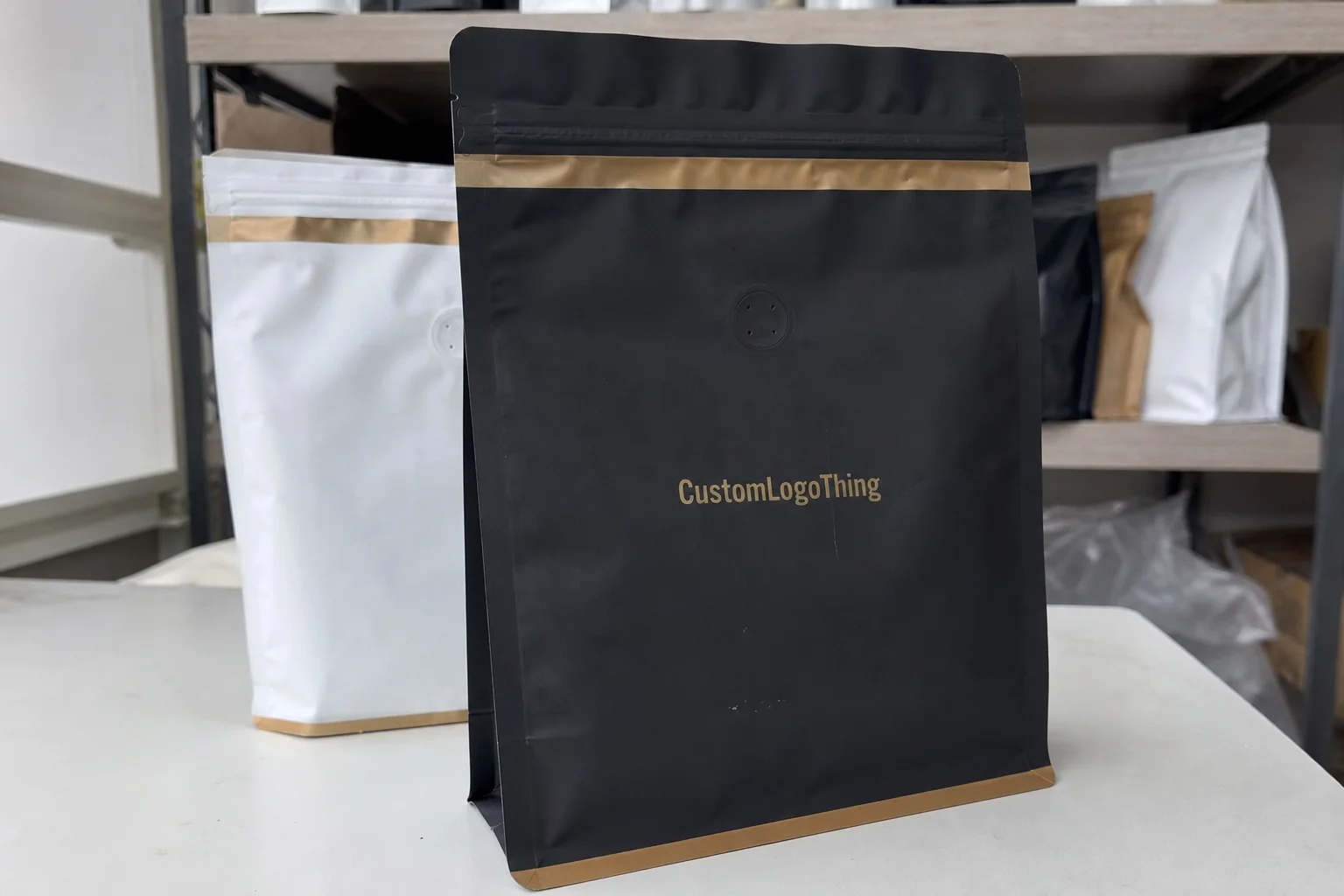
Most roasters begin with smaller runs. A new origin gets tested. A seasonal blend comes and goes. A private-label program starts with a retailer that wants something polished but not overbuilt. In those cases, the packaging has to present well without forcing a large commitment, which is exactly why Matte Zipper Bags MOQ for coffee brands becomes such a useful filter.
A matte finish creates a softer, more restrained shelf presence than gloss. It reads as intentional, especially beside competing bags that all try to look artisanal in slightly different ways. The effect is subtle, but subtle matters in coffee. Consumers often judge quality from the first few seconds of shelf contact, and matte film usually communicates a calmer, more refined brand position.
The zipper is not an accessory. It improves the post-open experience, which is one of the few packaging details customers will interact with repeatedly. If the bag tears badly, the zipper misaligns, or the seal feels flimsy, the product starts losing credibility long before the coffee itself is finished. Freshness is the obvious reason for a proper closure, but user trust is the less visible one.
Low minimums solve one problem and create another. They reduce launch risk, but they can push unit costs up once printing, specialty films, valves, and soft-touch finishes are added. A quote that looks attractive on the surface may only make sense if you understand what is included and what is being charged separately. Packaging pricing has a habit of moving in small increments that become large very quickly.
“Good coffee packaging is not just a visual decision. It has to protect aroma, survive handling, and still be affordable enough for the stage the brand is actually in.”
That is why early buying decisions should balance appearance, barrier performance, and production simplicity. Matte Zipper Bags can do that well, but not every version of the bag is equally suitable. A matte finish is not a single specification, and MOQ is not fixed across all structures.
Matte zipper bag build options coffee buyers should compare
Bag structure affects shelf presence, fill efficiency, shipping behavior, and unit cost. For coffee, the most common formats are stand-up pouches, flat bottom bags, and side gusset bags. Each one can work well, but each one suits a different sales channel and order profile.
Stand-up pouches are usually the most flexible option for small to mid-size runs. They display neatly, fill efficiently, and work well for both retail and direct-to-consumer fulfillment. Flat bottom bags have a more premium, box-like profile and are often favored for brands that want stronger shelf impact, although they can require tighter print control and may carry higher setup costs. Side gusset bags are a classic coffee format and can be efficient for larger fill weights or traditional retail presentation.
Finish selection matters just as much as the structure. “Matte” can mean several different things. Matte lamination gives a non-gloss surface that sits in a practical middle ground for many brands. Soft-touch matte has a velvety feel and often communicates a higher-end product, but it can cost more and may scuff more easily in heavy handling. Printed matte film can be cost-effective, though ink density and color behavior may vary more than buyers expect.
The zipper also deserves attention. A basic press-to-close zipper is fine for many retail packs, while stronger recloseable styles can improve the user experience for larger bags or higher-value coffees. One-way degassing valves are common for fresh-roast applications and should be considered standard in many cases, especially for whole bean coffee. Tear notches and hang holes are useful, but every added feature affects cost and production complexity.
Barrier performance should come before decoration. Coffee needs protection from oxygen, moisture, and odor transfer. If the film barrier is too weak, freshness drops off earlier than expected, and the brand ends up with complaints that are hard to unwind. In practice, the right bag is usually the one that combines barrier, sealing behavior, and printability without trying to do too much.
- Stand-up pouch: strong display value, efficient for retail and e-commerce.
- Flat bottom bag: premium shelf shape, often more expensive to produce.
- Side gusset bag: familiar coffee format, useful for larger fills.
- Matte laminate: common balance of appearance and budget.
- Soft-touch matte: richer feel, higher cost, more sensitive to handling marks.
After the first comparison round, many buyers discover that the prettiest sample is not the most practical one. Size, fill weight, channel, and fulfillment method all matter. A bag that works for retail shelf display may not be the best choice for subscription shipping, and a pouch that looks ideal in a mockup may wrinkle badly once filled. That is where a lot of packaging budgets go off course: the design is right, but the structure is wrong for the job.
Key specifications that affect print quality and freshness
Common material stacks for coffee packaging include PET/PE, kraft-lined laminates, and higher-barrier structures such as PET/VMPET/PE or similar combinations. PET helps with print stability and stiffness. PE supports heat sealing. Metallized or high-barrier layers improve resistance to oxygen and moisture. Kraft can create a natural look, but it does not automatically provide the barrier performance coffee needs, so the laminate behind it matters just as much as the visible surface.
Thickness influences puncture resistance, handling durability, and cost. Many coffee bags sit somewhere in the 100–160 micron range, although the right spec depends on size, fill weight, and shipping conditions. Heavier film usually improves toughness, but it also increases material cost and can affect carton weight if the bags are shipped in bulk. For brands selling direct, that can matter more than the catalog price suggests.
For coffee specifically, ask about heat-seal compatibility, zipper seal strength, puncture resistance, valve placement, and whether the structure can hold up during transport. A degassing valve is only useful if it is installed correctly and the surrounding film can survive the pressure and handling that come with real distribution. A bag can look perfect on arrival and still fail later if the seal area is weak or the valve area was not reinforced properly.
Print quality on matte surfaces deserves extra attention. Dark solids can look rich and premium, but they can also show banding, uneven ink coverage, or small registration issues more clearly than a glossy film would. Fine type and thin lines can lose clarity if the artwork is too busy or the file preparation is weak. For that reason, a proof on the actual material is far more useful than a screen rendering. The screen is helpful for layout; it is not a substitute for evaluating how ink sits on the final substrate.
Size selection by fill weight
Size should follow fill weight, not the other way around. A 4 oz sample pack, 8 oz retail bag, 12 oz bag, and 1 lb format each need different dimensions so the pouch fills cleanly and closes correctly. Too much empty space makes the package look underfilled. Too little space creates awkward bulging, makes the zipper difficult to use, and can complicate sealing during production.
It is also better to spec the bag from roasted coffee weight rather than green bean weight. Roasted coffee occupies more volume and behaves differently in the pouch, especially with degassing and the way the beans settle in the bag. That small distinction often explains why a design that looks fine on paper feels cramped once the first production lot is packed.
If you need a broader comparison of common packaging questions, the FAQ page covers several typical buying issues, and the Case Studies page shows how brands often narrow their options before placing an order.
Pricing, MOQ, and unit cost for coffee brands
Here is the part most buyers want to pin down quickly: Matte Zipper Bags MOQ for coffee brands shifts with bag size, print method, finish, and structure. There is no universal minimum that fits every format. A simple matte stand-up pouch with limited print colors may have a much lower MOQ than a flat bottom bag with a valve, zipper, soft-touch finish, and rich full-coverage artwork. That is not a pricing trick; it is the normal result of how packaging production is set up.
Typical cost drivers include tooling, setup charges, the number of print colors, finish upgrades, zipper style, valve inclusion, and order quantity. Digital printing often supports lower volumes and faster changeovers, but the unit cost can be higher. Gravure or plate-based printing may offer better economics once volume rises, though the upfront spend is usually higher. Buyers sometimes compare only the headline per-piece price and miss the fact that the economics change sharply once setup is spread across more bags.
| Order tier | Typical use | Indicative unit cost | Buyer tradeoff |
|---|---|---|---|
| 1,000 units | Test run, new origin, seasonal launch | $0.42-$0.85 each | Lowest inventory risk, highest cost per bag |
| 3,000 units | Growing DTC brand, local retail rollout | $0.24-$0.52 each | Good balance of flexibility and unit price |
| 5,000 units | Stable SKU, moderate monthly velocity | $0.18-$0.38 each | Often the practical middle ground |
| 10,000 units | Repeat reorder, multi-channel distribution | $0.12-$0.30 each | Lower unit cost, more cash tied up in inventory |
These figures are only planning ranges. Final pricing depends on artwork coverage, film stack, zipper type, valve count, shipping terms, and whether the order is moving by sea or air. Freight and duties can change the landed cost fast, and buyers sometimes discover that the factory price is only a part of the total spend. If the quote does not clearly show what is included, the missing line items usually show up later.
A practical way to compare options is to request tiered pricing at 1,000, 3,000, 5,000, and 10,000 units. That makes the MOQ curve visible. In many cases, the lowest minimum is not the best decision. The more useful quantity is the one that keeps cash flow manageable while lowering the unit cost enough to justify the inventory on hand.
Also ask whether the quote includes pre-press work, tooling, proofing, and shipping. Those items are often treated separately, and that can make an initially attractive quote less attractive once the full landed cost is calculated. Packaging is one of those categories where “cheap” can be very temporary.
Process, timeline, and production steps from quote to delivery
The usual workflow is straightforward: confirm the specs, review the artwork, approve a proof, produce a sample if needed, run production, inspect the goods, and ship. The part that slows projects down is usually not the press line. It is the artwork file, the revision that arrives after approval, or the missing dimension that has to be clarified before production can start.
For a typical custom coffee bag order, sample lead time often runs about 7-12 business days depending on the structure and print method. Mass production commonly takes another 12-20 business days after approval. More complex matte finishes, specialty valves, or higher-volume runs can extend the schedule. Seasonal demand and production queues matter too, so lead time should be treated as a real planning variable rather than a rough guess.
The fastest way to keep a project moving is to send the dieline, print-ready files, exact fill weight, zipper preference, valve requirement, and target quantity at the start. If the exact dimensions are not final, provide the roast weight, expected density, and whether the bag is intended for retail, e-commerce, or both. Better inputs create better quotes, and better quotes reduce the chance of rework later.
- Confirm structure, size, barrier level, and closure type.
- Review artwork on the dieline.
- Approve a digital proof or physical proof.
- Run a sample if the project needs one.
- Move into production and inspection.
- Ship with agreed carton specs and outer packaging.
Rush orders usually cost more and leave less room for correction. That matters because coffee packaging is not just a print item. The dimensions, seal behavior, and filling profile all need to work together. If the timeline is too compressed, it becomes harder to catch fit issues before a full batch is made.
How we keep coffee packaging consistent across repeat orders
Repeat orders are where packaging quality becomes visible. Color consistency. Zipper feel. Seal strength. Dimension control. Those details decide whether a seasonal return looks like the same product or a slightly off version of itself. Coffee buyers notice this more than they expect, especially if the brand has a clean, restrained design that leaves less room for variation.
Good quality control should check seal integrity, dimensional accuracy, valve placement, print registration, and the surface finish before shipment. If the bags are going into distribution-heavy channels or more sensitive shipping lanes, some brands also ask for carton testing guidance aligned with ISTA testing standards. For environmental claims, the EPA packaging guidance is a useful reference point so the claim language stays grounded in something more than marketing language.
File retention is a small operational habit that saves real time. Keep the final dieline, approved artwork, finish notes, and sample references tied to the SKU. That makes reorders faster and reduces the chance of paying setup charges again for a design that already went through approval. For growing coffee brands, that kind of consistency matters because it protects both the visual identity and the margin.
Warehouse space should also influence MOQ. A smaller roaster with limited storage should not be nudged into a quantity that looks efficient on paper but becomes an operational burden later. Packaging is part of supply chain planning, not just branding. If the order size forces cartons to sit for months, the savings per unit may not be worth the storage pressure.
“The most efficient reorder is the one that matches the previous spec closely enough to avoid retooling, reproofing, and avoidable variation.”
Next steps to order matte zipper bags without overspending
The cleanest way to request pricing is to gather the essentials first: bag size, coffee weight, barrier level, zipper style, valve requirement, artwork format, and target quantity. Those details usually determine whether the quote is accurate or simply approximate. Once those are in place, ask for a few quantity scenarios so you can compare MOQ, unit cost, and finish options side by side.
Samples or pre-production proofs are especially useful with matte finishes and darker artwork. Matte surfaces can look beautiful, but they also make print defects easier to spot if the ink balance is off. A proof is the best place to catch that, not a finished run. It is far less expensive to correct a color issue before production than to discover it after the bags are packed and shipped.
Sales velocity and warehouse space should stay in the conversation the whole time. A lower MOQ can be more useful than a cheaper unit price if the brand is still testing demand. If a coffee label sells 500 bags a month, ordering 10,000 simply because the per-piece number dropped a few cents is not a savings decision. It is an inventory decision, and it should be treated that way.
For brands comparing Matte Zipper Bags MOQ for coffee brands, the smartest path is to lock down exact specs, compare tiered pricing, and verify lead times before approving artwork. That approach usually leads to better costing, fewer surprises, and packaging that suits the business stage the brand is actually in.
What is the usual matte zipper bags MOQ for coffee brands?
MOQ varies by structure, print method, size, and finish. A simple pouch may start lower than a flat bottom bag with a valve and soft-touch lamination. The best comparison is not one universal minimum, but several tiered quotes that show how cost changes as quantity increases.
Do matte zipper bags work for whole bean coffee with a degassing valve?
Yes. Matte finish does not prevent valve integration. The key is choosing a proper barrier structure, confirming heat-seal behavior, and placing the valve correctly so the package can vent gas without weakening the bag.
Are custom matte zipper coffee bags more expensive than gloss bags?
Usually, though the premium depends on the finish, print coverage, structure, and add-ons such as zippers and valves. In some cases, the difference is modest. In others, soft-touch or specialty matte films add a noticeable cost increase.
How long does production usually take after artwork approval?
Sample lead time often runs about 7-12 business days, and production commonly takes another 12-20 business days after approval. Complex structures, seasonal demand, and shipping method can extend that schedule, so lead time should be confirmed before artwork is finalized.
What information should coffee brands send to get an accurate quote?
Send bag size, fill weight, material preference, matte finish type, zipper style, valve requirement, print colors, and target quantity. The more exact the specs, the more accurate the quote and the lower the risk of surprise charges later.


