Buying embroidered Nylon Camp Hats is mostly a materials problem. Nylon is slicker and softer than many common cap fabrics, and camp hats usually have a low crown that shifts more easily during hooping and stitching. A useful nylon camp Hats Embroidery Cost guide has to account for that, because the cheapest quote is not helpful if the logo distorts or the proof needs to be rebuilt.
For buyers, the real cost is a mix of digitizing, setup, thread changes, stabilization, inspection, and any rework caused by artwork that is too dense for the hat. The goal is not just a finished hat, but a clean logo that can be repeated at the right price and within the right timeline.
Why Nylon Camp Hats Need a Different Embroidery Approach
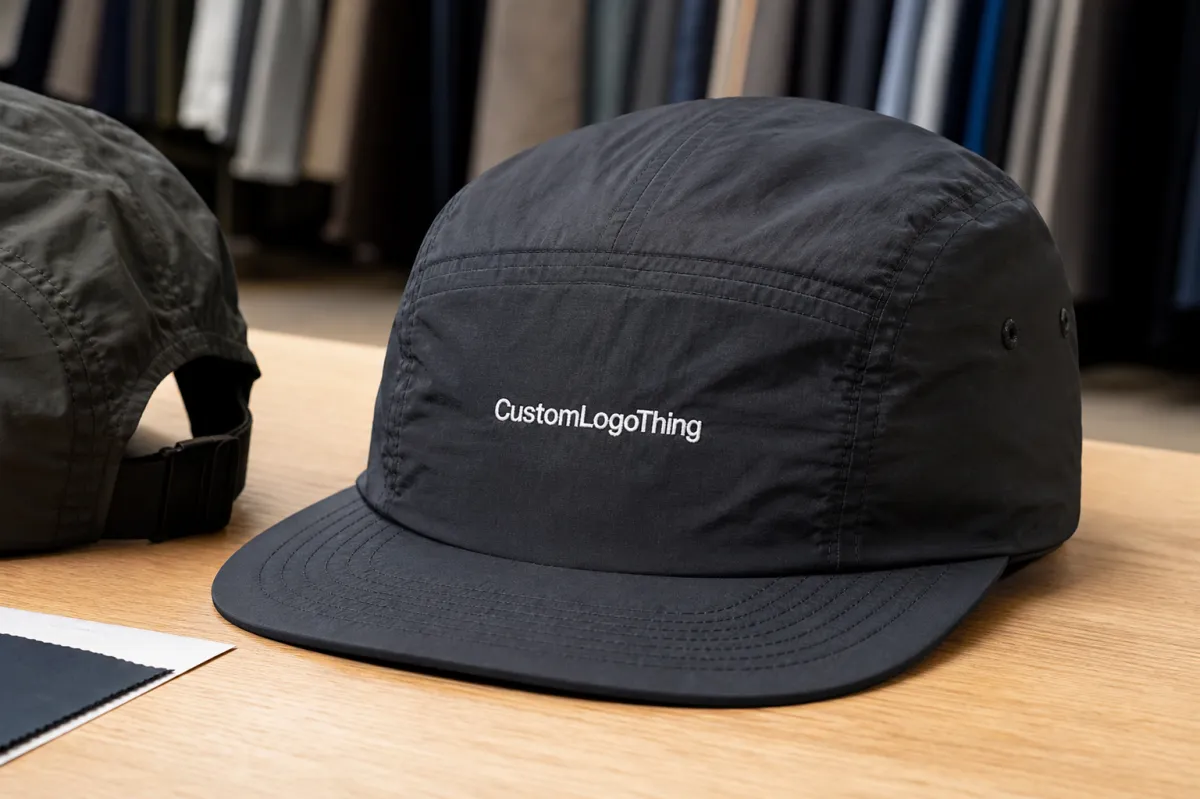
Nylon Camp Hats are light, packable, and popular for retail drops, outdoor promotions, and travel merchandise. That same softness makes them harder to embroider cleanly. The fabric can shift under the needle, and the crown usually has less structure than a standard baseball cap. If the stitch file is built for a firmer surface, puckering and distortion are more likely.
Smooth nylon also offers less grip than cotton twill, so the panel can move during hooping and stitching. Logos placed too close to seams, edges, or curved transitions are more likely to pull out of shape. Dense fills and oversized artwork can also create shine, thread stress, or a logo that reads smaller once stitched than it did on screen.
Placement, size, and stitch count are the first choices that affect outcomes. Center-front embroidery gives the most visibility, but it is not always the safest location. A smaller front mark or a side placement may produce a cleaner result when the hat has a seam through the front panel or a very soft shell. Those decisions affect look, production time, and unit price.
Nylon Camp Hat Construction, Fit, and Decoration Limits
Camp hats are made for a relaxed fit. Most have a low crown, a flat brim, and a soft body that folds easily. That construction is part of the appeal, but it limits how much decoration the hat can support. A stiff or oversized embroidery layout can change the shape of the crown, especially on lighter nylon.
Front-panel embroidery works best when the logo is compact and the stitch density stays moderate. Small text can work, but there is a practical floor. Once letters become too small, thread begins to close counters and the message loses clarity. For production, simplifying the artwork often improves both appearance and cost.
Rear placements and side hits can relieve pressure on the front panel, but they create their own constraints. Back closures can block usable space, and side seams can interrupt the artwork. A logo placed too close to an edge may not have enough stable surface to hold shape after stitching. Those issues can show up as pull, registration problems, or thread breaks that slow the run.
- Closure style: webbing, buckle, and snap hardware change how much back space is available for embroidery.
- Sweatband structure: firmer bands can improve fit, but they also affect how the crown sits in the hoop.
- Internal support: hidden reinforcement helps reduce panel movement on thin nylon shells.
- Panel layout: seams can interrupt the design and force a simpler logo version.
Specs That Change Stitch Quality and Logo Clarity
Good quoting starts with the hat spec, not the mockup. Confirm whether the shell is smooth nylon, ripstop nylon, or a textured blend. A smooth face often needs more stabilization, while ripstop adds a grid that can affect how stitches sit across the panel. Fabric weight matters too. Lightweight shells usually show puckering sooner than heavier ones, even when the artwork is the same.
The logo spec matters just as much. Width, height, stitch density, and thread count all affect clarity. A design with thin lettering and multiple colors may need to be reduced before it is production-ready. That is not a design failure; it is a material limit. Clean embroidery on soft nylon usually comes from disciplined simplification, not from trying to preserve every detail of the source file.
Stabilization is the quiet variable behind many quote differences. A light backing may be enough for a broad, simple mark, but small text or dense fills need more support. Too little stabilizer and the design drifts. Too much and the crown can feel rigid or show marks. The goal is enough control to hold the stitch path without flattening the hat's natural drape.
A practical proof checklist should include:
- Final placement with measurements from seam, brim, or edge.
- Thread color references for every logo element.
- Approved logo width and minimum text height.
- Digitized sample or stitch proof for dense artwork.
- Packaging notes if the order needs retail-ready labeling.
That level of detail reduces revision cycles and helps avoid duplicate digitizing charges. It also narrows the gap between what was approved on screen and what can actually be stitched on the hat.
Nylon Camp Hats Embroidery Cost Guide: What Drives Price
The easiest way to read a quote is to separate product cost from decoration cost. A useful nylon camp hats embroidery cost guide should show digitizing, setup, embroidery labor, packaging, and freight as separate lines whenever possible. If everything is bundled into one number, comparing offers gets difficult fast.
Stitch count is usually the first major driver. A simple one-color logo with about 3,000 to 5,000 stitches will price very differently from a multi-color design with 10,000 stitches or more. More thread colors mean more machine handling, more stops, and more time spent on alignment. Smaller, compact marks often look cleaner and cost less.
Order size changes the math too. Setup fees do not shrink with volume, so a 100-piece order carries more overhead per hat than a 500-piece run. That does not make smaller orders a bad idea. It just means the buyer should expect a higher unit cost and compare quotes using the same hat model, logo size, and delivery terms.
| Order Size | Typical Setup Charges | Embroidery Cost per Piece | Best Fit |
|---|---|---|---|
| 100 units | $35-$85 digitizing/setup | $1.15-$2.40 | Test launches, internal use, first retail check |
| 250 units | $35-$85 digitizing/setup | $0.85-$1.65 | Core program orders with stable artwork |
| 500+ units | $35-$85 digitizing/setup | $0.65-$1.35 | Repeat programs and larger retail runs |
Those ranges assume a straightforward front logo on stock nylon camp hats. Dense fills, unusually small text, specialty thread, raised embroidery, or multiple placements can move the price higher. So can a request for a color-matched shell if the blank has to be sourced to spec instead of pulled from standard inventory.
MOQ also affects price. Some suppliers accept lower minimums on stock hats with a simple logo. Others raise the threshold if the decoration is detailed or the closure style is custom. That reflects how much setup time has to be absorbed before production becomes efficient.
Comparing quotes only works if the inputs match. If one supplier is pricing a basic 100-unit run and another is quoting a more detailed 500-unit program, the lower number is not really lower. It is a different job.
For buyers concerned about packaging or transit durability, it can help to align carton specs with recognized testing standards such as ISTA. If the order includes paper inserts, hang tags, or retail carton components, FSC certification may matter for those printed pieces.
Order Process and Turnaround Timeline for Bulk Runs
The cleanest orders start with usable artwork. A vector file is ideal, along with the target logo width, placement, thread colors, and quantity. If the artwork arrives as a low-resolution image, time gets spent cleaning up edges and rebuilding shapes before anyone can give a reliable price.
After intake, the file is digitized into a stitch program and turned into a proof. That proof should show approximate size, position, and any simplifications needed for the hat. For nylon camp hats, this step matters more than in many other categories because the fabric is less forgiving. It is where the design gets translated into something the machine can place without damaging the panel.
Sampling is worth pushing for if the logo is dense, crosses a seam, or contains small type. A first article is a check against puckering, panel pull, misaligned elements, and thread breaks that would be expensive to correct later. On soft nylon, a sample often catches problems that are invisible in a digital proof.
- Artwork intake and digitizing.
- Virtual proof review and approval.
- Sample or first article, if needed.
- Bulk stitching, trimming, and inspection.
- Packaging, carton labeling, and freight booking.
Simple repeat orders usually move faster than new designs because the stitch file already exists and the placement has been approved before. Rush timing depends on blank availability and how quickly the buyer can sign off on the proof. Delays usually come from missing artwork, last-minute logo changes, or a request to revise the size after production has been queued.
MOQ, Quotes, and Sampling Rules for Smarter Orders
MOQ is tied to more than supplier preference. It reflects inventory position, stitching complexity, and whether the hats are already in stock. A standard nylon camp hat with a single-color logo can often support a lower minimum. A custom shell color, special closure, or heavy embroidery usually raises the threshold because the setup cost is harder to spread out.
Split ordering can reduce risk. One smaller run can validate the artwork, while a larger follow-up order locks in the design once market response is clear. That approach is useful for seasonal drops, staff programs, and retail tests where demand is uncertain.
A quote request should include these details:
- Quantity target and acceptable MOQ range.
- Vector artwork or a clean source file.
- Placement, logo width, and thread count.
- Target ship date and delivery location.
- Packaging instructions and label requirements.
Line-item pricing makes approvals easier. Setup, decoration, and freight should be visible separately so the buyer can see where the money is going. That also helps when two quotes look close but one includes hidden revisions, sample costs, or carton fees that the other does not.
Specs should be locked before production starts. If the logo changes after proof approval, or if the quantity shifts enough to cross a pricing tier, expect the quote to change. That is normal and one of the fastest ways to lose the cost advantage of a well-planned order.
Quality Checks, Packaging, and Reorder Advantages
On nylon, the quality checks that matter most are puckering, stitch trim, registration, and crown distortion. A hat can look acceptable from a distance and still fail close inspection if the fabric has pulled around the embroidery or the thread edges are messy. Buyers who ask for tighter QC usually reduce returns and rework, even if the first price is slightly higher.
Packaging is not cosmetic. Some programs need simple bulk cartons. Others need individual polybags, size stickers, retail tags, or insert cards. Each layer adds labor and material cost. If the hats are going straight into a warehouse or distribution center, simple pack-out may be enough. If they are headed to stores, the packing spec matters almost as much as the embroidery spec.
Reorders are where good file control pays off. Once the stitch file is approved and the placement is documented, the next run usually moves faster and more consistently. The supplier is not guessing, and the buyer is not re-explaining the same logo shape. That saves time and lowers the chance of small errors becoming expensive problems.
The lowest quote does not always produce the lowest landed cost. A supplier with fewer defects, cleaner proofs, and faster reapproval can beat a cheaper option that creates delays, samples, and rejected cartons. Small savings on the embroidery line disappear quickly if the order has to be reworked.
For programs that use paper inserts or outer cartons, FSC-certified components can help keep the packaging spec documented. If transit testing matters, it is better to define carton performance before production starts than to discover a packing issue after the hats are already finished.
Next Steps to Quote Nylon Camp Hats for Embroidery
Start with the facts that affect production. Confirm the hat material, choose the logo size, note the placement, and count the thread colors. Then ask for pricing at the quantities you are actually considering. That gives a clearer picture of where setup cost drops and where the unit price begins to make sense.
Ask for three things in writing: proof approval, MOQ confirmation, and turnaround estimate. Those details matter more than a polished pitch because they define whether the order can ship on time and whether the budget will hold. If any one of those is vague, the quote is not ready for approval.
Save the final spec sheet, proof, and price breakdown. Reorders move faster when the original assumptions are documented, and they are less likely to drift because someone forgot the exact logo width or thread count. That is the practical core of a nylon camp hats embroidery cost guide: match the decoration to the fabric, compare like for like, and keep the production path simple enough to repeat.
How much does nylon camp hats embroidery cost per piece?
Unit cost usually drops as quantity rises because setup fees are spread across more hats. A simple front logo on stock nylon often lands in the ranges shown above, while dense art or extra placements can move the price higher. Line-item quotes are the safest way to compare offers.
What factors increase nylon camp hats embroidery cost the most?
High stitch counts, multiple thread colors, and small orders usually have the biggest effect on price. Soft nylon can also require more stabilization or a sample run if the logo is detailed. Packaging and freight can add more than buyers expect if they are not quoted separately.
What is the MOQ for embroidered nylon camp hats?
MOQ depends on hat availability, decoration complexity, and whether the blanks are already in stock. Simple logos on standard hats often allow lower minimums than custom builds. Ask for MOQ and price breaks together so the threshold is clear.
How long is turnaround for nylon camp hats embroidery orders?
Timeline depends on proof approval, stitch complexity, and order size. Repeat orders with an approved file usually move faster than new artwork or dense multi-color designs. Rush timing is possible only if the artwork and specs are finalized early.
Can small logos be embroidered on nylon camp hats without puckering?
Yes, if the file is digitized for the fabric and the stabilizer is chosen correctly. Small text and tight fills need careful proofing because soft crowns show distortion quickly. A sample is smart whenever the design is fine-detail or placed near a seam.

