Nylon Camp Hats Unit Cost Breakdown for Smarter Quotes
Pricing a nylon camp hat run starts with a basic question: what actually moves the unit cost? Fabric matters, but it is only one part of the bill. Decoration, construction, packaging, sampling, and freight assumptions can all outweigh the shell material itself.
That is why a quote that looks low on paper can become expensive once the buyer adds logo application, custom closures, revision rounds, and shipping. Nylon Camp Hats are light and packable, which helps, but the savings only hold if the spec is tight and the approval process is disciplined.
Why nylon camp hats can lower landed cost on bulk orders
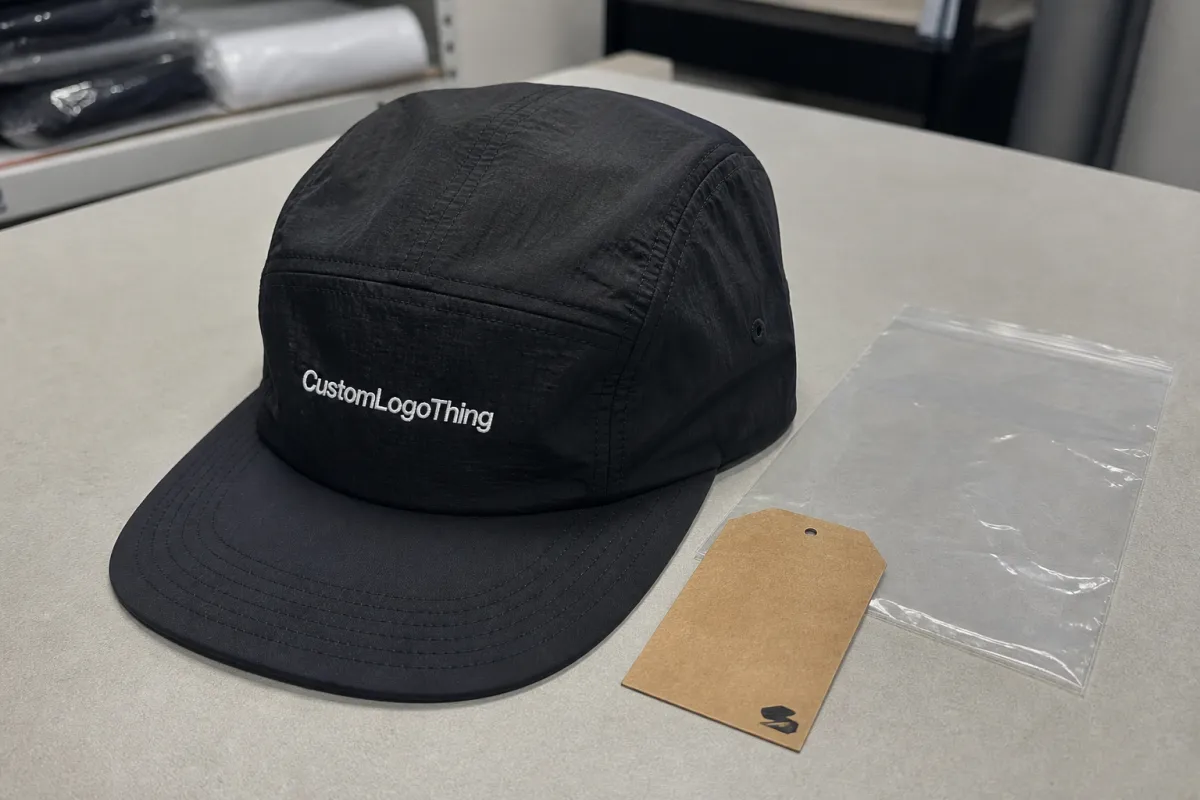
Nylon Camp Hats can be a practical bulk-buy option for merch programs, outdoor brands, and resale lines because they usually ship efficiently. A soft or lightly structured crown, a narrow sweatband, and a compact brim do not add much weight, so carton density tends to be better than on bulkier headwear.
That matters because freight pricing often follows cube as much as weight. A hat that packs flat and fills cartons cleanly can lower the landed cost per piece even when the factory price is only average. In other words, the box can matter nearly as much as the cap.
The catch is setup. Low piece counts make fixed charges visible, and small runs magnify the cost of custom patches, special labels, or unique colors. Nylon camp hats work best when the buyer is willing to standardize the spec and order enough units to spread the setup cost across the run.
In practice, these hats fit trade show giveaways, campground retail, outdoor promotions, and casual streetwear programs. The product is flexible, but the economics stay flexible only when the order is built carefully.
Nylon camp hats unit cost breakdown: what drives pricing
The cleanest way to read a nylon camp hats Unit Cost Breakdown is to split it into five parts: shell fabric, labor, trim, decoration, and overhead tied to sampling and admin. Some costs move with quantity. Others are fixed. Mixing those up is how buyers compare quotes that are not actually comparable.
| Cost driver | What usually affects it | Pricing behavior | Buyer takeaway |
|---|---|---|---|
| Shell fabric | Nylon weight, weave, finish, color | Moderate variation | Light fabrics cost less to move, but specialty finishes add cost |
| Labor | Panel count, stitching complexity, seam finishes | Scales with design detail | Simpler builds usually quote better and produce faster |
| Trim and closure | Snap, buckle, webbing strap, cord lock, eyelets | Small per-piece changes, meaningful at scale | Keep closure choices consistent across colorways |
| Decoration | Embroidery, woven patch, printed label, heat transfer | Setup plus per-piece cost | Decoration is often the biggest swing factor on low MOQ runs |
| Sample and admin | Artwork setup, revision rounds, approvals | Mostly fixed | Clean files and fast feedback save money |
Fabric choice gets too much attention. A 70D or 210D nylon shell may change the handfeel, but the price difference is often smaller than the difference between a simple woven label and a dense multi-color embroidery job. Buyers notice fabric first because it is tangible; the invoice usually disagrees.
Decoration is where cost gets slippery. Flat embroidery is durable and well understood by factories, but dense stitching raises thread time and slows production. Woven patches are cleaner for fine detail, although the setup can feel heavy on small orders. Printed labels are often economical for graphic marks, while heat transfers can help on short timelines or lower-color art. None is automatically best. The best option is the one that fits the artwork and the quantity.
Construction details matter too. More panels mean more sewing. A structured front means more reinforcement. Hidden seam tape, bar-tacks at stress points, and a wider brim all add labor. If the factory is also sourcing a custom buckle or special pull tab, the total climbs again. These are small numbers individually, but a quote is made of small numbers.
Quality tolerance can also change the price. A cheap spec with loose tolerances may look fine in a quote and then fail when the buyer asks for tighter stitch counts, cleaner edge finishing, or stricter color matching. Those changes are legitimate, but they should be priced from the start rather than added later.
Specs buyers should lock before requesting a quote
A vague brief usually produces a vague price. For nylon camp hats, the buyer should lock the build before requesting a quote: crown shape, panel count, brim width, closure type, decoration method, and whether the front panel should be soft or lightly structured. If those basics are still floating, the unit price will be too.
The difference between a soft front and a structured front is not just visual. Structured pieces usually need more reinforcement and more careful shaping, which increases labor and can create another approval round. A snap closure is faster and more common than a buckle-and-webbing system or a cord lock. That does not make the cheaper option better; it just means the buyer should know what each feature is buying.
Material detail belongs in the brief as well. A matte nylon shell gives a different feel than a water-resistant coated version. A polyester sweatband behaves differently from a cotton-blend band in both comfort and cost. If the hat is meant for outdoor use, packability and water resistance deserve more attention than fashion language. If it is retail merch, silhouette and handfeel may matter more.
- Crown shape: soft, unstructured, or lightly structured
- Panel count: four, five, or six panels
- Brim: standard, narrow, or extended
- Closure: strap, buckle, snap, or cord lock
- Fabric finish: matte, coated, or brushed handfeel
A one-page spec sheet can save more time than a long email thread. Include logo files, Pantone references, decoration placement, packaging requirements, and the quantity tiers you want priced. That gives a supplier enough context to separate fixed charges from variable ones and produce a quote that is actually usable.
Clear pricing often starts with clearer instructions. The fewer assumptions a factory has to make, the fewer surprises show up after sample approval.
Sampling workflow, approvals, and quality checks
The sample stage is where many orders lose momentum. A standard workflow runs like this: spec review, artwork placement, mockup approval, physical sample, revision if needed, then bulk sign-off. Each extra loop adds time. If the artwork shifts after the sample is made, the schedule stretches and the price can shift with it.
There are usually three sample levels. A digital mockup is fastest and cheapest, good for placement and proportion. A physical pre-production sample is more expensive, but it reveals handfeel, crown shape, and how the decoration sits on the fabric. A revised sample is the warning sign; it usually means the first brief omitted something important or the buyer changed direction after seeing the first sample.
Quality checks should be blunt and specific. Do not stop at a general thumbs-up. Check logo size, stitch density, seam alignment, brim symmetry, closure function, color match, and packing method. On nylon camp hats, minor issues can be hidden in soft construction, which is exactly why they need to be checked. Loose thread ends, crooked patch placement, and uneven brim curves are all small defects that become visible in a carton full of units.
For buyers who need more control, it helps to borrow from standard inspection habits used in apparel and packaging. That can mean checking carton compression, label legibility, and transit durability against common packaging practices such as those referenced by the International Safe Transit Association. Not every order needs formal certification, but every order benefits from a consistent inspection list.
The best sample is not always the most polished one. A sample that looks beautiful but ignores the actual production method can create trouble later. A sample that is honest about how the factory will build the hat is more useful, even if it feels less glamorous.
MOQ, pricing tiers, and lead time for nylon camp hat orders
MOQ changes the price more than many buyers expect. A fixed setup fee spread across 100 hats looks heavy. Spread across 1,000 hats, it becomes much easier to swallow. That is the basic engine behind the unit-cost structure: fixed charges get diluted as volume rises, while variable charges stay tied to each piece.
Still, the largest order is not always the best order. The real question is whether the buyer can sell the units before tastes move on. A lower MOQ gives room to test a color, a logo, or a silhouette. A mid-volume run usually offers the best balance between inventory risk and pricing efficiency. Bigger orders only win if the demand is real.
Lead time depends on complexity more than optimism. A straightforward spec with ready artwork and limited decoration can often move in about 12 to 15 business days after sample approval, though capacity, seasonality, and trim availability can shift that range. Add custom hardware, label changes, or multiple revision rounds, and the calendar stretches fast. Shipping time sits on top of that.
A simple way to think about tiers:
- Lower MOQ: useful for testing, but setup cost makes unit price higher.
- Middle tier: often the best mix of price stability and inventory risk.
- High volume: best unit economics, but less room for a miss in color or style.
Rush orders deserve caution. Faster timelines usually mean the factory has to move line time, source trims sooner, or compress approvals. That pushes cost upward. Buyers often ask for speed and discount in the same breath. Factories rarely reward that combination.
Freight, duties, and landed cost considerations
Factory price is only one line in the real budget. Freight, duties, brokerage, domestic delivery, and packaging can all change the final landed cost. A buyer comparing suppliers on base unit cost alone is comparing half the picture.
Nylon camp hats usually ship efficiently because they are light and compressible. That helps, but it does not make freight irrelevant. If one supplier quotes ex-factory and another quotes delivered to a warehouse, those numbers do not belong on the same spreadsheet row. The same caution applies to carton count, palletization, and whether retail packaging is included.
There is also a packaging trap that buyers overlook. A hat that packs flat in a carton can save money twice: once in freight cube and again in handling. But excess inserts, oversized polybags, and decorative hangtags can erase some of that advantage. The smallest items often carry the strangest costs.
For buyers who care about waste reduction and shipping efficiency, the U.S. Environmental Protection Agency has broad guidance on packaging and materials management that aligns with common freight thinking: less excess packaging usually means less volume and less waste. That is not a substitute for a quote sheet. It is a reminder that packaging is part of cost, not an afterthought.
Why buyers reorder these nylon camp hats and what to send next
Repeat orders happen when the system works. The hat fits the market, the color stays consistent, the decoration lands in the right place, and the factory repeats the spec without drifting. That consistency is valuable. In many programs, it matters more than chasing the lowest possible quote on a single order.
Reorders also reward suppliers who keep the pricing structure transparent. When the quote is broken into fabric, decoration, packing, and freight assumption, the buyer can see what changed from one run to the next. If a supplier quietly changes the trim or inflates a vague fee, the difference shows up immediately.
If you want a more accurate quote, send the essentials together rather than in fragments:
- Target quantity and any tiered quantity options
- Artwork files and placement notes
- Preferred decoration method
- Color references, ideally with Pantone numbers
- Closure type and brim shape
- Delivery address and target date
- Whether you want factory pricing or landed cost
That package gives the supplier enough context to price the order properly and flag the cost drivers before they become a problem. It also makes comparison more honest. If every quote is built on the same spec, the differences are real instead of decorative.
The cleanest buying decision is the one that uses the same spec, the same MOQ, and the same freight assumptions across every supplier. Anything else turns price comparison into guesswork, and with nylon camp hats, guesswork gets expensive quickly.
What affects the nylon camp hats unit cost breakdown the most?
Decoration method, quantity, and freight assumptions usually move the final number more than the nylon shell itself. A dense embroidery file, a custom patch, or a special closure can add fixed cost and labor time. If the order is small, those extras show up fast.
What MOQ should I expect for a nylon camp hat quote?
MOQ depends on the level of customization, but pricing usually improves in visible steps as quantity rises. A 100-piece run can carry a heavy setup burden, while 300 to 500 pieces often spreads that cost more efficiently. Ask for tiered pricing so you can see the breakpoints clearly.
Which decoration method usually gives the best unit price?
Simple embroidery or a standard woven patch is often a practical middle ground. Printed labels can be efficient for graphic art, and heat transfer can work for fast schedules. The right choice depends on logo detail, desired finish, and how many units you are ordering.
How long does production usually take?
A straightforward order with approved artwork can often move in about 12 to 15 business days after sample approval, though capacity and trim availability can change that. More custom details, extra revisions, or rush timing can extend the schedule. Freight sits outside production time and should be planned separately.
What should I send to get an accurate quote?
Send quantity, artwork, color references, decoration choice, closure type, brim shape, delivery address, and the date you need the hats in hand. If you want a serious comparison, ask for both factory pricing and landed cost. That makes the numbers easier to trust.

