Nylon Camp Hats Fit and Sizing Guide for Bulk Buyers
The Nylon Camp Hats fit and sizing guide matters because this style can look flexible on a spec sheet and still feel wrong on a head. A hat may match the stated circumference, then sit too high, pinch at the temples, or collapse at the front once someone wears it.
For bulk buyers, the main decision is not whether the hat is labeled “one size.” It is whether the actual fit range, crown shape, and closure can handle the intended audience. Nylon camp hats are popular for promotions, retail drops, and outdoor programs because they are light, quick-drying, easy to pack, and simple to decorate. Those same traits make fit mistakes harder to hide.
The safest approach is practical: measure correctly, review the crown shape, match the closure to the wearer range, and approve a sample on several heads. That usually prevents avoidable returns and a second production round.
Nylon camp hats fit and sizing: what buyers miss first
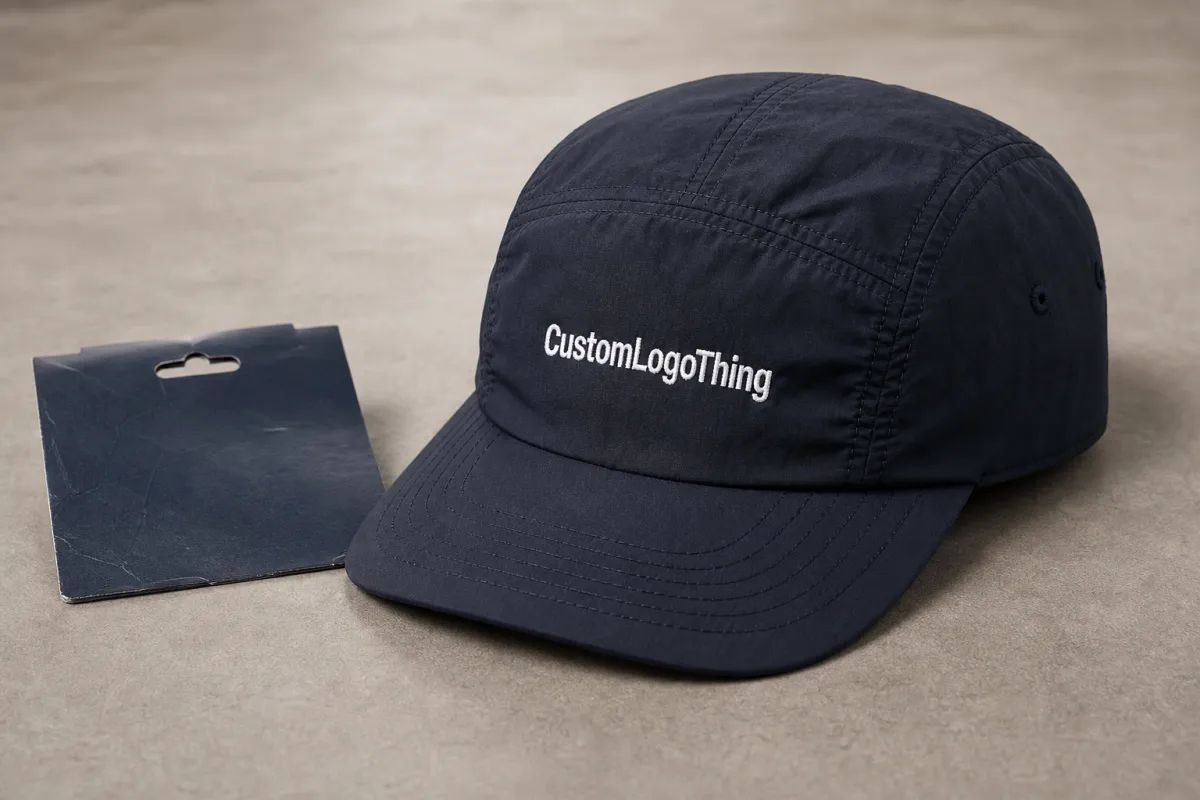
The first surprise is that nylon camp hats often feel forgiving at first touch. The second surprise is that forgiving does not mean universally comfortable. A shallow crown can ride up. A soft front panel can press into the forehead if the shape is too flat for the wearer. A hat can be technically correct and still wear poorly.
Fit starts with head shape, not just head size. Circumference matters, but crown depth and panel balance usually decide whether the hat sits naturally or looks forced. Buyers who only check the tape measurement miss the part people notice most: how the cap frames the face and whether it stays stable during normal movement.
- Light weight for travel, events, and parcel shipping.
- Fast drying for wet-weather use and outdoor wear.
- Easy decoration for embroidery, patches, woven labels, and print.
- Compact packing that lowers carton volume and freight cost.
A sample that fits one person well is not proof of fit. It is proof that one person liked it.
That is why “one size” should be treated as a starting point, not a guarantee. One-size builds can cover a useful range, but only if the closure, crown height, and front structure are balanced.
How nylon camp hat sizing really works
Good sizing comes from the interaction of five elements: head circumference, crown depth, panel structure, brim stiffness, and sweatband feel. If any one of those is off, the hat can wear badly even when the opening looks fine on paper.
Nylon behaves differently from cotton twill or canvas. It usually has less natural body, so stitching, lining, and seam tape matter more than many buyers expect. A 210D nylon camp hat with a soft lining can feel looser than a coated nylon version with a firmer sweatband, even when the measured opening is identical.
For bulk programs, the main build types behave like this:
- Adjustable styles offer the widest wear range, but the closure must stay secure.
- Elastic styles feel easy and low-fuss, though they can become tight on larger heads.
- Fixed-size hats look cleaner, but the fit window is narrow and returns are less forgiving.
Unisex sizing is usually a range, not a promise. Many adult programs sit around 56-60 cm or 22-23.6 inches, but that only helps if the crown shape is built for the audience. A relaxed outdoor style can tolerate more slouch. A cleaner retail style usually needs a firmer front and a more controlled profile.
Material choice also changes the feel in small but measurable ways. A shell in 210D nylon tends to be lighter and easier to pack. 420D nylon usually feels more substantial and keeps its shape better. Add a sweatband, stay stitching, and a properly set brim insert, and the same hat moves from flimsy to stable without becoming stiff.
Measure the head correctly before you order
If you want fewer sizing problems, measure where the hat will actually sit. Use a soft tape measure, wrap it around the widest part of the head, and record the number in both inches and centimeters. Guessing is how a clean-looking order turns into rework.
Measure several real wearers, not one person in the office with a convenient result. Sizing complaints usually come from the edges of the range, not the middle. A hat that works at 57 cm may feel tight at 60 cm and loose at 54 cm. That difference matters once the order leaves sample stage.
- Measure at least three to five heads from the target audience.
- Compare the numbers against the supplier’s actual closure range.
- Add a small comfort allowance instead of ordering to the bare minimum.
- Ask for a fit sample or size set before bulk approval.
The value of the measurement process is simple: it turns closure range into usable data. A 3 cm adjustment span is not the same as a 6 cm span. If the wearers include thicker hair, larger head sizes, or cold-weather layers, that difference can decide whether the hat is wearable or barely usable.
Good practice: test the sample on at least three head sizes and note pressure points, front collapse, rear gapping, and whether the brim stays level after five minutes of wear. That short check catches more bad approvals than a polished product sheet ever will.
Fit variables that change the final feel
Once the measurement is right, the next question is how the hat feels. That usually comes down to closure, crown height, brim shape, and finishing details. Buyers often focus on decoration first because it is visible. Fit is less visible and more expensive to ignore.
Closure style changes comfort and appearance. A snapback gives quick adjustability. A strap and buckle can feel more refined. Velcro is fast but some buyers dislike the look and sound. Elastic is clean and casual, though it narrows the range. A fixed build can look sharp, but it demands better size discipline from the start.
Crown depth controls how the hat sits on the head. Lower crowns give a flatter profile and often suit streetwear-driven programs. Deeper crowns add room and can feel more forgiving. Too shallow, and the front panel stands off the forehead. Too deep, and the hat starts to look oversized or floppy.
Brim stiffness is not a size measurement, but it affects balance. A brim that is too soft can make the hat feel unstable. A brim that is too rigid can create a front-heavy feel. Nylon camp hats usually land in the middle, which is why sample approval matters so much.
- Sweatband material — cotton twill feels softer; polyester blends often dry faster.
- Seam tape — cleaner finishing can reduce scratchy pressure points.
- Lining — adds structure and helps the crown keep its shape.
- Fabric finish — washed nylon feels softer; coated nylon usually feels firmer.
For decoration-heavy programs, keep in mind that embroidery density can also affect the wear feel. Heavy stitching on a thin shell can pull the front panel inward or make the cap sit differently after washing. That should be checked before bulk production begins.
Cost, pricing, and MOQ for nylon camp hats
Better fit usually costs more when it requires tighter pattern control, extra sampling, or a more precise closure component. That is normal. Good fit is part of the product, not a free add-on. Buyers who want a cleaner silhouette and a wider wear range should budget for it instead of hoping the cheapest quote will handle everything.
For custom nylon camp hats, a reasonable pricing range at moderate volume can look like this: $1.40-$2.60 per unit at 5,000 pieces for a simple build, or $2.10-$4.50 per unit at 500-1,000 pieces when decoration, packaging, and fit tweaks are included. Exact numbers depend on panel count, artwork coverage, closure choice, fabric weight, and whether the order needs a custom sweatband or lining.
| Closure option | Fit range | Typical unit impact | Best use case |
|---|---|---|---|
| Snapback | Wide and easy to size | Baseline to +$0.12 | Promos, retail basics, broad audience |
| Elastic | Comfortable, but less adjustable | +$0.10 to +$0.25 | Casual outdoor lines, softer fit |
| Strap with buckle | Wide, secure, more refined | +$0.18 to +$0.35 | Premium retail, brand programs |
| Velcro | Fast adjustment, mid-range | +$0.08 to +$0.18 | Events, giveaways, speed matters |
| Fixed size | Narrowest range | Lowest or neutral | Targeted retail drops with known sizing |
MOQ is where the practical limits show up. Lower quantities usually mean higher unit cost and fewer options for fit customization. Small runs may not justify changing the crown block, sweatband spec, or closure part for a one-off order. If fit matters, sample first and pay for the approval cycle.
For packaging-heavy programs, think beyond the hat itself. Retail cartons, hangtags, and polybags all affect how the product arrives and how it is judged. Transit testing based on ISTA methods is useful for understanding what a packaged hat can survive in shipment. If paper components are part of the order, FSC certification is a simple spec to request for cartons or inserts.
Production steps and lead time for approval
The usual workflow is straightforward: quote, spec review, sample development, fit approval, bulk production, and final packing. Delays usually happen in the middle. Artwork revisions, closure changes, and slow decisions about crown height can each add days.
For timing, a sample round often takes 7-12 business days after the spec is locked. Bulk production commonly runs 12-20 business days after final approval, depending on order size and decoration complexity. Complex embroidery, custom labels, or special packaging usually need extra cushion.
Fit should be approved before decoration is fully finalized. If the structure changes after embroidery or print placement is set, the artwork may need to move. If the closure changes, the back panel stitch path may need to be rebuilt. That means more cost and more delay for no real gain.
- Confirm the target head range and intended wearer profile.
- Approve the closure style and adjustment span.
- Review the sample on multiple heads.
- Lock the production spec in writing.
- Move to decoration and bulk packing only after fit is signed off.
If the order includes shipping cartons, print inserts, or retail-ready packaging, settle carton counts and pack-out rules here as well. A hat that fits well but arrives crushed still creates a complaint. Packaging is part of the fit story once the customer opens the box.
Common sizing mistakes that lead to returns
The classic mistake is trusting a generic one size fits most claim without checking the actual measurement range. “Most” is doing a lot of work there. Another common miss is approving a sample that fits one person well and assuming the rest of the audience will feel the same.
Ignoring crown depth is another easy way to get burned. A hat can have the right circumference and still sit wrong because the front panel is too shallow or too tall. On paper, the number looks fine. On the head, the shape looks awkward. Buyers usually notice only after the cartons are already moving.
Retail teams also get tripped up by silhouette expectations. A relaxed outdoor customer may want a softer, lower-profile fit. A streetwear customer may want a taller crown and a flatter front. Same category, different wear expectation. If the audience is mismatched, the hat becomes technically correct and commercially disappointing.
Measure the hat on three different heads before you sign off. If it only works on one person, the sample is telling you something useful.
Another mistake is skipping sweatband testing. If the band feels scratchy after ten minutes, people will remember that faster than the logo. Fit complaints are often comfort complaints in disguise.
Material and build shortcuts can also backfire. Thin nylon with weak stitching may save a few cents, but it can distort after repeated handling or heat exposure. A poorly finished brim insert can crease in transit. A closure that feels secure in the sample may loosen once the bulk run starts. QC should check both dimensions and wear behavior, not just appearance.
What to do next before you approve the order
Before final approval, lock three things: the target head range, the preferred closure, and the acceptable crown profile. Those controls decide whether the hat wears well or just looks good in a photo.
Then request three documents: a spec sheet, a sample, and a clear grading rule for any size range. If the supplier cannot explain the fit span plainly, that is a warning sign. Clean spec language usually predicts cleaner production.
Test the sample on different head sizes and write down what fails first. Pressure at the temples? Too much gap at the back? Front panel collapse? Weak brim? That feedback is more useful than a vague “looks okay.”
If the sample feels wrong, revise the spec now. If it feels right, document the exact closure setting, crown depth, and wear notes so the production team can repeat it. That is the point of a nylon camp hats Fit and Sizing guide: less guessing, fewer returns, and a product that actually gets worn.
How should nylon camp hats fit on the head?
They should sit securely without pressing into the temples or forehead. A little movement is fine if the closure is adjustable, but the crown should not collapse or float.
What size range works best for nylon camp hats in bulk orders?
The best range depends on the audience, but buyers should always verify the supplier’s actual fit span. Choose a closure and crown profile that covers the widest real wearer range, not just the average head size.
Do nylon camp hats fit differently than cotton or canvas hats?
Yes. Nylon is lighter and usually more flexible, so it can feel softer even when the measurement is the same. That flexibility helps with comfort, but it also makes structure details more important.
What is the best way to approve sizing before production?
Request a sample and test it on multiple head sizes. Confirm the closure range, crown depth, and sweatband feel before you sign off on bulk production.
How do pricing and MOQ affect fit options for nylon camp hats?
Lower MOQs usually limit how much you can customize the fit and often raise unit cost. If fit is critical, budget for sampling and spec revisions before chasing the cheapest quote.


