Buyer Fit Snapshot
| Best fit | Offset Printed Corrugated Boxes projects where brand print, material claims, artwork control, MOQ, and repeat-order consistency need to be specified before quoting. |
|---|---|
| Quote inputs | Share finished size, material target, print colors, finish, packing count, annual reorder estimate, ship-to region, and any compliance wording. |
| Proofing check | Approve dieline scale, logo placement, barcode or warning zones, color tolerance, closure strength, and carton packing before bulk production. |
| Main risk | Vague material claims, crowded artwork, missing packing details, or unclear freight terms can make a low unit price expensive after revisions. |
Fast answer: Offset Printed Corrugated Boxes: Board, Finish, Dieline, and Unit Cost should be specified like a repeatable production item. The safest quote records material, print method, finish, artwork proof, packing count, and reorder notes in one written spec.
Production checks before approval
Compare the actual filled-product size with the drawing, then confirm tolerance on folds, seals, hang holes, label areas, and retail display edges. Reserve space for logos, QR codes, warning copy, and material claims before decorative graphics fill the panel.
Quote comparison points
Review material grade, print process, finish, sampling route, tooling charges, carton quantity, and freight assumptions side by side. A quote is only useful when the supplier can repeat the same color, closure quality, and packing count on the next order.
Offset Printed Corrugated Boxes sit in a pretty practical middle ground. They need to survive carrier abuse, stack cleanly in a warehouse, and still land looking sharp enough to carry a brand story. That is why you see offset printed corrugated boxes so often in premium e-commerce, retail-ready shipping, and subscription packaging, where the outer shipper is part of the experience instead of a disposable shell.
A plain brown shipper does one job and then disappears into the background. An offset-printed shipper can do more. The right structure and print build improve shelf presence, reduce scuffing, and give you crisp graphics that look deliberate instead of rushed. This article walks through how offset printed corrugated boxes are made, what pushes price and lead time around, and how to Choose the Right board, print, and finish without wrecking shipping performance.
What Offset Printed Corrugated Boxes Are and Why They Stand Out
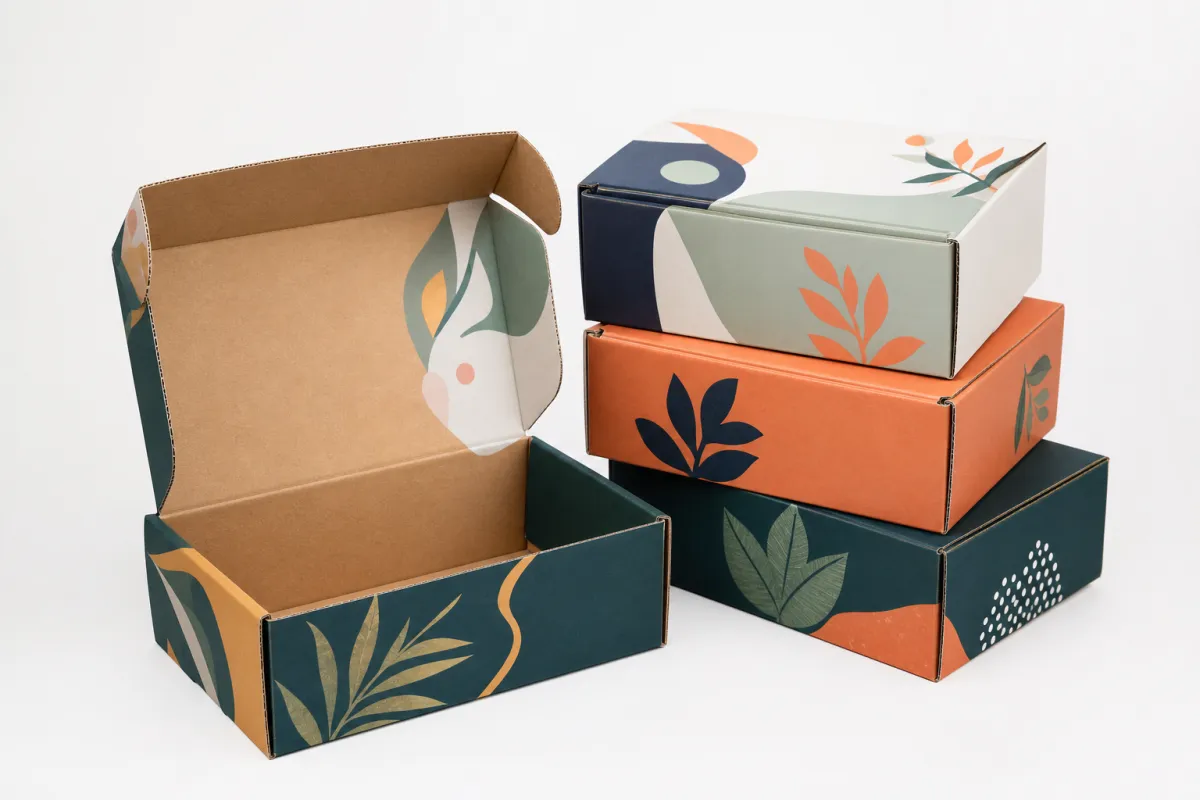
Picture a box that starts as a shipping container, gets handled by a few different people, rides through a mixed carrier network, and still needs to look composed when it lands on a doorstep. That is the real job of offset Printed Corrugated Boxes. They are not just decorated cartons. They are packaging structures built for transit first, with a premium printed face added so the box can keep earning attention all the way to the end user.
The biggest advantage is image quality. Offset printing, also called lithographic printing in this context, delivers fine detail, smoother gradients, cleaner type, and more consistent solids than many direct-print methods. On offset printed corrugated boxes, that matters because packaging art often includes small logos, subtle textures, product photography, or color fields that need to look controlled, not fuzzy or washed out.
Most of these boxes use a construction that separates print from strength. A printed liner, label, or paper sheet is produced first, then mounted or laminated onto corrugated board. That is one reason offset printed corrugated boxes can look much sharper than a standard carton printed directly on the corrugated medium. The top sheet handles the visual finish. The fluted board underneath handles cushioning, compression strength, and shipping durability.
That setup makes the format especially useful for premium e-commerce, subscription packaging, product launches, and retail shipments where the outer package is part of the unboxing moment. A buyer opening a carton should not feel like the brand stopped caring once the shipping label was printed. With offset printed corrugated boxes, the box can stay on-brand from the first glance to the final reveal.
One practical point gets skipped too often: the print method should never be chosen in isolation from the shipping job. A beautiful box that crushes in transit is not premium packaging. It is a replacement cost with a nice surface. I have seen teams approve gorgeous samples, only to discover later that the carton was never really built for the freight path they were using. Good offset printed corrugated boxes start with the product, the pack-out method, and the freight route, then move into print and finish decisions.
A box that looks expensive but fails in transit is not premium packaging. It is a packaging mistake with a nice surface.
If you are still comparing packaging paths, it helps to look at the broader structure options in Custom Shipping Boxes or browse the full range of Custom Packaging Products before locking a format. The better decisions usually happen once branding and logistics are discussed together, not in separate meetings that pretend the box lives in a vacuum.
How Offset Printed Corrugated Boxes Are Made
The production path for offset printed corrugated boxes is more layered than many buyers expect. It usually starts with approved artwork and a dieline, then moves into plate or image setup for the offset press. The printed content goes onto paper or label stock, not directly onto the corrugated board in most cases. That matters because the print surface can be tightly controlled for color and detail before it ever meets the structural board.
After printing, the sheet is dried or cured depending on the inks and coating system in use. If the design calls for extra scuff resistance, gloss, or matte control, a coating may be added at this stage. Then the printed sheet is laminated or mounted onto the corrugated board. In practical terms, this is where offset printed corrugated boxes get their polished look while still keeping the strength of corrugated construction underneath.
Once the board is printed and bonded, it moves into converting. That includes die-cutting the panel shape, scoring fold lines, adding glue areas, and forming the box style specified for the shipment. If the package needs hand holes, tuck flaps, windows, dividers, or inserts, those features are added here too. Good offset printed corrugated boxes are a coordinated chain of steps, not one print pass and a prayer.
Color control is one of the most important parts of the process. Proofing should account for the actual board, coating, and print path, because a logo that looks perfect on a screen can shift once it is printed, dried, laminated, and folded. Press checks, color bars, and defined brand targets help reduce surprises. In production, consistency matters as much as the first sample; repeat runs of offset printed corrugated boxes should match the same brand standard even if the order is split across several dates.
That is also why this differs from standard carton printing. Direct printing on corrugated board can be economical and perfectly fine for many jobs, especially simple shipping packaging. If the job needs cleaner imagery, richer photos, or a more retail-ready surface, offset printed corrugated boxes usually perform better because the print surface is separated from the fluting. That separation gives the box visual polish without giving up the board's structural role.
For buyers who want a better read on how production capacity shapes outcomes, the equipment and finishing range listed in Manufacturing Capabilities can be a useful reference. In this category, the exact line setup, board lamination method, and converting equipment matter a great deal.
Quality and Cost Factors for Offset Printed Corrugated Boxes
Pricing for offset printed corrugated boxes is rarely driven by one thing. It is usually a mix of size, board grade, flute selection, print coverage, coating, and how many extra steps the design asks the plant to perform. A small box with limited ink coverage will cost far less than a large full-bleed carton with specialty coatings, inserts, and tight registration requirements. Shocking, really.
Quantity changes the economics fast. Setup costs for plates, print preparation, and machine changeovers are spread across the run, so larger orders almost always reduce the unit cost. Short runs of offset printed corrugated boxes can still make sense, but they usually carry a higher per-box price because the setup work does not shrink just because the order is smaller. That is why a buyer should think in terms of total project value, not only unit price.
Print coverage matters more than many teams expect. Full-bleed art, solid dark backgrounds, metallic accents, and heavy ink coverage all raise production complexity. Add a coating or specialty finish, and the cost climbs again. On offset printed corrugated boxes, that does not automatically mean the job is too expensive. It means the visual goal needs to match the budget and the structural spec.
Board selection is another major cost lever. A stronger board, a more protective flute, or a higher-performing liner often costs more, but those choices can save money later by reducing damage, returns, and replacement shipments. For heavier items, this tradeoff gets serious fast. If the box fails compression or gets crushed on a pallet, any savings from a lighter spec disappear. Well-chosen offset printed corrugated boxes should protect the product first and market it second.
Here is a practical way to compare common packaging paths for a premium shipping project:
| Option | Best For | Typical Unit Range | Strengths | Tradeoffs |
|---|---|---|---|---|
| Offset printed corrugated boxes | Premium e-commerce, subscription packaging, product launches | $0.18-$0.45 for 5,000 pieces, depending on size and coverage | Sharp graphics, strong brand presentation, good shipping performance | Higher setup cost, more steps, longer lead time |
| Flexo printed corrugated boxes | Utility shipping, simple logos, very large volume | $0.10-$0.28 for 5,000 pieces | Efficient for simpler art, often lower setup burden | Less detail, less refined gradients, flatter presentation |
| Plain corrugated with label application | Low-volume launches, variable branding, test runs | $0.12-$0.40 depending on label size and labor | Flexible, easy to change artwork | Can look less integrated, labels may scuff or lift |
These numbers are directional, not gospel. Final pricing depends on dimensions, board caliper, print side count, coatings, freight assumptions, and how much manual handling the job needs. Still, they show the bigger picture: offset printed corrugated boxes often make the most sense when the packaging is both a marketing surface and a protective shipper. If the box is going to be seen, touched, stacked, and opened, the extra finish quality can pay back in presentation value.
For environmental context, the packaging industry often looks to sources such as the Packaging Machinery Manufacturers Institute for broad industry information and the International Safe Transit Association for transit-testing guidance. On the material side, FSC-certified paper and board can be part of a sourcing strategy if your brand has sustainability goals. Standards and certifications do not replace good engineering, but they do give the project a clearer frame.
If you need a broader view of package types beyond this format, it is smart to compare offset printed corrugated boxes against other structures in the context of order quantity, product weight, and retail exposure. A more decorative box is not automatically better if it adds cost without improving the customer experience or freight survival rate.
Step-by-Step Timeline for Ordering Offset Printed Corrugated Boxes
The cleanest orders for offset printed corrugated boxes usually start with three facts: product dimensions, ship weight, and order quantity. Once those are known, the packaging team can work backward to structure, board grade, and print coverage. If the product is fragile, heavy, oddly shaped, or sensitive to scuffing, state that early. Those details affect the box design more than many buyers realize.
Next comes structure selection and dieline review. Here, the box style is chosen, panel dimensions are finalized, and any inserts, dividers, handles, or windows are mapped out. Good offset printed corrugated boxes should be designed around the way the item actually packs out, not around a graphic mockup alone. A beautiful face panel means little if the product rattles inside or the carton stacks badly on a pallet.
Artwork preparation follows. The design team should supply vector logos, high-resolution images, and color-managed files, along with brand standards that define logos, Pantone targets, and safe zones. The dieline should be checked before final approval so the print does not land too close to fold lines or edges. That step matters even more for offset printed corrugated boxes because the print surface is usually very visible, and even a small alignment miss jumps out immediately.
Sampling or prototyping is worth the time whenever fit is tight or the product is expensive. A flat sample may be enough for simple cartons, but a physical mockup becomes much more valuable if the box has complex inserts, a precise closure, or weight-bearing requirements. For many offset printed corrugated boxes, the sample is the cheapest insurance policy in the whole project. A two-day delay for proofing can prevent a two-month problem after launch.
The typical production sequence follows a familiar order: print, dry or cure, laminate, convert, inspect, pack, and ship. If the job includes specialty coatings or tight color matching, quality checks can happen at several points. In production planning, a simple order may move in about 12-15 business days after proof approval, while more complex offset printed corrugated boxes can take longer if boards, coatings, or component sourcing add extra steps. That timeline stretches further when freight scheduling or launch timing is fixed.
A clear schedule helps everyone. The buyer gets a realistic handoff date, the plant gets room to set up correctly, and the package design is less likely to be rushed. If the order supports a launch date, work backward from the ship window rather than from the artwork approval date. That small shift often prevents the last-minute pressure that causes avoidable mistakes in offset printed corrugated boxes.
Common Mistakes with Offset Printed Corrugated Boxes
One of the most common mistakes is designing only for appearance and forgetting what the box has to survive. Offset printed corrugated boxes may look elegant in a render, but the real job includes compression, vibration, corner impact, and repeated handling. If the box is going into a parcel carrier network, the structure needs to be strong enough for the abuse, not merely attractive on a monitor.
Another frequent issue is artwork that was never prepared for print reality. Low-resolution images, missing bleed, tiny reversed type, and color expectations based on screen previews can all create problems. Because offset printed corrugated boxes rely on a print-and-mount process, the artwork needs to be checked at the correct scale with the correct dieline. File cleanup takes time, but it is much less painful than reprinting a run.
Warehouse handling is often ignored until it becomes a problem. Box size should work with pallet patterns, case pack counts, storage space, and the way workers actually move product. If a carton stacks badly or arrives in a pallet count that does not fit the warehouse plan, the brand pays for that mistake later. Well-planned offset printed corrugated boxes need to make sense on the loading dock as well as in the customer’s hands.
Approving proofs too quickly is another trap. A PDF proof may be useful, but it is not enough on its own for a complex printed shipper. Structural dimensions, logo placement, barcode zone, fold alignment, and final color target should all be reviewed before the order is released. With offset printed corrugated boxes, the proof stage is where expensive surprises are easiest to avoid.
Minimum order quantities and lead times can also catch teams off guard. A premium printed box often requires more setup than a plain corrugated mailer, so it is smart to plan early instead of treating packaging as the last task before launch. If the order quantity is too low, unit cost can rise quickly. If the timeline is too tight, the
FAQ
What should I verify before ordering Offset Printed Corrugated Boxes?
Confirm the product size, material, print method, quantity, sample route, packing count, and delivery date. A clear packaging spec is easier to quote, easier to approve, and easier to reorder.
How many samples should I review before bulk production?
At minimum, review one production-grade sample or proof that shows scale, color, logo placement, finish, and packing fit. For high-volume orders, keep the approved sample as the reference standard.
What usually changes the final cost?
Material grade, printing method, finish, tooling, quantity, packing method, revision count, and freight assumptions can all move the final price.


