Buyer Fit Snapshot
| Best fit | Offset Printed Shipping Envelopes projects where brand print, material claims, artwork control, MOQ, and repeat-order consistency need to be specified before quoting. |
|---|---|
| Quote inputs | Share finished size, material target, print colors, finish, packing count, annual reorder estimate, ship-to region, and any compliance wording. |
| Proofing check | Approve dieline scale, logo placement, barcode or warning zones, color tolerance, closure strength, and carton packing before bulk production. |
| Main risk | Vague material claims, crowded artwork, missing packing details, or unclear freight terms can make a low unit price expensive after revisions. |
Fast answer: Offset Printed Shipping Envelopes: Material, Print, Proofing, and Reorder Risk should be specified like a repeatable production item. The safest quote records material, print method, finish, artwork proof, packing count, and reorder notes in one written spec.
Production checks before approval
Compare the actual filled-product size with the drawing, then confirm tolerance on folds, seals, hang holes, label areas, and retail display edges. Reserve space for logos, QR codes, warning copy, and material claims before decorative graphics fill the panel.
Quote comparison points
Review material grade, print process, finish, sampling route, tooling charges, carton quantity, and freight assumptions side by side. A quote is only useful when the supplier can repeat the same color, closure quality, and packing count on the next order.
Offset Printed Shipping Envelopes: Why They Stand Out
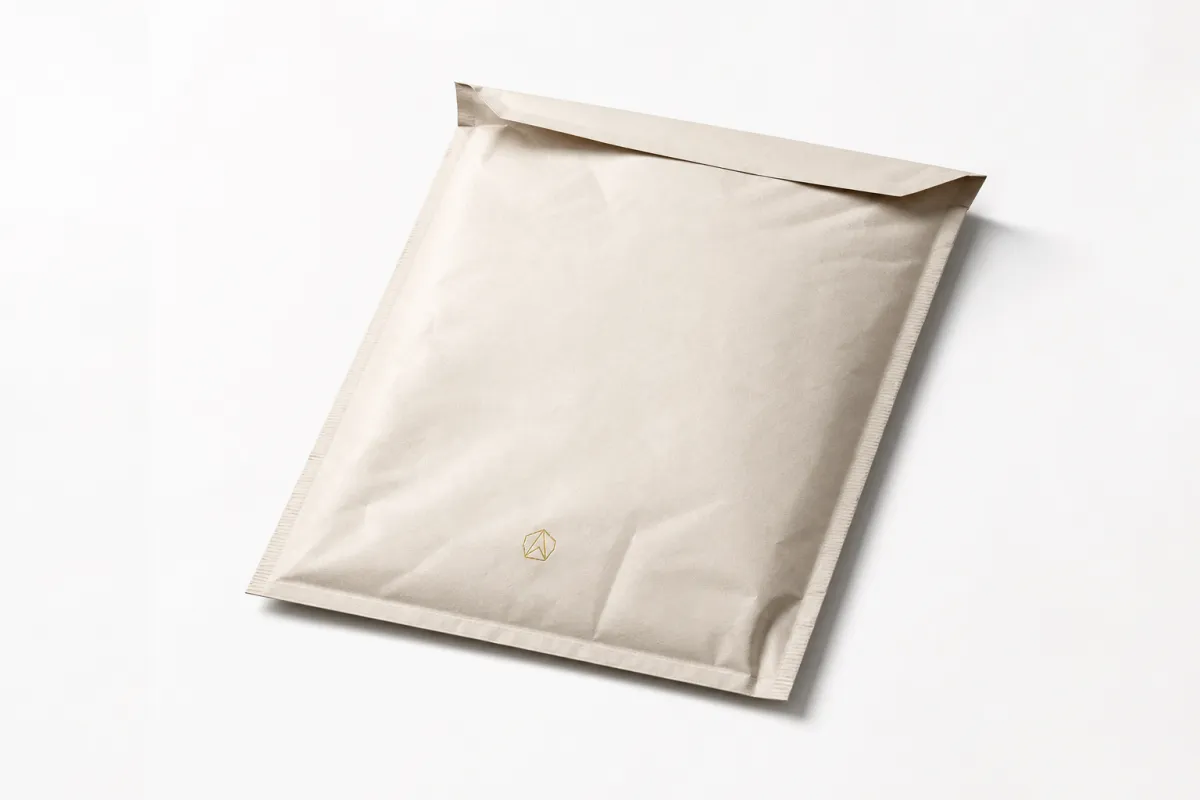
Offset Printed Shipping envelopes do more than move a product from one place to another. They set the mood before the seal is even broken. A plain mailer fades into the background; a well-made one tells the customer somebody paid attention.
That matters in ecommerce shipping, where the package is often the first physical interaction a buyer has with a brand. It also matters for teams trying to keep packaging efficient without defaulting to a generic look that feels mass-produced. Offset printing gives shipping envelopes crisp type, repeatable color, and strong image fidelity on larger runs. Those traits are a big reason Offset Printed Shipping Envelopes stay common in transit packaging for apparel, documents, inserts, subscription kits, and flat goods. They are not always the cheapest route, but they often hit the sweet spot between presentation and production discipline.
At a technical level, offset printed shipping envelopes are paper-based mailers or envelope-style packs printed on an offset press before conversion, folding, or finishing. That indirect print path matters. Compared with digital printing, offset usually gives better consistency on medium and large quantities. Compared with flexography, it often handles fine detail, small typography, and brand colors with more control, especially on artwork with gradients or tight registration.
Buyers usually care about three things at once: how the envelope looks, how it performs, and how it fits into fulfillment. A branded shipping materials program can still protect a flat or lightweight item without pushing the shipment into a rigid carton. That can help with warehouse handling, storage efficiency, and package protection. A recycled sheet, a certified fiber source, and a finish chosen with recycling in mind can also support a sustainability story that feels grounded instead of decorative.
The tradeoff is simple, and it is not all that forgiving. The prettiest envelope is not automatically the right shipping format. Make it oversized and you waste fiber while creating movement inside. Make it too small and the contents crease, buckle, or arrive looking tired. Offset printed shipping envelopes are really a test of fit first and decoration second.
A branded mailer has to prove itself twice: first in the warehouse, where it must move through order fulfillment without friction, and again in the customer's hands, where it must communicate value without adding unnecessary material.
I have seen teams spend hours debating foil accents and spot colors, then discover the mailer was 8 mm too short for the product stack. That is the kind of mistake that looks tiny on paper and gets expensive in production. It is also why buyers often compare offset printed shipping envelopes with formats such as Custom Poly Mailers and Custom Shipping Boxes. A paper envelope can be the right answer for one product and the wrong answer for the next. The structure has to follow the item, not the other way around.
How Offset Printing Works on Shipping Envelopes
Offset printing follows a simple mechanical idea: ink moves from a metal plate to a rubber blanket, then onto the substrate. That indirect transfer is what gives offset printed shipping envelopes their sharp edges and stable color. When file prep is strong, the result looks clean even on large runs where brand teams are watching every shade, every line, and every logo edge.
The process starts with artwork preparation. The printer needs the correct dieline, bleed, safe zones, and resolution. Small type has to survive the chosen stock and finish, so prepress review matters more than many buyers realize. Plates come next. Each color may be separated into its own plate in CMYK, or assigned to a spot plate if the design calls for exact color control. Once the press is set, sheets or forms run at speed while ink density stays as consistent as possible from the first piece to the last.
Offset printing remains popular for offset printed shipping envelopes because repetition is where it excels. A few thousand units can absorb setup cost well enough that unit pricing becomes reasonable. Color and registration also stay steady across the run. For brands with a fixed palette, that predictability can outweigh a small price difference. A logo that drifts a few shades off brand can make the whole package feel less deliberate.
Color strategy deserves a closer look. CMYK works well for photographic art, gradients, and complex branding. Spot colors are stronger when the brand needs a specific hue or a solid tone that stays exact across reorders. Many offset printed shipping envelopes use both: CMYK for the graphics, then one spot color for the logo or a key brand mark. That approach keeps the design flexible without giving up control.
Finishes shape the final result just as much as the press work. Aqueous coating can improve scuff resistance while remaining easier to recycle than a heavy plastic laminate. Varnish can sharpen the look of the print, though gloss should be chosen with care because too much shine can make recycled stock look artificially sealed. Lamination improves durability, but it can also complicate recycling depending on the construction. Buyers who care about package protection should ask whether the finish is solving a real handling problem or only polishing the appearance.
Beautiful print can mislead people into thinking the package is stronger than it is. It is not. Offset printed shipping envelopes can look premium while still being too thin for the item inside, too weak at the seams, or too slippery for automated sorting. Material construction, closure method, and transit testing belong in the same conversation as color and layout. For parcel networks, checking test methods from organizations such as ISTA or reviewing guidance from The Packaging School and related industry resources can prevent expensive assumptions.
Key Factors That Affect Quality and Sustainability
The substrate comes first. For offset printed shipping envelopes, paper weight, fiber mix, and surface treatment influence both performance and environmental profile. Lighter paper reduces material use and freight, though it may need smarter structural design to protect the contents. Heavier paper improves stiffness and presentation, though it adds cost and can raise the package footprint. Many buyers start with 100 gsm to 160 gsm paper for envelope-style formats, then adjust based on the product and shipping route.
Recycled content and certification matter, but they should never be treated like decorative labels. If recycled fiber is required, ask how much post-consumer material is actually in the sheet, whether the chain of custody is documented, and whether the supplier can verify FSC certification where relevant. The FSC site is a useful reference point for comparing certification claims with industry standards. For teams focused on sustainable packaging, those specifics say far more than vague claims about being "eco-friendly."
Closure style is another quiet driver of performance. Peel-and-seal closures move quickly in fulfillment centers, while tuck or glue styles may suit certain document packs better. If the envelope is part of order fulfillment, closure speed can affect labor cost almost as much as print cost. A slow seal adds touch time. A faster one improves throughput, especially in higher-volume ecommerce shipping operations.
Size affects more than appearance. Oversizing wastes shipping materials and can make the package feel careless. Undersizing can crush the contents or force the warehouse to repack. The right size also changes dimensional weight. A small shift in finished dimensions can push a shipment into a more expensive rate bracket, which is why envelope specs should be reviewed by both the product team and the logistics team before approval.
Graphics density is the last major variable, and it tends to be judged by instinct instead of analysis. Heavy ink coverage looks rich, but it can increase cost, slow drying, and complicate recycling if the finish is dense too. A restrained design with thoughtful white space may print more efficiently and still look premium. That is especially true on kraft stock or a lightly textured recycled sheet that already carries visual character.
Before approving offset printed shipping envelopes, I would ask these questions:
- What is the exact paper grade, and how much recycled content is in it?
- Does the finish stay compatible with paper recycling, or does it create a mixed-material structure?
- Will the envelope hold the product securely through typical parcel handling and package protection tests?
- Are there disposal instructions that customers or warehouse teams need to see?
- Does the sizing reduce excess void space and improve transit packaging efficiency?
Clear answers make the spec easier to defend. Unclear answers usually mean the quote looks attractive while the real-world performance remains untested. That is the point where sustainable packaging stops sounding good and starts becoming a production decision.
Offset Printed Shipping Envelopes Cost, MOQ, and Pricing
Offset printed shipping envelopes are typically priced by setup cost, plate cost, material selection, print coverage, and finishing. Two quotes can look close and still land in very different places once those details are unpacked. The headline number often hides the real driver. A simple 1-color recycled envelope with a standard closure can price very differently from a multi-color version with a specialty varnish.
MOQ, or minimum order quantity, usually changes the math the most. Offset printing has fixed setup steps, so unit price falls as quantity rises. At 1,000 units, setup is spread too thin. At 5,000 or 10,000 units, the same setup can make sense. That is why offset printed shipping envelopes become more economical as the run grows, especially when the artwork stays stable across several replenishment cycles.
Cheap and good value are not the same thing. A low quote that ignores freight, sampling, and revisions can end up more expensive than a cleaner quote with better planning. I have watched teams focus on the unit price and then discover they need extra proofs, extra plates, a rush fee, or split shipments because the first lot was too small for the launch window. The real budget line is total landed cost, not just the factory number.
| Option | Typical Use | Planning Price Signal | Main Tradeoff |
|---|---|---|---|
| Recycled kraft offset printed shipping envelopes | Documents, inserts, subscription mailings | About $0.18-$0.28 per unit at 5,000 pieces | Natural look, but less brightness for full-color art |
| White FSC-certified paper envelopes | Retail branding, cleaner color reproduction | About $0.22-$0.35 per unit at 5,000 pieces | Stronger print contrast, usually slightly higher paper cost |
| Coated or varnished premium envelopes | High-touch launches, image-driven campaigns | About $0.28-$0.45 per unit at 5,000 pieces | Better scuff resistance, but finish may affect recyclability |
| Heavy ink coverage or specialty color work | Brand-heavy designs, precise color matching | Often adds 10%-25% to the base print cost | Higher visual impact, but more setup and material risk |
Those ranges are planning benchmarks, not promises. Freight can move the total more than people expect, especially if the order ships in multiple cartons or has to be split across locations. Sampling matters too. A physical sample or press proof costs money up front, yet it often prevents more expensive mistakes later. For offset printed shipping envelopes, a modest proofing fee is usually cheap insurance.
Material choice can create another layer of savings or expense. Recycled stock may cost slightly more if supply is tight. Specialty coatings can add a few cents per unit. Tight color matching can increase press time. Meanwhile, a lighter envelope that reduces parcel weight or helps avoid an unfavorable dimensional weight bracket can save money in shipping even if the print cost rises a little.
Hidden costs are where quotes go sideways. Watch for these:
- Artwork changes after plate creation
- Rush production fees for compressed schedules
- Sample revisions or multiple proof rounds
- Split shipments to more than one warehouse
- Rework caused by missing dieline or incorrect file setup
If you want to compare a paper envelope against other Custom Packaging Products or decide whether a lower-touch format makes more sense, ask for the same quote structure every time: material, print method, finish, quantity, freight, and expected production window. That makes offset printed shipping envelopes easier to compare on substance instead of sales language.
Production Steps, Timeline, and Lead Time
The production path for offset printed shipping envelopes is usually straightforward, though each step can stretch if the brief is vague. It begins with quote and spec review, moves into artwork and proofing, then into plate creation, press setup, printing, finishing, inspection, and shipment. If any one of those steps is unclear, the schedule grows. Experienced buyers ask for milestones instead of a single promised delivery date.
- Brief and quote: Confirm size, quantity, substrate, finish, closure, and shipping destination.
- Artwork prep: Build to the supplier's dieline, with bleed and safe zones already set.
- Proofing: Review digital proofs, and if color matters, request a physical sample or press proof.
- Plate creation: The press plates are made after the artwork is signed off.
- Press run: Sheets are printed and checked for density, registration, and consistency.
- Finishing and QC: Coating, cutting, folding, or gluing happens here, followed by inspection.
- Shipment: The finished order is packed and sent to the warehouse or fulfillment site.
For a simple repeat order, a realistic lead time is often 12 to 15 business days from proof approval, assuming materials are in stock and there is no heavy finishing. If the job calls for special coatings, Custom Die Cuts, or unusual paper, it can stretch to 15 to 20 business days or more. Buyers who need speed should ask where the schedule is most likely to slip. In practice, the usual bottlenecks are artwork revisions, substrate sourcing, and the finishing stage.
There are a few ways to shorten the timeline without lowering quality. Supply print-ready files early. Confirm the exact envelope size before the quote is issued. Keep the color count low if possible. If the closure and finish are already decided, do not wait to decide. Offset printed shipping envelopes move faster when the supplier does not have to pause the job for avoidable approvals.
A useful planning tool is a milestone calendar like this:
- Day 1-2: Quote and spec confirmation
- Day 3-4: Artwork review and corrections
- Day 5: Proof approval
- Day 6-8: Plate and press preparation
- Day 9-12: Printing and finishing
- Day 13-15: Final inspection and shipment
Not every supplier will follow that exact sequence, but the outline reveals where time is actually spent. If the vendor cannot explain which steps happen in-house and which are outsourced, the lead time becomes harder to trust. That is where Manufacturing Capabilities says more than a marketing page ever could. It shows whether the plant controls the critical steps or simply coordinates them.
For buyers balancing ecommerce shipping, replenishment plans, and launch dates, lead time should be treated like a production variable, not a guess. Fixed launch dates need buffer. One proof round and one contingency usually prevent a messy rollout and an expensive air-freight panic.
Common Mistakes Buyers Make With Printed Mailers
The biggest mistake is choosing finish before function. A glossy envelope can look impressive in a mockup, but if the coating makes the stock brittle or harder to recycle, the design starts working against the brand. Offset printed shipping envelopes should be specified from the inside out: what the product needs, how the mailer travels, then how it should look.
Sizing by guesswork causes another round of problems. A buyer approves a stylish envelope, then discovers the product rattles inside or the flap folds awkwardly because the dimensions were copied from a different item. That can lead to returns, edge damage, and extra packaging. Good sizing is not glamorous. It is what keeps package protection intact through transit packaging, sorting, and last-mile handling.
Skipping a physical proof is another shortcut that usually costs more later. On screen, color can look richer, margins can seem wider, and small text can appear easier to read than it really is. Once the run starts, reality shows up fast. Even a slight alignment shift can change how a logo sits on the panel or whether the mailing area reads clearly. With offset printed shipping envelopes, a proof is often the least expensive way to verify the job before the plates are locked in.
Warehouse rules are easy to ignore until they cause trouble. Some mailers need specific seal placement, barcode clear zones, or label space. Others must fit automated folding and packing equipment. If the order fulfillment process depends on machine-fed inserts, the envelope needs to be tested in the real workflow, not just admired in an office sample review.
Quote comparison creates one more trap. One supplier quotes recycled stock, another quotes virgin paper. One includes varnish, another does not. One quote is based on a lower quantity, another on a larger lot. That happens constantly. Before judging the price of offset printed shipping envelopes, make sure the specs match line for line. Otherwise the cheapest number is usually the least useful number.
If a quote does not spell out material, finish, quantity, artwork assumptions, freight, and lead time, it is not ready for a purchasing decision. If you are comparing paper mailers with other formats, it can also help to review whether Custom Shipping Boxes would solve the same problem with less risk. A different structure can sometimes do the job better than a more complicated print job.
Expert Tips for Better Offset Printed Shipping Envelopes
Design for repeat orders, not just the first run. Save the dieline, document the exact substrate spec, and record which finishes fit your recycling goals. If the envelope will be reprinted every quarter or every season, lock down the file structure now. That makes offset printed shipping envelopes easier to reorder without accidental changes later.
Use restraint where it matters. A design with open space, a limited palette, and a clear logo placement can feel more premium than a sheet flooded with ink. It can also control cost and keep recyclability simpler. In paper packaging, visual discipline often reads as confidence. More coverage does not always mean more value.
Request swatches and test the closures before you commit. A paper sample tells you how the stock feels, how stiff it is, and whether the color holds up under normal light. A closure test tells you if the adhesive grabs fast enough for warehouse speed and strong enough for package protection in transit. If the closure feels awkward, the fulfillment team will notice before anyone else does, and the line will slow down. I have watched a whole pick-and-pack lane stall because a seal needed an extra thumb press. Nobody remembers the paper finish in that moment; they remember the bottleneck.
Be careful with sustainability claims. If you are going to say the envelope is recyclable, recycled, or FSC-certified, keep the proof in one place. Store the supplier's certification data, substrate description, and finish details together. If a retailer, marketplace, or compliance team asks questions later, that paperwork matters more than spec-sheet language. For outside validation, the FSC site is useful, and so is EPA guidance on sustainable materials management.
Build a vendor scorecard as well. Compare price, lead time, print quality, communication, sampling speed, and issue resolution side by side. A supplier with slightly higher unit pricing can still be the better partner if they keep launches on schedule and avoid repeat errors. For packaging managers, that difference can be worth far more than a one-cent spread.
If your packaging program uses several formats, compare the envelope's role against your other Custom Packaging Products. A branded envelope may be right for flat inserts and documents, while other SKUs may need a box, a poly mailer, or a mixed system. That wider view usually leads to cleaner specifications and fewer emergency changes later. And yes, it can save you from the kind of last-minute fix that always seems easy right up until the courier shows up.
What to Do Next Before You Request a Quote
Gather the spec before you gather the quotes. Start with the finished size, target quantity, paper stock, closure style, finish, and shipping destination. Add the artwork files, budget range, and any sustainability requirements that matter to your team. When that information is clear, suppliers can quote offset printed shipping envelopes in a way that is actually comparable.
Use the product's end use as a filter. Are these for documents, subscription inserts, ecommerce shipping, or flat products that need stronger edge protection? Different uses can tolerate different paper weights and finishes. A mailer for marketing inserts may behave very differently from one sitting inside a broader transit packaging system.
Ask every supplier for samples, lead-time estimates, and proofing details. If one quote assumes a digital proof and another includes a press proof, those are not the same offer. If one supplier can explain plate costs, plate storage, and reorder logic while another cannot, that says a lot about the reordering experience you should expect. Offset printed shipping envelopes are a planning exercise as much as a printing job.
Use this short checklist before you send a request:
- Confirm finished size and safe zones
- Choose a substrate with the right recycled content and strength
- Decide whether you need CMYK, spot colors, or both
- Pick a finish that supports both appearance and disposal goals
- Define quantity, freight destination, and delivery window
- Request proofing and sample details in writing
The best buying decisions usually come down to one thing: whether the envelope can do its job without complicating the rest of the supply chain. That is why offset printed shipping envelopes deserve the same scrutiny you would give a carton, a label, or a fulfillment insert. When the size, substrate, finish, and lead time line up, the package feels deliberate instead of improvised. If you are still deciding between recycled kraft, coated white stock, or a lighter structure for the next launch, the next move is simple: lock the spec, request a proof, and compare the sample against the way the item will actually ship.
What are offset printed shipping envelopes used for?
They are used for branded document mailings, ecommerce inserts, subscriptions, and flat goods that need protection plus presentation. They work best when a business wants consistent branding across larger print runs, and they can reduce the need for extra outer packaging when sized correctly.
Are offset printed shipping envelopes recyclable?
Often yes, if they use recyclable paper stocks and avoid non-recyclable laminations or heavy plastic coatings. Recyclability depends on the full spec, including inks, adhesives, and any barrier treatment, so buyers should ask suppliers for documentation on the exact material structure.
What affects the price of offset printed shipping envelopes most?
Quantity, setup costs, substrate selection, and finishing are usually the biggest drivers. Color complexity and specialty coatings can push the price up quickly, and freight, sampling, and artwork changes can also alter the final total.
How long does offset printed shipping envelopes production usually take?
Lead time depends on proof approvals, plate creation, material availability, and finishing steps. Simple orders move faster when print-ready files are supplied early, while rush production is possible in some cases but usually raises cost and limits material options.
What artwork files should I prepare for offset printed shipping envelopes?
Send vector-based files when possible, along with outlined fonts and linked images at print resolution. Ask for the supplier's dieline so artwork aligns with folds, seams, and safe zones, and include brand colors, bleed settings, and any required legal or mailing copy before approval. That final check is usually the difference between a smooth press run and a problem you have to fix after the plates are made for offset printed shipping envelopes.


