Branded Padded Mailers for Skincare Launches: What Buyers Need First
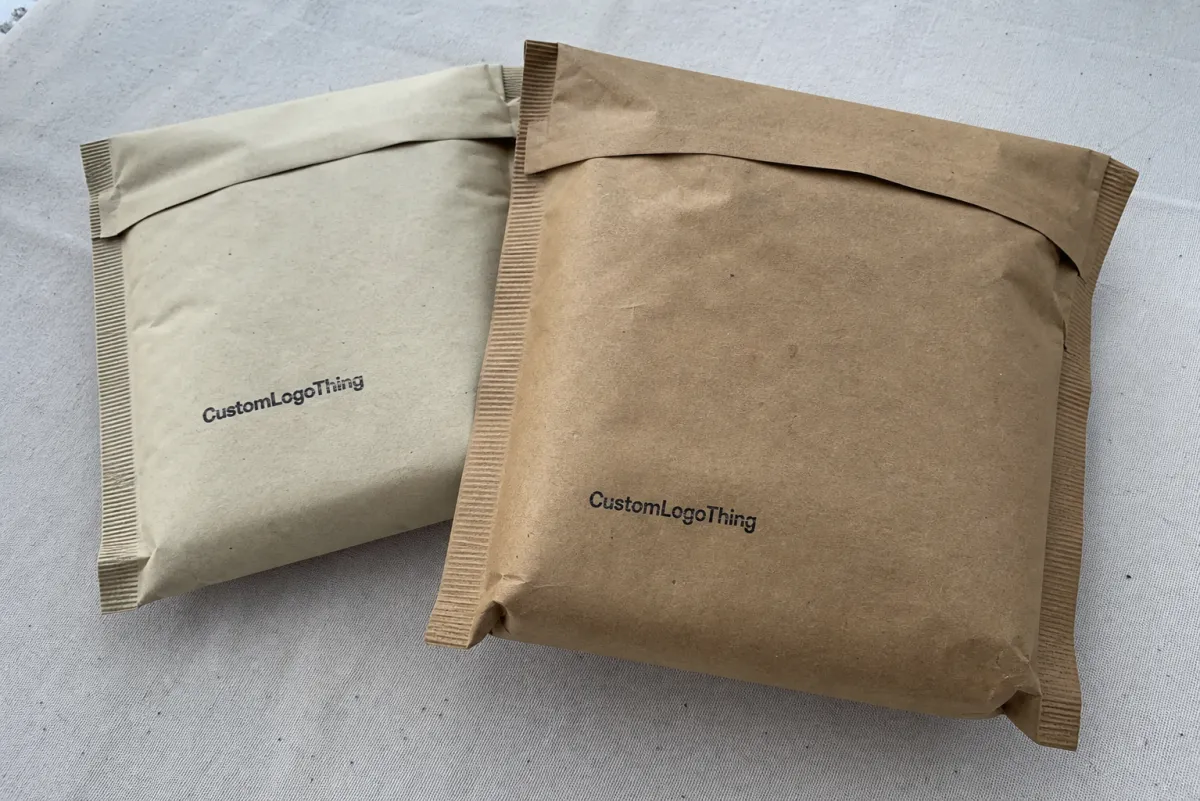
Branded Padded Mailers for skincare launches sustainable material options is a mouthful, but the buying decision behind it is simple: the mailer has to protect product, carry the brand, and survive the trip without creating a disposal headache. For a lightweight serum, a sample trio, or a slim gift set, a padded mailer can be a better fit than a folding carton inside a corrugated shipper. Less material. Fewer parts. Lower freight weight. Sometimes, lower waste too.
The catch is that “padded” does not automatically mean “safe” or “sustainable.” A mailer can look polished on a mockup and still crush at the corners, scuff in transit, or hold moisture against a paper finish. Skincare is especially unforgiving here. A damaged outer pack makes a launch feel less clinical, less premium, and less deliberate, even if the formula inside is excellent.
That is why the first question is not about print. It is about the product path: how heavy is the filled pack, how far will it travel, and how much handling will it see before it reaches the customer? A direct-to-consumer launch with one small bottle is a different job from a retail sample program or a subscription refill. The outer format should reflect the route, not the mood board.
Some brands also overestimate what a padded mailer should do on its own. If the product is fragile glass, a loose cap, or a multi-piece kit, the mailer is only one layer of protection. It may need a sleeve, insert, or inner carton to keep movement under control. That extra layer is not wasted material if it prevents breakage. Waste is shipping a damaged unit and replacing it later.
A mailer that arrives intact is packaging. A mailer that tears, dents, or delaminates becomes a problem with branding on it.
Sustainable Material Options: Paper, Recycled Film, and Hybrid Builds
For Branded Padded Mailers for skincare launches sustainable material options, buyers usually narrow the field to three construction paths: paper, recycled film, or a hybrid structure. Each one solves a different problem. None is perfect. That is the useful part.
Paper-based mailers are usually the easiest to position visually. Kraft outer paper, a fiber or paper padding layer, and a clean matte print can support a natural, calm, clinical, or minimalist brand story. They tend to photograph well and feel more premium than a standard poly mailer. Many teams also like the familiar recycling story, especially when the outer layer is FSC-certified or otherwise traceable.
Paper has limits. Humidity softens it. Rough conveyor handling scuffs it. Moisture can wrinkle the surface before the customer even opens the package. If the ship path includes humid climates, cold-chain-adjacent warehousing, or lots of parcel stacking, paper alone may not be the safest choice. That is not a flaw in the material. It is a mismatch between material and route.
Recycled-content polyethylene takes the opposite approach. It is not as warm-looking, but it is often more reliable under abrasion and damp conditions. A recycled-content film mailer with a padded interior can handle repeated friction better than a paper build, and the seal usually stays more stable under handling. For launches shipping through fulfillment networks with higher touch counts, that matters more than a nicer mockup would suggest.
Hybrid builds sit in the middle. They may combine a paper outer with a reinforced inner layer, or a paper face with a film-backed structure to improve tear resistance. These are common for skincare sets that need both presentation and resilience. The real benefit is not marketing language. It is the reduction in failure risk without giving up the tactile look brands want.
Be careful with compostable and biodegradable claims. They are not interchangeable, and they are rarely straightforward. Some materials need industrial composting, some need specific temperature and moisture conditions, and some are technically compostable only in theory because the local waste stream cannot process them. A label that sounds responsible can still be useless in practice.
A better question is whether the structure matches actual recovery systems. FSC certification can support paper sourcing. Post-consumer recycled content matters if the percentage is real and disclosed. A simple structure with fewer mixed materials is usually easier to explain and easier to process. If a layer cannot be separated, recycled, or recovered in the customer’s market, that should be part of the conversation before approval, not after delivery.
- Kraft paper: strong visual appeal, good for brands that want a natural look, but more vulnerable to moisture and surface wear.
- Recycled film: better moisture resistance and abrasion resistance, often the safer pick for humid or high-handling routes.
- Hybrid builds: a practical compromise when the launch needs a better first impression and stronger transit performance.
Material specs matter more than material labels. Ask for the paper basis weight or film gauge, the recycled-content percentage, the adhesive type, and whether the print layer affects recyclability. A 30% PCR film is not the same as a 90% PCR film. A paper shell with a non-recoverable laminate is not the same as a single-material build. The details decide the outcome.
Size, Cushioning, and Closure Specs That Protect Product
Size the mailer around the packed item, not the bottle on its own. That sounds obvious until the sample arrives with no room for a fold card, a box insert, or the extra millimeters needed for the seal. Tight packs crush edges. Loose packs rattle. Either way, the outer package starts fighting the product instead of supporting it.
For skincare, a few millimeters can change the whole result. A slim tube set may be fine in a compact padded mailer, while a glass dropper bottle needs more breathing room and better interior restraint. If the product has a secondary carton, include that in the measurement. If fulfillment adds literature or samples, include those too. The spec has to reflect the shipped version, not the early prototype sitting on a desk.
Cushioning structure is where padded mailers earn their keep. Paper fiber padding can be good for light to medium packs and gives a more natural tactile feel. Bubble-like film structures are more resilient under repeated impact and often more consistent in wet conditions. Quilted or multi-layer interiors can help with corner protection, but they also add cost and can change the package thickness enough to affect freight rates.
The closure is just as important. A peel-and-seal strip is common, but not every adhesive performs the same way. Ask about seal width, peel strength, and whether the seal survives heat, dust, or cold storage. Some launches need a tamper-evident seal line. Others need a reseal option for returns or subscription replenishment. If the package will be opened and handled twice, design for that from the beginning.
Print placement can create problems too. If the artwork runs too close to a fold or a seal edge, it can distort when the mailer is filled. A logo that looks centered in artwork review may end up clipped once the package expands. That is why a proper dieline matters. It is not paperwork for paperwork’s sake. It is the difference between a clean launch piece and a crooked one.
For quality control, the most useful checks are practical, not glamorous. Measure the filled dimensions. Check the corner crush after stacking. Look for ink rub after a little friction. Confirm that the adhesive does not fail when the package is peeled open and closed by a test hand. A mailer that only works once is not a launch-ready format.
Heavy glass jars deserve extra caution. If the jar can move, it can fracture the outer wall or damage the seal area. A small insert or inner carton can solve what a thicker mailer cannot. Sometimes the smartest packaging decision is adding a restrained second component, not asking the outer mailer to do all the work.
Process and Lead Time: From Artwork to Delivery
The production path is usually straightforward. The trap is failing to lock the spec before the artwork starts moving. First comes the brief: product weight, packed dimensions, target material, print colors, closure style, and destination. Then the dieline. Then the artwork layout. Then proofing. Then sample approval. Then production. Then freight. Each step depends on the one before it.
Artwork is where many launch delays begin. A good print file can still fail if the seal area was ignored, the barcode sits too close to an edge, or the colors were approved on a screen instead of on a substrate sample. Paper and film print differently. Matte surfaces swallow color differently than gloss. What looks balanced in digital proofing may need a correction once the real material is in hand.
Lead time depends on the build, but realistic planning beats wishful planning every time. Short digital runs may move in about 10 to 15 business days after proof approval if the structure is simple and the factory queue is clear. Larger runs often need 18 to 30 business days, especially if the material is custom, the print requires tighter color matching, or the structure uses multiple layers. Freight adds its own delay. Ocean, air, and domestic ground all live on different clocks.
There is also a hidden schedule risk: sample churn. A team can spend a week debating a finish, then another week asking for a second proof, then another week revising the label copy. None of that is unusual. It just means the packaging timeline should not be squeezed into the marketing launch date with no buffer. One round of revision is normal. Two is common. More than that usually means the spec was not ready.
Good suppliers can usually explain how they handle print proofing, material verification, and transit testing. If they can talk through abrasion, seal stability, and drop performance in plain terms, they probably understand the job. If they only talk about how nice the mockup looks, keep asking questions.
Cost, Pricing, MOQ, and Unit Cost Tradeoffs
Price is not a single line item. It is a stack of choices: material, size, print coverage, finish, closure, and volume. For Branded Padded Mailers for skincare launches sustainable material options, the cheapest quote often comes from the simplest build. One-color print. Standard size. Minimal finishing. Recycled film rather than a paper-heavy premium structure.
Once the build becomes more expressive, cost rises quickly. Soft-touch coatings, foil, spot varnish, thicker padding, and complex hybrid layers all add production steps. Some of those costs are obvious. Some are hidden in setup and spoilage. A job that looks inexpensive at first can become expensive if it requires a long proof cycle or a more delicate print process.
The right way to compare quotes is to normalize the spec. Same dimensions. Same material weight. Same closure. Same print method. Same shipping terms. Without that, the numbers are not comparable. A lower quote on a heavier-build mailer is not a bargain. It is a different product.
| Build Type | Typical Use | Relative Unit Cost | Pros | Tradeoffs |
|---|---|---|---|---|
| Recycled-content film | Moisture-sensitive skincare, lightweight kits | Lower to mid | Good durability, strong abrasion resistance, stable in transit | Less natural look than kraft paper |
| Kraft paper build | Premium launch mailers, eco-forward branding | Mid to higher | Warm appearance, strong first impression, good print character | Can scuff or soften in damp conditions |
| Hybrid paper-plus-film | Launches needing both shelf appeal and shipping strength | Mid | Balanced feel, better protection than paper alone | Structure is more complex, so sourcing and pricing vary |
MOQ is another point that gets overstated. Small digital runs often begin around 500 to 1,000 units for simple constructions, while larger runs usually unlock better unit pricing at 3,000, 5,000, or more. Exact thresholds vary by size, print complexity, and material availability, but the pattern stays the same: lower volume carries more setup cost per unit.
For a first launch, a smaller order can be the smarter move. It limits risk, gives the team real shipping feedback, and avoids sitting on a pallet of packaging that was right in theory and wrong in practice. That said, a tiny order is not always the best business choice. If the launch is already locked and the packaging spec is stable, ordering more units can reduce cost enough to justify the inventory.
For comparison work, it helps to price the padded mailer against a lighter poly format and against a small folding carton plus shipper. The right answer depends on what the customer sees, how fragile the product is, and how much damage risk the route carries. Cheapest is rarely the same as best value.
Step-by-Step: How to Choose the Right Mailer for a Launch
Start with the packed product dimensions. Measure the real item, the insert, the secondary carton if there is one, and the final closure margin. Do not use the naked bottle. Do not use the pre-production sample if the retail unit will change shape. Packaging projects fail on measurement shortcuts more often than they fail on print quality.
Then decide what the launch needs most. If the goal is a premium tactile impression, paper or hybrid structures usually make sense. If the shipment route is wet, rough, or long, recycled film may be safer. If the budget is the main constraint, keep the construction simple and spend money where the customer will actually notice it: accurate color, clear branding, and a closure that works.
- Measure the packed item with all inserts, sleeves, and fill components in place.
- Choose the material based on the main risk: moisture, abrasion, appearance, or cost.
- Request samples and test them with the actual skincare product, not an empty mock unit.
- Check the seal for peel strength, tamper evidence, and repeat handling performance.
- Approve artwork last after the format, material, and dieline are locked.
Testing should be plain and slightly boring. Fill the mailer. Shake it. Stack it. Press on the corners. Leave it somewhere humid for a bit if that is part of the shipping reality. If the mailer will pass through multiple handlers, test for that. The packaging team does not need drama. It needs failure before production, not after.
For a premium skincare set, ordering two or three sample builds is usually the cleanest path. One may photograph better. One may survive handling better. One may print more cleanly. The best choice is often the one that does all three well enough, not the one that wins only on one dimension.
Common Mistakes That Make Sustainable Mailers Fail
The first mistake is overclaiming sustainability. A mixed-material structure with hard-to-separate layers is not magically green because it uses recycled content somewhere in the stack. If the package needs a special disposal route, say so plainly. Customers notice vague claims, and the mismatch between label and reality erodes trust fast.
The second mistake is under-sizing the mailer. Brands often approve a fit based on a flat sample, then discover that the filled version has more depth, more corner pressure, and a stronger tendency to shift. That small mismatch can turn into crushed corners, bowed seams, or a seal that no longer closes cleanly.
Finish wear is another quiet failure point. Matte inks, soft-touch coatings, and some paper surfaces show scuffing after a single fulfillment cycle. That matters because the outer package carries the brand’s first impression. If the print rubs off or the surface dulls unevenly, the launch starts looking tired before the customer even opens it.
If you have not tested the exact filled product, you have tested a sample, not the shipping format.
Recycled does not always mean better. A recycled-content paper mailer that weakens in damp transit is a worse choice than a recycled-content film mailer that arrives intact and can actually be handled by the customer’s waste system. Buyers do not need a perfect story. They need an honest one that works in the real world.
Another frequent issue is ignoring the barcode, shipping label, or compliance area until the artwork review stage. Once the mailer is scaled down, those elements can become crowded or unreadable. Labels need clear space. Postal marks need clean placement. If the layout is too busy, the package may be beautiful and still difficult to process.
Finally, do not skip shipping abuse testing. Drop and vibration checks are not decorative. They exist because parcels get dropped, stacked, scraped, and exposed to heat and moisture. If the package survives the design review but not the route, the launch is still not ready.
Next Steps to Lock the Spec Before You Order
Build a one-page spec sheet before you ask for quotes. Include product weight, packed size, target material, print count, finish, seal type, destination lane, and any disposal expectations. That document saves time because it gives suppliers something concrete to price instead of a vague brief that shifts every time someone opens a new thread.
Then request two or three sample builds and compare them side by side. Hold them, fill them, seal them, and look at them under normal warehouse lighting, not just on a styled desk. Ask for quotes on the exact same structure so the price comparison means something. If one quote is lower, make sure it is not simply smaller, thinner, or easier to produce.
For a skincare launch that needs a premium feel without wasting material, the practical path is usually simple: choose the lightest structure that survives the route, verify the print on the actual substrate, and approve a pilot batch before the full run. That keeps the packaging intentional instead of improvised.
If the spec is still uncertain, compare the mailer option against the broader packaging system, not in isolation. Inner protection, fulfillment speed, freight weight, and disposal behavior all affect the final result. Packaging does not live in one department.
FAQ
What is the best material for branded padded mailers for skincare launches?
Paper-based mailers work well when the launch priority is visual warmth and a cleaner material story. Recycled-content film is usually the safer choice when moisture resistance and transit durability matter more. Hybrid builds sit in the middle and are often the best compromise for skincare sets that need both presentation and protection.
How much do custom padded mailers usually cost per unit?
Simple recycled-film runs usually price lower than paper-heavy premium builds. Print colors, finish, seal design, and smaller MOQs can raise the unit cost fast. The cheapest quote is not the best value if the mailer fails in shipping or forces a second production round.
What MOQ should I expect for a first skincare launch order?
Small digital runs often start around 500 to 1,000 units, though exact minimums vary by structure and print method. Better pricing usually shows up as volume increases. Check whether the MOQ is tied to one size, one artwork version, or one material construction.
How long does the process and lead time usually take?
Artwork and proofing can move quickly if the dieline and spec are already locked. Production often takes longer than brands expect once samples, approval cycles, and freight are included. If the launch date is fixed, leave room for one revision cycle and transit delay.
Can I use padded mailers for fragile skincare jars?
Yes, but only if the jar is protected by an inner carton, insert, or other restraint. If the glass is exposed, a padded mailer alone is usually not enough. For fragile products, test drop performance before placing the full order.

