The ceramic Ribbed Winter Beanies Material Sample guide matters because a flat image can hide almost everything that decides whether the hat works in real life. A beanie may look expensive on a monitor and still feel scratchy, collapse at the crown, or stretch out after one afternoon in the cold. That gap between appearance and performance is where bad buying decisions get expensive.
Ceramic is also a difficult color to judge from a screen. It can lean warm, cool, gray, or faintly blue depending on the yarn base, knit density, and lighting. A sample is the first time you see how the color behaves on actual rib knit, not in a design file.
For buyers, the sample is not a formality. It is the only reliable checkpoint before bulk production starts turning assumptions into inventory.
Why the ceramic ribbed winter beanies material sample guide matters
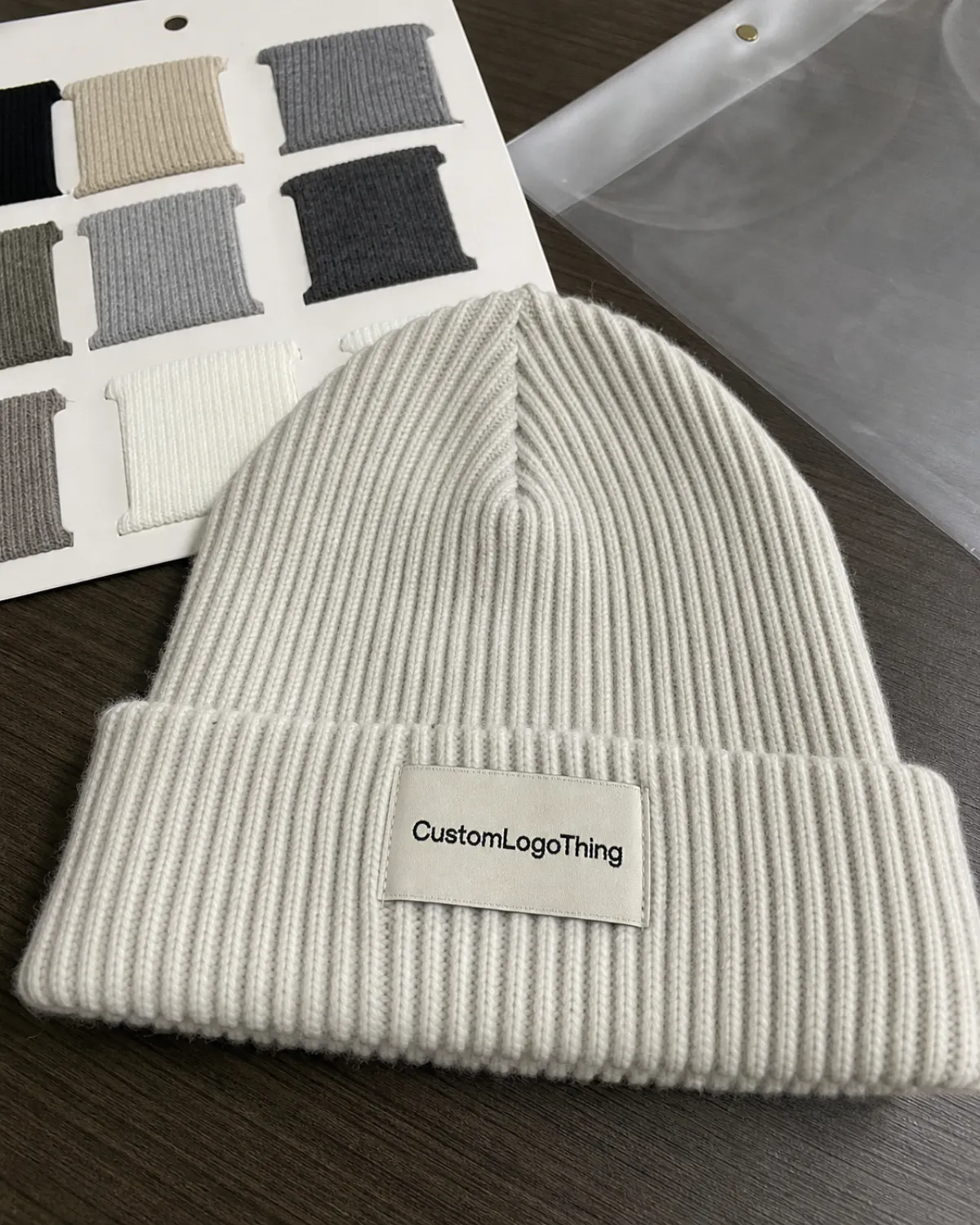
Ceramic is a color name, not a fiber spec, and that distinction matters more than people expect. Two beanies can both be called ceramic and still look different enough to miss the line entirely. Yarn finish, dye lot, rib density, and the surrounding trim all influence how the shade reads once the hat is worn. The sample is where those variables stop being theoretical.
The rib structure itself changes the result. A rib knit stretches more than a flat knit swatch, then pulls back in a way that can either feel premium or feel restrictive. On paper, a one-size-fits-most beanie sounds simple. In production, the difference between a comfortable fit and a hat that rides up or sags often comes down to millimeters in gauge and circumference.
I see the same mistake repeatedly: buyers approve color from a mockup, then assume the physical piece will look close enough. It rarely does. Real knitwear has texture, shadow, and bulk, and those details change how the eye reads color. If the goal is a clean, wearable winter accessory, the sample has to prove that the tone still looks controlled after the hat is shaped, blocked, and worn.
The best samples also clarify what the factory can repeat. A clean-looking prototype is useful only if it reflects the same yarn source, stitch count, and finishing method that will be used in bulk. If the sample uses substitute yarn or temporary trims, that should be stated plainly. Otherwise the approval is based on a version that may never exist again.
How the sample behaves in real wear
Ribbed Winter Beanies live or die on stretch, recovery, and shape retention. If the rib opens too easily, the beanie starts to feel loose after a few wears. If it rebounds too hard, it can feel pinchy at the forehead and give the impression of a low-grade knit. If it holds shape but never relaxes, the fit can feel stiff under a hood or coat collar.
That is why handfeel and physical response matter just as much as color. A sample should be pulled, folded, worn for a few minutes, removed, and worn again. That simple sequence tells you more than a polished product photo ever will. Does the cuff bounce back? Does the crown flatten? Does the knit twist or widen after a stretch cycle? Those are practical questions, not aesthetic ones.
Fiber choice changes those answers. Acrylic is usually the most forgiving on cost and color consistency. It can hold a deep ceramic tone well, and it is easier to keep within a target retail price. Wool blends add warmth and a more natural hand, but they can also increase itch risk, pilling, and cost. Recycled synthetic yarns can support a lower-impact positioning, yet the handfeel depends heavily on the exact blend and yarn twist. A recycled label does not guarantee a nicer hat.
Weight and gauge matter too. A heavier beanie is not always warmer if the stitch is too open. A lighter beanie is not automatically cheap if the rib is dense and the yarn has enough loft to trap air. The sample should confirm whether the hat lands in the desired category: snug and functional, relaxed and casual, or longer and slouchier. Those are not cosmetic differences. They define how the product is worn.
Color testing should happen under more than one light source. Ceramic can look polished in daylight and flat under warm indoor bulbs. Some yarns also pick up a slight chalky cast when photographed with flash. If your approval process includes only one lighting condition, the result can be misleading. A useful sample is the one that still looks right on a gray day, in office light, and in the kind of indoor lighting customers actually live with.
The touch test matters as much as the visual test. Run the knit between your fingers. Check whether the surface feels smooth, dry, fuzzy, or slightly abrasive. Small changes in yarn finish can turn a premium-looking piece into something that feels ordinary the moment it leaves the package. On winter accessories, touch often decides whether the buyer keeps reaching for the product or leaves it in a drawer.
What to lock before you order samples
The most useful sample requests are precise. Before the factory makes anything, define the yarn composition, rib width, target weight, cuff height, branding method, and intended fit. If those details are vague, the sample becomes a guess with a shipping label. Precision up front usually saves at least one revision later.
- Yarn content: 100% acrylic, acrylic-wool blend, or recycled synthetic blend, depending on price and feel targets.
- Gauge and structure: rib width, stitch count, and whether the body should be tighter or looser through the crown.
- Finished weight: a target range rather than a vague “medium weight” description.
- Fit profile: fitted, standard, or slouchy.
- Branding: woven label, embroidery, patch, or no branding on the sample.
- Packaging: whether the sample should arrive flat-packed, folded, or boxed for presentation.
That list may sound rigid, but it is the easiest way to avoid costly confusion. A buyer might love the sample and still discover that the cuff is two centimeters shorter than planned, the label placement is off-center, or the rib is looser than the tech pack allowed. Those are not small deviations if the product is meant to sit in a specific retail lane.
Color approval also deserves exact language. “Ceramic” can span a surprisingly wide range, from warm stone to pale blue-gray. If the brand wants a particular direction, reference a physical swatch, a prior season sample, or a lab dip. Saying “make it ceramic” is not enough. Factories need a target, not a mood.
Cost, pricing, MOQ, and unit cost drivers
Sample pricing usually tracks four variables: yarn availability, knit complexity, branding, and whether the factory already has the base structure on hand. A simple stock-yarn prototype may fall in the $25-$45 range. A custom-dyed ceramic shade, knit-in logo, or special label can push the sample into $60-$120, especially if the factory needs to create a one-off build. If the sample fee is refundable or credited to bulk, that should be stated before the order is placed.
MOQ has a direct effect on flexibility. Lower minimums often mean fewer options for trial-and-error adjustments, and that can make the unit cost higher. For a straightforward ribbed beanie, bulk pricing commonly sits around $2.80-$4.80 per unit at 500 pieces. Add wool, heavier gauge knitting, custom embroidery, woven patches, or premium trims, and the range can move into the $5.50-$9.00 bracket. That is not a markup mystery. It is the cost of materials, labor, and handling.
The cheapest sample is not always the smartest choice. A low-cost prototype that uses substitute yarn or skips the final trim details may save a small amount up front, but it can lead to a bulk order that looks and feels wrong. Pay for the version that best represents the final product. A sample should reduce uncertainty, not create more of it.
| Sample type | Typical fee | Lead time | Best for |
|---|---|---|---|
| Stock-yarn mockup | $25-$45 | 5-8 business days | Fast color and fit check |
| Custom dyed prototype | $60-$120 | 8-15 business days | Matching ceramic tone and handfeel |
| Pre-production sample | $80-$150 | 10-20 business days | Final approval before bulk |
If the beanie is being packaged for retail presentation, ask for protective but simple packaging. Recyclable corrugated cardboard, a neat kraft wrap, and minimal loose plastic help preserve shape and reduce handling damage. If branded inserts or hangtags are part of the order, FSC certified paper is a reasonable standard to request. If the packaging claim mentions recycled content or post-consumer fiber, verify the paperwork before the order moves forward. FSC’s chain-of-custody guidance is available at fsc.org.
Transit is another quiet cost. A sample can arrive looking fine while the box itself has been crushed enough to flatten the cuff or distort the crown. If the product is going to be shipped repeatedly, ask for a box style that can survive vibration, drops, and compressed stacking. The ISTA test methods are a useful reference if you want a packaging standard beyond guesswork.
Production steps, lead time, and turnaround expectations
A clean sample workflow usually runs through spec intake, yarn confirmation, knit test, finishing, inspection, and shipping. Delays tend to start with yarn, not knitting. Ceramic shades often require a closer match than black or navy, and if the factory has to source a specific acrylic, wool blend, or recycled yarn, the schedule moves. If dye matching is needed, it moves again.
A first sample, a revised sample, and a pre-production sample serve different jobs. The first sample asks whether the project is headed in the right direction. The revised sample checks whether the fixes actually solved the problem. The pre-production sample is the final reference before the bulk run begins. Mixing those stages together is one of the fastest ways to approve too early.
Typical timing is straightforward. A simple first sample may take 5-10 business days. Custom dye work or specialty yarn sourcing can stretch that to 10-15 business days or more. Revisions can move faster if the structure stays the same. Shipping should be counted separately, because transit time can easily add several days to the calendar. If the sample is needed for a launch shoot or line review, the safest move is to build a buffer, not a wish.
Changing packaging after the sample has been made also costs time. If the sample arrived packed one way and the bulk order needs another format, that is a new instruction, not a small adjustment. The same is true for label placement, hangtags, or fold style. Once the approval path changes, the quote usually changes with it.
What to check before you approve bulk production
Approving a sample should feel like reviewing a product, not admiring an object. Start with color. Check the ceramic tone under daylight and indoor light, then compare it against the swatch or reference standard you gave the factory. If the shade drifts enough to change the product’s mood, that is a real issue, even if the beanie still looks attractive on a desk.
Then move to structure. The cuff should recover after stretching. The crown should keep its form without going floppy. Seams should be neat and low-bulk. Label placement should sit exactly where the tech pack says it should, not merely “close enough.” When people say a difference is minor, they often mean it is minor to them, not to the final product.
Material checks that matter: pilling resistance, yarn twist, lint level, knit density, and any visible unevenness in the rib. A dense rib pattern usually feels more substantial than a loose one, even when the weight is similar. Softness is valuable, but softness without durability is just a short-lived first impression.
Wash behavior deserves attention too. Winter beanies are handled more often than many buyers expect. They get stuffed into bags, pulled on wet hair, exposed to sweat, and sometimes washed more casually than a delicate accessory should be. If the sample distorts, pills quickly, or loses shape after a basic wash test, that problem will scale with the bulk order. A factory may have its own wash procedure, but it is still worth comparing the results to a common textile standard or at least a repeatable internal method.
Do not approve a beanie because it photographs well on a clean surface. Knitwear should be judged while stretched, worn, folded, and seen in normal light. A good sample survives those conditions without losing its shape or tone.
Finally, compare the sample line by line with the tech pack. If the cuff height, stitch count, weight, or logo size is off, treat it as a production error, not a style preference. If the sample matches the spec and the team still wants a different look, that is a design change and should be handled as one. That distinction matters for cost, timing, and accountability.
Common mistakes when reviewing beanie samples
The first mistake is judging ceramic color under only one light source. Warm light can make the shade look beige. Cool light can flatten it into gray. Daylight may reveal a cleaner, more premium tone than either indoor setting. A single desk-lamp photo does not count as approval.
The second mistake is relying on photos alone. Images flatten texture and hide stretch recovery. They can make a looser knit look denser than it is, or make a good knit look less refined because of exposure or shadow. Physical samples exist for a reason.
The third mistake is ignoring shrink and rebound after wear. A beanie that relaxes slightly may still be fine. A beanie that grows baggy, pills fast, or loses cuff shape after one or two uses is not. If the end customer is wearing it outdoors and folding it into pockets, the sample should survive that kind of handling.
The fourth mistake is changing specs after approval and acting surprised by the delay. New yarn means new cost. New label placement means new proof. New color means a new sample round in many cases. Production schedules do not stay still just because the brief shifted late in the process.
Next steps after your sample arrives
As soon as the sample arrives, document it while the details are still fresh. Take daylight photos. Measure the body, cuff, and opening. Compare the results against the spec sheet. Write down what is correct, what is slightly off, and what has to change before bulk production. That record becomes useful the moment multiple people start giving opinions that are technically different but operationally vague.
Send one consolidated revision list. Not three separate messages. Not a loose collection of comments spread across email and chat. A clear list reduces friction and helps the factory respond with the right quote and the right timeline. If a different yarn is needed, say so. If the rib should be tighter, say that too. Rank the changes by priority so the important ones do not get buried under cosmetic preferences.
Before approving bulk, lock four things: material choice, color approval, trim details, and timeline. If the packaging also matters, lock that at the same time. Once those pieces are fixed, the order has a much better chance of staying on schedule and within budget. That is the practical value of the sample process. It narrows the gap between what was imagined and what can actually be produced.
The most reliable final step is simple: revise if needed, confirm the quote, approve the final sample, and then move into production with the expectation that the approved reference is the standard. That keeps the ceramic Ribbed Winter Beanies Material Sample guide doing its real job, which is protecting the order before the factory makes hundreds of the same decision.
FAQ
What should a ceramic ribbed winter beanies material sample include?
The sample should show the actual yarn, rib structure, cuff construction, label placement, and finished measurements. A loose swatch is not enough for approval because it does not show how the beanie stretches, rebounds, or sits on the head. If branding or trims are not included, that should be stated clearly before the sample is reviewed.
How long does a ceramic ribbed winter beanies sample usually take?
A straightforward sample often takes about 5 to 10 business days. Custom dye matching or special yarn sourcing can extend that timeline. Revisions may be quicker if the base build stays the same, but shipping time still needs to be counted separately from production time.
How much does a ribbed winter beanie material sample cost?
Simple stock-material samples are usually lower cost, while custom samples cost more because the factory is creating a one-off build. Expect pricing to move with yarn type, knit complexity, finishing, branding, and whether the sample needs custom dye work. Ask in advance whether the sample fee will be credited toward the bulk order.
What fabric is best for ceramic ribbed winter beanies?
Acrylic blends, wool blends, and recycled synthetic blends are the most common options because they balance warmth, cost, and durability. The right choice depends on the target retail price, the climate the hat is meant for, and the handfeel the customer expects. The sample should prove that the knit is not scratchy, too loose, or too heavy.
Can I change the design after approving the sample?
Yes, but even small changes can affect cost, lead time, and whether another approval round is needed. Changes to yarn, rib gauge, label placement, or color often require a re-quote and sometimes a new sample. The safest approach is to finalize the sample before treating it as the green light for bulk production.

