Buyer Fit Snapshot
| Best fit | Custom Branded Shipping Envelopes projects where brand print, material claims, artwork control, MOQ, and repeat-order consistency need to be specified before quoting. |
|---|---|
| Quote inputs | Share finished size, material target, print colors, finish, packing count, annual reorder estimate, ship-to region, and any compliance wording. |
| Proofing check | Approve dieline scale, logo placement, barcode or warning zones, color tolerance, closure strength, and carton packing before bulk production. |
| Main risk | Vague material claims, crowded artwork, missing packing details, or unclear freight terms can make a low unit price expensive after revisions. |
Fast answer: Custom Branded Shipping Envelopes: Film, Print, MOQ, and Carton Packing should be specified like a repeatable production item. The safest quote records material, print method, finish, artwork proof, packing count, and reorder notes in one written spec.
Production checks before approval
Compare the actual filled-product size with the drawing, then confirm tolerance on folds, seals, hang holes, label areas, and retail display edges. Reserve space for logos, QR codes, warning copy, and material claims before decorative graphics fill the panel.
Quote comparison points
Review material grade, print process, finish, sampling route, tooling charges, carton quantity, and freight assumptions side by side. A quote is only useful when the supplier can repeat the same color, closure quality, and packing count on the next order.
Custom Branded Shipping Envelopes: Smarter Mailer Guide
Plain mailers can get the job done, but custom Branded Shipping Envelopes do something more useful: they turn a routine handoff into a brand moment before the recipient ever opens the package. That matters because shipping is often the first physical contact a customer has with a business, and first impressions form fast, sometimes before the label is scanned or the envelope even makes it to a desk.
From a packaging buyer's point of view, custom Branded Shipping Envelopes sit in a practical middle ground. They are not decoration for decoration's sake. They protect flat goods, documents, inserts, contracts, samples, and returns while carrying package branding that makes the shipment look deliberate instead of improvised. For teams balancing ecommerce shipping, order fulfillment, and budget pressure, that mix of function and presentation is the real reason these envelopes keep showing up in purchasing conversations.
In many operations, the envelope is the quiet part of the system that keeps things moving. It can reduce intake confusion, support internal sorting, and make customer-facing mail feel more organized. The rest of this piece stays focused on the details that change outcomes: material, size, print method, lead time, and how custom branded shipping envelopes fit into the packing line without slowing it down.
What Custom Branded Shipping Envelopes Do Beyond the Mailer
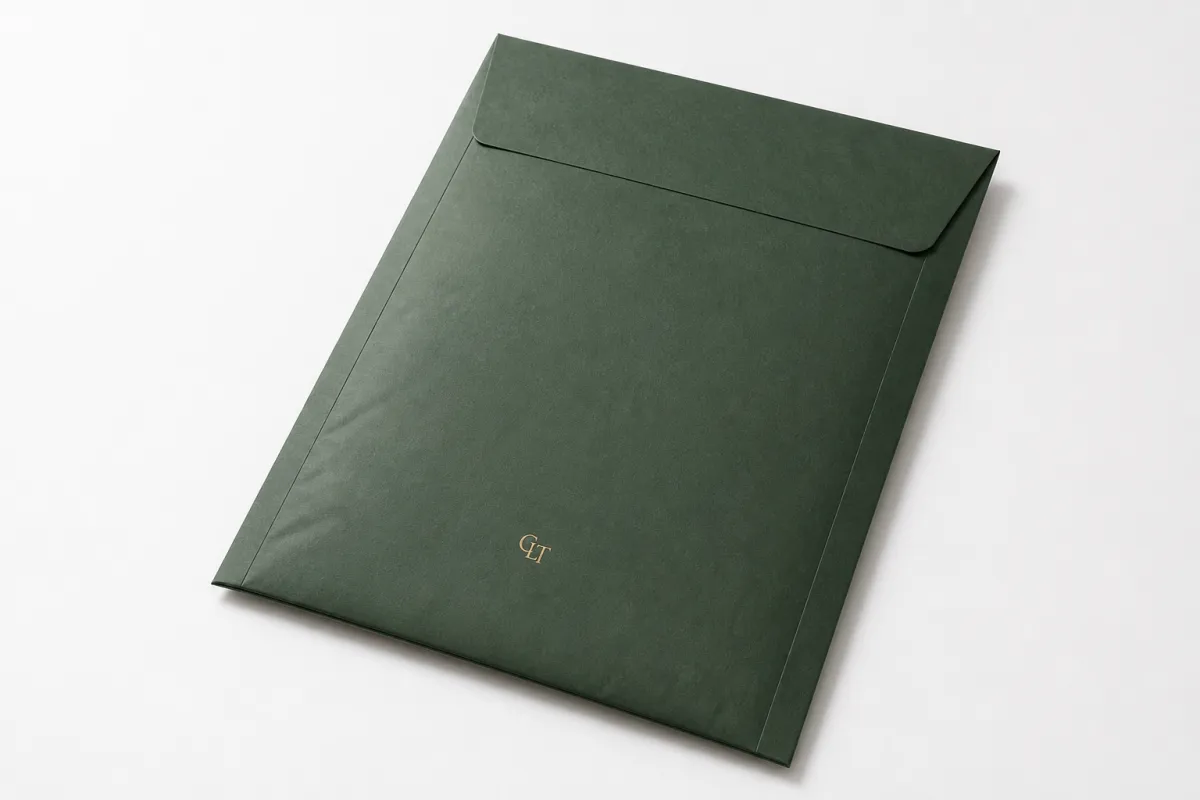
A plain envelope can vanish into the stack. Custom branded shipping envelopes do the opposite. They quietly signal legitimacy, and that signal matters whether the contents are investor paperwork, a product insert, a return authorization packet, or a lightweight promotional kit. In day-to-day use, branded packaging often performs a second job: it reassures the recipient that the shipment came from an organized business, not a one-off sender trying to look official.
That is why custom branded shipping envelopes show up across so many categories. They hold flat samples for sales teams. They carry forms for healthcare or finance. They package internal documents between offices. They support retail packaging programs where the outer mailer has to match product packaging standards and the broader package branding system. The envelope is small, but the brand effect is not.
There is also a logistics angle that gets missed too often. A branded outer layer can reduce intake confusion in warehouses, mailrooms, and multi-stop delivery routes. If a shipment is meant for a specific department or customer, visual cues help. That matters in order fulfillment, where speed and accuracy are more valuable than a flashy mockup. A well-planned custom branded shipping envelopes program is about recognition first and aesthetics second.
Some buyers compare envelopes only to printed bags or Custom Shipping Boxes, which skips an important distinction. A box solves one problem. Custom branded shipping envelopes solve a different one: they keep flat or low-bulk items moving efficiently while still looking designed. If you are mapping out a broader branded packaging system, the Custom Packaging Products page is a useful place to see how envelopes fit beside other formats.
A good envelope does not shout. It lowers friction, protects the contents, and makes the shipment feel like it came from a company that knows what it is doing.
Material responsibility deserves a place in the conversation too. If sustainability is part of your brand story, look for paper stock options with FSC certification and ask how recycled content fits into the build. The FSC standard is a practical reference point, and the organization explains it clearly at fsc.org. For many buyers, that matters as much as color or print coverage.
For a broader industry baseline on package performance and terminology, the Packaging & Processing community at packaging.org is a solid authority. Shared language keeps teams aligned, especially when custom branded shipping envelopes need to work across marketing, procurement, and operations.
How Custom Branded Shipping Envelopes Work in Fulfillment
The life of custom branded shipping envelopes is simpler than many buyers expect. Artwork gets approved, the envelope is produced, inventory is staged, and fulfillment teams pull it into standard packing steps. That sounds basic, but the ordering process can still break down if the print file, size spec, or closure method does not match the actual work happening on the floor.
Branding can live in several places. On the front panel, it may be a one-color logo or a full-bleed design. On the flap, it can be a secondary mark or a message. Inside print can carry a thank-you note, a reorder prompt, or product instructions. Some custom branded shipping envelopes even include variable data areas for barcodes, routing marks, or batch numbers. The trick is to treat those spaces as operational tools, not decorative leftovers.
That matters because the envelope has to interact with other elements in the pack-out process. Shipping labels need clean placement. Inserts need to sit flat. Barcodes cannot be buried under busy art. Compliance marks, return instructions, and handling cues should all have a clear home. A design that looks elegant on screen can become a nuisance in a packing bay if it covers the wrong zone or slows down scanning.
Good custom branded shipping envelopes are built for the real world. They stack neatly. They feed properly. They resist scuffing during transport. They do not curl so badly that labels lift. In a warehouse with multiple pack stations, that kind of consistency is worth more than a slightly more dramatic render. The best packaging design is the version that stays out of the way while doing its job.
A practical test helps here: hold the envelope beside the actual item it will carry. If the envelope is for a contract packet, does the paper weight keep the contents from showing through? If it is for a sample kit, does the closure hold under repeated handling? If it is for ecommerce shipping, does it match the way teams work on the line, or does it create an extra fold, insert, or seal step?
That is why some programs pair envelopes with Custom Poly Mailers or other formats for different product classes. Custom branded shipping envelopes are strong for flat items and lightweight sets, but they are not universal. A better system usually uses a few package types, each chosen for one job instead of forcing one format to do everything.
For buyers managing multiple channels, the best envelope program also supports internal handoffs. Marketing may care about the look. Operations care about speed. Customer service may care about return visibility. Custom branded shipping envelopes sit in the center of those priorities, which is why the approval process should include more than one department.
Here is the short version: if the envelope is built around the workflow, it becomes part of the fulfillment engine. If it is designed only as a mockup, it becomes a problem later. That gap is where many brands stumble with custom branded shipping envelopes, and it usually shows up only after the first pallet lands at the dock.
Cost, Pricing, MOQ, and Quote Factors That Change the Budget
Pricing for custom branded shipping envelopes is driven by a handful of variables buyers can actually control. Size is the first one. Material is the second. After that, print method, color count, closure style, finishing, and whether the envelope is custom-sized or stock-based all affect the quote. The more the job moves away from a standard setup, the more setup time and material planning start to shape the price.
MOQ, or minimum order quantity, often frustrates first-time buyers because it feels arbitrary. It usually is not. Most minimums reflect press setup, material ordering, and production efficiency. A printer or converter needs enough volume to justify the work. That is why custom branded shipping envelopes bought in small lots can carry a higher unit price, while larger runs reduce cost per piece but raise the total spend quickly.
For budget planning, it helps to think in ranges rather than fixed numbers. As a rough reference, simple one-color paper envelopes might land around $0.18-$0.35 per unit at higher volumes, while more complex printed builds with custom sizing or specialty finishes can move closer to $0.40-$0.80 per unit, depending on quantity and coverage. These are not universal figures, but they are realistic enough to help a buyer avoid fantasy pricing.
| Envelope Option | Best Use | Typical Unit Range | Main Tradeoff |
|---|---|---|---|
| Stock paper envelope with one-color logo | Contracts, inserts, flat mailings | $0.18-$0.35 | Lower decoration, lower setup time |
| Custom-sized kraft or white envelope | Samples, branded documents, returns | $0.28-$0.55 | Better fit, more planning needed |
| Full-color printed envelope with finish | Marketing kits, premium presentations | $0.40-$0.80 | Higher visual impact, higher cost |
| Padded or specialty mailer build | Lightweight protection for fragile inserts | $0.55-$1.10 | More material, more freight weight |
Those numbers change if freight is expensive, if proof cycles drag out, or if a customer needs a rush production slot. That hidden cost is easy to miss. The base quote may look fine, but rush fees, custom tooling, multiple revisions, and split shipments can make custom branded shipping envelopes much more expensive than expected. If you do not ask about those pieces up front, they kind of sneak into the total later.
Storage matters too. A buyer ordering 10,000 envelopes at once may earn a lower piece price, yet the inventory cost can still be a problem if the design is seasonal or tied to a campaign. I have seen teams overbuy because the unit economics looked good, only to store dead stock for months. That is not a savings; that is deferred waste.
Comparing quote structures is useful here. Some vendors bundle prepress and proofing. Others list them separately. Some include freight to one destination. Others treat it as an add-on. If you are evaluating custom branded shipping envelopes, ask for a full landed cost, not just the print price. That one question tends to reveal the real budget faster than anything else.
The most useful quotes also spell out what is included in the sample process. A digital proof is not the same as a production proof. A plain paper sample is not the same as the actual substrate. For custom branded shipping envelopes, that difference can affect everything from ink holdout to feel in the hand.
Process and Timeline: From Spec Sheet to First Shipment
The timeline for custom branded shipping envelopes usually starts with a spec sheet, not artwork. That is a good thing. A clear spec sheet speeds everything up because the vendor can quote with fewer assumptions. Size, intended contents, quantity, print count, target delivery date, and brand files are the basics. If the envelope will be used in ecommerce shipping or a warehouse pack-out, that should be stated up front.
The next step is proofing. This is where projects often lose time. Low-resolution logos need cleaning up. Missing dielines need to be rebuilt. Brand colors need to be translated into the print process, which means Pantone references or clearly specified CMYK values. If the envelope uses custom branding and precise color expectations, vague files create back-and-forth that nobody enjoys.
Typical turnaround depends on complexity. Simple custom branded shipping envelopes with one-color art and standard materials can move quickly once the proof is approved. More complex builds, specialty substrates, or multiple print stages add time. A practical planning window is often 12-15 business days from proof approval for straightforward work, and longer for unusual sizing, foil, or specialty coatings. Freight can add another variable, especially if the destination is far from the production site.
The smartest buyers plan backward from the launch date. If a campaign starts on a Monday, approval should happen well before the deadline. Buffer stock should be built in. If the envelopes are part of a product packaging release, there should also be room for a revised proof or a late-stage wording change. That cushion is not wasted time; it is insurance against avoidable churn.
In one sense, custom branded shipping envelopes follow the same logic as Case Studies in packaging: the goal is to connect design intent to actual production outcomes. A handsome render means little if the finish date slips or the closure style fails under real use. Good process keeps the project grounded.
Packaging note: if a supplier cannot explain where time is spent, that is a warning sign. Ask which steps happen in-house, which steps are outsourced, and where approval delays usually occur. That conversation tends to show whether the vendor understands the operational side of custom branded shipping envelopes or only the visual side.
There is also a production sequencing question. Some teams want the envelope built early so they can hold inventory. Others prefer just-in-time runs tied to an ongoing order fulfillment cycle. Neither approach is always right. The better choice depends on demand stability, storage space, and how often the artwork changes.
One small but useful tactic: build a launch checklist that includes final art approval, material sign-off, freight booking, receiving instructions, and a named owner for internal review. It sounds tedious. It is not. That checklist keeps custom branded shipping envelopes from getting stuck between marketing enthusiasm and operational reality.
Key Factors to Compare Before You Order
Material choice is the first comparison worth making. Paper envelopes are lightweight and economical. Kraft gives a more natural, utilitarian feel. Coated stock can sharpen graphics and hold ink well. Padded formats help with light protection. For custom branded shipping envelopes, the right substrate should match the contents, the brand tone, and the handling conditions, not just the price.
Size is just as operational as it is visual. If the envelope is too small, inserts curl or jam. If it is too large, the contents shift and the mailer feels sloppy. In ecommerce shipping, oversizing can also increase dimensional weight or trigger unnecessary filler. That is why a fit check matters before you commit to a full run of custom branded shipping envelopes.
Print choices deserve more scrutiny than they usually get. One-color logos are efficient and often elegant. Full-color graphics can be striking, but they raise cost and can introduce registration concerns. Inside print is useful for messages, product instructions, or brand storytelling. Outside print is visible at the handoff point. A buyer deciding on custom branded shipping envelopes should think about which side does the real work for the shipment.
Closure style changes the experience too. Peel-and-seal is common because it is fast. Gummed closures can work for specific applications. Tuck or flap variations may be better for repeat use or internal mail. Tamper evidence can matter for confidential materials. These are not cosmetic choices. They alter how the envelope behaves in the field, especially under repeated handling.
Logistics details deserve a place in the decision. Carton count affects warehouse storage. Stackability affects shelf use. Packing station compatibility affects speed. If the envelope does not feed cleanly into the line, the brand moment loses value quickly. Custom branded shipping envelopes have to be judged as packaging systems, not design concepts.
There is a useful distinction here between a mailer and a broader branded packaging strategy. Some brands treat envelopes as a one-off. Better programs fold them into a larger system that includes retail packaging, product packaging, and printed support materials. That system-level view keeps the work consistent and often reduces mistakes across formats. The same logic applies to Custom Printed Boxes, inserts, and documentation packets.
If you need a standard to sanity-check performance expectations, look at transit testing language from the International Safe Transit Association. ISTA methods are widely referenced in packaging because they connect the package to the hazards it will face. Not every envelope needs formal testing, but the mindset is useful: vibration, compression, drops, and handling are part of the equation whether people talk about them or not.
The best comparison question is simple: which version of custom branded shipping envelopes gives you the strongest mix of fit, speed, protection, and presentation without adding unnecessary steps? That answer is usually more specific than buyers expect.
Common Mistakes When Ordering Custom Branded Shipping Envelopes
The biggest mistake is designing for the mockup instead of the warehouse. A render can make anything look polished. A real production run exposes weak choices fast. If the envelope smudges, curls, or slows the packer down, the beautiful concept has already failed. That is why custom branded shipping envelopes should be reviewed in the context of the actual fulfillment process.
A second mistake is overworking the artwork. Too many colors, tiny type, or delicate line work can blur in production. Small logos can disappear when the envelope is handled quickly or printed on a textured stock. In packaging design, restraint often improves clarity. The most reliable custom branded shipping envelopes are usually cleaner, not busier.
Quantity errors cause another kind of pain. Buyers sometimes underestimate demand for a launch and run short in the middle of a campaign. Other times, they overestimate and end up with boxes of obsolete inventory after a seasonal push or promotion ends. Either way, poor forecasting turns custom branded shipping envelopes into storage problems instead of supply assets.
Skipping samples is a gamble. A digital proof cannot show paper feel, closure strength, or stacking behavior. It also cannot tell you whether the print is too subtle once ink meets stock. Even a simple sample check can expose issues before they become expensive. If a supplier offers physical samples, use them. It is a small step compared with reworking a full batch of custom branded shipping envelopes.
Another avoidable issue is ignoring freight and receiving. A good production price can be undone by a bad shipping plan, especially if the envelopes arrive when the warehouse is short-staffed or space is tight. The packaging project may be done on paper, yet still fail on the receiving dock. That is why logistics planning belongs in the same conversation as color and size.
There is also a coordination problem that shows up often. Marketing approves one version. Operations needs another. Customer service wants return information added. Procurement wants the lowest cost. If those groups do not agree early, the proof stage becomes a negotiation stage. That is no way to buy custom branded shipping envelopes.
If a packaging project keeps changing after proof approval, the issue is usually not the printer. It is the lack of a single internal owner.
Some buyers treat envelopes like custom printed boxes and expect the same production behavior. That is a mistake. The flatter format, lighter substrate, and faster workflow create different constraints. Custom branded shipping envelopes are their own category, and they should be managed that way.
Expert Tips and Next Steps Before You Place the Order
The cleanest way to request quotes is to build a one-page spec sheet first. Include size, intended contents, quantity, print count, target delivery date, packaging format, and any special handling needs. If your team is comparing custom branded shipping envelopes against other formats, note whether the envelope will replace a box, support inserts, or function as part of a returns workflow. That context changes the recommendation more than people expect.
Ask for practical samples, not just digital mocks. You want to see whether the closure feels secure, whether the envelope stacks flat, and whether the logo reads clearly at arm's length. If the envelope will be used in order fulfillment, test it on the bench and at the station. Small friction points grow quickly once a team starts packing hundreds or thousands of units.
Internal approval should include marketing, operations, and shipping. That sounds obvious, yet many projects still move forward with only one department signing off. The result is usually a late change that could have been settled in ten minutes at the start. For custom branded shipping envelopes, one final review can save a week of wasted production time.
It also helps to compare at least two or three quotes side by side. Not just on unit price. Compare tooling, proof fees, freight terms, lead time, and whether the supplier is proposing stock material or custom construction. The cheapest quote is not always the best value. The strongest quote is the one that matches the actual use case and keeps the project moving.
From there, make a small test run part of the plan if the application is new. A first batch lets you validate fit, print clarity, and packing speed before you commit to a larger run. That is especially useful if the envelope supports ecommerce shipping or a new branded packaging rollout. Teams that test early tend to spend less correcting mistakes later.
There is a broader brand question here too. Good custom branded shipping envelopes do not exist in isolation. They should match the tone of your site, your inserts, your cartons, and your customer communication. If the envelope looks like it came from a different company than the rest of the package, the inconsistency will be noticed. Brand systems reward discipline.
Packaging teams that want a fuller view often compare envelopes with other formats in the same family, such as Custom Packaging Products, Custom Poly Mailers, and Custom Shipping Boxes. That comparison usually makes the decision clearer. The goal is not to force every job into custom branded shipping envelopes. The goal is to place each item in the format that serves it best.
My short recommendation is simple: start with the real contents, not the artwork. Then match the envelope to the packing process, not the mockup. That is the difference between a nice-looking item and a useful one. For most brands, custom branded shipping envelopes earn their value when they reduce friction, protect the contents, and make the shipment feel deliberate from the first touch to the final handoff.
What are custom branded shipping envelopes used for?
They are used to ship flat or lightweight items such as documents, samples, inserts, returns, contracts, and promotional materials. Well-made custom branded shipping envelopes help the shipment look intentional while still protecting the contents during handling and transit.
Are custom branded shipping envelopes better than plain mailers?
They are better when brand presentation, recognition, or a more polished customer experience matters. Plain mailers can still be the smarter choice for internal workflows, low-visibility shipments, or situations where speed and cost matter more than presentation.
How much do custom branded shipping envelopes cost?
Price depends on size, material, print complexity, quantity, and whether specialty finishes or custom tooling are needed. For custom branded shipping envelopes, unit cost usually drops as quantity increases, but freight, proofs, and rush timelines can shift the final budget more than buyers expect.
What is the usual lead time for custom branded shipping envelopes?
Lead time depends on artwork readiness, proof approval speed, production complexity, and shipping distance. Simple one-color orders can move faster than multi-color or specialty-material runs, especially if revisions are needed before production starts.
What do I need before requesting a quote for custom branded shipping envelopes?
Have your target size, estimated quantity, logo files, print preference, and delivery deadline ready before you ask for pricing. It also helps to know what the envelope will hold, because that affects material choice, closure style, and overall fit for custom branded shipping envelopes.

