Custom OPP Header Bags for toy accessory sets look simple, but small spec choices can change how the product reads on shelf and how reliably it runs on the packing line. Film clarity affects visibility. Header height affects branding space. Bag size affects whether the parts sit neatly or drift inside the pack.
That matters because accessory sets are usually sold by first impression. A pack may hold stickers, clips, mini figures, tokens, screws, or replacement pieces, and each mix behaves differently. The right structure protects the contents, keeps the assortment orderly, and makes the item easier to merchandize.
For buyers, the key question is whether the packaging helps the item move through retail without friction. A good bag should load cleanly, hang straight, scan correctly, and survive normal handling. That is the standard worth using when comparing product packaging options in toy and novelty categories.
Why Tiny Toy Parts Expose Big Packaging Problems
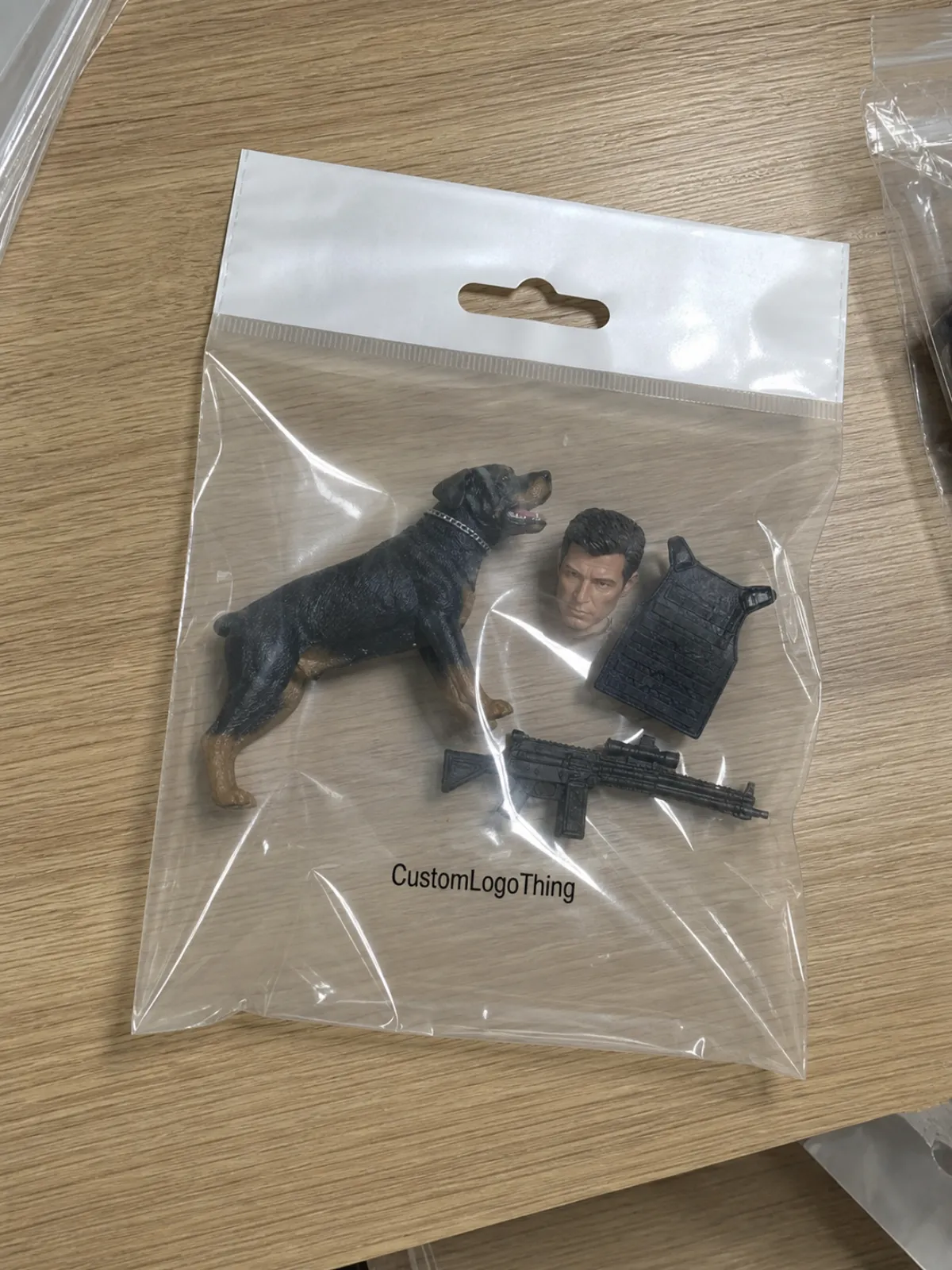
Small parts make flaws obvious. A cloudy film, weak seal, or crooked hang hole can make a usable product look rushed. On a peg hook, the package often shapes the buyer's impression before anyone reads the copy, which is why these packs need closer attention than they usually get.
Loose contents are the most common visual issue. When tiny pieces move around too much, the set can look underfilled even if the count is correct. Oversized bags show too much empty space. Undersized bags stress the seal and make the pack look cramped.
Retail staff notice those problems quickly, and parents do too, even if they do not describe them in packaging terms. A kit that looks jumbled tends to feel less trustworthy. A clean, aligned pack signals care, even when the contents are simple.
Protection also goes beyond dust and scuffing. Small toy parts can scratch one another, curl at the edges, puncture a weak seal, or shift enough to distort the presentation. A good structure keeps the assortment grouped, visible, and stable from packing line to shelf.
Buyer reality: if the set includes more than one small component, the packaging has to preserve both order and visibility. Once the contents look loose or the seal looks stressed, shelf value drops fast.
That is why custom printed bags should be judged as working packaging, not just as a graphics surface. Good package branding starts with fit, seal integrity, and a layout that supports the contents instead of fighting them.
How OPP Header Bags Keep Mixed Pieces Clean and Visible
OPP, or oriented polypropylene, is popular because it delivers a crisp, clear presentation with a retail-friendly finish. In header bag form, the lower body holds the accessory set while the reinforced top section supports hanging display and printed information.
The transparency helps buyers, merchandisers, and distributors see the contents immediately. That reduces confusion and lowers the chance of returns caused by mismatched expectations. It also makes count verification easier during receiving and stocking.
For small accessory kits, the practical value is organization. A clear pack keeps stickers from curling out of view, groups small parts together, and prevents loose accessories from wandering inside the bag. The result is a package that looks intentional rather than improvised.
OPP is not the right answer for every toy accessory set. Heavy pieces, sharp edges, or products that need a softer structure may call for a different material or gauge. The better approach is to match the format to the contents instead of forcing the contents into a generic bag size.
When buyers compare retail packaging options, the appeal is straightforward: hanging display, a clear view of the contents, and a compact format that works well in toy aisles, checkout zones, and promotional racks. For that reason, Custom Packaging Products often start here when the brief calls for presentation plus basic containment.
For broader material references and packaging context, organizations such as packaging.org can help frame discussions about film choice and display behavior. They are not a substitute for a sample run, but they do provide useful background.
Custom OPP Header Bags for Toy Accessory Sets: Spec Choices
Spec decisions do most of the work. Start with size. The bag needs enough width and length to fit the accessory set without pinching the contents or wasting too much empty space. Header height matters too, because the top section has to hold branding, scanning, hanging, and any required warnings.
Film thickness is the next practical choice. A common range for light retail use is around 30 to 50 microns, but that is only a starting point. A set with flat, smooth parts can usually use a lighter structure than one with rigid or sharp-edged components. Seal strength matters just as much as clarity.
Hang-hole style is another detail that gets overlooked until the sample arrives. A round hole, slot hole, or euro-style cut may all work, but each behaves differently on store hooks. The sample should hang straight and stay that way when filled.
The header is functional space, not just a branding strip. It may need a logo, age-grade copy, barcode placement, warning text, or a simple product identifier. Barcode legibility deserves real attention because a code that scans on proof but fails once filled creates avoidable retail friction.
| Spec Area | What It Affects | Typical Buyer Concern |
|---|---|---|
| Bag width and length | Fit, appearance, loading ease | Will the accessory set sit flat? |
| Film thickness | Durability, clarity, feel | Will the pack crease or tear? |
| Header height | Branding space, hanging display | Is there room for warnings and a barcode? |
| Hang hole shape | Retail display stability | Will it hang straight on standard hooks? |
| Print coverage | Brand visibility, cost | How much branding is actually needed? |
Print coverage affects both appearance and cost. A one-color logo is cheaper and faster to approve than a multi-color layout with detailed icons, caution text, and a custom barcode reserve area. More ink and more proofing usually mean more cost, though stronger shelf recognition can justify it in crowded categories.
Consistency across a line is another practical issue. If the toy range already uses Custom Printed Boxes or other branded packaging, the header bag should feel related rather than random. Matching color logic, logo treatment, and warning style helps the range look coordinated.
Pricing, MOQ, and Unit Cost: What Actually Moves the Quote
Pricing usually comes down to a few controllable variables. Size is the first one because larger bags use more film and handling time. Film thickness comes next, then print colors, header complexity, and order quantity. If two quotes differ, the gap is usually sitting in one of those categories.
MOQ affects unit cost because setup costs have to be spread across the run. Lower quantities almost always carry a higher per-unit price. Larger orders usually reduce the price, sometimes enough to matter in a category with thin margins. As a rough working range, a 10,000-piece order might land around $0.11-$0.18 per unit, while a 3,000-piece run may sit closer to $0.18-$0.30, depending on dimensions, print coverage, and setup needs.
Sampling, artwork cleanup, and proofing time can also shift the quote. A simple clear header bag with a basic logo is easier to price than a pack that needs multiple colors, exact barcode placement, compliance text, and a tighter fit to a mixed set. Clean input files usually reduce both cost and back-and-forth.
The best comparison method is simple: send the same dimensions, the same art files, the same quantity, the same material request, and the same delivery target to every supplier. If one number is lower but the inputs are incomplete, the quotes are not really comparable.
A useful quote request should include:
- Finished bag width, length, and header height
- Approximate accessory count and part sizes
- Print colors and placement
- Hang-hole preference
- Barcode, warning, or age-grade requirements
- Target quantity and needed ship date
That level of detail improves pricing accuracy and usually trims the back-and-forth. It also helps suppliers flag cost drivers early, which is more useful than chasing the lowest number on the page.
Production Steps and Lead Time: From Artwork to Shipment
The production sequence is usually stable: spec confirmation, artwork review, proof approval, production, inspection, and final packing. If the dimensions are clear and the art is ready, the process moves at a reasonable pace. If the brief is vague or the files need cleaning up, the schedule slips quickly.
For a standard custom run, lead time often falls around 12-15 business days after proof approval. Larger orders, multiple print colors, or a seasonal toy launch can extend that. Sampling adds time, but it usually saves more time than it costs by preventing size or barcode mistakes.
There are a few common delay points. The first is unclear dimensions. The second is artwork cleanup, especially low-resolution logos, missing bleed, or crowded text blocks. The third is approval lag when too many people need to sign off before the final file is released.
Quality control should be part of the discussion before the order begins. Ask whether the supplier checks seal integrity, hanging behavior, print alignment, and barcode scan quality. For products that need transit resilience, it is reasonable to ask whether the pack has been evaluated against common shipping expectations such as ISTA methods. If the broader packaging system includes paper components, certifications such as FSC may also matter to retail buyers.
Seasonality can compress the schedule more than most buyers expect. Toy packaging runs often tighten around trade shows, holiday promotions, and product refresh windows. It helps to work backward from the date the item needs to be on shelf, not from the day artwork is approved.
Common Mistakes That Cause Returns or Rework
Wrong sizing causes more trouble than almost anything else. Some buyers size the bag from a tightly stacked sample photo and forget that real packing adds depth, irregularity, and air. The result is a pack that pinches the set, strains the seal, and looks cramped. Oversizing creates the opposite problem: the product drifts inside the bag and looks less premium.
Header mistakes show up quickly in retail. If the hole sits too close to the print area, the bag can tear or hang crooked. If the header is too short, there is no clear space for branding or compliance text. If the print is positioned too low, the filled body obscures it.
Barcode placement deserves more care than it usually gets. A code printed near a fold, seal, or heavily curved surface may scan poorly once the pack is filled. The same issue applies to warning text and age grading. If the information is crammed into a narrow space, it can become hard to read after production.
Weak product information also creates trouble. If the supplier does not know whether the contents are sharp, fragile, nested, or reusable, it cannot make a thoughtful recommendation on thickness or seal strength. Split seals, poor pack counts, and crooked presentation often trace back to that missing context.
Testing with the actual accessory set solves most of this early. A placeholder load is useful only if it matches the real product in size, weight, and shape, and that is rare. Even a small change in part height or geometry can alter the way the contents settle in the bag.
Before committing to a full order, ask for these checks:
- Physical sample or pre-production proof
- Artwork review with readable barcode and warning area
- Confirmed fit using the real accessory set
- Seal and hanging tests under normal handling
Those four steps do not eliminate every risk, but they catch the expensive ones early. That is usually the standard that matters.
Expert Tips and Next Steps Before You Request Samples
A clear one-page spec sheet saves time. Include the finished dimensions, estimated quantity, artwork notes, accessory count, and any handling requirements. If you have a photo of the actual set, add that too. Images help suppliers understand volume and shape in a way dimensions alone cannot fully capture.
Ask for a sample or proof before you place the full order. That is the simplest way to check fit, hanging behavior, and print placement under real conditions. The goal is not just to confirm that the bag exists, but that the package works when it is filled, displayed, and handled the way the buyer will use it.
Sample testing should always use the actual accessory mix. Two sets with the same piece count can behave very differently if one includes flat components and the other includes rounded, nested, or fragile parts. Small differences in geometry change the final appearance.
If the accessory set is part of a larger product family, keep the visual system aligned. Match the color tone to other pack types, keep safety copy style consistent, and avoid a header that feels disconnected from the rest of the line. That kind of coherence makes the range feel intentional rather than assembled piecemeal.
It also helps to compare two or three suppliers with identical inputs. Use the same film spec, the same print assumptions, the same quantity, and the same target ship date. If the quotes differ, the reason usually becomes clear once the assumptions are stripped away.
Custom OPP Header Bags for toy accessory sets work best when the buyer treats them as a retail tool, not just a container. The pack has to fit the product, protect the contents, support the brand, and stay within a workable cost structure. If it does those things, it earns its place.
FAQ
What size works best for custom OPP header bags for toy accessory sets?
Measure the widest part of the set first, then allow enough clearance for loading and seal margin. The header height should leave room for branding, warnings, and the hang hole. If the accessory mix varies by SKU, a sample fit is the safest way to confirm the final size.
Are custom OPP header bags better than plain poly bags for toy accessories?
OPP usually gives a clearer, crisper retail presentation than a basic flexible poly bag. The header format also supports hanging display, which matters in pegged toy aisles and checkout racks. For visibility and merchandising, it is often the stronger option.
What affects the price of custom OPP header bags the most?
Bag dimensions, print coverage, film thickness, and total order quantity usually have the biggest effect on price. Complex headers, extra compliance text, and specialty proofing can increase the unit cost. A cleaner spec sheet usually produces a tighter quote.
How long does production take for toy accessory packaging orders?
Lead time depends on artwork readiness, sample approval, and the size of the run. Simple orders move faster when files are final and no structural changes are needed. Plan extra time if the order has to land before a launch window, seasonal promotion, or trade show.
What should I send a supplier when requesting a quote?
Send finished dimensions, quantity, artwork files, and any required warnings or barcodes. Include sample photos of the accessory set so the pack size and presentation priorities are clear. State whether you need custom print, a hang hole, a specific seal type, or sample approval first.
