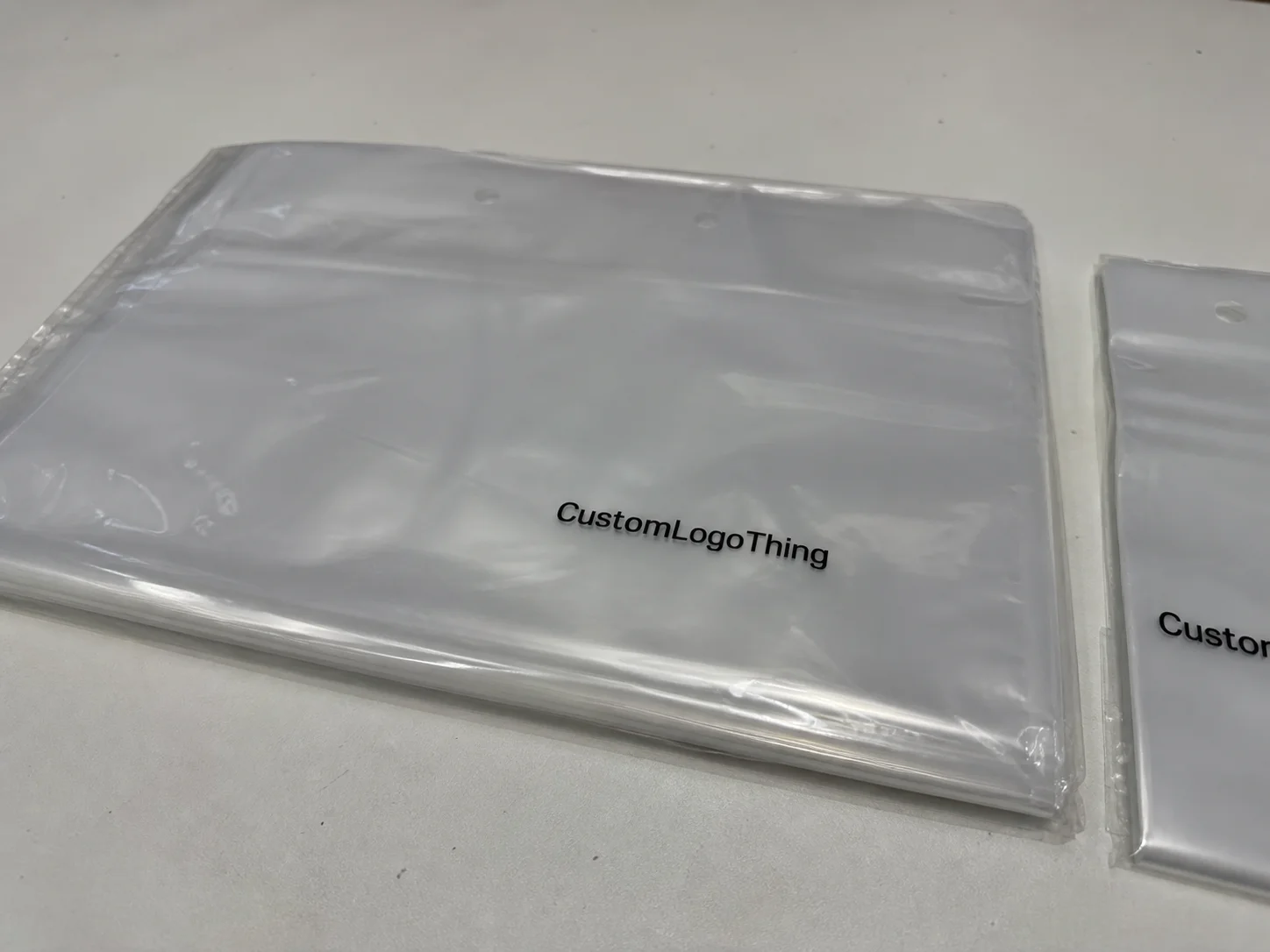
Choosing a private label OPP Header Bags supplier gets complicated once the quote arrives. Bag size, film thickness, print colors, header style, and freight can change the total fast. These packs are judged from arm's length on a peg, so the header has to carry the brand quickly and clearly.
OPP Header Bags are clear oriented polypropylene bags with a reinforced top header for hanging and branding. They protect the product, keep weight low, and show the item through the film. That makes them practical for snacks, stationery, small accessories, party goods, samples, and promo kits. For Private Label Buyers, the goal is simple: make the package look like it belongs to the brand and still performs in retail.
Four decisions drive most of the result: fit, print, cost, and timing. Everything else supports those four.
Why OPP header bags win on crowded retail hooks
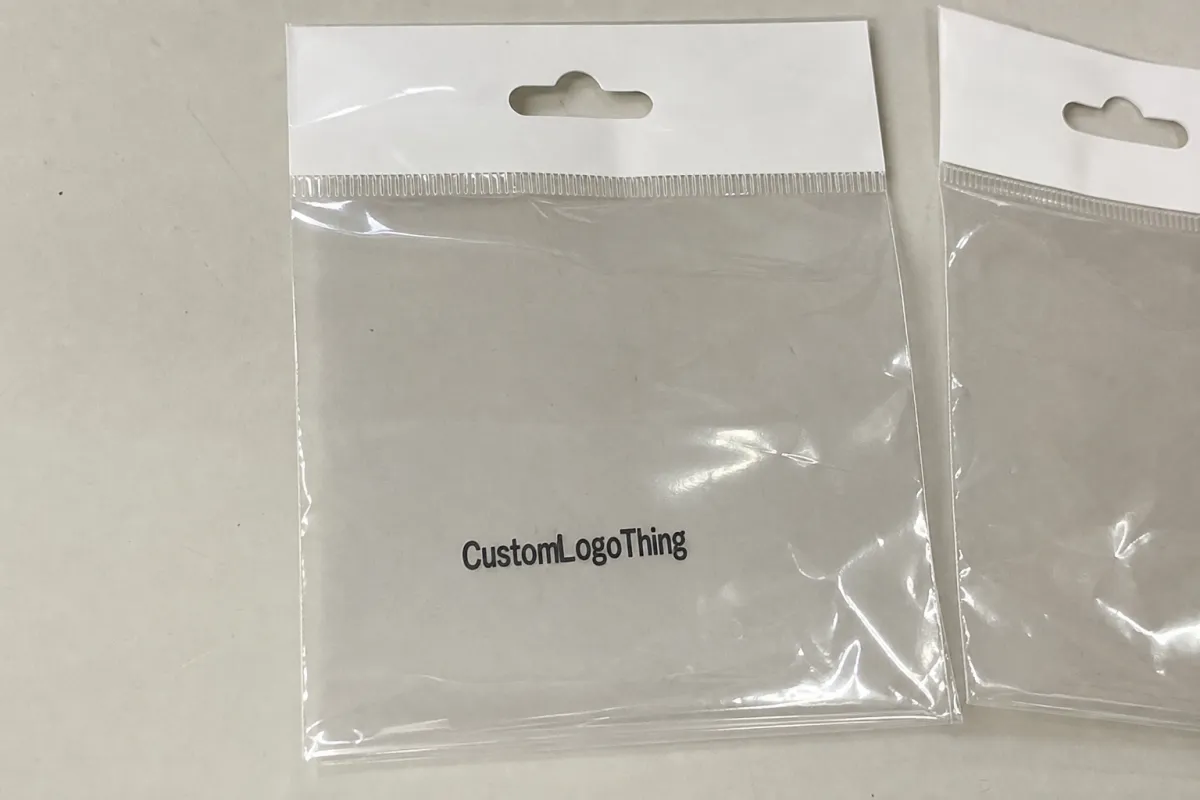
Retail hooks are unforgiving. Products hang beside each other, store lighting creates glare, and shoppers move fast. In that setting, a plain pouch can disappear while an OPP header bag gives you a visible branding panel and a clear view of the product. The package has to communicate in seconds, not minutes.
The real value of the header is structure. It creates a hard edge for the brand while the clear body lets the product do part of the selling. On a crowded peg wall, that usually works better than decorative packaging that looks good in a mockup but gets lost in store. A supplier should be thinking about visibility, hang behavior, and retail fatigue, not only print placement.
These bags fit products that need to hang neatly and stay visible: craft accessories, hair clips, small tools, refill packs, sample bundles, seasonal novelty items, and lower-weight food or confectionery items. They are less useful for heavy, fragile, or luxury products that need rigid protection or a more elevated unboxing experience. Packaging always has tradeoffs.
The bag itself does not create the premium effect. Header height, print contrast, film clarity, and hanging behavior shape the impression. If one of those is off, the pack can read cheap even when the logo is strong. That is usually a production issue, not a branding mystery.
Process and lead time: from artwork to shipment
The production path is straightforward: inquiry, spec review, artwork check, quote, proof, approval, production, packing, and shipment. Most delays happen in the handoff between buyer and supplier, especially when the spec is unclear or the artwork is not ready for print.
Artwork issues are the usual cause. Missing dielines waste time. Low-resolution logos force revisions. Color that looks fine on screen can fail on transparent film if the artwork was not prepared for the substrate. Once the supplier schedules film, plates, or print setup, late changes stop being minor and become a new job.
Lead time depends on quantity, print complexity, and material availability. Location matters too. Domestic production can shorten the front end of the schedule. Overseas production can reduce unit cost on larger runs, but freight and customs add time that should be counted as part of the order.
Production time and total turnaround are not the same. A simple run may take 10-15 business days after proof approval. Once freight and receiving are included, the total can stretch to 3-6 weeks. Larger or more customized jobs often run 4-8 weeks, sometimes longer if the artwork is complex or the material supply is tight.
Ask the supplier to break the schedule into stages: proofing, approval, production, packing, and shipping. A reliable private label Opp Header Bags supplier should be able to answer each stage clearly. Vague averages usually mean weak control elsewhere.
Cost, pricing, MOQ, and quote drivers
Header bag pricing comes from a stack of small choices: material grade, bag size, header construction, print colors, setup charges, packing method, and freight. Two quotes can look close and still land very differently once every line item is counted. A low quote that hides setup, uses thinner film, or excludes freight is not a better quote.
MOQ works the same way. Small runs usually cost more per piece because setup is spread over fewer units. Larger runs lower unit cost, but they tie up cash and storage space. If the product is new, a smaller MOQ protects you from overbuying. If the SKU already moves steadily, a larger run can make sense if the inventory plan is realistic.
These are the numbers buyers usually compare first, and they are the right ones to compare:
| Order Type | Typical MOQ | Typical Unit Price | Best For | Watch Outs |
|---|---|---|---|---|
| Small test run | 1,000-3,000 pcs | $0.22-$0.45 | New launches, seasonal items, sample programs | Higher unit cost, more setup overhead |
| Mid-size custom run | 5,000-10,000 pcs | $0.12-$0.28 | Steady sellers, retail-ready private label lines | Artwork must be final before production starts |
| Large production run | 20,000+ pcs | $0.08-$0.18 | High-volume replenishment, national programs | Inventory risk, longer transit planning |
Those numbers move with size, thickness, and print coverage. A simple one-color logo on the header costs less than a full-color layout with white ink support. A euro slot, custom hang tab, or special packing format adds cost too. What matters is not the lowest line item, but whether the quote reflects the real build.
To compare suppliers cleanly, normalize the specs first: size, thickness, print method, pack count, and whether setup, samples, and freight are included. If one quote is based on 2.2 mil film and another on 3 mil film, they are not interchangeable. If the unit price is lower but the MOQ is too high, the savings may just be inventory risk.
Spec choices that affect print, seal, and display
Three choices shape most of the outcome: film thickness, header design, and print setup. Thickness affects feel and durability. Header design affects how the pack hangs and how much room the brand has. Print setup affects whether the artwork looks sharp or washed out.
Thickness usually lands around 30-50 microns for lighter retail uses, though the right spec depends on product weight and handling conditions. Thinner film is cheaper and usually fine for lightweight items. Thicker film resists scuffing, feels more substantial, and handles repeated retail contact better.
Header style changes both appearance and function. A euro slot hangs neatly on most retail fixtures. A round hole is simpler. A hang tab can improve display on specific fixtures. Tear notches, seal strength, and insert-card fit matter too. If the bag will sit on a peg for weeks, it should be designed for that reality.
Print is where many custom bags go wrong. Spot colors are often cleaner for simple logos. Full-bleed art can look richer, but it needs tighter artwork control and more careful setup. Clear film changes how colors read, so artwork should be reviewed on a film mockup, not only on a white digital proof.
Environment matters too. Moisture, abrasion, UV exposure, heat, grease, and rough retail handling all affect bag performance. Snacks and food-adjacent products may need stronger seal consistency. Accessories that rub together may need tougher film. Samples may need better clarity than durability. There is no single best spec, only the spec that matches the use case.
If you are building a broader retail kit, pair the bags with Custom Labels & Tags so the branding stays consistent across the pack and accessory items. If you want to compare related packaging support options, the Custom Logo Things homepage is a practical starting point.
Step-by-step ordering checklist for custom runs
Start with one spec sheet: finished bag size, header dimensions, film thickness, print area, hang style, quantity target, and packing format. Put everything in one place before requesting prices. Vague requests create vague quotes, and vague quotes usually become expensive corrections.
Then give the supplier one clear use case: retail peg display, sample distribution, subscription insert, or promotional kit. That single line tells the supplier what matters most: shelf visibility, shipping durability, or cost control. Without it, the supplier has to guess.
Before approving artwork, check the proofing rules. Ask for the file format, bleed, safe margins, and whether the proof is digital or physical. If the brand is color-sensitive, ask for a pre-production sample or a close production reference. A screen proof helps, but it is not a promise.
A small pilot run makes sense when the design is new, the product is seasonal, or the launch schedule is tight. Catching a hole-position issue, weak contrast, or poorly chosen font on 1,000 pieces is much cheaper than finding it on 20,000. That is basic cost control.
Lock the calendar before placing the order. Count backward from launch, then add receiving time, inspection, and a buffer for the problem that always appears once. If the order must hit a retailer appointment or distributor deadline, the buffer matters more than the supplier's optimistic completion date.
- Use the same spec sheet for every quote request.
- Confirm whether setup, sampling, and freight are included.
- Ask for lead time split into production and transit.
- Save approval emails and proof versions in one folder.
For buyers who want a broader view of transit packaging and material choices, resources from Packaging Corporation of America and FSC are useful references. They will not choose the bag for you, but they help frame questions about sourcing, material integrity, and how packaging behaves under real handling.
Common mistakes that create reprints and delays
The biggest mistake is vague language: "standard size," "whatever fits," or "something nice." Those phrases create bad quotes because nobody can build a spec from fog. If the goal is the right bag, give dimensions, thickness, print count, hang style, and quantity.
Artwork mistakes come next. Low-resolution logos, missing fonts, and files built for screens instead of print cause problems fast. A design that looks fine on a laptop can fail once it is scaled, separated, and printed on clear film. Tiny type is especially risky because transparent packaging leaves nowhere to hide.
Do not ignore the product environment. Heat, grease, humidity, and rough retail handling all change performance. A light pack that works for dry stationery may be wrong for a snack product or a bundled sample kit. A supplier who does not ask about those conditions is only quoting, not helping.
Changing the design after proof approval is expensive because it interrupts scheduling, consumes material planning, and can push the run into the next production window. If internal review is weak, tighten it before the order goes out. One extra approval cycle inside the team costs less than one reprint outside it.
Finally, do not let the lowest price make the decision by itself. Consistency matters more than a nice-looking purchase order. If you need the same look across reorder cycles, choose the supplier that can repeat the spec cleanly. Cheap and inconsistent is just a longer way to buy problems in bulk.
What to ask a private label opp header bags supplier before you buy
Ask for the build spec in writing: material, thickness, dimensions, printing method, header style, pack count, and any insert-card requirement. If a private label opp header bags supplier cannot put that down clearly, keep moving. You need a production document, not a sales brochure.
Confirm lead time, payment terms, MOQ, freight method, and what happens if artwork needs correction after the first proof. Those answers show how the supplier handles pressure. A clear answer usually means the process is organized. A vague answer usually means your team will spend time chasing details later.
Ask for the sample policy in plain language. Is the sample a digital mockup, a stock-reference bag, or a true pre-production sample? Buyers get burned when they think they approved one thing and the factory produced another. If the sample does not match the final build, that needs to be stated before payment.
Compare suppliers on more than price: communication speed, proof accuracy, reorder consistency, and how they handle mistakes. Anyone can quote a number. Not everyone can keep a line stable over multiple runs without turning every reorder into a detective story.
A practical method is simple: shortlist two or three suppliers, send the same spec sheet to each, and ask them to quote the same terms. The one that answers clearly usually wins. The one that talks in circles usually costs more later.
Frequently Asked Questions
What should I ask a private label opp header bags supplier before quoting?
Ask for a written spec sheet covering size, thickness, print method, header style, and packing format. Confirm whether setup, sampling, and freight are included or billed separately. Check the real lead time for your quantity, not a broad average.
What is a normal MOQ for custom OPP header bags?
MOQ varies by print complexity and supplier setup, but small runs usually cost more per bag. A lower MOQ can be useful for testing, seasonal launches, or new SKUs. If the MOQ feels unusually high, ask whether the supplier is tying it to a specific machine setup or print method.
How long does private label header bag production usually take?
The full timeline usually includes proofing, approval, production, packing, and transit. Simple orders move faster; custom print, special finishes, or overseas freight add time. Ask the supplier to separate production lead time from shipping time so you can plan with a real calendar.
Which print method works best for clear OPP header bags?
The right method depends on how bold the artwork needs to be and whether white ink or underprinting is required. Simple logos can work with fewer colors, while premium retail packs may need tighter print control. Always request a proof that shows how the art will read on clear film, not just on a white background.
How do I compare two suppliers when the prices look close?
Compare identical specs first: size, thickness, print colors, header style, and pack count. Check what is included in the quote, especially setup fees, sampling, and freight. Choose the supplier that gives cleaner communication and fewer hidden variables, not just the cheapest line item.
If one point matters most, it is this: the right private label opp header bags supplier gives you a clear spec, a believable timeline, and a bag that still looks good after shipping, stacking, and retail handling.