On a construction site, headwear is often the first part of the uniform that gets noticed. It shows up in truck arrivals, client walk-throughs, job photos, and all the small moments that shape how a crew is perceived. That is why Custom Trucker Caps for construction crew uniforms do more than carry a logo. They help crews look coordinated without adding much friction to issue-out, replacement, or storage.
The appeal is mostly operational. Trucker caps are one-size, breathable, and easy to stock in bulk. They can be handed out to mixed crews without sorting by hat size, which saves time during onboarding and makes reorders simpler later. For teams that move between jobs, work in heat, or rotate through outdoor tasks, that matters as much as the decoration itself.
Good headwear also works quietly. It does not need a hard sell. If the front panel stays readable, the mesh keeps airflow moving, and the closure holds up after repeated wear, the cap does its job. If not, it becomes another item that sits in a drawer.
Custom Trucker Caps for Construction Crew Uniforms: Why They Stand Out on Site
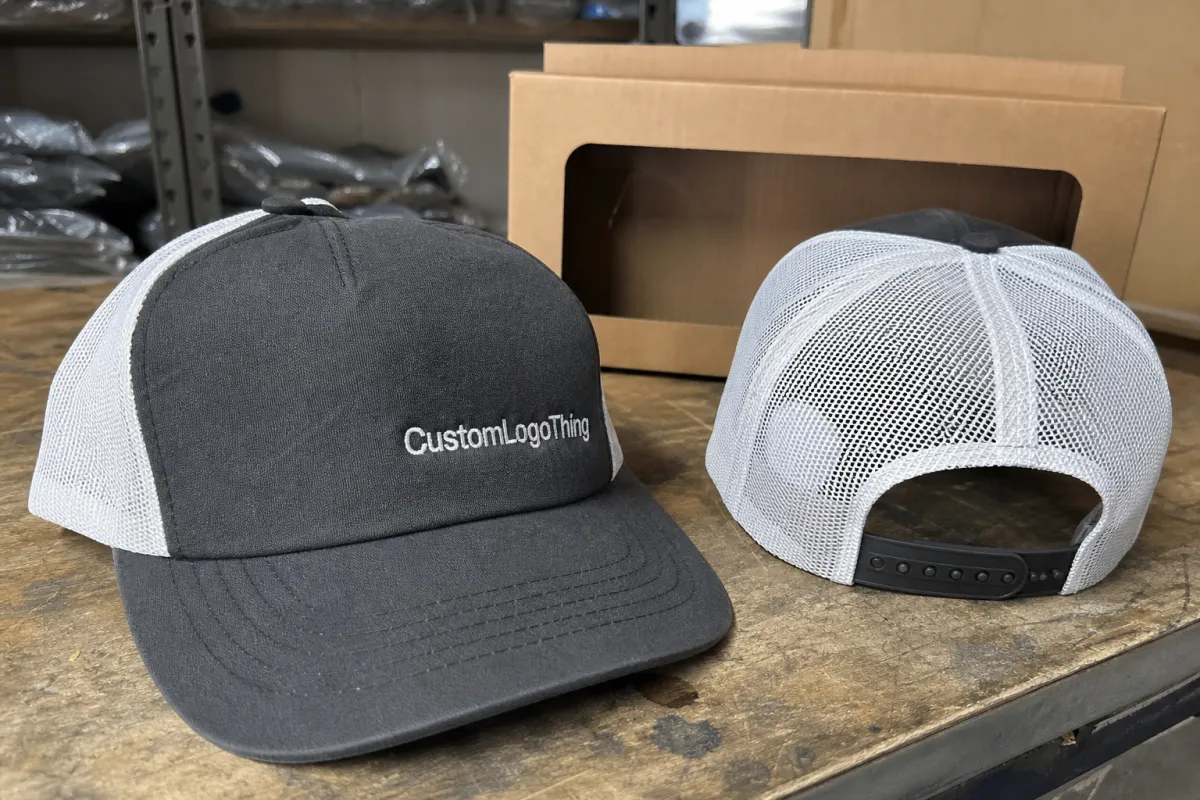
Construction uniforms get judged fast. A foreman stepping out of a vehicle, a delivery team unloading material, or a client walking the perimeter will usually notice the top line first: hats, helmets, and whether the group looks consistent. That makes Custom Trucker Caps for construction crew uniforms a small piece of apparel with a noticeable effect on presentation.
The basic construction of the cap explains a lot of its value. A structured front panel keeps a logo flat, the mesh back releases heat, a curved bill reduces glare, and the adjustable closure lets one style fit a wide range of wearers. The cap feels simple because it is simple, and that simplicity is useful in the field.
One-size headwear also reduces operational clutter. There is no size run to sort, fewer mistaken issues, and less chance that a crew lead has to hold inventory just to cover a few odd sizes. That makes the cap a good fit for companies that want a dependable uniform item without creating extra admin work.
A cap that only looks good in a mockup is not doing its real job. On site, the better test is whether it still reads cleanly after a week of sun, dust, sweat, and truck cab storage.
The best programs treat the cap as part of a broader uniform system rather than a loose add-on. If a company already pays attention to branded shirts, safety vests, onboarding kits, or package presentation, the cap should follow the same logic: consistent color, clear logo placement, and a finish that holds up beyond first impressions.
That is also why many buyers keep the order tied to other branded items, including Custom Packaging Products, so the visual language across the kit feels intentional from the start.
How Mesh Panels, Foam Fronts, and Closures Affect Daily Use
Material choices change how a cap behaves after the first few shifts. The front panel is the display surface, so it needs enough structure to keep embroidery or a patch from buckling. The mesh back does the cooling work. On a hot crew, a cap that traps heat quickly becomes one more thing workers leave in a truck.
Foam-front truckers give a smooth surface and a more casual look. They are often used for bold logos or larger front graphics. Cotton twill fronts feel more like workwear and usually age well when the cap gets stuffed into a tool bag or trailer seat. Polyester blends dry faster, which helps in humid climates or during long summer shifts. None of these is universally best. The right choice depends on weather, wear time, and how polished the final appearance needs to be.
Closures influence daily use more than many buyers expect. Snapbacks are quick and common. Fabric strap closures can feel a little more refined and tend to work well when the cap will be worn by different people over time. Hook-and-loop closures are easy to adjust, though they can wear down sooner in gritty environments. If the cap is going to move between team members, speed of adjustment matters.
| Decoration method | Look | Durability | Best use case |
|---|---|---|---|
| Embroidery | Clean, dimensional, familiar | High | Daily wear, repeat reorders, simple logos |
| Woven patch | Sharp detail, polished finish | High | Small type, fine lines, premium crew branding |
| Printed label or heat transfer | Flat and lightweight | Moderate | Short runs, promo-led programs, lighter use |
That last row needs a little caution. Printed decoration can work for limited use or lighter wear, but it usually gives up ground in rougher environments. For Custom Trucker Caps for construction crew uniforms, stitched decoration or a patch usually lasts longer and keeps the logo looking deliberate after repeated handling.
Material, Visibility, and Fit Factors That Matter Most
Color affects more than style. It changes how much grime shows, how the cap reads against shirts and outerwear, and how quickly the uniform starts to look worn. Dark caps hide dirt well, which helps on concrete, framing, and landscaping jobs. Brighter caps can stand out more if the rest of the kit is muted. The useful rule is simple: keep the cap in conversation with the uniform instead of letting it fight it.
Fit matters too. Some crews have a wider spread of head sizes than the sample set suggests. Some workers wear the cap over thicker hair, and some will tilt the closure differently for comfort. A well-designed trucker cap should adjust without feeling flimsy or loose.
There is also a safety boundary buyers should keep clear. A trucker cap is not a substitute for impact protection, and it should not be treated like one. If a crew needs hard hats for a task, that requirement stays separate. Trucker caps are better viewed as off-duty, travel, supervisory, or low-risk task headwear where a lighter, more breathable cap makes sense.
Readability is another quiet factor. A logo that looks clean on a screen can disappear once it is stitched onto a dark front panel in low-contrast thread. Black thread on navy, dark gray on charcoal, or similar combinations often fail in daylight. Buyers should think about contrast first and style second.
Common material choices that usually perform well include:
- Polyester front panels for faster drying and better shape retention
- Cotton twill fronts for a softer workwear feel and easier break-in
- Mesh backs for airflow during long summer shifts
- Pre-curved bills for glare control with little break-in time
For packaging-heavy programs, the cap should also travel well. If hats ship with shirts, gloves, or onboarding materials, the carton and inner packing format need to hold up under repeated handling. Transit standards such as ISTA testing are useful to understand, and paper components can be specified with FSC certification if recycled-content goals matter.
The same thinking used for retail packaging can carry over to crew kits. A cap that arrives folded badly, crushed in transit, or loose inside a larger box feels less finished than it should, even if the decoration is good.
Cost, Pricing, and MOQ Questions to Ask Before You Request a Quote
Pricing usually comes down to four variables: quantity, decoration method, blank cap availability, and how much artwork cleanup is needed. A one-color embroidered logo on a stock cap is one of the more economical routes. Add a woven patch, extra thread colors, custom labeling, or a nonstandard color and the quote changes quickly.
The unit price also behaves differently at different order sizes. A small run carries more setup cost per piece, while a larger order lowers the unit price but raises the total spend. A 50-cap order and a 500-cap order solve different problems, even when the logo is identical.
Typical cost drivers include:
- Quantity and how setup is spread across the run
- Decoration complexity such as thread count, patch shape, or multiple placements
- Digitizing or setup fees for embroidery and patch tooling
- Rush production or split shipments to more than one site
- Sample or pre-production charges if a physical check is needed before release
| Order size | Typical decoration | Indicative unit range | What to watch |
|---|---|---|---|
| 48-72 caps | Simple embroidery | $8.50-$14.00 | Setup fees have a bigger effect here |
| 100-250 caps | Embroidery or woven patch | $6.25-$10.00 | A useful middle ground for one or two crews |
| 500+ caps | Standard embroidery or patch | $4.50-$7.25 | Best pricing if colors and specs stay stable |
A few extra costs show up often enough to plan for them. Digitizing can land around $25-$75 depending on logo complexity. Patch tooling may add $40-$125. Rush fees often run 10%-20% of the order. Split shipping can add expense if caps must go to several jobsites. If the cap will be reordered later, ask whether the art file and final spec will be kept on record. That reduces repeat work and keeps the next order cleaner.
A sensible budget approach is to price by crew size, add 10%-20% for loss and replacement, and decide whether the order is one-time issue stock or a standing uniform item. That is usually the point where custom trucker caps for construction crew uniforms move from a merch line item into actual operational planning.
Order Process and Lead Time: From Artwork to Delivery
The production path is straightforward on paper: quote, artwork review, proof approval, sampling if needed, production, quality check, then shipping. The delays usually happen in the handoff points. A logo file may need cleanup. A brand color may be unclear. Three different people may review the proof at three different speeds.
Vector artwork usually moves faster than a flat image file. Simple one- or two-color marks are easier to approve than logos with gradients, tiny type, or thin outlines. Buyers often underestimate how much time gets lost during proof revisions. A two-day pause on approval can matter more than a faster ship method.
For standard production, a realistic planning window is often 12-15 business days after proof approval. Rush options can be available if the blank cap is in stock and the decoration is simple. Sampling can add several days. Multi-site orders add more time if the ship-to list changes late in the process.
Quality control should not be an afterthought. At minimum, a final check should confirm logo placement, thread color, patch alignment, closure function, and cap shape across a sample from the run. If the caps are being shipped with other branded items, the outer packing should also be checked for count accuracy and transit durability. That matters most for programs that need the same consistency every time.
A simple planning checklist helps keep the order moving:
- Confirm the final logo file and exact cap color.
- Approve the mockup with thread or patch colors clearly called out.
- Decide whether a sample is needed before full production.
- Set the ship-to list early if the order goes to more than one site.
- Leave room for peak season, freight delays, or a crew-count change.
That buffer matters. A crew launch delayed by a week can make a good order feel late. Good planning is still the most reliable way to keep the schedule steady.
Step-by-Step: Building a Uniform Cap Program for Crews
Start with headcount, not the artwork. That sounds basic, but it prevents a lot of ordering mistakes. A buyer should know how many people need caps now, how many are likely to join later, and whether any supervisors need a cleaner client-facing version while field crews wear a standard daily-use style. Those answers affect quantity, decoration, and spare stock.
Then choose the spec in a practical order: fit, color, decoration method, and logo placement. Buyers sometimes reverse that sequence and spend too much time on a clever patch shape or a special thread color before checking whether the cap actually works in the field. Style still matters, but the cap has to function through a hot shift, a cramped vehicle, and rough handling.
Good artwork saves time. Ask for a vector file, exact brand colors if they are known, and any site-specific visibility rules. If the company already uses packaging design standards for onboarding, the cap should sit comfortably inside that system. A crew kit that arrives in custom printed boxes with a clean internal layout feels more deliberate than one that arrives as a loose pile of parts.
Distribution should be documented. A short internal spec sheet can capture:
- Cap style and closure type
- Front panel color and mesh color
- Decoration method and logo placement
- Packaging preference for issue-out
- Reorder threshold for spare inventory
That last point keeps the program from stalling later. If reorder stock is defined, the cap becomes a standing uniform item instead of a one-off purchase that has to be rebuilt from scratch every time a new project starts.
Common Mistakes That Make Jobsite Headwear Fail Fast
The first mistake is buying for appearance alone. A cap can look fine on a desk and still fail on site if it traps heat, fits poorly, or loses shape fast. The second mistake is overloading the logo. Large, crowded art on a small front panel usually looks busy and can be harder to read from a distance.
The cleaner rule is simple: keep the mark centered, leave enough open space around it, and avoid tiny type unless the decoration method can truly hold it. A woven patch can carry more detail than embroidery, but neither one benefits from clutter. For custom trucker caps for construction crew uniforms, the strongest branding is usually the most restrained version.
Another common miss is underordering. Caps disappear. They get sweat-soaked, left in trucks, or handed to a new hire before inventory gets updated. A reasonable starting point is headcount plus 10%-20% for loss and replacement. If crews rotate between sites, keep some extras in vehicles or trailers so the uniform issue does not depend on one central storage point.
Construction teams also run into PPE confusion. A cap that clashes with safety gear can look out of place, especially when the crew switches between hi-vis outerwear and more neutral daily wear. The goal is to support the uniform system, not compete with it. If the cap sits alongside vests, gloves, and onboarding materials, those items should feel like they belong together.
Another mistake: approving a proof without seeing it against the actual shirt or vest color. A cap proof on its own can hide contrast problems that show up immediately in the field. That small step can prevent a costly reprint.
Next Steps: Turn the Spec Into a Repeatable Ordering System
Once the spec is clear, the process gets easier. Gather crew counts, choose the cap style, confirm the logo file, and set the reorder threshold before the first order ships. That turns the purchase into a routine instead of a scramble.
If the cap will be shared across multiple crews or supervisors, request one mockup or sample before placing the full run. A sample helps when the logo has fine detail, the cap color is new to the program, or the buyer is matching a broader branding system that already includes onboarding kits or package presentation standards.
A short internal spec sheet can prevent a lot of rework later. Keep it tight: cap style, closure type, decoration method, thread or patch colors, packaging preference, and reorder point. If the team keeps that record with the rest of its uniform and packaging notes, future orders take minutes instead of weeks.
That is the real value of planning ahead. The cap itself is small, but the system around it can save time, reduce waste, and keep crews looking consistent across projects. Treated as a repeatable standard, custom trucker caps for construction crew uniforms become one of the simplest tools in the uniform kit.
Frequently Asked Questions
How many construction crew trucker caps should I order for a small team?
Start with headcount plus 10%-20% for losses, sweat damage, and new hires. If crews rotate between sites, keep a small buffer in each truck or trailer. For ongoing programs, reorder when inventory drops below one shift's worth of extras.
What decoration method holds up best on trucker caps for jobsite uniforms?
Embroidery is usually the most durable for daily wear and repeated handling. Woven patches work well when the logo has fine detail or needs a cleaner finish. Simple prints can work for short runs, but stitched decoration is usually the safer long-term choice.
Can custom caps match hi-vis construction uniforms without clashing?
Yes, if the cap color supports the rest of the uniform instead of competing with it. Use high-contrast logos so branding stays readable against bright or muted garments. If visibility matters, ask whether brighter panels or accent colors make sense.
What affects the quote most for custom construction crew headwear?
Quantity has the biggest effect on unit cost because setup is spread across more caps. Decoration complexity, color changes, and patch construction can raise the price quickly. Rush schedules, split shipments, and sampling can also add cost if the timeline is tight.
How fast can jobsite trucker caps be produced and shipped?
The timeline depends on proof approval speed, decoration method, and whether samples are required. Ready-to-go artwork usually moves faster than logos that need cleanup or redrawing. Planning ahead is still the safest option because peak seasons and freight delays can stretch delivery.

