A custom trucker Caps Bulk Order looks straightforward until the first quote comes back with setup, decoration, freight, and revision time folded into the total. The buyers who end up with the strongest result are rarely chasing the lowest sticker price. They are judging whether the cap will actually be worn, photographed, and remembered at a seasonal rollout, a tradeshow, a dealership event, or a staff launch that spans several locations.
That matters because a mesh-backed cap often outlives the campaign that paid for it. One production run can serve field teams, event crews, retail shelves, and even post-campaign resale. The same logic shows up in package branding: the item still has to perform after the handoff. The real question is not simply what each cap costs, but what each usable impression costs once the order is in circulation.
Trucker caps also behave differently from many other promo items. They are worn in public, passed around more than apparel basics, and judged quickly from a few feet away. A weak logo, sloppy placement, or flimsy crown shape is visible immediately. A well-made cap can carry a brand for months without needing much explanation.
Why a bulk order lowers the real per-cap cost
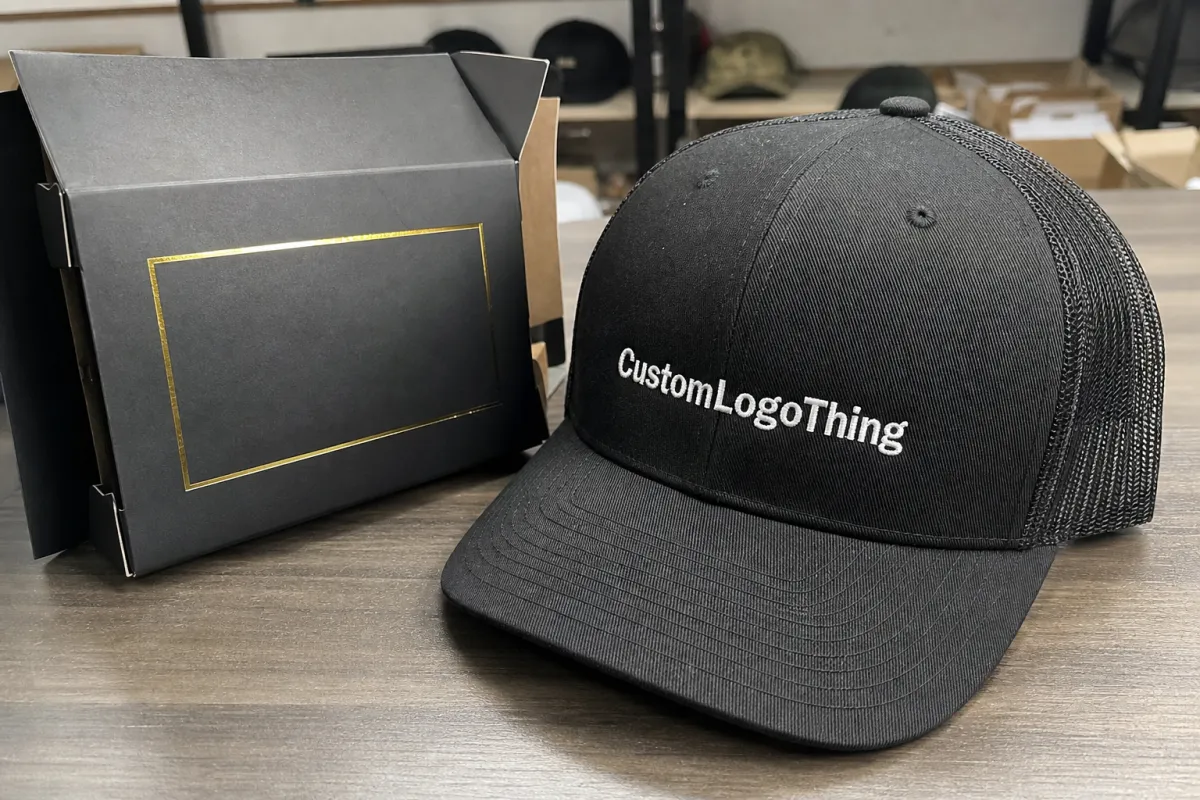
The main savings come from consolidation. One run means one artwork setup, one proof cycle, one color decision, and one shipment plan. If a program is split into smaller buys, the supplier repeats the same steps and spreads fixed costs across fewer units. That is why a custom trucker Caps Bulk Order can often beat piecemeal buying even when the blank cap itself is only a few dollars apart.
There is also a consistency benefit that gets overlooked. Matching panels, mesh, thread color, and closure style across separate orders sounds easy on paper. In practice, stock from different lots can drift in shade or hand feel. A single run gives tighter color control and fewer surprises at distribution. For companies already managing branded packaging, custom printed boxes, or retail packaging, the lesson is familiar: fewer handoffs usually mean fewer errors.
Trucker caps work especially well in volume when the audience is broad and active. Outdoor crews need airflow. Brewery merch needs something casual that people will wear off the clock. Dealership giveaways need a logo that reads from a distance. Trade shows need a cap light enough to hand out without slowing the line. Uniform programs need adjustable sizing that avoids a full size chart.
Price and value are not the same thing here. A low sticker price can still create a high landed cost if the cap arrives late, looks cheap, or fails in daily wear. A cap that sits in a carton until the next event does not earn much. A cap worn twenty times does. That is why a quote should be judged as a complete system, not as a single unit number.
Watch for quotes that leave out freight or assume a shipping method without naming it. A number can look attractive until packaging, carton counts, and destination charges are added. If the order is headed to multiple branches or a distributor network, split shipment fees can shift the math in a hurry. The cleanest quote is the one that shows the cap, the decoration, and the logistics separately.
Mesh, crown shape, and closure options that change the result
The front panel does most of the branding work, so build choice matters more than many first-time buyers expect. Structured fronts hold shape and give logos a sharper frame. Unstructured fronts feel softer and less formal, but embroidery does not always sit as cleanly on them. Foam fronts create a bold retro look and leave room for large graphics. Cotton twill fronts lean a little more premium. Polyester mesh backs keep the cap breathable for long wear in heat or direct sun.
If the team is mixed-size, snapback closure is usually the easiest route. It gives one size range, fewer fit issues, and simpler stocking. Fitted styles can look more tailored, but they work best when sizes are known ahead of time and the program is controlled. For most promotional use, flexibility beats precision.
Profile changes the tone as much as the logo does. A higher crown gives more visual presence and usually more room for a patch. A lower crown feels quieter and can fit lifestyle merch better. Bill curve matters too. Flatter bills feel more modern and sport-forward. More curved bills read as classic and easygoing. Those are not small details once the cap is in someone’s hand.
Color strategy should be handled the same way as packaging design. Strong contrast between the front panel and mesh improves recognition at a distance. Matching panels and mesh creates a cleaner, more uniform look. Underbill color is a minor detail that still affects how finished the cap feels when someone flips it over. If the cap is going into retail packaging or a presentation kit, those choices become even more visible.
- Structured front: best for clean logo presence and a more formal finish.
- Unstructured front: softer feel, lower profile, more casual appearance.
- Foam front: bold branding area, strong retro look, less forgiving for tiny text.
- Mesh back: better airflow, better comfort for outdoor or all-day wear.
- Snapback closure: easiest fit range for staff teams and giveaways.
Many quote delays start because the build was left vague. The cap construction affects imprint area, price, and the way the logo reads the moment the carton opens. It is easier to settle on structure first, then ask for art, than to redesign the decoration around a cap that was never clearly specified.
Decoration methods that survive daily wear and distribution
Decoration method changes the whole equation. Embroidery is the workhorse because it is durable, repeatable, and easy to reorder. Woven patches add detail and texture without relying entirely on thread density. Leatherette patches give a more premium look with a little contrast. Screen print can work for simple graphics, though it is less common when buyers want a longer-lasting, dimensional finish. Heat transfers are useful for certain short-run or full-color applications, but they are not the best answer for every program.
The logo itself should guide the choice. If the mark is bold, with clean shapes and little text, embroidery is usually the most cost-stable option. If the artwork contains fine lines, gradients, or a lot of internal detail, a woven patch may preserve clarity better. If the brand wants a textured lifestyle feel, leatherette or stitched patch construction can add value without turning the cap into a novelty item.
Two variables move the quote more than buyers expect: stitch count and patch size. A compact left-front embroidery can be economical. A large, dense, multi-color design is a different job entirely. Patch shapes with custom die-cut edges can also add cost, especially when the outline is intricate. The blank cap may not change, but the decoration bill does.
There is a practical limit on detail. Tiny text, thin outlines, and low-contrast art can disappear on foam fronts and read poorly on coarse mesh-backed styles. A good proof should show the actual placement, actual size, and actual cap style. A mockup on a flat template is not enough if the logo is pushing the limits of the decoration method.
Ask for the proof that matches the real cap, not a generic blank. Placement, thread color, patch size, and crown shape all affect how the finished piece reads in the hand.
For repeat buyers, proofing is a quality gate rather than paperwork. Ask for the file format, the logo placement, and the Pantone reference or closest-match reference if color matters. That is the same mindset used in product packaging: once a visual system is approved, the supplier should be able to repeat it without guessing.
Quality control also matters after decoration. Thread trimming, patch alignment, and backing finish tell you more about a supplier than the mockup ever will. A cap with clean stitching and even placement looks better on a table, but it also suggests the supplier is controlling the run instead of reacting to it.
Pricing, MOQ, and unit-cost tiers to compare
Pricing should be compared line by line. The blank cap is only one part of the bill. Setup, decoration, sample charges, freight, split shipments, and rush fees can change the final total more than the blank itself. That is why a custom Trucker Caps Bulk order should be quoted as a system, not as a single unit number.
Ask for the cost to be broken into these parts:
- Blank cap cost: the base style, color, and construction.
- Decoration cost: embroidery, patch, print, or transfer.
- Sample or mockup charge: if the supplier bills for pre-production review.
- Shipping: freight, carton count, and destination details.
- Rush or split-ship fees: extra handling for tight dates or multiple locations.
For reference, these are typical comparison ranges for one-logo trucker cap programs. They are not universal, because decoration method and artwork complexity matter, but they are useful for quote review.
| Quantity | Simple embroidery | Patch decoration | What usually drives the price |
|---|---|---|---|
| 100 | $6.50-$11.00 each | $7.50-$13.50 each | Setup cost dominates; freight per unit is high |
| 250 | $4.20-$7.25 each | $5.25-$9.25 each | Better spread of setup and more efficient packing |
| 500 | $3.10-$5.80 each | $4.10-$7.50 each | Usually the point where real unit savings show up |
| 1,000 | $2.40-$4.95 each | $3.25-$6.40 each | Lowest per-unit pricing if artwork stays simple |
Those tiers tell a useful story. The gap between 100 and 500 units is often larger than the gap between 500 and 1,000. That is where buyers should focus their comparison grid. A quote for 250 pieces may work for a pilot, but if the plan is a national rollout, the better value may start at 500 or higher.
MOQ deserves scrutiny too. A lower minimum does not always mean a better deal if the supplier offsets it with a higher decoration fee. Ask whether the minimum is tied to one colorway, one logo position, or one style. If you are comparing vendors, request apples-to-apples quotes: same cap, same stitch count, same patch size, same delivery terms. Otherwise the price comparison is noise.
Sample size and freight assumptions can distort the final number. Some suppliers quote a friendly unit price and then recoup margin through handling or a padded shipping line. Others offer better unit economics but require a larger minimum. The only way to compare accurately is to isolate each variable and keep the order specs identical across vendors.
For a clean buying decision, the quote should show blank cap cost, decoration, freight, and any rush charge separately. If those numbers are blended, you are not comparing suppliers; you are comparing guesses.
If your team already buys recurring apparel or Wholesale Programs, the same logic applies. The best vendor is rarely the one with the shortest number. It is the one whose quote tells you what the order will really cost after the cartons are packed and the goods leave the dock.
Production timeline and approval steps from quote to ship
A typical order follows a predictable path: request, spec confirmation, art proof, sample or mockup approval, production, quality control, packing, and shipment. The order usually does not stall because the cap is complicated. It stalls because one of those handoffs is incomplete. Missing vector art, undecided colors, and late approvals are the usual causes.
- Request: share quantity, style, decoration, delivery address, and deadline.
- Spec confirmation: lock in cap build, color, imprint area, and closure type.
- Proof review: check placement, size, spelling, thread color, and patch shape.
- Production: manufacture the blank, apply decoration, and inspect the run.
- Packing and ship: carton count, labels, and destination routing are finalized.
For standard embroidery orders, production after approval often lands in the 10-15 business day range. Patch programs can run a little longer, especially if there is a custom shape or more color handling. If artwork revisions pile up, add time. If the order is large or includes split shipments, add time again. The cap category does not set the schedule by itself. The approval path does.
Smart buyers build a buffer. If the caps support a launch date, a trade show, or a staff onboarding date, leave room for one revision cycle. That buffer is cheap insurance. A late cap order has a way of making the whole promotion feel rushed, and rushed promotions are rarely the ones that get shared or reused.
Shipping deserves the same attention as decoration. If cartons are going to stores, branches, or event sites, ask how the supplier handles carton counts, palletization, and destination labeling. Standards from ISTA are useful when you want a more disciplined view of transit testing, and FSC matters if your sourcing policy calls for certified paper-based packaging. Those details sound small until a carton arrives crushed or a store receives the wrong count.
The same process discipline that protects custom printed boxes and retail packaging also protects cap programs. Packaging and apparel are different products, but the operational lesson is identical: clear approvals and accurate labels prevent rework that can be more expensive than the goods themselves.
If you are buying for a deadline, ask for two dates instead of one: the production completion date and the ship date. Those are not the same thing. A run can finish on time and still miss the event if freight is not planned correctly. That gap is where many first orders lose their margin.
How to judge supplier reliability beyond the price tag
Price is only one signal. Reliable suppliers answer quickly, quote clearly, and keep the same materials in front of you from first message to final proof. That sounds basic, but it is not universal. Some vendors quietly swap fabrics, patch construction, or decoration assumptions after the first quote. Buyers discover the change only when the proof lands.
Look for production discipline. Are thread tails trimmed cleanly? Are patch placements centered? Are carton counts documented? Is there batch labeling that supports repeat orders? Those details show up in the final product and in the paperwork. A supplier that handles package branding, branded packaging, and other retail packaging programs usually understands why that level of control matters.
Ask about reorder consistency too. Bulk programs often do not end with the first shipment. They restart three months later, or six, or next quarter, and the second run needs to match the first. If the supplier cannot tell you how they preserve color control, artwork files, and production notes, that is a risk. Reorders should feel like a repeat, not a new project.
Sample photos and digital mockups are useful, but the most reassuring sign is a pre-production check that looks like an internal quality checkpoint rather than a courtesy email. If a vendor can show the same cap style across multiple runs, with stable placement and finish, you are looking at a process, not a one-time success.
It also helps to ask what happens when a run misses spec. A dependable supplier should be able to describe rework thresholds, approval hold points, and the way they isolate defective units before packing. That answer matters more than a polished sales pitch. The best partners are usually the ones who can explain how they prevent mistakes from shipping.
Buyers who use Custom Packaging Products tend to recognize the pattern: when the supplier keeps specs visible, packaging stays consistent, and the whole order becomes easier to manage. If you need a quick read on ordering basics before pricing, the FAQ is a practical place to check the details.
What to lock in before you request the final quote
The cleanest quote request is the one that removes guesswork. Before you ask for numbers, lock in the cap style, decoration method, target quantity, logo file format, delivery destination, and whether you need samples or split shipments. If the supplier has to chase those answers later, the quote will be slower and less precise.
- Style: structured or unstructured, foam front or cloth front, mesh color, and closure type.
- Decoration: embroidery, woven patch, leatherette patch, screen print, or heat transfer.
- Artwork: vector file, logo size, text minimums, and color references.
- Logistics: ship-to address, carton instructions, and whether the order needs split delivery.
- Timing: event date, internal approval date, and a buffer for one proof revision.
Internal approvals deserve special attention. Artwork may need signoff from marketing, procurement, operations, or a local branch manager. If those people are not looped in early, proof approval becomes the hidden bottleneck. That delay is avoidable, and it is usually more expensive than the cap itself.
If you are planning future reorders, say so. Suppliers can sometimes quote stock reservation or repeat-run planning differently from a one-time buy. That matters if the goal is a long-running staff program or a merch item that will be restocked. The same thinking applies to package branding programs, where repeatability is often worth more than chasing the lowest first-run price.
Production discipline also improves with simple choices. Fewer color changes, cleaner artwork, and a standard crown shape usually lead to fewer surprises. A design that looks attractive on screen can be difficult on foam fronts or low-profile mesh caps. The order is easier to buy when the decoration method fits the art instead of forcing the art to fit the cap.
A strong custom Trucker Caps Bulk order is the one that matches the brand, the budget, and the timeline without surprises. The useful work happens before the purchase order: settle the spec, inspect the proof, confirm the freight path, and keep the artwork simple enough for the chosen decoration method to handle cleanly.
What is the minimum order for custom trucker caps in bulk?
Minimums vary by decoration method and cap style. Simple embroidery and patch orders often have lower entry points than fully custom builds. Ask for MOQ by colorway and imprint location, because those details can change the minimum more than the cap blank itself.
Which decoration method is best for pricing?
Simple embroidery is usually the most cost-stable choice for clean logos and repeat orders. Patches can add texture and a stronger brand feel, but they often raise the unit cost and may extend lead time. The best value comes from matching the decoration method to the artwork, not just the quote number.
How long does production usually take after approval?
There is no single universal turnaround because cap style, decoration method, and order size all matter. For standard programs, production often falls in the 10-15 business day range after proof approval, with patch-heavy or more complex orders running longer. Ask for a firm ETA that separates production time from freight time.
Can I mix colors or styles in one bulk order?
Often yes, but mixed assortments can affect pricing tiers, MOQ, and packing complexity. Some suppliers can combine colors within one style more easily than they can combine different cap constructions. Request a Quote that shows the cost impact of each variation before you decide the mix is worth it.
What should I have ready before requesting a quote?
Have your target quantity, preferred cap style, logo file, decoration method, and delivery timeline ready. Include any packaging or split-shipment requirements up front so the quote reflects the real landed cost. If approvals come from multiple stakeholders, identify them early so proof review does not hold up production.
For a buyer who wants fewer surprises and a cleaner margin, the best order is the one where the cap spec, decoration, and shipping plan are all settled before the first price comes back. That makes the quotes comparable, and it keeps the final landed cost closer to the number you approved.

