Order PVC Zipper Garment Bags: Quality Inspection Standard
Order PVC Zipper Garment Bags Quality Inspection Standard
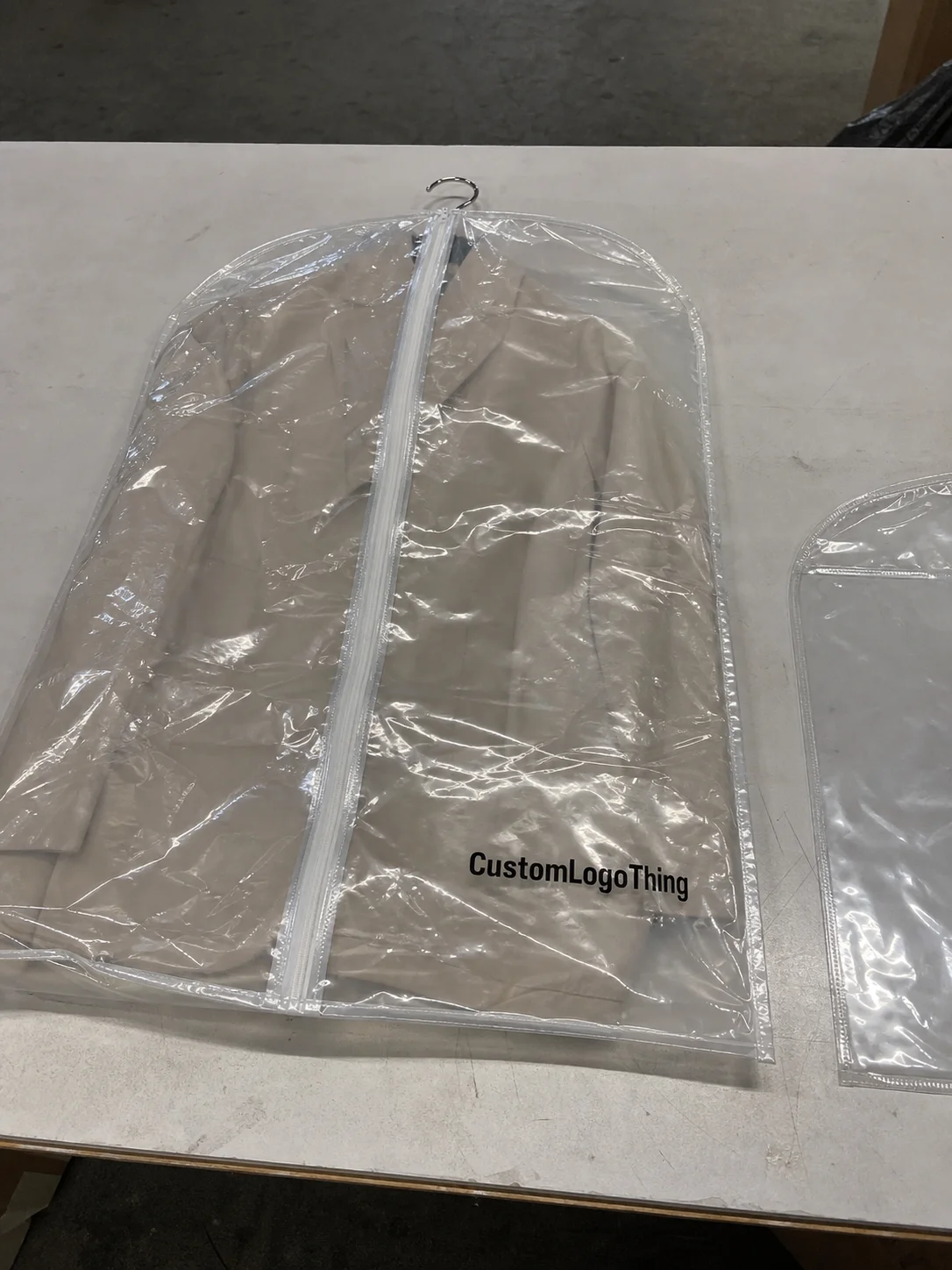
Most garment bag failures do not start with ugly PVC film. They start with a zipper that jams, a seam that splits, a hanger opening that tears, or a printed logo that scuffs after a few warehouse moves. Buyers asking for an Order PVC Zipper Garment Bags quality inspection standard are not being difficult. They are trying to avoid inconsistent shipments. Sensible.
PVC Zipper Garment Bags are used because they solve several plain, expensive problems at once. Apparel brands need branded presentation and dust protection. Dry cleaners need garment visibility and fast handling. Uniform suppliers need moisture resistance during storage. Bridal shops need long bags that do not make expensive dresses look like they were packed in a panic. Suit manufacturers, costume suppliers, robe brands, and promotional garment distributors all need the same basic result: a bag that protects the garment and still looks presentable when the customer receives it.
The inspection plan belongs at the start of the order. Not after production. Not after the shipment arrives. Before deposit payment, confirm how the supplier checks PVC thickness, zipper function, seam or seal strength, hanger reinforcement, logo adhesion, odor, carton packing, and random sampling. A digital mockup only approves color placement. It does not approve performance.
Custom PVC Zipper Garment bags can be made with clear, frosted, or tinted PVC; center or side zipper placement; printed logos; reinforced hanger openings; handles; pocket windows; and different edge finishes. Those options are useful, but each one adds a possible failure point if nobody checks it. A bag with a beautiful logo and a weak puller is still a complaint waiting in a carton.
Buyer rule: if the garment bag must survive folding, carton packing, freight, unpacking, and retail handling, inspect the zipper, seams, hanger opening, and print. The product is not the photo.
Product Details That Decide Whether the Bag Feels Retail-Ready
A PVC garment bag looks simple until the first bulk order goes wrong. The construction includes the PVC body, zipper closure, zipper position, hanger opening, edge finish, binding tape, handles, pocket windows, and reinforced stress points. Each choice affects unit price, lead time, carton count, and how the bag behaves under actual use.
Clear PVC works well when garment visibility matters. Dry cleaners, uniform providers, and suit distributors usually want staff to identify the item without opening the bag. Frosted PVC hides light scuffs better and gives a cleaner retail look. Tinted PVC adds brand color, but it can reduce visibility, especially with dark garments. Printed PVC panels create stronger branding, but heavy print coverage increases drying time, ink cost, and inspection requirements. Choose based on use. Not vibes.
Zipper choice matters more than many buyers expect. A nylon zipper usually gives smoother movement and fewer catching issues. A plastic zipper can help control cost on lightweight bags. Metal pullers improve perceived quality, even if the zipper tape itself is nylon. Double sliders make sense for long bridal bags, gown bags, robe bags, and costume bags where users need access from more than one point.
Zipper failure is one of the first quality checks buyers should care about. One jammed zipper can make the entire bag feel cheap. Worse, it makes the garment harder to remove, which means staff pull harder, the seam takes more stress, and a small defect turns into a ripped bag.
Logo application depends on artwork, quantity, and PVC surface. Silk screen printing is practical for bold one-color logos and medium runs. Gravure or flexo printing can suit larger quantities or repeat graphics. Heat transfer works for selected designs, but adhesion testing matters. Label patches are useful when direct printing is not ideal because of texture, folding, or complex artwork.
- Side zipper: common for suits, coats, uniforms, and reusable storage bags.
- Center zipper: clean access for dresses, bridal pieces, and retail garments.
- Sewn binding: stronger edge finish, better presentation, higher labor cost.
- Heat-sealed edge: economical and suitable for many lightweight to midweight bags.
- Handle option: useful for retail carry-out, trade shows, sample kits, and uniform programs.
Ask for samples made with the same PVC thickness, zipper style, print method, edge finish, and folding style as the bulk order. A random shelf sample tells you almost nothing about the shipment you are buying. Amazing how often people still approve that. The inspection standard should match the real construction, not a nicer sample from a previous job.
Specifications to Confirm Before Approving a Custom Garment Bag
Good quoting starts with clear specifications. Width, length, gusset, hanger hole diameter, zipper length, pocket size, handle position, and folded packing size all affect cost and usability. A suit bag may need a 24 to 26 inch width and a 40 to 44 inch length. A coat bag may need extra length and stronger hanger reinforcement. Bridal gowns often need 60 to 72 inches or more, sometimes with a gusset so the garment is not crushed.
Robes, costumes, uniforms, and sample garments each need different storage and presentation choices. Do not let one generic “garment bag” quote cover all of them. That is how buyers end up with a bag that technically fits but feels wrong in use.
PVC thickness is one of the biggest quality signals. For lightweight dust covers, 0.08 mm to 0.12 mm is common. For standard retail garment bags, 0.13 mm to 0.18 mm gives better structure without making the bag too stiff. For premium reusable storage, heavy coats, bridal gowns, or high-value uniforms, 0.20 mm or higher is usually more appropriate.
Thicker PVC costs more, weighs more, and reduces carton count. It also reduces the sad crinkly feeling that makes a branded bag look disposable. If the finished bag will be carried by customers, reused in closets, or stored in a warehouse for months, the extra material may be worth it. If it only needs to protect garments during short-term handling, a lighter gauge may be enough.
Edge construction should match garment value. Heat sealing is clean and economical for many projects. Sewn binding costs more but gives stronger edges and a more premium look. Reinforced hanger openings are smart for heavier garments because the hanger area takes repeated stress. Cheap edge work looks fine until the first warehouse pull test. Then everyone acts surprised.
Print specifications need the same discipline. Confirm Pantone color target, logo size, print position, bleed margin, artwork format, ink adhesion expectations, and folding resistance. Vector artwork in AI, EPS, or print-ready PDF format is usually best. If the logo crosses a fold line, ask whether the ink can resist cracking or transfer. If bags are packed tightly, confirm whether printed surfaces touch other PVC panels during carton compression.
| Specification | Common Range or Option | Best Use | Buyer Watchout |
|---|---|---|---|
| PVC Thickness | 0.08 mm to 0.12 mm | Light dust covers | May tear faster around hanger openings |
| PVC Thickness | 0.13 mm to 0.18 mm | Standard retail garment bags | Confirm zipper quality, not just film thickness |
| PVC Thickness | 0.20 mm and above | Premium reusable storage | Higher freight cost and lower carton count |
| Edge Finish | Heat sealed or sewn binding | Budget or premium construction | Seal strength and stitch density need checking |
| Logo Printing | 1-color screen to full panel print | Brand presentation | Ink adhesion and folding marks matter |
Compliance and usability should be raised before quoting. Ask about PVC odor control, phthalate-free material if required, carton weight limits, barcodes, hang tags, retail display needs, and destination-market requirements. For packaging and freight testing references, buyers can review resources from ISTA. For environmental packaging considerations, the EPA provides general guidance. Not every garment bag needs formal lab testing, but ignoring destination requirements is a reliable way to create delays nobody budgeted for.
Inspection Checks for Film, Zippers, Seams, Printing, and Packing
A practical order pvc zipper garment bags quality inspection standard does not need to become a 40-page ceremony nobody follows. It should cover four stages: incoming material check, in-process inspection, finished product random sampling, and pre-shipment inspection. For larger orders, buyers may use AQL sampling methods based on standards such as ANSI/ASQ Z1.4 or ISO 2859-style sampling plans. For smaller runs, a simplified checklist with documented photos may be enough.
The right inspection level depends on order value, defect risk, customer tolerance, and delivery pressure. A low-cost dust cover for internal storage does not need the same inspection scope as a branded bridal gown bag. Still, basic zipper, seam, print, and packing checks should not be optional.
PVC Film Checks
PVC film should be checked for thickness tolerance, transparency or frost level, color consistency, scratches, black spots, wrinkles, odor, brittleness, and panel matching against the approved sample. Thickness can be measured with a micrometer. A reasonable tolerance should be written into the specification, especially for higher-value orders.
If the approved sample uses 0.18 mm PVC and bulk production quietly shifts to 0.13 mm, the bag will feel different. Buyers notice. Customers notice faster. The material should also be checked after cutting because scratches, pressure marks, and cloudy patches often show up once panels are stacked and handled.
Zipper Checks
Zippers should open and close smoothly without catching. The puller should not detach under normal use. Teeth should be complete, aligned, and properly fixed to the zipper tape. Zipper length should match the approved drawing, not just “look close.”
For sample pieces, repeated-use testing is sensible: open and close selected bags 20 to 50 times and check for jamming, skipped teeth, puller looseness, or separation. That is not overkill. That is basic self-defense. Long gown bags and bags for repeated storage deserve more attention because the zipper travels farther and gets handled more often.
Seam and Construction Checks
Seams and edges need both visual and functional checks. Inspect edge alignment, seal width, seal strength, stitch density if sewn, hanger hole reinforcement, corner tearing, and handle attachment strength. Finished dimensions should be checked after sealing or sewing because heat and tension can slightly change the final size.
For common retail garment bags, a dimensional tolerance around plus or minus 5 mm may be acceptable. Larger bags may need a different tolerance. Put it in writing. Nobody enjoys arguing about whether “close enough” means 5 mm, 15 mm, or whatever number helps the supplier ship faster.
Printing Checks
Logo printing should be checked for placement tolerance, ink adhesion, color match, smudging, pinholes, ghosting, registration, and print damage after folding. A simple tape test can help confirm adhesion: press tape over the printed logo and pull it away to see whether ink lifts. Use consistent lighting when checking color. Warehouse lighting can make every shade look wrong, because apparently packaging needed one more source of drama.
Print placement should be measured against the approved layout. A logo that drifts slightly may still pass for storage bags, but retail-facing bags need tighter control. If the logo sits near the zipper, hanger hole, or fold line, inspection should include those stress areas.
Packing Checks
Packing checks protect all the work done earlier. Confirm bag count per carton, inner polybag use, folded size, moisture protection, carton strength, shipping marks, barcode labels, and photo documentation before dispatch. If cartons exceed practical weight limits, handlers drop them more. If folding is too tight, PVC creases and printed logos may mark.
A good custom garment bag inspection looks at the packed shipment, not just one nice sample on a table. Randomly selected cartons should be opened, counted, and checked against the approved specification. Carton labels should match the purchase order, item number, color, quantity, and destination requirements. Boring? Yes. Useful? Also yes.
Pricing, MOQ, and Quote Factors for PVC Zipper Garment Bags
There is no honest one-size Price for Custom PVC zipper garment bags. Unit cost depends on PVC thickness, bag size, zipper type, seam method, print colors, print coverage, reinforcement, packing method, and order quantity. A small 0.10 mm clear bag with one-color screen printing is not in the same price bracket as a 0.22 mm frosted gown bag with sewn binding, double sliders, handles, and full-panel printing.
As a practical planning range, simple lightweight PVC garment bags for bulk orders may land around $0.40 to $0.90 per piece, depending on size and quantity. Standard custom retail zipper garment bags commonly sit around $0.80 to $1.80 per piece. Premium reusable bags with thicker PVC, sewn edges, reinforced hanger holes, handles, or multi-color logo printing may run $1.80 to $4.50+ per piece.
Those ranges are not a magic menu. Freight, duties, destination, packing requirements, and current material costs can move the landed price. If a quote looks dramatically cheaper than the rest, check what disappeared: PVC thickness, zipper grade, reinforcement, print durability, carton packing, or inspection scope. Cheap bags have a talent for becoming expensive later.
MOQ logic is not mysterious. Lower MOQs are easier for simple sizes, clear PVC, common zipper colors, and one-color logos. Higher MOQs usually apply to custom tinted PVC, special thickness, custom zipper colors, special binding tape, or full-panel printing because setup waste is real. Factories do not print air for free. Annoying, but true.
For the fastest accurate quote, send bag size, PVC thickness, quantity, artwork, number of print colors, zipper style, edge finish, destination country, packing requirements, and inspection level. If you are comparing quantities, ask for two or three price tiers. Many buyers find that the real unit-cost break appears between 1,000 and 3,000 pieces, or between 5,000 and 10,000 pieces, depending on construction.
Sample costs also vary. Stock samples can often confirm general material and workmanship quickly, sometimes with only shipping charges. Custom printed samples usually require setup fees and production time. A practical approval package includes one physical sample and one written specification sheet covering size, thickness, zipper, edge finish, print method, packing, and QC expectations. That sheet becomes the reference for the inspection standard. That is exactly the point.
Production Process, Lead Time, and Approval Timeline
A clean order process starts with an inquiry and specification review. After that comes quotation, artwork setup, sample confirmation, deposit, material purchase, printing, cutting, zipper installation, sealing or sewing, inspection, packing, and shipment. Skip steps and the project does not get faster. It just gets messier.
- Send garment type, target size, quantity, PVC thickness, artwork, and destination country.
- Review construction options, zipper placement, edge finish, and packing method.
- Approve quotation, artwork layout, and written specification sheet.
- Confirm stock or custom sample before bulk production.
- Approve bulk production after sample review and deposit payment.
- Complete printing, cutting, zipper installation, sealing or sewing, and finishing.
- Inspect finished goods, pack cartons, apply labels, and arrange shipment.
Quotation can often be prepared within 1 to 2 business days if specifications are complete. Digital artwork proofing may take 1 to 3 days. Custom samples often take about 5 to 10 days, depending on print method, zipper availability, and material stock. Bulk production commonly takes 12 to 25 days after sample approval and deposit.
Complex printing, higher quantities, special PVC colors, sewn binding, or peak production schedules can extend that timing. Delays usually come from the same suspects: incomplete artwork, unclear thickness requirements, late sample feedback, changing zipper color after approval, and destination packing requirements discovered after production starts. Classic chaos. Completely avoidable.
If barcodes, retail hang tags, carton labels, warning text, or compliance documents are needed, raise them before production. The factory cannot retroactively design your export packing after cartons are sealed. Well, it can, but you will hate the invoice.
Protect the timeline by locking the specification sheet, approving samples quickly, confirming carton labels early, and scheduling pre-shipment inspection before the cargo needs to leave the factory. For repeat orders or seasonal programs, ordering plans can also be reviewed through Wholesale Programs.
How to Place a Clean Order Without Quality Surprises
A clean order begins with a practical checklist. Confirm the garment type first: suits, coats, dresses, uniforms, gowns, robes, costumes, or retail apparel. Then choose PVC thickness, finalize bag dimensions, select zipper position, choose edge construction, send logo artwork, define packing, and state inspection expectations before quote approval.
If you wait until the shipment is finished to ask about zipper testing, you are not managing quality. You are gambling with cartons.
Use the approved sample and specification sheet as the control documents. The sheet should include material thickness, dimensions, zipper details, edge finish, print method, print placement, packing count, carton label requirements, and inspection checks. If the production team, QC team, and buyer are all using the same document, fewer decisions get made from memory. Memory is a terrible production standard.
For the fastest quote, send quantity tiers, target bag size, preferred thickness, artwork file, desired delivery date, destination country, and any required compliance or testing documents. If you are not sure which thickness or zipper style makes sense, describe the garment and the use case. Storage bag? Retail handoff? Dry cleaner packaging? Bridal gown protection? Those do not need the same construction.
Compare quotes carefully. Check PVC thickness, zipper grade, seam method, print durability, carton packing, sample policy, inspection scope, and delivery terms. A lower price may be valid if the construction is simpler. It may also mean every tenth zipper jams. Those are very different bargains.
If you need broader ordering details before sending artwork, the Custom Logo Things FAQ covers common production, shipping, and customization questions. For orders requiring order pvc zipper garment bags quality inspection standard support, send the specs and artwork together so the quote can include material, printing, MOQ, sampling, QC checks, and realistic lead time in one pass.
FAQ
What should a PVC zipper garment bag inspection standard include?
It should include PVC thickness checks, size tolerance, zipper function testing, seam or seal strength, hanger hole reinforcement, print adhesion, odor review, packing count, carton labeling, and pre-shipment photos or inspection records. For larger orders, request random sampling based on an agreed AQL level so rejected defects are handled before shipment, not after your customer opens a carton.
What PVC thickness is best for zipper garment bags?
Use 0.08 mm to 0.12 mm for light dust covers, 0.13 mm to 0.18 mm for standard retail garment bags, and 0.20 mm or thicker for premium reusable garment storage. Heavier garments, bridal gowns, coats, and uniforms usually need thicker PVC plus reinforced hanger openings or sewn binding.
What is the MOQ for custom PVC zipper garment bags with logo?
MOQ depends on size, PVC type, printing method, zipper color, and construction. Simple clear PVC bags usually allow lower MOQs than tinted PVC, thick material, special binding tape, or full-panel printed designs. Send quantity targets in two or three tiers so pricing can show where the real unit-cost break happens.
How long does it take to produce custom PVC zipper garment bags?
A typical custom sample takes about 5 to 10 days after artwork confirmation. Bulk production commonly takes 12 to 25 days after sample approval and deposit. Special materials, complex printing, large order quantities, or late specification changes can extend lead time.
How do I compare PVC zipper garment bag quotes fairly?
Compare thickness, dimensions, zipper type, seam method, print colors, reinforcement, carton packing, sample policy, inspection scope, and delivery terms. A cheaper quote may exclude stronger zippers, accurate logo printing, reinforced openings, or pre-shipment QC. That is not savings. That is a future complaint folder.