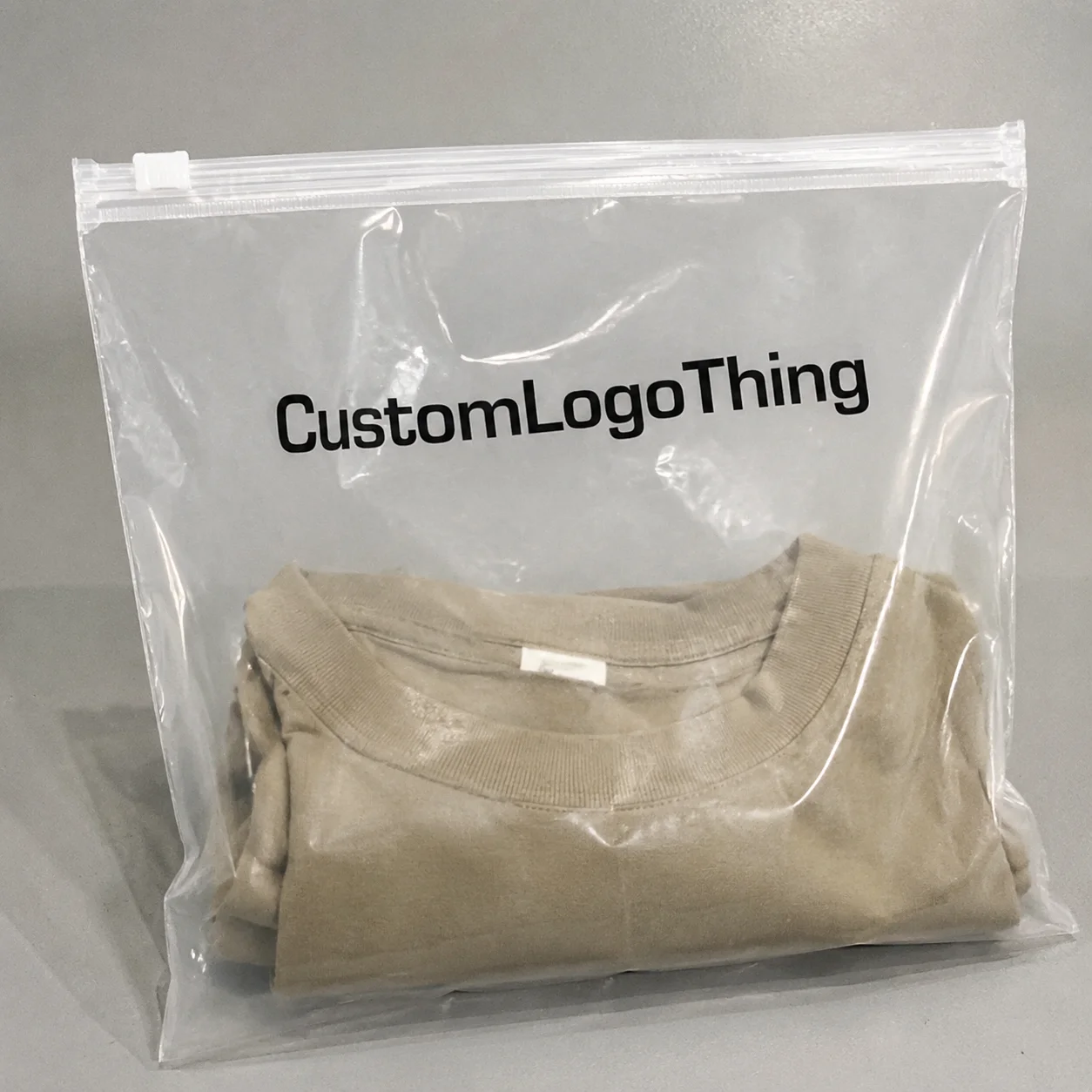
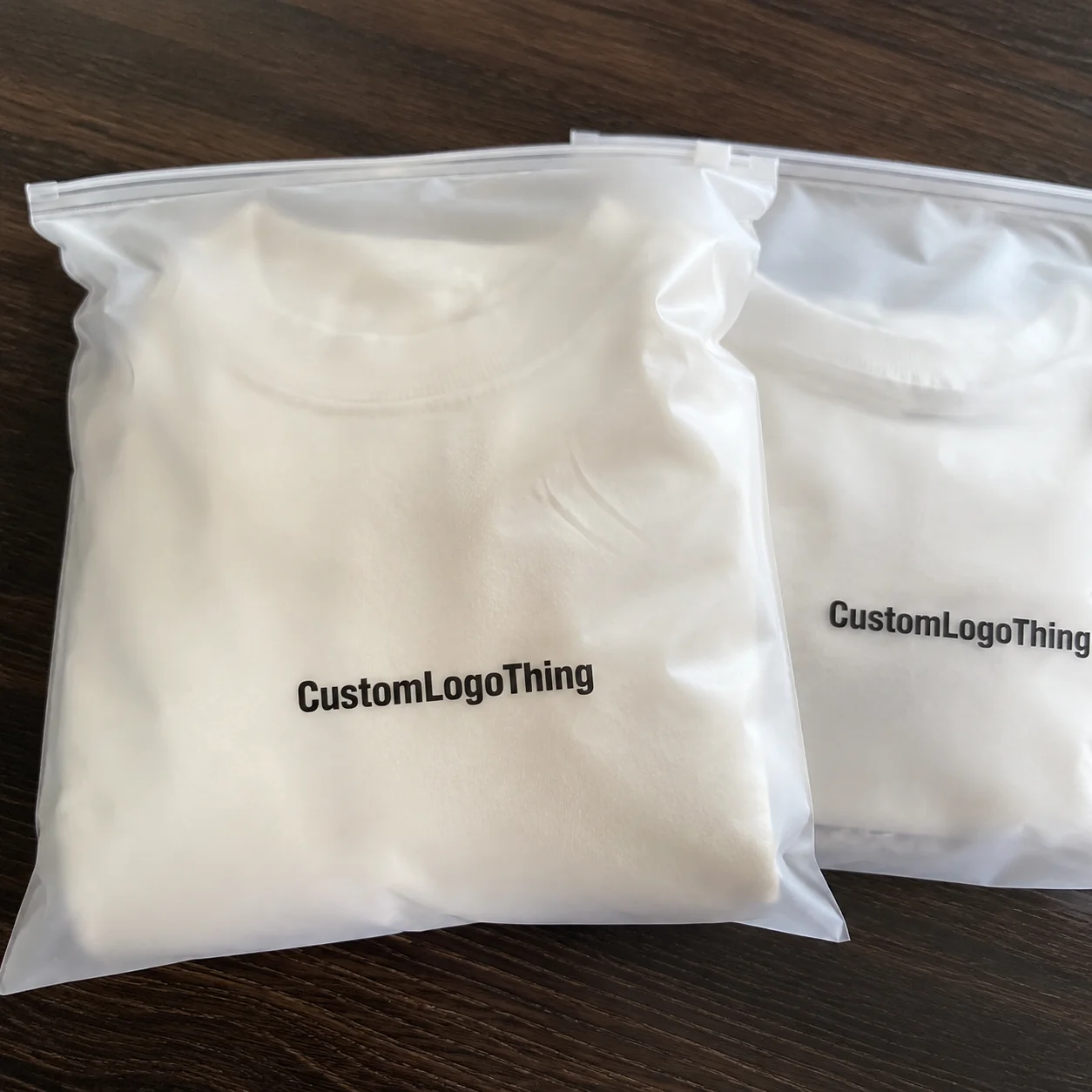
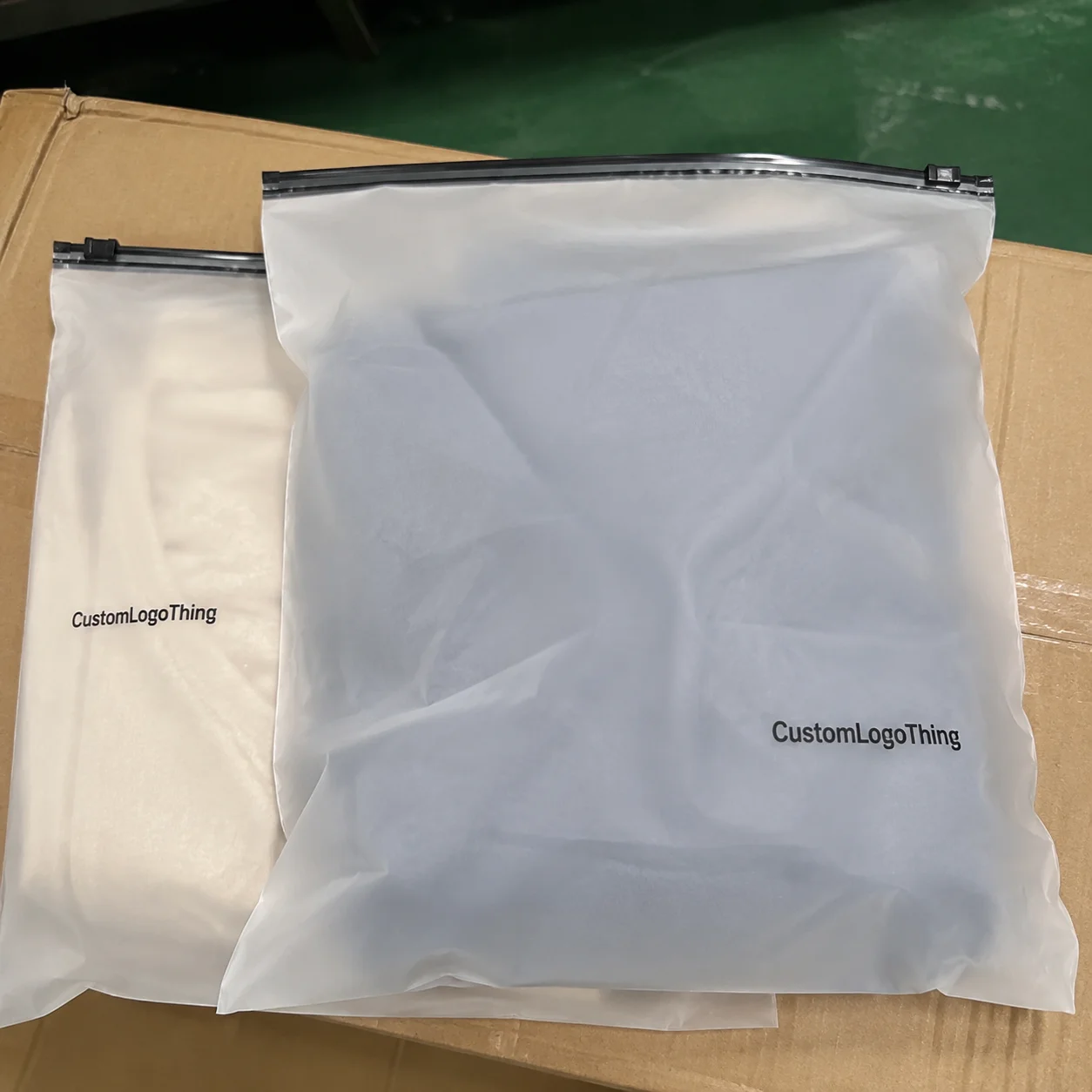
A $900 dress may spend more visible time inside its protective bag than on a selling floor. Buyers comparing a PVC Zipper Garment bags unit moq pricing plan are usually trying to settle four questions at once: cost, durability, branding, and delivery risk.
That is a purchasing problem, not a decoration exercise. Clear PVC shows the garment without forcing staff or customers to open the package. A zipper lets the garment come out and go back in without tearing the cover. A printed logo keeps the brand visible in closets, hotel wardrobes, showrooms, backstage racks, retail pickup areas, and customer storage.
Thin poly covers still have a place. They are cheap, light, and fine for short dust protection. They also behave like temporary wrapping. PVC Zipper Garment Bags sit in a different category: reusable garment packaging, inventory organization, retail handoff, and transport protection in one item.
The cheapest sleeve is often an expensive mistake for mid-value and high-value apparel. The right bag is the lowest-risk build for the garment value, handling frequency, and buyer expectation. That may mean a lighter PVC bag for one-time uniform distribution. It may mean a heavier clear PVC garment bag with sewn handles for gowns, coats, or premium retail pickup.
When a Garment Bag Becomes the Sales Floor
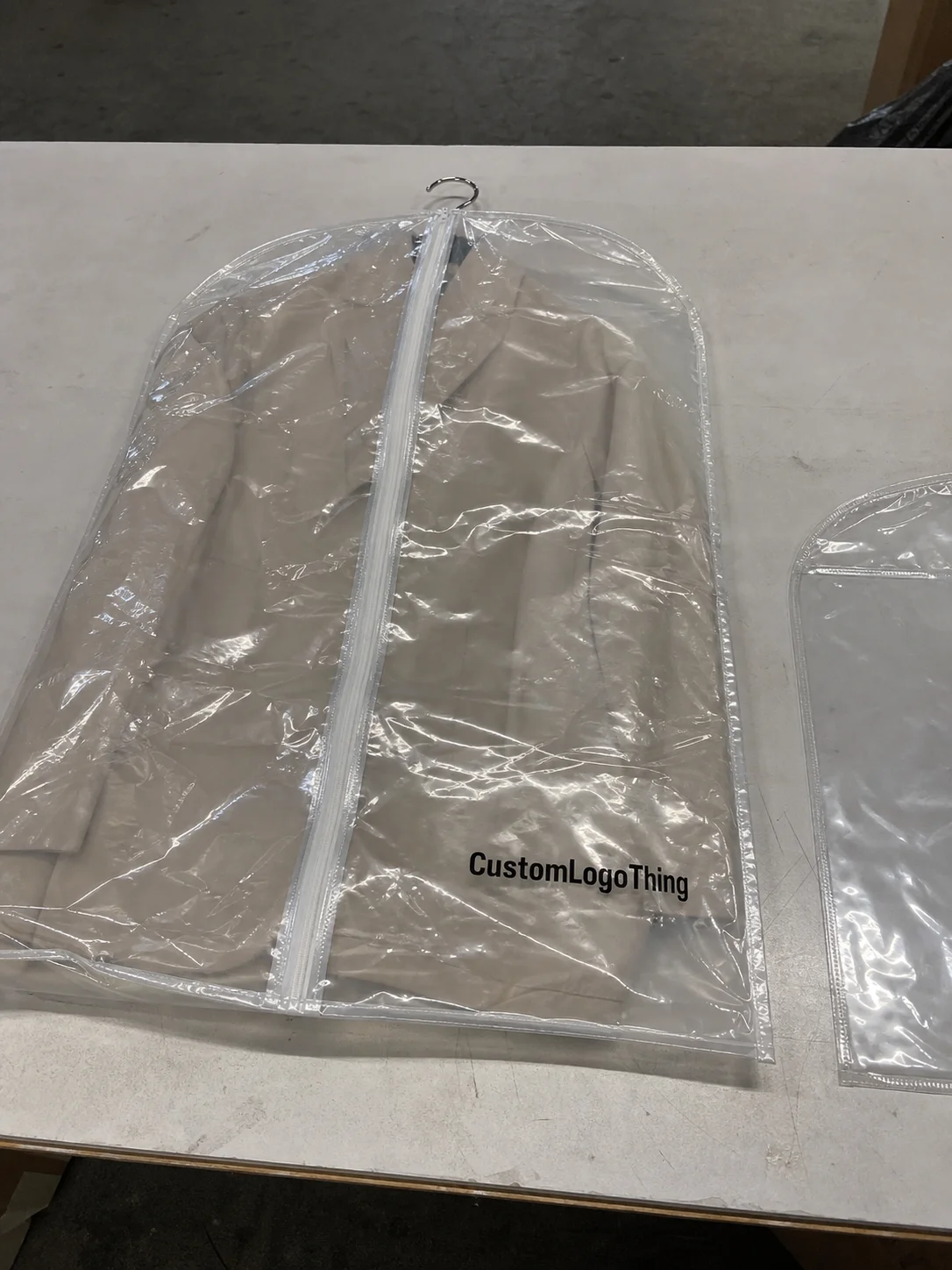
Packaging buyers often underestimate how much judgment a customer forms before touching the garment. A bridal gown in a flimsy cover sends one signal. A clean, structured, branded PVC zipper bag sends another. Same garment. Different level of perceived care.
From a purchasing view, the bag has three jobs. It protects against dust, light handling, and accidental surface contact. It presents the item clearly enough that staff and buyers can identify it fast. It repeats the brand message after the sale, which is why logo placement matters more than many teams expect.
For boutiques, hotels, wardrobe departments, dance studios, dry cleaners, and uniform managers, the decision is rarely about one bag. It is about hundreds or thousands of handling events. A zipper that snags on day three, a seam that splits under coat weight, or a logo that rubs off during storage can turn a low unit cost into poor value. Nobody brags about saving eight cents after replacing unusable stock.
Procurement rule: match the garment bag to the garment’s value and handling cycle first, then negotiate MOQ and cost per piece. Reversing that order usually creates rework.
That rule sounds obvious. It gets ignored constantly. A showroom bag, a laundry transport bag, and a one-time retail pickup bag should not have the same specification just because they share the word “garment.”
PVC Zipper Garment Bag Details That Affect Buyer Confidence
A standard custom PVC garment bag usually includes a clear or frosted PVC body, a hanger opening, reinforced seams, and a zipper running down the center or side. Buyers can add a gusset for bulky garments, handles for transport, or a larger print area for retail and event programs.
The use cases are broad: bridal gowns, suits, coats, choir robes, dance costumes, uniforms, boutique apparel, hotel laundry, wardrobe department stock, and promotional apparel kits. Each one pulls the spec in a slightly different direction. A suit bag may need a clean mid-length format with modest branding. A gown bag may need extra length, a gusset, and stronger handle zones. A hotel laundry program may care more about repeated staff use than premium shelf appeal.
Zipper quality deserves special attention because it is the most touched component. Buyers notice weak sliders, misaligned teeth, short zipper pulls, and snagging instantly. A zipper failure also makes the whole bag feel defective, even if the PVC and printing are acceptable. For daily operational use, the zipper should be specified with more care than for one-time retail pickup.
Branding does not need to be complicated. One-color logo printing is usually the most cost-controlled option, especially for clear PVC. Multi-color printing can work for retail presentation, but it increases setup charges and can add proofing time. Logo placement is commonly near the chest area so the mark is visible while the garment hangs. Larger marks can suit showroom, event, or uniform distribution programs, as long as they do not block garment identification.
There is a tradeoff. Thicker PVC often improves perceived value, clarity, and reuse. Lighter PVC can reduce unit cost, carton weight, and storage space for bulk distribution. The better recommendation depends on garment length, garment weight, expected reuse, storage environment, and whether the bag is sold, gifted, or used internally.
Material Thickness, Sizes, Zippers, Handles, and Print Specifications
Most quote errors start with vague specs. “Standard garment bag” is not a specification. A reliable quote needs the PVC type, approximate gauge, finished width, finished length, gusset depth if needed, zipper position, handle style, print colors, and packing preference.
Clear PVC is the practical choice when garment visibility matters. Frosted PVC gives a softer retail look and can reduce glare under store lighting. Tinted PVC may support brand color or privacy, although darker tints slow down quick garment identification. For compliance-sensitive buyers, ask about material declarations and applicable chemical requirements before approval. Do that early, not after production is scheduled.
Thickness selection is part cost control, part risk control. Lighter gauges suit dust protection and short-term storage. Mid-weight materials are common for boutique apparel, uniforms, and retail handoff. Heavier PVC supports repeated handling, premium garments, gowns, coats, and travel-oriented use. Exact thickness availability varies by supplier and construction, so confirm the offered gauge during quoting rather than assuming a catalog number.
Size logic is direct. Short bags fit shirts and jackets. Mid-length bags work for suits and many dresses. Long bags protect gowns, robes, coats, and formalwear. Bulky garments often need a gusset of 2 to 4 inches so the bag does not crush the shoulders, sleeves, or skirt volume.
| Specification Choice | Best Fit | Typical Cost Impact | Buyer Watchpoint |
|---|---|---|---|
| Light clear PVC | Short-term dust protection and bulk handoff | Lower cost per piece | May feel too light for premium apparel |
| Mid-weight clear or frosted PVC | Boutiques, suits, uniforms, dresses | Balanced unit cost and presentation | Confirm zipper quality and print area |
| Heavy PVC with reinforced handles | Gowns, coats, repeated transport | Higher unit price and freight weight | Check carton size and landed cost |
| Gusseted construction | Bulky garments and formalwear | Moderate increase from extra material | Measure garment depth before ordering |
Zipper format changes usability and price. A center zipper gives fast access while the garment hangs. A side zipper can preserve a cleaner front panel for branding. A full-length zipper improves loading and removal for long garments, while a shorter access zipper may reduce cost for simple storage use.
Handle choices should match weight. No handle is fine for closet storage. A die-cut handle can support basic carrying on lighter bags. Sewn handles are better for reuse. Reinforced handle zones are advisable for heavier garments, especially coats, gowns, or staff-carried wardrobe kits.
Artwork should be prepared in vector format, usually AI, EPS, or editable PDF. Pantone references help with spot colors. CMYK references may be needed for process-style artwork, although many PVC bag projects stay with one or two solid colors for cost control. Confirm print area limits, ink coverage, and proof approval before production begins. For broader packaging terminology, Custom Logo Things also answers common buying questions on the custom packaging FAQ.
PVC Zipper Garment Bags Unit MOQ Pricing Plan
A PVC Zipper Garment bags unit moq pricing plan is built from physical variables. Material thickness, bag size, zipper length, handle type, print colors, order quantity, packing method, and shipping destination all affect the final number. A quote without these inputs is a placeholder, not a purchasing-ready price.
MOQ is not arbitrary. It reflects material setup, cutting setup, screen or plate preparation, zipper sourcing, labor batching, inspection time, and carton packing efficiency. If the job requires a custom size, special tinted PVC, multi-color printing, or reinforced sewn handles, the minimum order quantity may rise because the production run needs enough volume to absorb setup work.
Smaller MOQs help boutiques, event teams, new apparel brands, and pilot programs manage risk. Larger runs usually lower the unit cost by spreading tooling fees, setup charges, printing preparation, and packing labor across more bags. The drop is not always linear. A move from 300 to 500 pieces may help a little. A move from 500 to 1,000 or 2,500 pieces may change the economics more clearly, depending on the construction.
For budget planning, buyers should request tiered pricing instead of one isolated number. Ask for a test quantity, an operational quantity, and an annual-stock quantity. That structure shows where the cost per piece drops meaningfully and where it does not.
| Quote Tier | Typical Buyer Use | Pricing Behavior | Best Question to Ask |
|---|---|---|---|
| Test MOQ | New boutique, event order, sample program | Higher unit cost because setup is spread across fewer bags | What changes if we approve a repeat run? |
| Standard run | Retail season, hotel department, uniform issue | Better balance of total spend and unit price | Can carton packing reduce freight cost? |
| Bulk pricing tier | Annual stock or multi-location program | Lower factory unit cost, higher storage planning need | Can the order ship in scheduled releases? |
Hidden variables can move the landed unit cost. Oversized cartons, heavy PVC weight, rush production, special color matching, multiple artwork positions, and split shipments all add pressure. Freight can be especially deceptive because PVC garment bags are often bulky even before they are heavy. A low factory price loses its charm fast if the carton cube is inefficient.
Typical budget discussions should separate factory unit price from landed unit cost. Factory price covers the item as made and packed. Landed cost accounts for freight, duties where applicable, split delivery charges, storage, and internal handling. Buyers who compare only the first number are comparing half the problem.
For rough planning, expect the lowest unit prices on simple, common-size clear bags with one-color printing and no sewn handles. Longer bags, thicker PVC, gussets, reinforced handles, and multi-color logos push the price up. Rush orders can also reduce the supplier’s ability to batch materials efficiently, which is a polite way of saying speed costs money.
Custom Logo Things treats pricing as a specification exercise first. The goal is not to push the thickest PVC or the most expensive zipper. The goal is to match the buyer’s garment value and usage cycle, then quote the lowest-risk option that can be produced and delivered on schedule.
Production Process and Lead Time From Quote to Delivery
The order path is straightforward if the buyer supplies complete information. It usually moves through quote request, spec confirmation, artwork review, digital proof, sample or pre-production approval when needed, material preparation, cutting, zipper attachment, printing, inspection, packing, and shipment.
Lead time depends on order volume, custom size complexity, print colors, material availability, approval speed, rush requests, and freight method. A simple one-color logo on a common size can move faster than a long gusseted gown bag with reinforced sewn handles and multi-position printing. Not always. Material availability can change the calendar even on a simple build.
Buyers control more of the timeline than they think. Complete dimensions, usable vector artwork, clear logo placement notes, and fast proof approval can remove days of avoidable delay. Slow approval does the opposite. Production generally starts after the proof and specifications are approved, not when the first inquiry is sent.
A realistic calendar includes quoting and proofing first, production second, packing third, and transit last. If a department needs bags for a trade show, hotel opening, bridal trunk show, or uniform launch, the required delivery date should be shared early. That gives the supplier room to compare production and freight options instead of rushing every step and hoping nothing breaks.
Sampling depends on risk. A digital proof may be enough for a repeat order or simple logo placement. A physical sample is more useful for a new size, premium retail program, thick PVC build, or unfamiliar handle construction. Sampling can add time, but it may prevent a much more expensive mismatch.
Quality checkpoints should be visible in the buying conversation. Check PVC clarity, seam alignment, zipper function, logo position, print consistency, handle strength, carton labeling, and random packed units. Organizations such as ISTA publish transport testing resources that remind packaging buyers why packing, handling, and transit conditions belong in the specification, not just the product itself.
The common timeline mistake is focusing only on production days. Proofing, approvals, packing, and transit are part of the real delivery calendar. A useful PVC Zipper Garment Bags Unit moq pricing plan should include both unit economics and schedule assumptions.
Quote Mistakes That Raise Unit Cost or Delay Orders
The first mistake is incomplete dimensions. Asking for a garment bag quote without width, length, gusset, and garment type forces assumptions. Those assumptions often change later. Changed assumptions change the price.
The second mistake is choosing thickness by price alone. PVC that is too light can wrinkle, tear, cling poorly, or feel disposable. That may be acceptable for short-term dust coverage. It is not a strong match for a premium gown, formalwear pickup, or high-touch staff program.
Oversized logos create another problem. Large ink coverage may affect drying time, registration, appearance, and cost. It can also make a clear bag less useful if the print blocks garment visibility. A measured logo position near the chest area often gives better brand visibility without overloading the print area.
Zipper under-specification is common. A bag used once by a customer does not need the same zipper performance as a bag opened daily by wardrobe staff. If the use case involves repeated access, ask about zipper strength, slider style, and zipper length before approving the quote.
Freight surprises deserve blunt treatment. PVC can be bulky and heavy, and carton size can matter almost as much as factory unit price. Buyers should ask for shipping assumptions or landed-cost guidance, especially for oversized gown bags or multi-location deliveries.
Another avoidable error is treating artwork as a minor detail. Low-resolution logos, unclear color notes, and vague placement instructions slow proofing. If the logo must sit above the garment’s chest area, say that. If the bag must show a barcode label or department code, include that before the proof is made.
Document the use case before production: retail handoff, showroom storage, laundry transport, costume organization, customer resale packaging, or event distribution. Each use case implies different durability, print, and packing requirements. If the proof needs revision, request the revision before approval. Post-approval changes can reset schedules and add setup charges. Annoying, yes. Also normal.
How to Judge Supplier Fit Before Production
Good supplier fit shows up before the invoice. The questions are practical: What garment is going inside? How often will the bag be opened? How heavy is the garment? Does the customer carry it, store it, or travel with it? Is visibility more important than privacy? Is the logo decorative, instructional, or part of retail presentation?
Custom Logo Things helps buyers align size, PVC thickness, zipper format, handle strength, print method, MOQ, and budget before production starts. That sounds basic. It is also where many packaging orders succeed or fail.
Manufacturing flexibility matters because apparel programs are rarely identical. Buyers may need custom dimensions, clear or frosted PVC, different zipper placements, optional gussets, sewn handles, or quantity tiers for a growing program. A boutique may start with one logo color and a modest MOQ. A uniform manager may need repeatable bulk pricing and carton labels for distribution.
The selling approach should be fact-based. Recommendations should come from garment value, handling frequency, storage conditions, and delivery deadline, not generic packaging upsells. A thick premium bag is not automatically correct. A lightweight promotional bag is not automatically wrong. The use case decides.
Communication also affects total cost. Buyers can submit artwork, product dimensions, target quantity, and timeline in one request, then receive a quote structured around real production variables. If procurement teams need internal approval, clearer specifications make the decision easier. The Custom Logo Things FAQ can also help teams prepare basic artwork and order questions before requesting a formal quote.
Quality control is a commercial safeguard, not a slogan. Zipper testing, print checks, seam inspection, material review, carton verification, and packed-unit review reduce the chance of unusable stock arriving late. For broader sustainability and material-disposal context, the EPA recycling resources are useful for buyers building internal packaging policies.
The right supplier turns a vague custom garment bag idea into a priced, approved, production-ready packaging item. That is the practical value. No mystery required.
What to Prepare Before Requesting a Quote
Prepare the basics before asking for pricing. Measure the garment length and shoulder width. Decide the finished bag length and width. Confirm whether a gusset is needed. Choose clear, frosted, or tinted PVC. Estimate the order quantity and the likely reorder pattern.
Define usage intensity in plain language. Is the bag for one-time retail handoff, seasonal storage, daily staff use, customer resale packaging, or travel-ready garment protection? A supplier can recommend a better structure when the handling cycle is clear.
Prepare artwork in vector format and note the preferred logo size, print color, and placement. If Pantone matching matters, include the reference. If the logo can print in one color for cost control, say that early. Proofing moves faster when the artwork file and placement notes are clean.
Request two or three quantity tiers so MOQ, unit cost, and total landed value can be compared together. One isolated price rarely tells the full story. Also share the required delivery date early, especially if the bags are tied to a launch, show, hotel opening, school program, or seasonal retail calendar.
Before final approval, check the quote against the real use case. Bag size, PVC gauge, zipper placement, handle construction, print method, carton packing, and delivery timing should all match the job the bag has to do. If one of those details is missing, the price is not finished. It is just waiting to surprise someone.
FAQ
What is the usual MOQ for custom PVC zipper garment bags?
MOQ depends on size, PVC thickness, zipper type, print method, and setup requirements. Higher quantities generally reduce unit cost because setup, cutting, printing, and packing are spread across more bags. Buyers should request tiered pricing so they can compare test, standard, and bulk order economics.
How is unit pricing calculated for PVC garment bags with zippers?
Unit pricing is based on material gauge, bag dimensions, zipper length, handles, gussets, print colors, order quantity, packing, and shipping destination. Large bags, thick PVC, reinforced handles, and multi-color printing usually increase cost. The most accurate quote requires exact measurements, artwork, quantity, and delivery details.
Can I order clear PVC zipper garment bags with my logo printed?
Yes, logo printing is available on clear, frosted, or tinted PVC garment bags depending on artwork and material choice. Vector artwork is preferred for clean logo reproduction and faster proof approval. One-color printing is often the most cost-efficient option, while multi-color branding may suit retail or premium garment programs.
What size PVC zipper garment bag should I choose for suits, dresses, or gowns?
Suits and jackets usually need shorter or mid-length bags, while gowns, coats, and formalwear often require longer formats. Bulky garments may need a gusset to prevent compression and improve presentation. Buyers should measure garment length, shoulder width, and thickness before requesting a quote.
How long does production take after approving the PVC garment bag proof?
Lead time depends on order quantity, customization complexity, material availability, printing requirements, and shipping method. Production begins after specifications, artwork, and proof are approved. Fast approvals, complete dimensions, and confirmed delivery details help prevent avoidable timeline delays.