Order PVC Zipper Garment Bags Logo Print Specification
Two PVC garment bags can look nearly identical in a product photo. The difference shows up later, after the bag has been folded, packed, hung, opened, zipped, handled by staff, and handed to a customer. One stays clear, flexible, and presentable. The other cracks at the fold, smells too strongly of plasticizer, jams at the zipper, or loses ink because the order PVC Zipper Garment Bags Logo print specification never got past “clear bag with logo.”
That is not a specification. It is a vague wish with a purchase order attached.
For apparel brands, dry cleaners, bridal shops, uniform suppliers, outerwear sellers, and sample-room teams, the bag is part of the delivery experience. It protects finished garments, carries the brand, and gives the customer something reusable instead of a thin disposable cover. A weak bag makes a good garment feel cheaper. Annoying, but true.
The strongest custom orders define the bag before pricing starts. Buyers should confirm material clarity, PVC thickness, finished size, zipper type, hanger opening, gusset, print color, artwork position, packing method, and quantity. Small changes are not small to production. Moving from lightweight clear PVC to thicker frosted film changes material cost and carton weight. Changing from a one-color screen print to a two-color logo adds screens, registration checks, drying control, and more inspection time.
Practical rule: if the bag protects a high-value garment, treat the bag specification like part of the product. Not a loose packaging detail added after the apparel order is already late.
A clean specification helps Custom Logo Things quote the same product you expect to receive. It also helps your team compare suppliers fairly, approve samples faster, and avoid quality complaints that could have been caught on paper.
Product Details That Affect Bag Performance
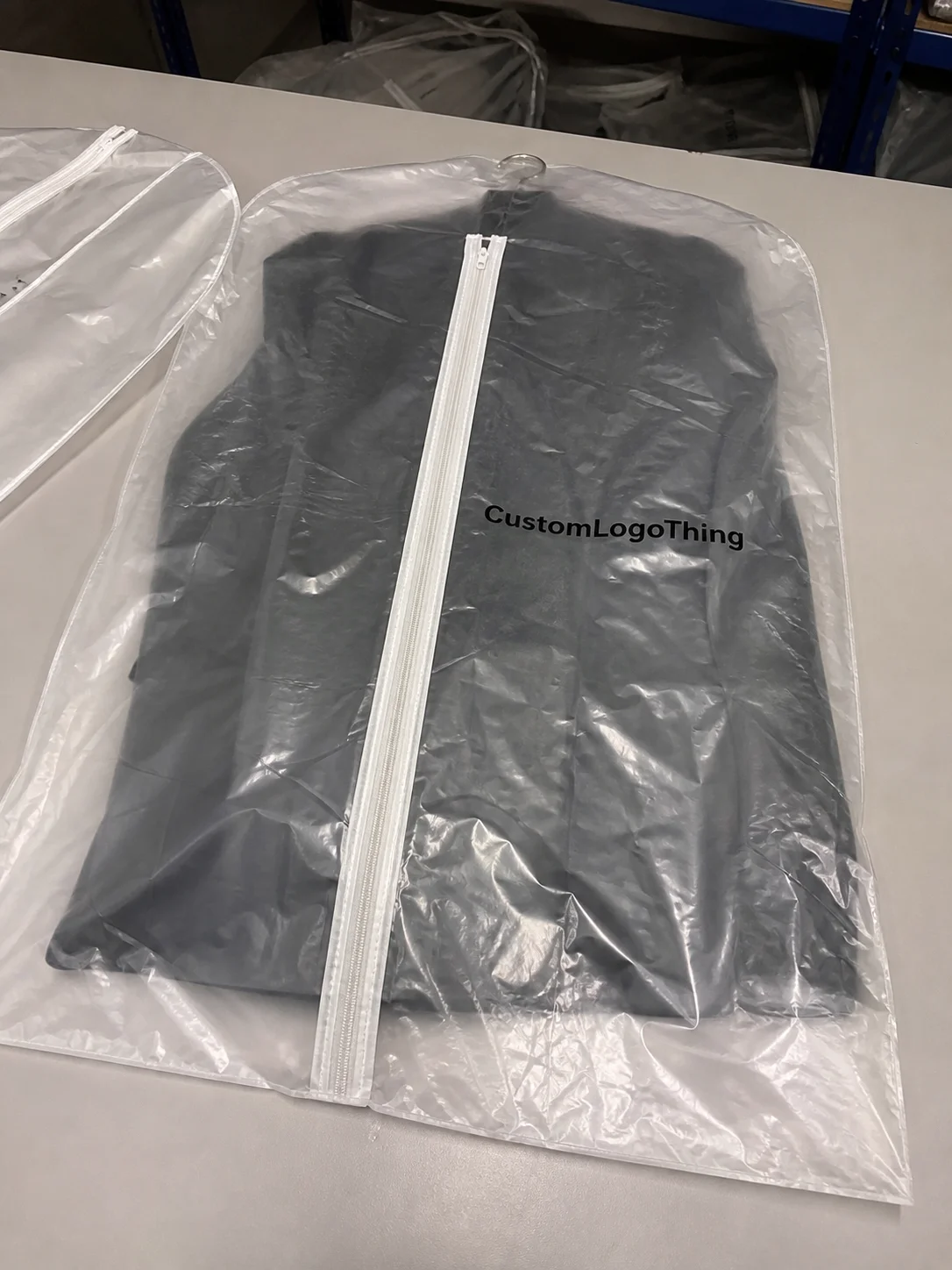
PVC Zipper Garment bags are reusable apparel storage and transport bags made from flexible polyvinyl chloride film. They are used for suits, coats, dresses, uniforms, costumes, robes, gowns, retail apparel sets, and seasonal outerwear. Compared with thin poly garment covers, they are usually expected to last longer, so seam strength, zipper movement, film flexibility, and print adhesion all matter.
The construction looks simple: front and back PVC panels, zipper closure, hanger slot or reinforced hanger opening, side seams, bottom seal, and optional features such as gussets, handles, piping, document pockets, or accessory pockets. Simple does not mean interchangeable. A flat suit bag may need only two panels and a standard zipper. A bridal gown bag or winter coat bag may need extra depth so the garment hangs naturally instead of being squeezed at the shoulders and crushed at the hem.
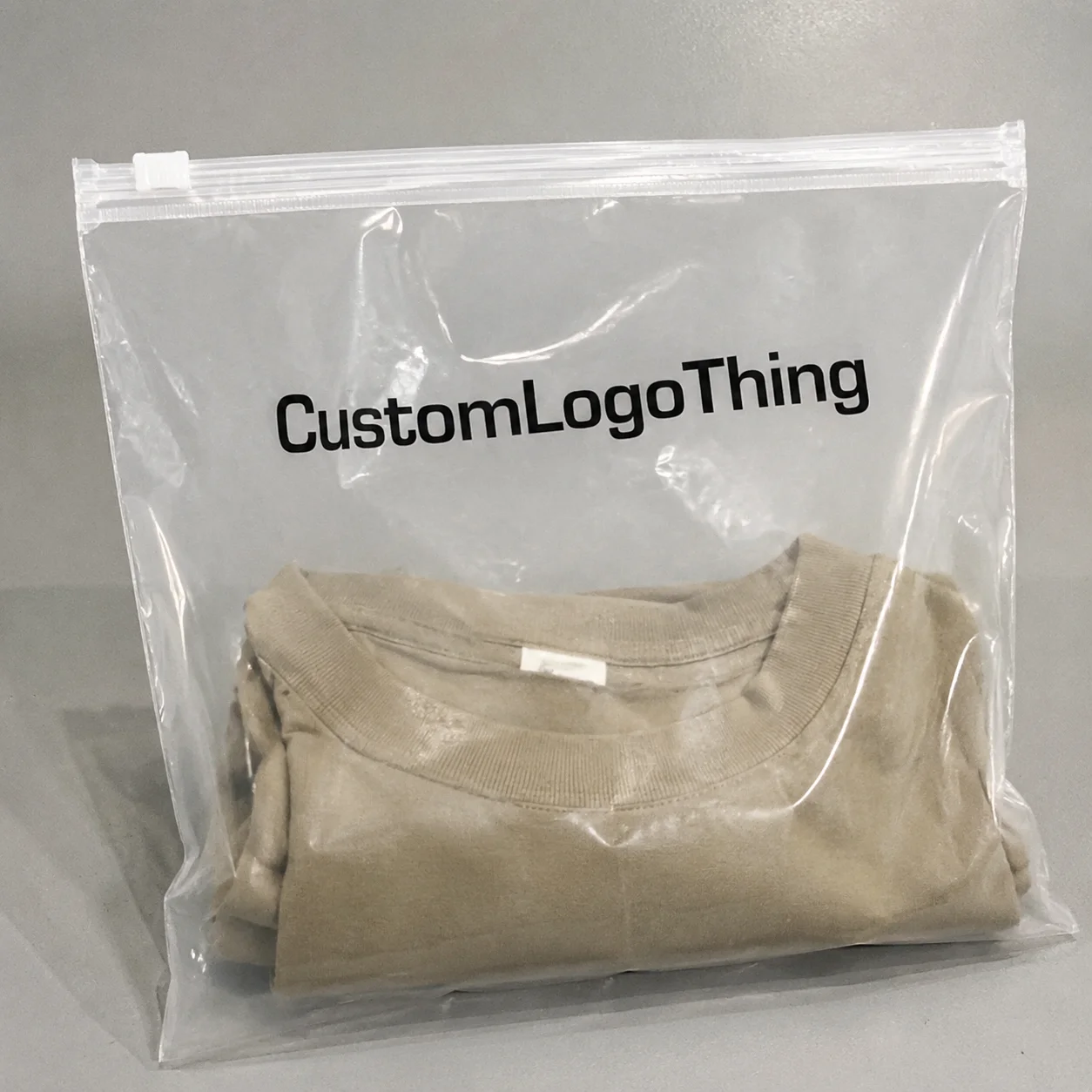
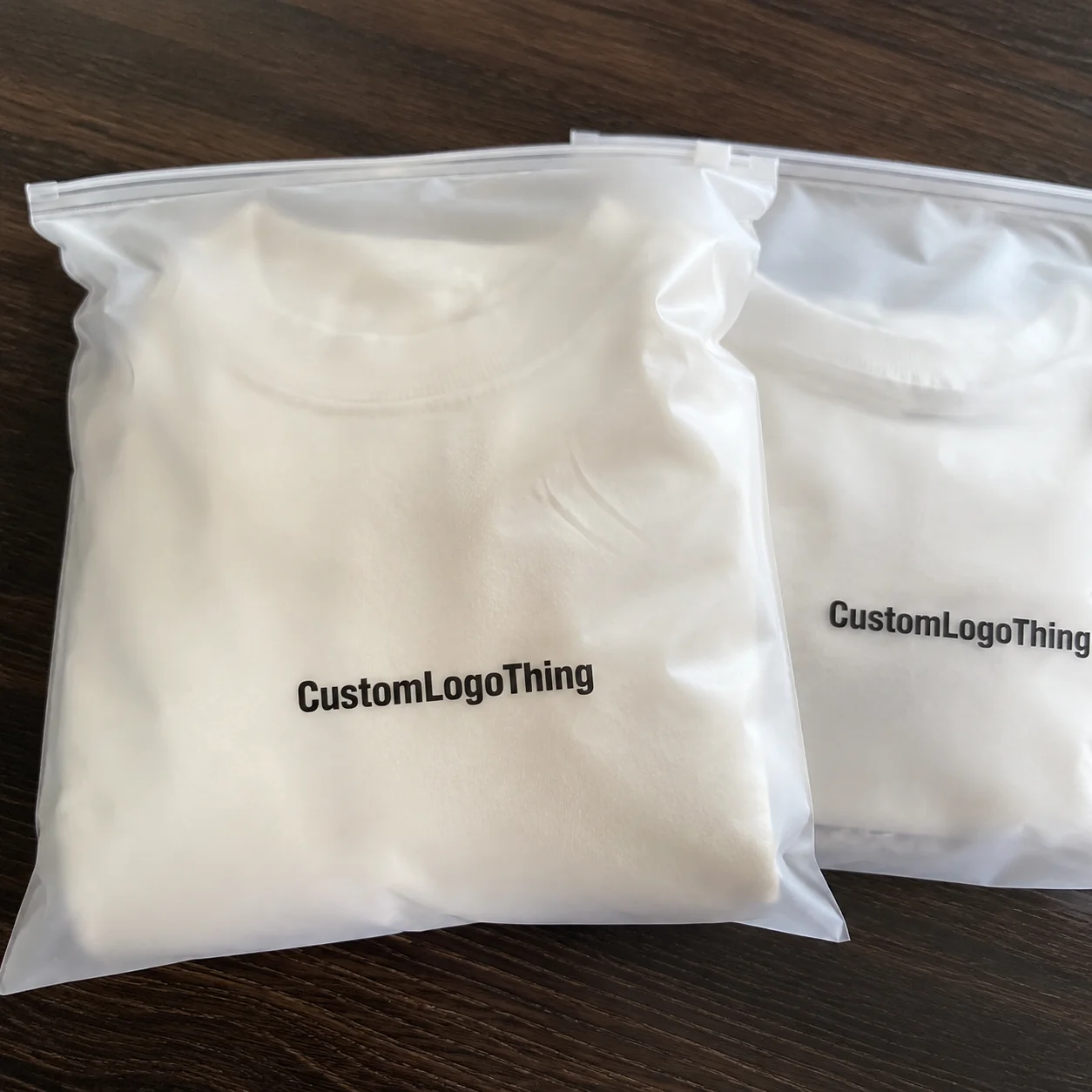
Material appearance is usually the first decision. Clear PVC shows the garment and helps warehouse, retail, or dry-cleaning staff identify contents quickly. Frosted PVC softens the view, hides light scuffs better, and often feels more polished in hand. Tinted PVC can support a branded look for uniform programs or retail sets, but it reduces visibility. If staff need to pick garments by color, style, or label, do not ignore that tradeoff.
Zippers deserve more attention than they get. Standard nylon coil zippers are common because they are flexible, affordable, and suitable for most garment bag shapes. Metal-look sliders can improve presentation without using a full metal zipper. Double sliders are useful on long gown or coat bags because staff can open the bag from more than one point. Color-matched zipper tape gives the bag a cleaner retail look, especially when the logo uses a matching spot color.
Finished size should be based on the garment on a hanger, not the garment folded flat on a table. Allow clearance across the shoulders, around sleeves, at the hem, and around padded or bulky areas. A common suit-length bag may be around 24 inches wide by 40 inches long. Dress, robe, coat, and gown bags often move into 54, 60, or 72 inch lengths. The right size depends on whether the bag holds one garment, a set, or multiple pieces.
| Bag Style | Typical Use | Common Construction Detail | Buyer Watch Point |
|---|---|---|---|
| Flat PVC garment bag | Suits, shirts, light uniforms | No side gusset, standard zipper | Works best for slim garments, not bulky coats |
| Side-gusset garment bag | Coats, gowns, costumes | 2 to 6 inch side depth | Confirm finished depth after sealing |
| Bottom-gusset garment bag | Long dresses, bridal gowns | Extra room near hem | Protects drape and reduces compression |
| Retail presentation bag | Branded delivery or resale | Frosted PVC, color zipper, logo print | Print placement and folding affect appearance |
Material, Thickness, and Print Specs to Confirm
A useful inquiry includes finished width, finished length, gusset depth, PVC thickness, color or transparency, zipper length, zipper color, hanger opening style, print area, packing quantity per carton, and delivery destination. Without those details, the quote becomes a pile of assumptions. That is where mismatched samples are born.
PVC thickness may be listed in microns, millimeters, or gauge depending on the supplier. A light reusable garment bag may use film around 0.10 to 0.15 mm. A more substantial retail, bridal, or uniform bag often uses 0.18 to 0.25 mm. Heavier film is possible, but it increases raw material usage, carton weight, folding stiffness, and freight cost. Lighter film reduces unit price, but it may tear sooner around the zipper, hanger opening, or sealed edges if staff handle the bag repeatedly.
Printing on PVC has its own rules. Silk screen printing is common for solid logos, bold marks, and clean one-color brand work. It gives strong ink coverage and works well for many bulk garment bag orders. Multi-color graphics may be possible, but each color usually needs a separate screen, ink setup, registration check, and drying control. Fine lines, metallic inks, large coverage areas, gradients, and tight registration should be reviewed before pricing. Otherwise the proof looks easy and production gets fussy. Production usually wins that argument.
Buyers sometimes ask about offset, digital, or flexographic printing because those methods appear on other packaging projects. For flexible PVC zipper garment bags, silk screen printing is often the practical choice for logos. Digital printing may be considered for shorter runs or complex images only if the material, ink system, and adhesion requirements support it. CMYK artwork can be converted or matched, but a spot color reference such as a Pantone value is usually better for a brand logo.
PVC surface energy and plasticizer migration can affect ink adhesion. The practical result is easy to spot: ink scratches, smears, cracks on a fold, or transfers to another surface if the wrong ink system is used or curing is rushed. Sample testing matters. A reasonable check includes rubbing the printed area after curing, folding near the logo, checking for transfer, and reviewing whether the logo survives normal handling.
Artwork should be supplied as vector files such as AI, EPS, or PDF with fonts outlined. Include exact print dimensions and placement measured from the bag edges, zipper line, or hanger opening. “Logo centered” is not precise enough if the zipper is offset or the hanger slot changes the visual center. For many garment bags, logos fall in the 6 to 12 inch wide range, but the correct size depends on bag dimensions, print method, and viewing distance.
Compliance and user-experience details should be confirmed early. Low-odor PVC is preferred for apparel presentation. Phthalate-related requirements may apply depending on market, buyer policy, and end use. Suffocation warnings may be needed for certain packaging formats. Ventilation holes may help when airflow matters during storage. For packed-product distribution, some buyers reference ISTA protocols, though the actual test plan depends on carton format, shipping route, and handling risk.
A complete specification prevents quote gaps. If one supplier prices 0.12 mm clear film with a small one-color logo and another prices 0.20 mm frosted PVC with a larger print area, the lower unit price does not represent the same bag. It represents a different product wearing the same name tag.
Pricing, MOQ, and Unit Cost Drivers
Unit cost is mainly driven by PVC thickness, finished dimensions, zipper quality, gusset construction, print color count, print area, order quantity, packing method, and special material or compliance requirements. Size is often the surprise. A long gown bag can use far more film than a suit bag, and a wide gusset adds material to every unit before printing even starts.
Custom PVC zipper garment bags usually require a minimum production run because the factory must set up cutting, zipper attachment, sealing or welding, screen preparation, ink mixing, sampling, inspection, and packing. MOQ depends on the final specification. A small, simple, one-color bag may have a lower practical threshold than a large frosted gown bag with double sliders and multi-color printing.
For planning, buyers should review quantity breaks instead of asking for one flat price. A simple custom PVC garment bag may fall in a broad range such as $0.85 to $1.80 per unit at mid-volume quantities. Heavier frosted bags, gusseted coat bags, bridal gown bags, or bags with extra features can move higher depending on size, film weight, finish, and packing. That range is not a quote. It is a reality check: material weight, zipper length, and print coverage have real cost behind them.
| Cost Driver | Lower-Cost Choice | Higher-Cost Choice | Practical Impact |
|---|---|---|---|
| PVC thickness | 0.10 to 0.15 mm | 0.18 to 0.25 mm or heavier | Changes hand-feel, durability, carton weight |
| Print setup | One spot color logo | Multi-color registration | Adds screens, setup time, inspection |
| Bag construction | Flat bag | Side gusset, bottom gusset, pockets | Adds material and assembly labor |
| Packing method | Bulk carton packing | Individual bags, barcodes, retail cartons | Improves distribution but adds labor |
Print-related price factors are fairly direct. One-color logo printing is usually the simplest and most economical. Two or three colors require more setup and registration control. Large ink coverage may need more curing time and more careful packing. Matte effects, metallic ink, high-opacity white, or unusual color matching should be discussed before the order is quoted, not after the proof is approved.
There are sensible ways to reduce cost without making the bag flimsy. Standardize sizes across garment programs. Use one strong logo color. Keep print coverage controlled. Avoid pockets, handles, nonstandard zipper colors, and unusual packing unless they solve a real handling problem. Order enough volume to spread setup costs across the run. If your team buys across multiple locations, Custom Logo Things can review Wholesale Programs for repeat-order consistency.
Freight needs a seat at the table too. Individually folded bags, inner polybags, barcode labels, carton marks, and retail cartons can improve distribution, but they add labor and material. Heavier PVC increases carton weight. Tight folding can create creases. For environmental packaging guidance and waste-reduction planning, buyers can review resources from the EPA Sustainable Materials Management program, especially when comparing reusable garment packaging with disposable covers.
Production Steps and Lead Time for Custom Orders
The normal production path starts with specification review, artwork check, quotation, digital proof, and a physical sample if required. After approval, the order moves into bulk material preparation, cutting, zipper sewing or attachment, heat sealing or welding, printing, curing, inspection, packing, and shipment. Each step catches a different risk. Skip one and the problem usually returns later wearing steel-toe boots.
Lead time starts cleanly only after artwork, dimensions, sample details, payment terms, and packing instructions are approved. If the logo file is low resolution, dimensions change after proofing, or the zipper color is still undecided, the schedule gets messy. A straightforward custom order may take several business weeks from proof approval. Complex samples, larger quantities, special packing, material availability, or freight constraints can extend that schedule.
Sampling depends on risk. A digital proof is fast and useful for checking logo size, placement, spelling, and general layout. It cannot show PVC hand-feel, zipper movement, odor, flexibility, or true ink behavior on the film. A pre-production sample gives the buyer a better view of finished size, print position, logo color, zipper operation, and material feel before bulk production. For bridal, uniform, outerwear, and retail presentation programs, that sample step is usually worth the time.
Quality checkpoints should be measurable. Film thickness can be checked against the approved gauge. Finished size should be measured after sealing, not only before assembly. Zipper pulls should move smoothly without catching at the top or bottom. Seams should be reviewed for weak welds, burn marks, edge splits, and uneven sealing. Print adhesion should be checked after curing. Carton counts should match the purchase order.
The approved Order PVC Zipper Garment bags logo print specification also makes inspection less subjective. If the print is 8 inches wide, centered 6 inches below the hanger opening, in one black spot color, the inspector can check it. If the instruction says “print logo on front,” people start debating what “front” and “centered” mean. That debate should not happen beside finished cartons.
Plan extra time for seasonal apparel launches, uniform rollouts, bridal retail orders, and outerwear programs. Garment bags often need to arrive before finished garments are loaded, tagged, stored, or shipped. Custom Logo Things can organize material, logo proofing, carton packing, and delivery timing in sequence so buyers are not chasing separate answers after production has already started.
Common Specification Mistakes That Delay Orders
The first mistake is requesting a quote with only a photo and a logo. A photo does not define finished dimensions, film thickness, zipper type, order quantity, gusset depth, print size, or packing method. The supplier has to guess. Then everyone acts surprised when quotes do not match.
The second mistake is assuming garment size equals bag size. Hanging garments need clearance. Shoulders spread on the hanger. Sleeves add bulk. Padded uniforms and structured coats need depth. Long gowns need room at the hem so fabric is not crushed. If a garment measures 38 inches long, a 38 inch bag is usually too tight once hanger height, sealing tolerance, and usable space are considered.
Choosing the thinnest PVC only to save money creates another common problem. Thin film may work for light-duty presentation, but it can disappoint if the bag is reused, shipped with garments inside, or handled by retail staff all day. The material should match the actual use case, not the lowest number on a quote sheet.
Print placement can cause trouble too. Logos placed too close to the zipper, hanger opening, fold line, or welded seam may distort, rub, crack, or lose visibility. A safe print zone should be marked on the proof. If bags are folded for packing, avoid folding directly through heavy ink coverage before curing is complete.
Color expectations need careful handling. Clear PVC, frosted film, ink opacity, lighting, and the garment behind the panel can all change how a logo appears. A black logo may look sharp on frosted PVC but less bold over a dark garment inside a clear bag. Pantone references, ink drawdowns, and samples reduce surprises for brand-sensitive retail programs.
Packing errors are less exciting, which is exactly why they get missed. Cartons that are too heavy can crush lower layers or create warehouse handling problems. Bags folded too tightly can arrive creased. Inner packing that rubs against uncured or soft print can mark the surface. For repeat programs, the packing specification should include fold method, units per bundle, units per carton, carton marks, and barcode label requirements.
Treat the first order as a controlled build. Once the approved specification is documented, reorders become faster, cleaner, and easier to quote consistently. If your team is still defining requirements, the Custom Logo Things FAQ can help sort out common ordering details before an inquiry is sent.
Next Steps Before You Request a Quote
Before requesting pricing, gather the core information in one place. Confirm garment type, finished bag size, PVC thickness, clear or frosted finish, zipper color and style, gusset requirement, hanger opening, logo size, logo colors, print position, order quantity, packing method, and delivery location. A simple checklist can save days of back-and-forth.
- Garment use: retail delivery, dry-cleaning return, uniform issue, bridal storage, sample-room organization, or e-commerce shipment.
- Finished dimensions: width, length, and gusset depth measured for garments on hangers.
- Material choice: clear, frosted, tinted, low-odor, and target PVC thickness.
- Closure details: zipper tape color, slider style, zipper length, and single or double slider.
- Logo details: vector artwork, spot color or CMYK reference, print size, and measured placement.
- Packing needs: bulk cartons, individual folding, carton marks, barcode labels, or special distribution instructions.
Send artwork in vector format whenever possible. AI, EPS, or PDF files with outlined fonts allow the logo to be checked for screen setup, line weight, scaling, and accurate placement. A marked-up bag diagram is even better. It does not need to be pretty. A basic sketch with measurements from the zipper, hanger opening, and bag edges can prevent a wrong proof.
Share the target use case as well. A dry cleaner returning garments may prioritize cost and visibility. A bridal shop may care more about film feel, length, zipper smoothness, and polished print. A uniform supplier may need consistent carton labels and reorder control across several locations. Those details influence the recommendation.
Ask for quantity-based pricing and practical cost-reduction options. Sometimes the answer is not “make it cheaper.” The better answer may be standard sizing, one-color logo printing, adjusted carton count, or removing a pocket nobody uses. Confirm whether you need a physical sample, production sample photos, carton marks, barcode labels, or special packing before the order is released.
A clear Order PVC Zipper Garment Bags logo print specification gives the supplier enough information to quote accurately, sample correctly, and move into production without preventable delays. Send the specification list, logo file, order quantity, and delivery location to Custom Logo Things so the quote reflects the bag you actually need.
Frequently Asked Questions
What information is needed to order PVC zipper garment bags with logo printing?
Provide finished bag width and length, PVC thickness, clear or frosted finish, zipper type and color, gusset depth if needed, hanger opening style, print size, print colors, logo placement, order quantity, and delivery destination. Send vector artwork such as AI, EPS, or PDF with outlined fonts so the logo can be checked for screen printing and accurate placement.
How does PVC thickness affect custom zipper garment bag pricing?
Thicker PVC uses more raw material, increases carton weight, and can raise unit cost, but it usually improves hand-feel, durability, and tear resistance around seams, zippers, and hanger openings. For reusable retail, uniform, bridal, or outerwear bags, choosing thickness only by lowest price can lead to a bag that feels too light for the job.
What is the usual MOQ for logo printed PVC garment bags?
MOQ depends on bag size, material, zipper construction, print method, and setup requirements, so it should be confirmed after the specification is reviewed. Buyers can often improve unit cost by ordering in practical quantity breaks because screen setup, cutting, sealing, and packing labor are spread across more bags.
Can PVC zipper garment bags be printed with multi-color logos?
Yes, multi-color logo printing is possible, but each color may require separate screen setup, registration control, ink matching, and additional inspection time. Simple one-color logos are usually the most cost-efficient and durable choice for flexible PVC surfaces, especially for bulk garment bag programs.
How long is the lead time for custom PVC zipper garment bags?
Lead time depends on sample approval, material availability, order quantity, print complexity, packing requirements, and shipping method. The schedule becomes more predictable when the buyer approves artwork, dimensions, PVC thickness, zipper details, packing instructions, and payment terms before bulk production starts.