restaurant custom bakery Paper Bags MOQ is rarely just a procurement line item. It sits at the point where packaging, labor, shelf life, and presentation all collide. A bag that looks inexpensive on paper can become expensive the moment a warm pastry softens the stock, a stacked order collapses in transit, or staff start double-bagging because the first version does not hold shape.
That is why the first useful question is not “What is the lowest minimum?” It is “What specification gets a bag that survives your menu and your service style?” The best bag disappears into the workflow. Staff can pack it quickly, customers can carry it comfortably, and the brand gets a clean exit from the counter instead of a wrinkled apology.
Why the cheapest bakery bag usually costs more
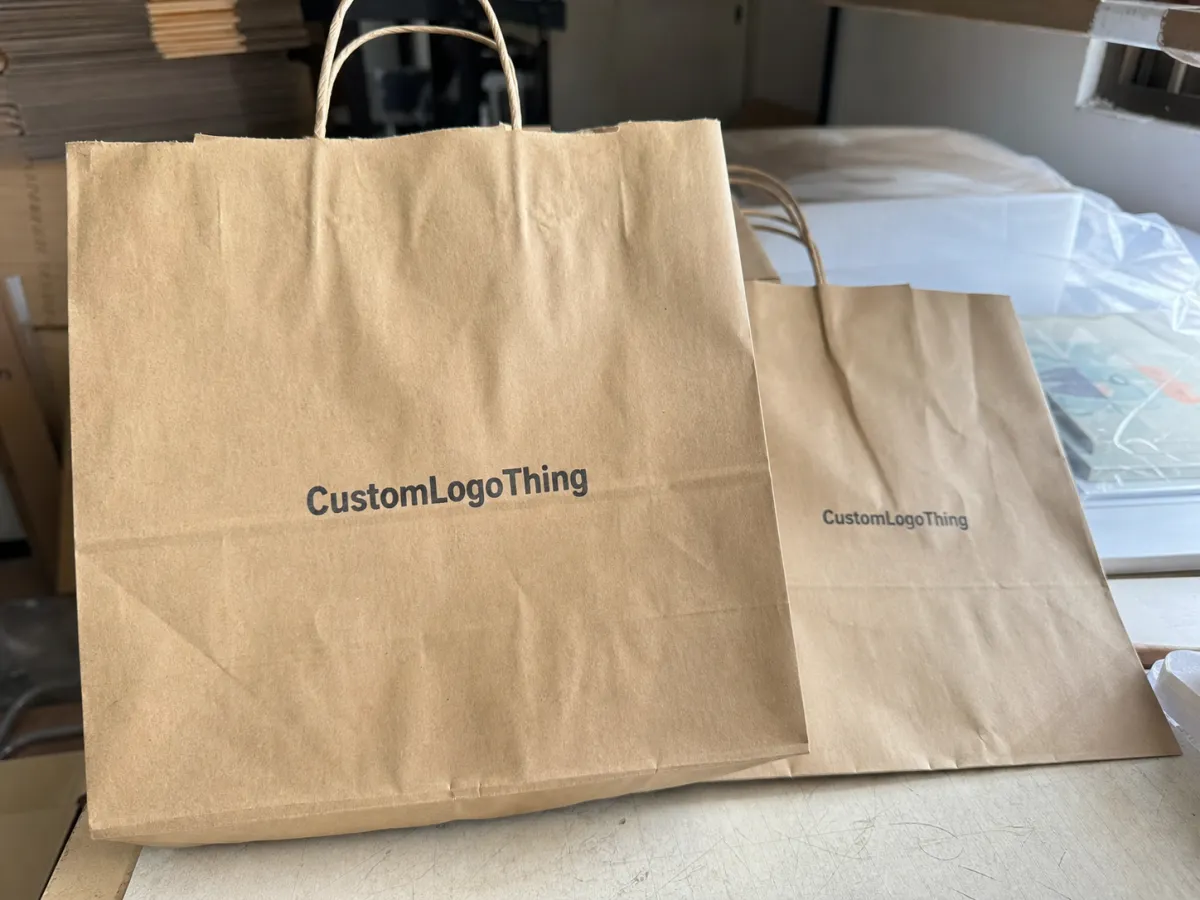
Most buyers begin with unit price. That is normal. The problem is that bakery bags fail in ways that do not show up in a spreadsheet. A low-cost bag can arrive looking acceptable, then bleed grease, crease at the gusset, or lose stiffness before the product reaches the car. Once that happens, the savings evaporate into repacks, waste, and replacement orders.
Grease is the classic culprit. Croissants, brioche, filled buns, and laminated pastries all transfer oil faster than plain dry goods. Add condensation from a warm box or a chilled dessert, and lighter paper can soften faster than expected. Handles are another weak point. A handle that holds a few pastries may fail when staff add a boxed cake slice, a second container, or a coffee carrier on top.
Labor matters too. A bag that is too shallow, too narrow, or too flimsy forces the line to compensate. That can mean taping, folding, or moving product into another format. It sounds small until it happens hundreds of times a week. A better bag spec usually costs more upfront and less in the rest of the operation.
A bag is only cheap if it works through handoff, transport, and opening. If it fails before the customer gets home, the replacement cost has already erased the bargain.
For bakeries and restaurant groups, packaging is a working tool, not decoration. The right approach is to match the bag to the actual load, then check whether the MOQ makes sense for storage and cash flow. If the first run needs to be repeatable, the spec matters more than the headline number.
Pick the right bag structure for pastries, loaves, and boxes
No single bag style handles every bakery order well. Flat paper bags are fine for a small pastry or cookie pack, but they are poor candidates for boxed desserts or anything that needs side clearance. Gusseted kraft bags offer more room and behave better for bread loaves, boxed slices, and narrow cartons. SOS carry bags stand upright, which speeds packing because staff do not need to hold the mouth open while loading. Handled carriers are the strongest choice for heavier orders and premium handoff.
Structure should follow the contents. If the order is mostly soft pastries, a flat or gusseted bag can be enough. If the bag has to support several items, a reinforced bottom and wider gusset are worth the extra material. For delivery handoff or takeout counters that move quickly, an upright bag reduces fumbling and keeps the load stable.
Window panels can help, but only when visibility adds value. They make sense for display-forward products, clear labeling, or premium bakery items where the customer wants a preview. They do not solve weak construction, and they can add complexity to both price and lead time. If the bag is going into a car, a window is a nice feature, not a substitute for good paper and a solid fold.
Fit is where many first runs go wrong. Too much empty space lets boxed products shift, crush frosting, or slide into the side seam. Too little space slows packing and wrinkles the artwork. The most usable bag gives enough clearance for a smooth insert and a clean pull-out, without so much slack that the contents wander around.
- Flat bag: Best for light pastries, cookies, and small takeaway items.
- Gusseted kraft bag: Better for loaves, narrow boxes, and mixed bakery orders.
- SOS carry bag: Useful for upright loading and fast service lines.
- Handled carrier: Strong option for heavier orders and a more polished handoff.
Many buyers also coordinate the bag with broader Custom Packaging Products so the bakery’s boxes, sleeves, and inserts share the same visual system. That matters more than it sounds. When the print style, paper tone, and finish all feel related, the packaging reads as intentional rather than assembled from leftovers.
Size, paper weight, print, and finishing specs that matter
The bag spec has four jobs: fit the product, hold weight, accept print cleanly, and survive the trip. Width, gusset, and height determine the fit. Paper weight affects stiffness and tear resistance. Handle reinforcement affects whether the bag feels reliable in hand. Finish affects moisture resistance, abrasion, and how the print ages under service conditions.
Paper weight should match the load, not a guess. Lightweight pastry bags often sit around 60-80 gsm. Heavier carry bags frequently move into the 100-120 gsm range, sometimes higher depending on the structure and handle style. Those are typical ranges, not rules. The point is simple: the more the bag has to carry, the more paper or reinforcement it needs. A thin stock carrying boxed desserts is a false economy.
Print decisions should follow use. A one-color logo on kraft is usually the cheapest and cleanest option. It dries faster, tends to scuff less, and keeps setup simpler. Full-bleed artwork, extra spot colors, or metallic effects can raise setup time and complicate drying. Heavy ink coverage can also change how the paper behaves around folds. If the bag moves through service quickly, simple branding often outperforms an overworked design.
Finish is not cosmetic fluff. A matte kraft surface gives a natural look and suits a bakery that wants an honest, handmade feel. A treated or coated surface helps when bags encounter friction, moisture, or chilled items. If the bags will sit alongside custom printed boxes or sleeves, match the finish across formats so the whole package feels deliberate.
For buyers who need a reference point, packaging standards can help sanity-check expectations. The ISTA testing framework is useful if a bag is shipping with heavier inserts or secondary packaging. The FSC system is still one of the clearer ways to specify responsibly sourced fiber. The EPA’s packaging guidance at epa.gov is also a practical baseline for waste and material efficiency.
| Option | Typical Use | Usual Cost Range | Notes |
|---|---|---|---|
| Flat kraft bag, one-color print | Small pastries, cookies, light takeaway | $0.05-$0.12 per unit at higher quantities | Lowest setup burden, limited load capacity |
| Gusseted kraft bag, custom print | Loaves, boxed slices, mixed bakery orders | $0.10-$0.22 per unit depending on size | Good balance of fit and cost for many bakeries |
| SOS carry bag with reinforced bottom | Heavier orders, stacked containers, lunch service | $0.14-$0.30 per unit | Better standing stability and faster packing |
| Handled paper carrier | Premium takeaway, multi-box orders, delivery handoff | $0.18-$0.40 per unit | Higher material and assembly cost, stronger presentation |
MOQ, pricing, and unit-cost tradeoffs
MOQ usually changes with paper type, print method, and whether the bag is a stock-style format or a custom die-cut. restaurant Custom Bakery Paper Bags MOQ can look manageable at first, then climb once you change a dimension, add a window, or request a second print color. That is normal. The factory has to pay for plates, setup, and material allocation before the first finished bag exists.
Ask for a cost breakdown, not just a single number. A usable quote separates setup, material, printing, freight, and any special tooling. Without that split, you are comparing apples to shipping pallets. A low bag price paired with expensive freight is not a low-cost order. It is just an incomplete one.
Lower MOQ reduces commitment and usually raises unit cost. Larger runs bring the per-unit cost down but tie up more cash and storage space. Independent bakeries often prefer a smaller first run so they can confirm fit and demand. Multi-location groups may care more about the lower landed cost because they can distribute inventory across stores and reorder on a schedule. Both approaches work if they match the operation.
There are a few ways to save money without downgrading the packaging:
- Use a standard size if the menu allows it.
- Keep the print to one or two colors.
- Avoid unnecessary coatings or specialty finishes.
- Choose a format the factory already runs often.
- Reorder before stock gets thin, so production can stay planned instead of rushed.
Unit cost should always be read alongside monthly usage and waste rate. A bag that costs slightly more but cuts repacking can still win on total cost. That is especially true for branded packaging programs where the bag is the final touchpoint before the customer leaves the store. Weak packaging makes the entire order feel weaker.
There is no single MOQ that fits every bakery. A standard size with simple artwork may start lower than a fully custom format, while a specialty handle or laminated finish usually asks for more. The smarter move is to compare at least two quantity breaks. That shows whether a slightly larger first run meaningfully lowers the per-unit price or just increases inventory risk.
Proofs, production steps, and turnaround
A clean order starts with the artwork and the dieline. After that comes proofing, and proofing is where most delays hide. The usual sequence is straightforward: artwork intake, dieline review, digital proof, revisions if needed, sample approval if requested, production, inspection, and packing. A supplier that cannot explain those steps clearly is worth a second look.
Missing vector files slow the process. So do logo screenshots, blurry color references, and artwork revisions that arrive after proofing has started. Custom windows, unusual handle styles, or last-minute dimension changes can add another layer of delay because the factory has to re-check material usage, tooling, and layout before it commits to production.
Typical timing depends on the bag style and the current production queue, but buyers usually see something like this:
- Artwork and proofing: 1-3 business days if files are clean.
- Sampling or spec approval: 3-7 business days if a physical sample is needed.
- Production: often 10-18 business days for standard custom paper bags.
- Freight: separate from production, and often the part teams forget to schedule.
That last item causes more trouble than the rest. Production completion is not the same as arrival at the store or warehouse. If a menu launch, holiday shift, or seasonal promo depends on the bags being on site, transit time has to be built into the calendar before the launch date is announced. Many rushed orders happen because someone treated “finished” as if it meant “delivered.”
For best results, the process should feel boring. The proof is approved quickly. The dimensions are already locked. The color references are clear. The warehouse knows what is coming. That is what good packaging operations look like in practice.
How to keep reorders consistent across locations
After the first run, consistency matters more than novelty. A supplier that stores the dieline, keeps the approved artwork, and records the exact paper grade saves the buyer from reopening the same conversation every quarter. That kind of continuity sounds unglamorous. It is also what keeps reorders sane.
Standardization across locations reduces mistakes. The same dimensions mean staff can pack the same menu items the same way. The same print placement keeps the brand experience familiar. The same paper weight or board weight means one store does not end up with a bag that feels right for pastries while another uses the same SKU for boxed cakes.
A simple control sheet prevents small errors from turning into expensive ones:
- Bag size and gusset dimensions
- Paper weight and finish
- Print colors and placement
- Approved artwork version
- Reorder quantity thresholds
- Backup contact for approvals
That sheet also cuts time spent hunting through old emails to confirm which version was last approved. Procurement moves faster when the specs are visible and current. So do store teams, because they are not guessing which bag goes with which product.
Good suppliers help with the repeat order, not just the first invoice. They can flag whether a size change needs a new dieline, whether a print update affects MOQ, and whether a finish change will alter lead time. That matters for restaurants that also order Custom Packaging Products and want the visual language to stay aligned across bags, sleeves, and boxes.
What to send for a quote that gets the first run right
If you want a useful quote, send useful inputs. Factories can guess, but guessing is how orders come back wrong. Start with the product size, the contents, the expected monthly volume, the number of print colors, and whether the bag needs handles, grease resistance, or a reinforced bottom. That gives the supplier enough detail to recommend a structure and price it honestly.
Artwork should be in vector format if possible. PDF, AI, or EPS is best because it keeps logos sharp at print size. Include logo placement notes, color references, and any legal text, barcode, or QR code that has to appear. If you already have a dieline, send it. If not, ask for one before design work begins. A clean spec sheet shortens the back-and-forth and makes the first proof far more useful.
It also helps to give the real deadline, not the hopeful one. If the bags are needed before a menu launch, a holiday rush, or a store opening, say so. That allows the supplier to tell you whether the schedule is realistic before anyone commits to a date that will create stress later.
The most reliable buying method is simple: compare the quote to your actual use. Check whether the bag fits the product, whether the print supports the brand, whether the finish makes sense for your service style, and whether the MOQ fits storage and cash flow. Then confirm the restaurant Custom Bakery Paper Bags moq only after the spec can be repeated without surprises.
What is the MOQ for restaurant custom bakery paper bags?
MOQ depends on bag size, print complexity, paper type, and whether the format is standard or fully custom. One-color orders in common sizes usually start lower than specialty shapes or multi-color artwork. Ask for two quantity breaks so you can see how much the unit price changes before you commit.
Are custom bakery paper bags strong enough for greasy pastries?
They can be, if the paper grade and finish are chosen for grease resistance rather than plain kraft alone. For oil-heavy items, a liner or barrier treatment is safer than hoping the paper holds up on its own. Test the bag with the heaviest, greasiest item on your menu, not the easiest one.
How can I lower restaurant bakery bag unit cost without hurting quality?
Use a standard size where possible, because unusual dimensions and custom dies raise cost quickly. Keep the print simple, and skip extra finishes unless the bag needs them for performance. Larger reorder quantities usually reduce unit cost more effectively than trimming quality.
What artwork do you need for custom bakery paper bags for restaurants?
A vector file in PDF, AI, or EPS is ideal because it keeps the logo crisp during printing. Include print placement, color references, and any barcode, QR code, or legal text that must appear. If you have a dieline, send it with the artwork; if not, ask the factory for one before design starts.
What is the usual turnaround after proof approval?
Timing depends on the bag style, print method, and current production load, but proof approval is the point where the order starts moving. Standard custom bags with simple print usually move faster than special finishes or unusual construction. Freight is separate from production, so include transit days before setting a launch date.

