Order Subscription Private Label Beanies Print Options
For recurring private label beanie programs, decoration choice often changes the buyer's perception more than yarn color, knit weight, or cuff height. The same blank can feel elevated with a woven patch and ordinary with a thick direct print. That gap matters more in a subscription model, where customers compare each shipment against the last one and notice drift fast.
The phrase subscription Private Label Beanies print options covers a broad set of programs: retail drops, member mailers, employee gifts, fan merch, and seasonal replenishment. Those orders share one constraint that gets underestimated: the beanie is a soft, stretchy surface with limited real estate. A logo that looks polished on a flat art board may distort once it hits a ribbed cuff or a fuzzy acrylic body. The best decoration method is rarely the most decorative one. It is the one that holds up on the exact knit you plan to ship, at the exact volume you need, within the time window your calendar can survive.
Why Subscription Private Label Beanies Print Options Matter
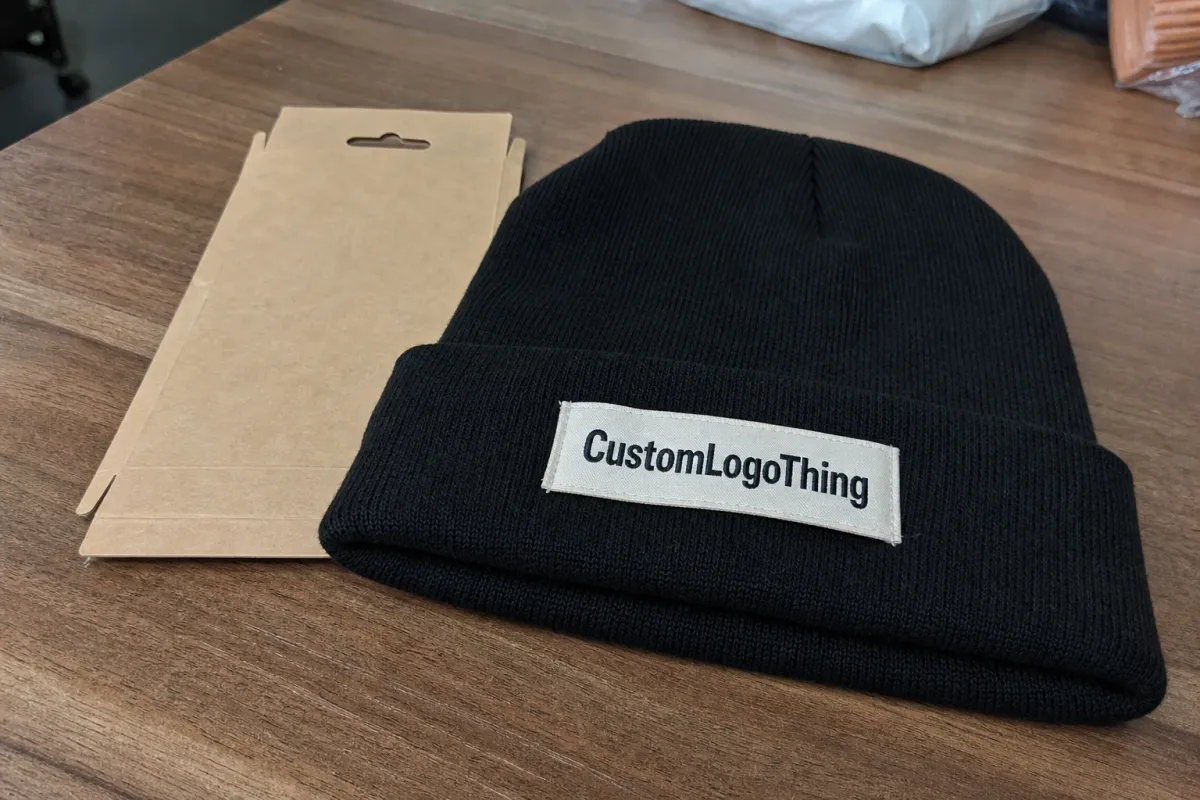
A beanie is judged in motion. It stretches when pulled on, folds into a mailer, and lands under harsh retail lighting or a phone camera. That is why decoration has to be chosen with the fabric behavior in mind, not just the logo file. A thin mark placed too close to a rib can look crisp in proofing and uneven in production. A larger patch can cover that problem and still feel premium.
On a ribbed knit, decoration is part of the product structure. A poorly matched method makes the beanie read as promotional. A well-matched one can make a modest blank feel intentional. The difference is rarely about one dramatic choice. It usually comes down to a handful of details: stitch density, yarn loft, cuff recovery, placement size, and whether the decoration can survive a little stretch without turning blurry or puckered.
For subscription programs, consistency matters as much as appearance. Reorders need to match the first run, not approximate it. If the cuff rises higher, the knit loosens, or the patch shifts by half an inch, the whole line starts to feel less controlled. That matters because recurring orders do not get the benefit of novelty. They have to earn trust through repetition.
When decoration fights the knit, the buyer pays for friction in setup, approvals, and replacements. The issue usually shows up in stretched cuffs, fuzzy edges, and the second wash.
One overlooked point: packaging changes how the decoration is read. A beanie shipped in a plain polybag does not land the same way as one folded with a belly band, hang tag, and insert. If the presentation is part of the offer, decoration, labeling, and packaging need to agree with each other instead of competing for attention.
How the Process and Turnaround Work From Proof to Delivery
The production path is usually simple on paper and less simple in practice. The order starts with artwork intake, where file type, line weight, and color count are checked. After that comes cleanup. Tiny text may need redrawing, shape edges may need simplification, and colors may need to be converted to thread references or print separations. Mockups come next so the team can review scale and placement before anyone starts production.
- Artwork intake - confirm the format, logo version, and intended placement.
- File cleanup - simplify small details and prepare the art for the chosen method.
- Mockup review - check size, position, and cuff relationship on the actual beanie style.
- Proof approval - lock color references, decoration method, and packaging details.
- Decoration or application - print, stitch, press, or attach the chosen mark.
- Finishing and packing - trim loose threads, inspect the run, and prepare shipment.
Most delays happen before production starts. A low-resolution file can add days. A logo with too many colors can trigger a round of simplification. Packaging approval can stall an order if the buyer is deciding between one paper stock and another while the production slot sits open. Clear decisions move faster than endless refinement.
It also helps to separate factory time from transit time. A vendor might quote 10 business days for decoration, but that does not include freight, consolidation, customs handling, or carrier delays. For subscription drops with fixed ship dates, the real schedule is production plus transit plus a buffer for one unexpected revision. Buyers who plan only against factory time often end up with a perfect order that arrives late.
Repeat replenishment is usually quicker than the first run. Once the supplier has an approved spec sheet, a locked artwork file, and the right blank in stock, the process can move with less back-and-forth. If the blank still needs to be sourced after the order is placed, the timeline becomes less predictable. That is a common problem in seasonal programs, where demand spikes just as inventory gets tight.
Packaging adds another layer. A large run may justify offset printing for inserts or hang tags; shorter subscription quantities often fit digital printing better because setup is lighter; flexographic printing can be efficient for repeatable labels and simple one- or two-color components. The beanie itself is only one piece of the job. The support materials carry a surprising amount of the perceived value.
Cost, Pricing, MOQ, and What Pushes Unit Cost Up
For subscription private label beanies print options, the cheapest quote is rarely the cheapest program. Unit cost depends on decoration method, artwork complexity, knit density, packaging, and quantity. A 100-piece order almost always carries a higher per-unit cost than a 1,000-piece reorder, even when the logo stays the same. The setup work has to be paid for somewhere.
MOQ, or Minimum Order Quantity, is one of the first numbers buyers should ask about, but the more useful question is how that MOQ affects the full landed cost. Sampling, color matching, digitizing, screens, freight, and special packaging can add up quickly. A quote that looks low because it omits setup or revisions is usually the quote that causes friction later.
| Method | Best fit | Artwork tolerance | Typical added decoration cost | Notes |
|---|---|---|---|---|
| Screen print | Flat cuff, larger logos | Medium | $0.60-$1.25/unit | Strong for simple spot-color art; weaker on heavy stretch |
| Heat transfer | Smoother knit zones | Medium-high | $0.85-$1.75/unit | Can hold detail better than direct print, but film feel matters |
| Embroidery | Premium retail or gift sets | Low for fine detail | $1.10-$2.50/unit | Strong handfeel, but may pucker on lightweight knits |
| Woven patch | Textured knits and repeat programs | High | $1.00-$2.20/unit | Often clearer for small type than direct decoration |
| Printed patch | Sports, fan drops, and bold branding | Medium | $1.20-$2.80/unit | Works well when the brand wants a more structured look |
The blank matters too. A basic cuff beanie can land around $2.50-$4.25 before decoration. Heavier acrylics, recycled yarn styles, or lined versions often move into the $4.00-$7.50 range. Those numbers shift by market, order size, and whether the style is stocked or made to order. Packaging can change the quote just as much. A matte hang tag with thicker stock usually feels more deliberate than a glossy insert on flimsy paper, even when the printing cost is only modestly different.
A practical quote should separate these items:
- Blank cost - same style, same yarn, same color.
- Decoration cost - by method, placement size, and color count.
- Setup fee - artwork prep, screens, or digitizing.
- Sampling fee - pre-production sample or physical proof.
- Freight and packaging - bags, cartons, labels, and shipping.
If one supplier offers a low unit price but charges for every revision, while another quotes a slightly higher unit price with a stable spec and free reorder setup, the second option is often cheaper over time. Recurring programs expose hidden costs faster than one-time orders do.
Choosing the Right Print Method for Ribbed Knits
Ribbed knits are elastic, uneven, and unforgiving. That matters because the decoration has to behave on a surface that moves. A flat patch panel gives more freedom. A deep ribbed cuff asks for restraint. The wrong method can blur, crack, or pull the fabric out of shape. The right one can look sharp and stay readable after wear.
Screen print can work on flatter cuff areas and larger logos, but tiny text can disappear if the knit is too open. Heat transfer can carry more detail and smaller type, though the film needs to feel acceptable in hand. Embroidery often looks the most premium, yet it can distort on lightweight beanies and make the cuff stiffer. Woven patches are often the safest path when the logo needs crisp edges on textured fabric. A printed patch can also work when the brand wants more structure and a bolder finish.
Artwork complexity should influence the method. Thin lines, gradients, and small taglines are risky on knits. If the logo depends on 6-point text or a tight line screen, enlarge it or move to a patch. If the mark is simple and strong, a one- or two-color spot treatment can look cleaner than a full-color build. The same logic applies to packaging: short runs often fit digital printing, while larger, stable quantities make offset more efficient. Substrate, volume, and detail level should point in the same direction.
Material choice shifts the result more than many teams expect. A fleece-lined beanie can hide some texture but complicate placement. A chunky acrylic rib can soften a direct print edge. A denser knit usually holds decoration better, though it may also feel warmer and heavier at the forehead. There is no universal winner. The best method depends on the exact blank, the logo size, and the way the finished piece will be used.
For brands that want a more polished retail presentation, the best result often comes from combining a restrained decoration method with clean labeling and consistent packaging. A woven patch, a tidy size label, and a well-printed swing tag usually do more than adding extra colors to the beanie itself. If sewn-in identification is part of the spec, pairing the decoration with Custom Labels & Tags keeps the product story consistent from inside the cuff to the outer carton.
Step-by-Step Ordering From Artwork to Approved Sample
Start with the business case, not the art file. Before requesting quotes, confirm the audience, the beanie style, the target margin, and the delivery window. A membership mailer does not need the same finish as a premium retail drop. A bulk promotional bundle can tolerate different packaging than a product intended for resale.
Then move through the process in clear stages. First comes the source art. Next comes a digital mockup, where the vendor places the logo on the beanie and confirms the position, scale, and color count. After that, request a physical sample or pre-production proof. That step matters because knit texture can make a mockup look cleaner than the finished product will actually be.
At the sample stage, check four things carefully:
- Placement - is the logo centered, high enough, and scaled correctly?
- Color - does the yarn, thread, ink, or patch match the approved reference?
- Compatibility - does the decoration sit cleanly on the knit without puckering or distortion?
- Packaging - do the carton, bag, and tag fit the final presentation?
If the order will repeat, lock the spec sheet before the first full run is released. Record the final artwork file, Pantone or thread references, placement dimensions, packaging details, and exact blank style. That is the difference between a reorder that matches and a reorder that gets described as “close enough.” Close enough is where subscription programs start losing consistency.
Sustainable packaging should be documented with the same care. FSC-certified paper components do not improve the beanie itself, but they do signal discipline in the support materials. A recycled yarn beanie with an FSC hang tag and restrained labeling usually feels more coherent than a product with disconnected upgrades stacked onto it.
One helpful move is to ask for photos of the exact knit style in prior runs, if the supplier has them. Side-by-side images often reveal more than a polished mockup. You can see how the stitch catches light, whether the logo compresses at the curve, and how clean the patch edge stays after application. Those details matter because they predict real-world consistency better than a perfect render does.
Keep internal labeling in the same conversation. Custom Labels & Tags can be approved alongside the beanie itself, which saves a second round of revisions later and prevents the final kit from feeling mismatched.
Common Mistakes That Make Branded Beanies Miss the Mark
The first mistake is choosing decoration purely because it is the cheapest line item. That usually fails when the logo stretches, the edges blur, or the finish looks lower-grade than the brand intended. The second mistake is asking too much of a small cuff. Tiny logos, metallic effects, and narrow type can look impressive in a presentation deck and weak on a knit.
Some decoration styles age better because they are less exposed to movement. A good patch or a well-planned embroidery hit can survive wear and washing better than a delicate direct print placed on a high-stretch zone. That does not make print a bad choice. It means the placement and substrate have to be right. A rub test and a wash test on the actual beanie style should be part of the approval process before a retail or subscription run goes into full production.
Size errors are another common failure. A logo that looks balanced on a vector file can feel cramped once it is scaled to a 2-inch cuff. If the art carries too many colors or too much detail, simplify it or move to a patch. Fighting to preserve every small element usually increases setup time and cost without improving the final piece.
Timing errors cause just as much damage. Seasonal beanie programs have a short useful window. If artwork, sampling, and freight are not staged early, the production queue can swallow the calendar before the first box ships. The budget may be approved and the design may be finalized, but the market window still closes. That is the part people forget: recurring apparel programs are schedule projects as much as design projects.
Finally, do not separate the decoration from the rest of the presentation. A beanie can be well made and still look rushed if the hang tag is flimsy, the label placement varies, or the pack-out differs from box to box. The product and its print finishing should feel like one system, not three unrelated purchases.
Expert Checks Before You Place the Next Reorder
Before a reorder is approved, compare it to the original run rather than to memory. Memory is generous. A physical sample is not. The best buyers treat the first approved production as the reference point and check every future shipment against it under the same light, with the same packaging, and ideally alongside the same blank style.
- Decoration method - confirm the exact process, not only the visual result.
- Artwork file type - keep the final vector or print file on record.
- Color standard - note Pantone, thread color, or approved sample reference.
- MOQ and pricing - verify current minimums and any volume break.
- Delivery window - include production time plus freight, not just factory time.
Side-by-side samples catch problems quickly. A small change in stitch density, patch adhesion, or knit tension can be obvious when the old and new versions sit next to each other. It is much easier to stop a run before production than after 1,000 pieces are packed.
Vendor communication matters more in recurring programs than in one-off orders. The supplier who keeps the approved files, answers clearly, and understands the packaging format often saves more time than the one offering the lowest initial unit price. Administrative drag eats margin quietly. Reorders expose that faster than first runs do.
Brands that sell accessories alongside apparel should keep the packaging system consistent. Label placement, hang tag stock, belly band size, and carton marking should all be recorded with the beanie spec. If the next cycle needs a small update, change one element at a time rather than reworking the entire package. Stability is easier to maintain than to recreate after the fact.
Before placing the next order, compare subscription private label beanies print options on durability, unit cost, and turnaround rather than on first-look appeal alone. The method that costs a little more upfront is often the one that protects customer perception, controls reorders, and keeps the program from drifting after the first shipment leaves the dock.
Frequently Asked Questions
Which subscription private label beanie print options last the longest?
Durability depends on stretch resistance, wash performance, and placement, not only on the decoration type. Methods applied to lower-stretch areas or used as patches often outlast small direct prints on highly ribbed sections. A rub test and wash test on the exact knit style are the best way to confirm fit before production.
How does MOQ affect private label beanie pricing?
Higher MOQ usually lowers unit cost because setup, proofing, and coordination are spread across more pieces. Small runs often carry higher per-unit pricing because sampling and prep take up a larger share of the order. Compare the full landed cost, including packaging and freight, before deciding.
Can beanie print options handle small logos or fine text?
Sometimes, but knit texture can swallow detail quickly, especially on looser or thicker yarns. If the logo is tiny, a patch or embroidery-style application often stays clearer than a direct print. Ask for the minimum legible size before finalizing artwork.
How long does a subscription private label beanie run usually take?
First runs usually take longer because proofing, color approval, and sampling add extra steps. Repeat orders move faster when the supplier already has blanks, approved artwork, and a locked spec sheet. Build in buffer time for revisions and freight delays so the subscription schedule does not slip.
What should I ask before choosing private label beanie print options?
Ask which fabrics and knit structures each method actually fits. Request unit cost at your target volume, plus setup, sampling, and shipping fees. Confirm turnaround, MOQ, and whether reorders will match the original production run.

