A supplement Unstructured Dad Hats Material Sample guide sounds procedural, but it is really a filter for bad assumptions. A swatch can look great in a tray and still produce a cap that collapses too easily, feels too warm, or holds a visor shape that never settles right. That gap between flat material and finished headwear is where sourcing mistakes get expensive.
For custom logo programs, the sample is not a box to tick. It is the checkpoint where fabric, crown behavior, trim quality, and logo execution either line up or fail apart. A buyer can usually fix a color shift. Fixing a crown that sits too shallow, or a front panel that wrinkles under embroidery, is much harder. That is why a strong request starts with the exact proof needed, not with a vague ask for “a sample.”
Used well, the sample process exposes the real constraints early: available fabric widths, wash behavior, stitch tolerance, closure choices, and the lead time tied to each one. Used badly, it creates false confidence. A cap may photograph well and still wear cheaply. The fastest way to reduce that risk is to define the sample as a working prototype, not a marketing prop.
Supplement Unstructured Dad Hats Material Sample Guide: What It Covers
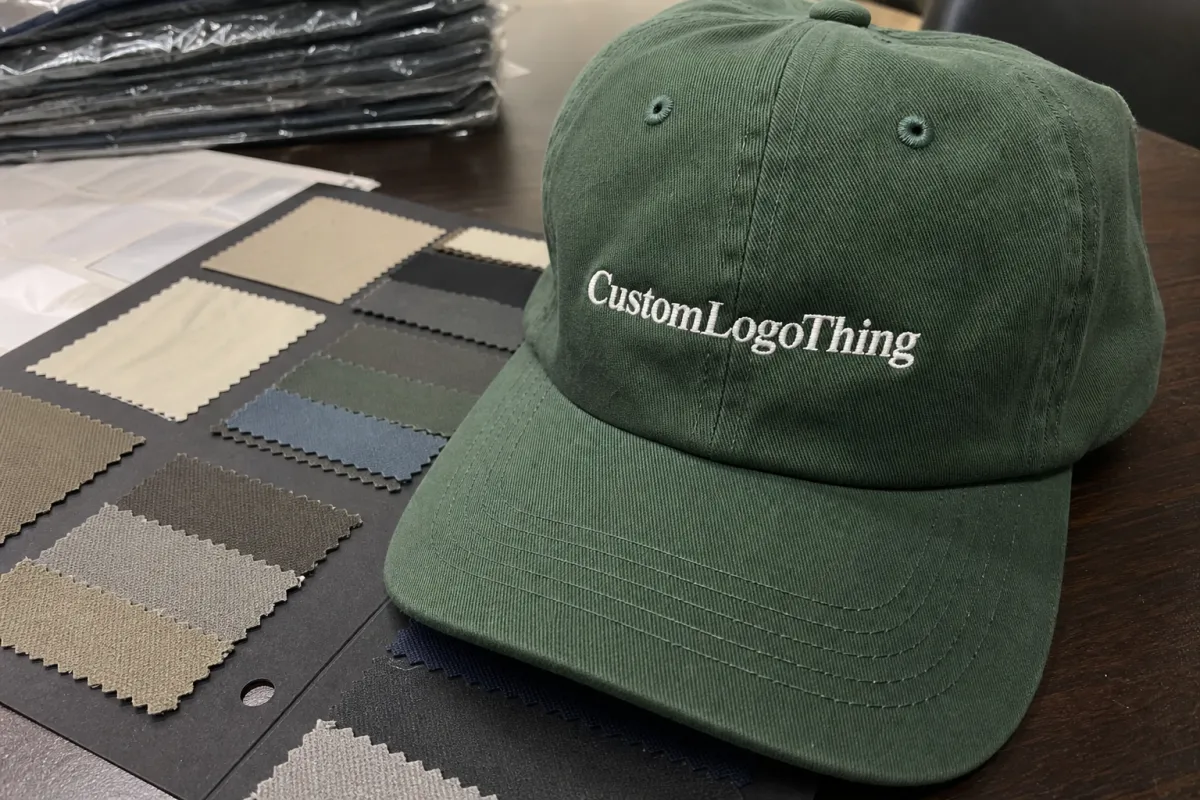
The first job of any supplement Unstructured Dad Hats material sample guide is to name the sample type. Buyers often ask for “a sample” and mean three different things: a fabric swatch, a blank sewn cap, or a fully decorated prototype. Those are not interchangeable. A swatch helps compare texture, color, and finish. A blank cap shows crown drape, fit, stitching, and visor shape. A decorated prototype adds placement, thread build, and how the logo behaves on an actual crown.
Unstructured Dad Hats are harder to judge than structured caps because there is no internal buckram forcing the front to stand up. The fabric carries the entire shape story. A 100% cotton twill with a washed finish will sit differently from brushed canvas, and a cotton-poly blend often feels a little cleaner at the edge while losing some of the broken-in softness buyers usually want from this category. The same material can look crisp in a fabric card and slump dramatically once it has six sewn panels, a sweatband, and a closure attached.
That is why a buyer should ask the sample to prove five things before decoration even enters the conversation: hand feel, breathability, seam behavior, color accuracy, and crown drape. For warm-weather retail or promotional wear, comfort and airflow matter as much as appearance. A slightly off color may be acceptable if the cap sits right and breathes well. A perfect color with a stiff, hot interior usually does not survive real wear.
Good sample requests also define the target use. A golf-style casual cap, a retail fashion cap, and a low-cost event giveaway can all be unstructured dad hats, but they do not share the same tolerance for fabric weight or finish. A 220gsm brushed cotton cap may feel ideal for a soft retail piece. A 260gsm twill body may hold shape better for a logo-heavy program. Once the intended use is clear, the supplier can pick the closest material instead of guessing.
A sample that looks clean in photos but feels wrong on head is not a finished answer. It is a warning with good lighting.
That is where the supplement Unstructured Dad Hats Material Sample guide earns its place. It forces the conversation away from vague approval and toward measurable details. Without that discipline, the buyer and supplier end up arguing from memory, and memory is a weak quality-control tool.
How Sample Caps Are Built and Reviewed
A proper sample usually follows the same build order as production. Fabric is selected, panels are cut, the crown is sewn, the visor is formed, the sweatband and seam tape are installed, and the closure is attached last. If decoration is included, embroidery or patch work usually happens after the cap body is assembled. That is not just convenient. It allows placement to be judged on the actual shape, which is the only place it matters.
From Fabric To Finished Cap
The review should begin before the first stitch. Look at fabric weight, weave density, wash treatment, and whether the supplier can name the exact material composition. A 100% cotton twill at 240gsm will not behave like a 280gsm brushed canvas or a 65/35 cotton-poly blend. Heavier fabrics generally hold a cleaner silhouette, while lighter constructions feel easier and more laid back. Neither is automatically better. The right choice depends on whether the buyer wants softness, durability, or a more retail-leaning profile.
For unstructured caps, crown depth is one of the easiest dimensions to underestimate. Even a difference of 10 to 15 mm can change how the front panel sits on the forehead. If the profile is too shallow, the cap can ride high and expose too much forehead. If it is too deep, the front may puddle or fold after a few wears. This is why sample approval should include an actual fit check, not just a visual scan on a table.
What Reviewers Should Check First
- Crown depth: Confirm the profile suits the target wearer and does not sit oddly high.
- Panel shape: Check for puckering, seam drag, or front-panel collapse after sewing.
- Visor curve: Decide whether the bill should stay nearly flat or settle into a soft curve.
- Closure comfort: Metal buckle, fabric strap, and plastic snap feel different under daily wear.
- Stitching density: Look for even seam lines, tidy corners, and no skipped stitches.
A blank sample is often the better first approval because it isolates the body from the logo. A decorated sample can hide structural issues. A patch may make a weak front panel look intentional. Thick embroidery can mask a shallow crown. If the body is wrong, the artwork only hides the problem until the production run arrives. Start with the cap. Then approve the decoration.
A strong review also includes the parts people rarely photograph: seam tape, interior labels, sweatband finish, closure stitching, and edge trimming. These details may not sell the cap at a glance, but they decide whether it feels polished or rushed once it is in hand. A buyer who ignores the inside of the cap usually finds out later that the outside was the easy part.
Cost, Pricing, and MOQ for Sample Orders
Sample pricing is usually clearer than buyers expect, but the total can move quickly once custom details enter the build. The simplest way to break it down is into four buckets: base sample fee, material sourcing, decoration setup, and freight. A stock-fabric blank cap is the lowest-cost route. A custom-dyed cap with special hardware, a woven label, and embroidery setup can move into a much higher range because each added detail increases labor and risk.
| Sample Type | What It Proves | Typical Price Range | Best Use |
|---|---|---|---|
| Fabric swatch set | Color, texture, weight, wash, and finish | $15-$35 | Early material comparison |
| Blank sewn cap | Fit, drape, seam quality, and closure feel | $35-$85 | Body approval before logo work |
| Decorated prototype | Body plus logo placement and finish | $65-$180 | Final approval before bulk order |
| Special trim or custom-dyed prototype | Premium build with unusual components | $120-$260+ | Retail launches and higher-spec programs |
MOQ affects sample economics in a less obvious way. The sample may be one piece, but the material behind it is not always small. If the supplier has to reserve a custom fabric run or unusual hardware, the minimum order quantity may be 100 to 300 meters of fabric, sometimes more for specialty dye lots or custom finishes. The buyer sees one cap. The factory sees cutting waste, setup time, and leftover inventory risk. That is why a low sample quote can still sit on top of real development cost.
Ask one direct question early: Will the sample fee be credited back on the bulk order? Some suppliers apply the fee in full after approval. Others credit only part of it, or only if the final order reaches a threshold. Freight is usually separate, and international shipping can add brokerage or customs handling on top. A sample that costs $48 before shipping may land close to double that once transit is included. That is not unusual. It is the cost of getting a physical object across borders and into a buyer’s hands.
Packaging also matters at this stage. If the sample is being reviewed by multiple people, a clean pack-out using corrugated cardboard, kraft paper, and, where appropriate, recycled materials protects the cap shape and keeps the review closer to final condition. If sustainability claims are part of the brand story, ask whether the carton is FSC certified and whether the void fill uses post-consumer waste or other biodegradable packaging options. For packaging performance references, the International Safe Transit Association is a useful standard source: ISTA. For certified fiber sourcing, FSC remains the marker many buyers look for.
Process, Timeline, and Revision Loops
The cleanest sample workflow starts with a request, moves to a quote, then to material confirmation, sample build, photo review, physical shipment, and final signoff. It looks linear on paper. In practice, one missing trim detail can push the entire cycle back by days. The timeline is often more sensitive to communication quality than to sewing speed.
A realistic first-sample window is often 7 to 15 business days after proof approval if the base fabric and trims are already in hand. If the supplier has to source a new fabric, a custom closure, or a specialty label, the schedule can stretch to two or even three weeks before shipment. A revised sample usually moves faster than the first one, but it still goes through the same internal cycle: cutting, sewing, inspection, and shipping. Revision work is never just “one small change.” It is another pass through the line.
- Request: The buyer sends specs, artwork, and target fit.
- Quote: The supplier prices fabric, trims, decoration, and freight.
- Sample build: The cap is made in the closest available spec.
- Review: Photos and physical inspection identify fit or material gaps.
- Revision: The highest-priority changes are rebuilt and checked again.
- Final signoff: The approved sample becomes the production reference.
Delays usually come from predictable places. Artwork changes are common. Dye matching takes time. Closure changes can stall a build if the exact hardware is not on hand. Labels, sweatbands, and inner taping often slip because they are treated like finishing details rather than core components, which means they get ordered later than they should. A buyer who leaves those choices vague usually pays for the delay in calendar time.
The most useful rule is simple: the first sample should answer the biggest questions, and the revision sample should only fix the highest-priority gaps. If a buyer changes fabric, fit, and logo placement in one round, the learning value drops fast. It becomes difficult to tell what caused the issue and what solved it. The supplement unstructured dad hats material sample guide works best when every revision is tied to one reason and one expected outcome.
Key Material and Fit Factors to Compare
If two samples look similar on a desk, they can still wear very differently. That is the trap. Buyers often over-focus on front-panel appearance and under-focus on the variables that shape the actual wearing experience. The better method is a scorecard, not a gut feeling.
Start with fabric weight, weave, and surface texture. A brushed cotton finish usually feels softer and warmer, while a tighter twill can hold a cleaner line through repeated wear. Then check crown depth, panel count, brim curve, and closure style. A six-panel unstructured cap with a low crown gives a different silhouette than a deeper mid-profile shape, and that matters if the cap is meant for retail shelves rather than one-off promo use.
- Colorfastness: Ask how the fabric reacts to rub, sweat, and light exposure.
- Sweatband comfort: Inner comfort often matters more than front-panel appearance.
- Stitching density: Clean, even stitches usually signal better handling.
- Logo placement: The same mark can sit well on one sample and awkwardly on another.
- Breathability: Softer caps still need airflow if they are meant for warm-weather use.
One practical way to review samples is to assign a score from 1 to 5 for fit, fabric, finish, logo placement, and overall value. Add notes in plain language. “Front panel feels shallow” is useful. “Looks weird” is not. Strong notes make production corrections easier, especially when the buyer and factory are not working in the same time zone.
There is also a packaging link that buyers underestimate. A cap shipped cleanly in FSC certified corrugated packaging with neat kraft paper wrap tends to arrive in a condition that reflects the intended product standard. A crushed mailer stuffed with loose filler does the opposite, even if the cap inside is well made. If the program uses biodegradable packaging or other recycled materials, the delivery experience should match the product promise instead of fighting it.
Buyers do not approve a cap because one feature looks good. They approve it because fit, fabric, and finishing all point in the same direction.
For broader packaging and transit references, the Institute of Packaging Professionals remains a useful resource. It does not set hat standards, but it does reinforce a point headwear teams sometimes miss: protection and presentation are part of the product, not an afterthought.
Material specs deserve a close look here. Cotton twill between 220gsm and 280gsm is common for this category because it gives enough body without turning rigid. Washed cotton can feel more casual but may show lighter color variation from lot to lot. Polyester blends usually improve consistency and dry faster, though some buyers dislike the less natural hand feel. If the sample uses pigment dye or garment wash, ask for an actual lot reference, because those finishes can vary more than a raw dyed fabric.
Common Mistakes That Skew Sample Reviews
The first mistake is judging color under bad light. A sample seen under warm indoor lighting may look richer than it really is, while a phone screen can make a muted shade appear too bright. Compare samples in neutral daylight if possible. If buyer and supplier are in different regions, ask for controlled-light photos and do not rely on one image alone.
The second mistake is approving a cap because it fits one person well. Unstructured dad hats are forgiving, but they are not identical on every head. Shape, hair volume, and wearing style all change the result. If the target audience is broad, test on more than one person. Three heads reveal more than one.
The third mistake is ignoring the trim details. Inner tape, sweatband finish, seam alignment, label placement, and closure stitching are easy to skip because they are not front-facing. Buyers often discover too late that the logo is fine, but the interior feels cheap. That is difficult to repair once production starts.
The fourth mistake is spreading comments across email, chat threads, and image files with no master record. That creates contradictions. One person approved the brim curve. Another asked to change it. Two weeks later, nobody is sure which instruction mattered. A single written spec sheet avoids that mess and gives the factory one source of truth.
The fifth mistake is treating the sample as a yes-or-no decision only. A better review separates what must change, what can stay, and what is already locked. That matters in a supplement unstructured dad hats material sample guide because one change in crown depth can improve wearability without touching the fabric or decoration. A scattered approval process usually creates more rework than it prevents.
Another common problem is asking for too many revisions at once. Changing the crown, switching the closure, and reworking the logo in the same round makes it hard to learn anything useful from the next sample. The cleaner approach is to change the most important variable first. Then compare. Then decide whether the next round is even necessary.
Next Steps After the Sample Arrives
Once the sample lands, document everything in one place. A clean approval sheet should list the approved fabric, crown profile, visor shape, closure, stitch count where relevant, decoration method, and packaging note. If the sample arrived in protective cardboard with recycled void fill, record that too. Shipping quality is part of the buyer experience, especially when samples are being reviewed for retail, press, or internal signoff.
If the sample is close but not perfect, rank the revisions by priority. The simplest order is usually: fit first, fabric second, trim third, decoration last. That order matches how the cap is actually worn. A logo can be moved. A bad crown depth usually cannot be rescued by art alone.
Before releasing the final purchase order, confirm quantity, target ship window, and which materials are locked. If a custom closure or special label is still pending, put that in writing. Confirm whether the sample approval becomes the production standard or whether one more pre-production check is required. That single question can remove a lot of friction later, especially when multiple people are reviewing the same cap from different departments.
Used properly, the supplement unstructured dad hats material sample guide is not just a sourcing note. It is the bridge between concept and production reality. It helps a buyer lock fit, fabric, and branding before the full run is cut, which is where the real savings sit. The cap that survives sample review with fewer assumptions usually survives production with fewer surprises.
What does a supplement unstructured dad hats material sample usually include?
It may include a fabric swatch, a blank sewn cap, or a fully finished prototype depending on what the buyer needs to verify. A good sample should show crown drape, visor shape, closure style, and seam quality before mass production starts. If decoration is included, ask whether the sample reflects final embroidery, patch placement, or label construction.
How much do supplement unstructured dad hats sample orders cost?
Pricing usually depends on whether the request is a swatch, a blank cap, or a custom prototype with special trims. Shipping, custom material sourcing, and artwork setup can add to the base sample fee quickly. Ask whether the sample charge is credited back on the bulk order, because some suppliers apply that credit only after approval.
How long is the process for a sample and revision cycle?
A simple sample can move quickly if the fabric and trims are already available, but custom sourcing adds time. First samples are usually faster than revised samples because revisions require another build, inspection, and shipment cycle. Clear feedback from the buyer is the fastest way to protect the timeline.
What should I check before approving an unstructured dad hat sample?
Check fit, crown depth, brim curve, and overall drape on more than one head if possible. Review fabric texture, stitch density, color match, and sweatband comfort as separate points. Test the cap in real wear conditions, not just on a flat table or in product photos.
Can I request changes after seeing the sample?
Yes, and it is better to request changes before production than to accept a near-match and regret it later. Be specific about what to change: fabric, fit, closure, color, or decoration placement. Each revision can affect cost and lead time, so prioritize the changes that matter most to the final buyer.

