Vitamin Embroidered Beanies Material Sample Guide
The most expensive beanie mistake is usually not the yarn cost. It is approving a sample that looks polished in a photo but feels rough in hand, loses shape after a stretch, or reads as the wrong color under retail lighting. A vitamin embroidered Beanies Material Sample guide helps buyers catch those failures before they become a full production problem.
Retail buyers, promo managers, and merch teams all face the same trade-off: keep the piece wearable, keep the logo accurate, and keep the budget under control once the order scales. A good sample does more than show artwork. It reveals knit structure, cuff behavior, stretch recovery, embroidery density, and color accuracy in a way a digital proof never can.
Screen renderings can hide a stiff cuff or a yarn that pills after handling. A physical sample shows what the customer will actually receive. That matters more as order volume rises, because a flaw that looks minor on one piece becomes a costly pattern across hundreds or thousands.
Vitamin embroidered beanies material sample guide: why it matters
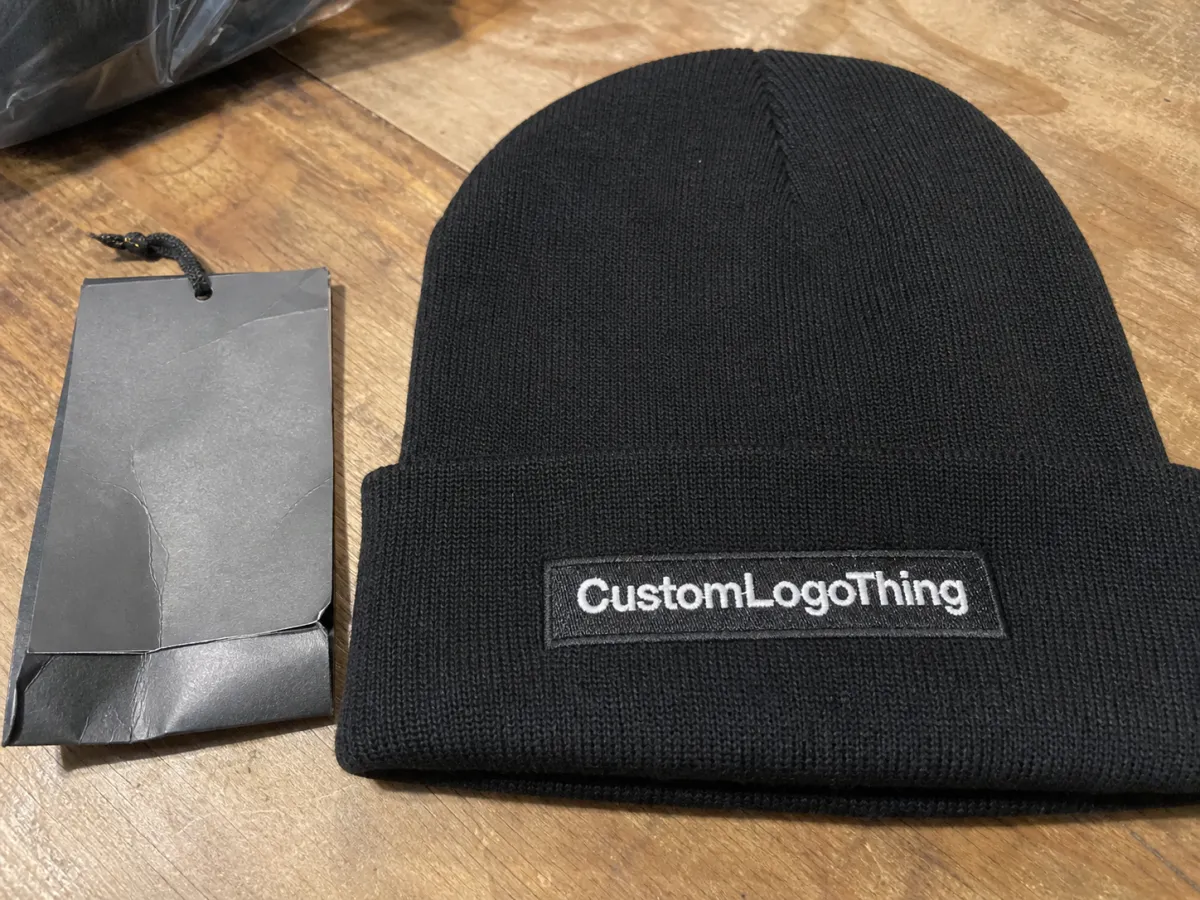
Most beanie problems are approval problems, not design problems. The buyer signs off on a clean proof, production starts, and the finished piece arrives with a cuff that sits too high, a body that stretches out too quickly, or embroidery that pulls the knit in a way nobody noticed on a flat screen. A sample process exists to interrupt that chain before it becomes expensive.
For promotional orders, the pressure is speed and consistency. For retail, the pressure is repeatability and comfort. For merch programs, it is often both, plus the need to keep the final unit price believable. In each case, the sample is the first honest test of yarn, gauge, stitch firmness, finishing, fit, and logo placement.
The sample also gives buyers a view into production constraints. A soft yarn may feel better, but it can distort under heavier embroidery. A tighter knit may hold shape well, but it may feel warmer and less relaxed on the head. Those are not abstract trade-offs; they determine whether a line sells or sits.
“A flat image can hide a lot. The sample is where the actual product starts speaking back.”
That is why sample approval should be treated as a decision point, not a formality. Once a piece is approved, bulk production usually follows that reference closely. If the reference is weak, the final order inherits the same weakness at scale.
The safest approach is simple: ask the sample to prove the things the buyer cannot see in artwork. Does it spring back after being stretched? Is the embroidery dense enough to read cleanly without feeling hard? Does the color shift under daylight, warm LEDs, and camera flash? Those details look small until they show up in a launch review or customer complaint.
How material samples are built and approved
A useful sample workflow begins with a complete brief. The buyer sends artwork, target size, material direction, color references, and any non-negotiable finish details. From there, the sample team chooses the yarn, knits the test piece, runs the embroidery sew-out, applies trim, and prepares the cap for review. It sounds straightforward; in practice, every step can change the final result.
It helps to separate three sample types that buyers sometimes treat as interchangeable. A knit swatch checks yarn, texture, and color. A decorated sample adds the logo and usually reflects the nearest production intent. A pre-production sample is the closest proof of the bulk run, including final structure, placement, and decoration method. Comparing a swatch to a finished cap is like comparing a fabric book to a finished garment. Related, yes. Interchangeable, no.
The approval process should be documented. Email alone is often too vague. A marked-up spec sheet, a photo set from multiple angles, and a side-by-side comparison with a reference beanie or approved technical sheet will catch more issues than a simple yes or no. If fit matters, the sample should be stretched, worn, and checked after it relaxes. That quick test catches cuff drift and crown looseness better than most review meetings.
Digital proofs still matter for logo layout, thread color direction, and placement. They do not prove handfeel, stitch firmness, or whether embroidery backing will feel scratchy on the forehead. That is why the reviewer needs to match the business problem. Marketing may focus on visual balance, sourcing may focus on timing and cost, and merchandising may care about sell-through. One person should own the final call so the sample does not get trapped in a chain of conflicting edits.
- Send the spec, artwork, and target fit.
- Confirm yarn and decoration method.
- Review the first sample in hand.
- Mark changes clearly if revisions are needed.
- Approve only after a final measurement and wear check.
If packaging is part of the request, specify it early. FSC certified kraft paper inserts can be a better fit than glossy extras that add cost without adding value. Corrugated mailers with recycled content are usually enough for transit. Some programs can use biodegradable packaging, but the right choice depends on the shipment, the destination, and the shelf life of the product. For shipping and pack-out standards, ISTA is a useful reference point.
Fabric, yarn, and trim factors that change the outcome
Yarn choice is the first major variable, and it affects more than price. Acrylic is common because it is consistent, color-friendly, and usually easier on budget. Wool offers better natural warmth and a more premium handfeel, though it can raise cost and sometimes feels scratchier unless blended carefully. Cotton blends breathe better, but they usually feel less insulating. Recycled fibers are increasingly common as buyers reduce virgin content, but post-consumer material can shift texture and color depth enough that a fresh sample is worth the time.
Knit gauge matters just as much. A looser knit can feel soft and lightweight, but it may distort faster. A tighter knit tends to hold shape better and gives embroidery a cleaner base. Two beanies can carry the same logo and still feel completely different in hand because the knit density, fiber, and finishing stage are not the same.
Trim choices often hide at the margins until they trigger complaints. Woven labels can add polish, but if they sit against the skin, they can also add scratch risk. Interior care labels are useful for compliance and retail readiness, yet they can affect comfort more than buyers expect. Pom details change silhouette. Cuff construction changes logo visibility. If the embroidery sits on a cuff, the fold thickness becomes part of the design calculation, not a minor detail.
Embroidery has several variables of its own. Stitch count changes coverage and cost. Thread sheen changes how premium the logo reads. Backing changes stiffness. Logo size and placement change how much the knit pulls during sewing. A small logo on a dense knit can feel crisp and restrained. A larger logo on a soft knit may look fine on paper and then feel heavy once it is stitched. That is exactly why the decorated sample matters more than the layout file.
Color deserves extra attention. The same navy can look deep under daylight, dull under retail LEDs, and slightly green on a phone camera. If the buyer wants exact shade control, review the sample under the same lighting the customer will see. That small step prevents a lot of late-stage debate. It also helps to check the yarn and thread together, because separate approvals sometimes miss the way the two materials shift next to each other.
There is also a practical packaging issue that gets overlooked: the box or mailer can make a product feel more or less premium without changing the beanie itself. If the order includes retail presentation, the sample should include the final pack-out assumptions. Corrugated cardboard, kraft paper, recycled materials, and post-consumer waste content are all reasonable choices depending on the channel. The point is to match the packaging to the order, not to decorate the spec sheet.
Process and timeline: from sample request to approval
The cleanest sample process follows a simple sequence: intake, specs, build, review, revision if needed, final approval, then release into bulk production. That sounds tidy. The delay usually enters through the side door: missing logo files, vague color references, or comments that arrive after the factory has already moved to the next step.
Typical timing depends on how custom the order is. A straightforward sample can often be turned in 7 to 12 business days before transit. Add yarn matching, special embroidery density, or a second revision, and the timeline stretches. Rush handling can shave days, but it cannot erase knitting time or shipping physics. If the sample has to cross borders or move through multiple approvers, build a buffer.
Backward planning works better than hopeful planning. Start with the launch date, then subtract sign-off time, shipping days, and at least one review round. If the campaign has a fixed in-store date, that buffer is not optional. It is the difference between a controlled launch and a scramble.
Most delays are avoidable. The biggest culprits are unclear artwork files, no tolerance guidance, and internal teams waiting too long to respond. The knitting is rarely the slowest part. The decision path is. A buyer who knows who signs off, what they are measuring, and how fast feedback will arrive usually moves faster than one who sends the sample into a committee.
For buyers who need a packaging or transit benchmark, FSC is worth checking whenever paper components are included. It is not a styling choice; it is a specification choice. That difference matters in procurement, and it matters again when the product lands at retail.
Cost, pricing, MOQ, and quote variables
Sample cost is driven by setup, not only materials. A one-off knit setup, embroidery digitizing, yarn matching, finishing labor, and shipping all contribute to the bill. Depending on complexity, a decorated sample may land around $25 to $60, while a pre-production sample can run higher if the factory needs a dedicated knit, a tighter color match, or extra finishing. A simple swatch can be cheaper. Special yarns, extra thread colors, or multiple revision rounds can push the cost higher.
MOQ changes the math more than many buyers expect. A 100-piece order has to absorb setup across far fewer units than a 1,000-piece order, so unit cost rises quickly. In a small run, the product may look expensive on paper and still be the right choice for a seasonal drop, a limited campaign, or a market test. The wrong decision is not always the pricier one; sometimes it is the order that looks cheap but does not fit the use case.
Sample fee treatment also varies. Some suppliers credit the fee back once the bulk order is confirmed. Others keep it separate, especially if the process includes revision rounds or special materials. Ask early. It prevents awkward follow-up emails and makes it easier to compare quotes honestly.
Quote variables can move faster than buyers expect. Fiber content, knit gauge, embroidery stitch count, label add-ons, private packaging, and delivery speed all affect the final number. A simple beanie with a small logo is one thing. A double-layer cuff, woven label, custom hangtag, and branded mailer are something else entirely.
| Sample option | What it proves | Typical cost | Typical timing |
|---|---|---|---|
| Knit swatch | Yarn feel, stitch quality, base color | $8-$18 | 3-5 business days |
| Decorated sample | Logo placement, embroidery handfeel, fit | $25-$60 | 7-12 business days |
| Pre-production sample | Final production intent before bulk release | $35-$90+ | 10-15 business days |
For cleaner quoting, send the supplier a brief that includes quantity, size or fit target, color references, logo file and placement, material preference, and destination country or ZIP. That sounds basic, but it removes most of the back-and-forth that slows first pricing. It also helps the vendor price the vitamin embroidered Beanies Material Sample guide request more accurately the first time, which is usually where the savings start.
Common mistakes buyers make with sample requests
The first mistake is approving a sample without testing stretch, wear, and recovery. A beanie can look perfect flat on a table and still feel wrong after ten minutes on head. The cuff may relax too much. The body may bag out. The logo may buckle once the knit moves. A quick wear test catches those issues before production does.
The second mistake is treating one color swatch like universal truth. Yarn lots shift. Lighting shifts. Embroidery thread shifts. Even a phone camera can make the same beanie read warmer or cooler. Buyers who need tighter color control should ask for a tolerance window and define what “close enough” means before the sample is made.
The third mistake is skipping tolerance language altogether. If acceptable variation for size, placement, or shade is never defined, the factory has little to compare against except the artwork. That usually works until the buyer and the supplier have different ideas about what close means. A difference of 2 to 3 mm on embroidery placement may be fine in a promo run, but not always in premium retail.
The fourth mistake is dropping the revision step because the first sample is “close enough.” That is risky. One small correction in the sample phase can save a much larger correction in bulk. In headwear, a minor stitch-density change or cuff tweak can improve comfort and reduce complaints without changing the design intent.
The fifth mistake is confusing a giveaway standard with a retail standard. A promotional beanie does not need the same finish level as a premium merch piece, and pretending they are the same creates budget friction. Set the expectation early. Buyers, decorators, and end users all benefit from that clarity.
There is also a packaging trap. If the order includes gift-ready presentation, do not let the sample ignore the carton. Corrugated cardboard, kraft paper, recycled materials, and post-consumer waste content can all shape the unboxing experience without inflating waste. The spec should fit the channel, not the mood board.
Expert tips and next steps for a cleaner order
Start with a tight reference pack. The best requests usually include a target photo, logo file, Pantone target, desired fit, and a short note about texture or finish. If there is an old sample that nearly worked, send that too. A physical reference often communicates more than a few pages of email.
Ask for two close material options if the project allows it. Side-by-side comparison makes the trade-off clearer. A slightly softer yarn may feel better, while a tighter knit may hold the logo cleaner. Seeing both usually shortens the decision path more than a single swatch can.
Review the sample under the same lighting the customer will use. Then take photos both on head and flat. The on-head image reveals proportion. The flat shot reveals construction. A sample can hide a problem in one view and expose it in the other, which is why both matter.
For higher-value orders, a short wear-and-wash test is worth the time. It does not need to be a lab report. A few cycles of handling, stretching, and cleaning can expose pilling, distortion, or embroidery backing that feels too stiff. If the order is more technical, ASTM-style thinking around wash and abrasion helps shape the internal review, even when the full test package is not required.
Finally, make the decision path visible. Annotate the sample, confirm sign-off, lock the quote, approve the timeline, and record any special packaging notes. That is the point where a sample guide stops being a checklist and starts acting like risk control. Used well, it turns a vague headwear idea into a production order that feels deliberate, measured, and much easier to defend internally.
Frequently asked questions
What should I include in a sample request?
Send the logo file, target color references, quantity, size, fit preference, decoration details, and any must-have material notes. If you want the factory to match a specific handfeel or silhouette, add photos of a reference beanie too. A strong brief usually cuts revision rounds and keeps the sample aligned with the actual order.
How long does a sample usually take?
Timing depends on yarn availability, embroidery complexity, and shipping distance. A simple sample can move quickly, while custom yarn matching or multiple revisions can add days. If the launch date is fixed, build in extra buffer instead of assuming the first pass will be final.
What does a sample cost, and is it credited back?
Sample cost usually includes setup, knitting or finishing labor, embroidery digitizing, and shipping. Some suppliers credit the fee back on a confirmed bulk order, but not all do. Ask before you approve the quote so there are no surprises later.
How many samples should I review before approving an order?
At minimum, review the decorated sample plus any alternate color or material option you are considering. If the order is for retail, compare the sample under different lighting and do a wear test. More than one sample can save money if the first version is close but not final.
What if the sample looks right but feels too stiff or scratchy?
Ask for a yarn or knit adjustment before bulk production begins. Check whether the embroidery backing, stitch density, or label placement is adding stiffness. A visual match is not enough if comfort is part of the buying decision.
Why use a vitamin embroidered beanies material sample guide at all?
Because it turns a subjective approval into a controlled process. It helps buyers compare materials, confirm decoration quality, and spot production risks before they become expensive. That is the point of the sample: not to admire it, but to pressure-test it.

