Choosing Zipper Pouches for Apparel Material and Sizing guide options is mostly about fit, finish, and cost control. A pouch can look right on paper and still wrinkle the garment, bow at the zipper, or waste space in carton. For apparel buyers, the right spec affects protection, retail presentation, packing speed, and how polished the final product looks when it reaches the customer.
Zipper pouches for apparel material and sizing guide: what buyers should notice first
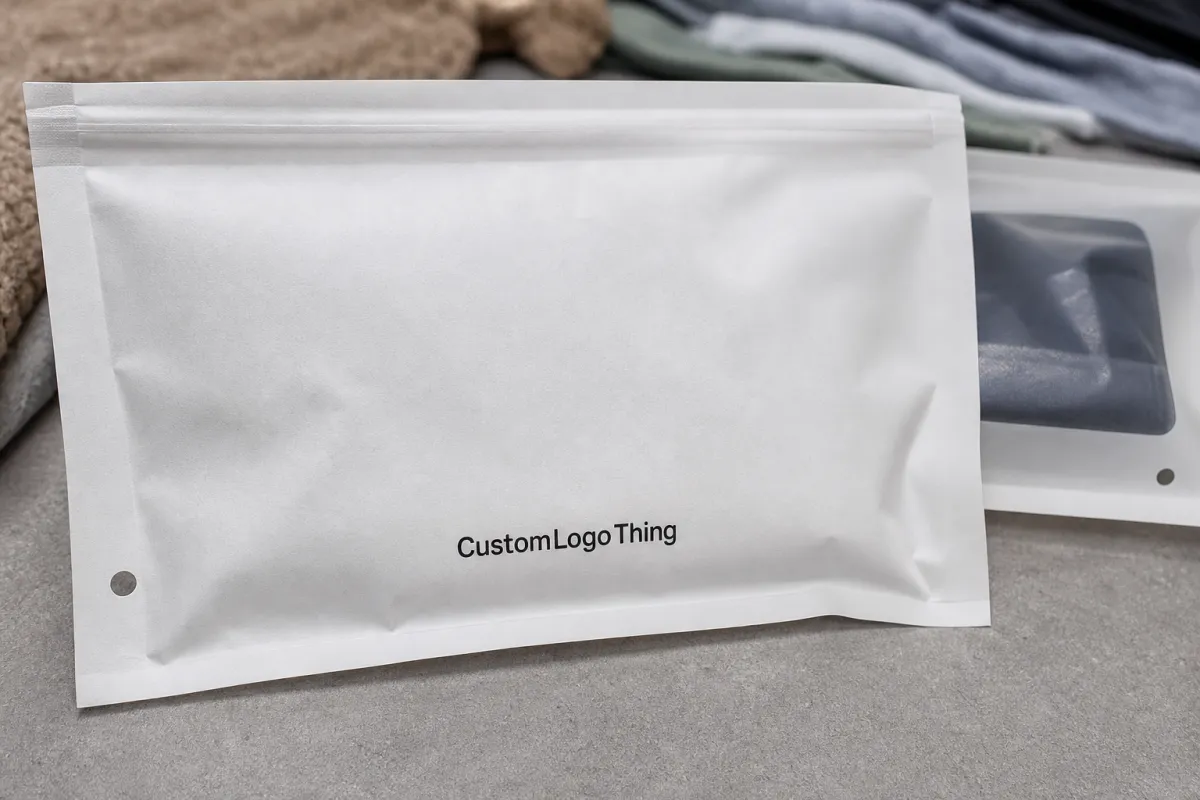
The first decision is whether the pouch fits the folded garment, not whether the label size sounds correct. A tee, woven shirt, hoodie, or multi-piece set compresses differently. If the pouch is too short, the fold presses into the zipper track. If it is too large, the garment shifts and looks loose in a carton or on shelf.
That is why Zipper Pouches for Apparel material and sizing guide decisions work best as one spec. Material affects stiffness, clarity, print quality, and zipper feel. Size affects insertion speed, finished appearance, and freight cube. Most buyers need a pouch that protects the item, supports the brand, and keeps packing labor efficient.
A good apparel pouch should pack quickly, close cleanly, and show the garment clearly. If those three things are true, the spec is usually close.
In practice, the pouch needs to balance four things:
- Presentation so the garment looks organized and retail-ready.
- Protection against dust, scuffs, and light handling abrasion.
- Workflow so staff can fill and close it without fighting the film.
- Cost so the package adds value without raising landed price too much.
Sustainability should be handled the same way. Recycled or paper-based packaging is useful, but apparel pouches are usually chosen first for clarity and seal performance. If the brief includes recycled content, separate the pouch from the outer pack-out. Recycled film, corrugated cartons, kraft paper void fill, and FSC certified paper each solve a different part of the job.
Material choices that protect garments and support retail presentation
Most apparel zipper pouches use polyethylene, polypropylene blends, or laminated films. Clear PE is common because it is flexible, easy to source, and economical. CPP tends to feel stiffer and gives a cleaner hand feel. Laminated structures, often combining PET, OPP, PE, or CPP layers, improve clarity, puncture resistance, and print performance when branding matters.
High-clarity film matters when the package has to support visual inspection, barcode visibility, size marking, or premium presentation. If the garment has embroidery, printed graphics, or a branded hang tag, clear film helps buyers assess the item without opening the pouch. Cloudier film still works, but it can make a premium item look less finished.
Thickness changes performance more than many teams expect. Lighter gauges reduce cost, but they may stretch during insertion and feel soft. Heavier gauges improve body, puncture resistance, and zipper engagement, though they cost more and take up more space in cartons. For many apparel programs, a mid-range film is the best balance.
| Material structure | Best for | Practical strengths | Tradeoffs |
|---|---|---|---|
| Clear PE | Tees, socks, simple ecommerce packs | Flexible, economical, easy to source | Less stiffness; can feel basic |
| CPP | Folded shirts, medium-weight garments | Crisper hand feel, better clarity, cleaner zipper action | Usually costs more than simple PE |
| Laminated film | Retail-ready apparel and branded sets | Higher clarity, stronger print surface, more premium look | Higher unit cost and more setup detail |
| Recycled-content PE | Programs focused on recycled materials | Supports recycled content targets | Clarity and consistency need closer checks |
Optional features should solve a real packing or display issue. Matte film cuts glare under bright retail lighting. Frosted film hides fingerprints and can read as more upscale. Tear notches make opening easier. Hang holes support peg display. Printed size marks, warnings, or barcode windows can speed fulfillment. If humidity is a concern, a moisture-control insert may help, but it is not the same as upgrading film barrier.
For packaging testing, the ISTA test procedures are a useful reference. They help frame how a packed item behaves under vibration, drop, and carton handling, especially when the pouch is only one layer in a larger fulfillment system.
Some teams want a clearer sustainability story. That is where corrugated cardboard, kraft paper, and recycled materials can do real work. The apparel pouch protects the garment, while the shipper carton and void-fill system often carry the environmental message more clearly. If paper sourcing matters, FSC certification guidance is a useful checkpoint.
Sizing rules for folded shirts, sets, and bulk apparel orders
A practical sizing guide starts with the folded stack, not the garment name. Measure the actual pack after folding, because a cotton tee, a heavyweight hoodie, and a woven shirt do not occupy the same space even when the size label is identical. Embellishments matter too. Heat transfers, embroidery, patches, and accessories can add bulk at one edge and change the fit enough to affect zipper closure.
The pouch should leave enough room for a clean insert, but not so much that the product shifts around. Too much space creates trapped air and wrinkles. Too little space forces the garment against the zipper track. The best fit is usually snug, flat-faced, and easy to close without strain.
- Fold the sample exactly as production will fold it and measure width, height, and thickness at the thickest point.
- Add a modest allowance for insertion, not a large oversize cushion.
- Test the zipper closure with a fully packed sample, because paper dimensions can still fail on the line.
- Check the finished look in carton and in hand, since presentation issues often appear after closure.
Typical apparel use cases follow a familiar pattern:
- Single tees usually need a flatter pouch with enough height to keep the fold away from the zipper track.
- Woven shirts often need extra height because collar and cuff bulk changes the top edge.
- Hoodies and fleece need more thickness tolerance, and a heavier film can help the pouch hold its shape.
- Underwear or sock sets work best when the pouch is sized to the bundled stack, not the individual pieces.
- Promo packs or subscription orders should be measured as a complete set, since inserts can add depth.
Width, height, and zipper placement all matter. A pouch that is too narrow can bow at the seams, while one that is too short presses the fold into the zipper track. If a gusset is involved, remember that it changes how the pouch fills and stands, not just the capacity on the spec sheet. That extra structure can help multi-item packs, but it still needs to match the garment stack so the pouch opens cleanly and closes without resistance.
For bulk orders, the fastest validation method is a sample test in the planned production fold. If the packer needs two hands and effort to close it, the pouch is too tight. If the garment rattles after closure, it is too loose. One fit test usually reveals more than a ruler alone and helps prevent rework.
Process and turnaround: from quote to approved production
The workflow is simple, but small details create most delays. A typical project starts with size targets, film choice, print needs, and zipper style. Then comes artwork review, proofing, and, for custom jobs, a sample or pre-production mockup. After approval, production moves into printing, converting, sealing, inspection, and carton packing before shipping.
For many programs, sample lead time lands around 5 to 7 business days, while production often runs 12 to 15 business days after proof approval. That is a practical benchmark, not a promise. A simple clear pouch can move faster than a fully printed laminated version, and shipping method changes the calendar as much as the factory schedule does. Air freight is faster and more expensive; ocean freight or consolidated ground transit adds time but can lower landed cost.
The fastest jobs are the ones where the buyer locks dimensions early, sends final artwork without revisions, and confirms whether the pouch is stock-style or fully custom before sampling starts. The slowest jobs usually involve repeated changes to size, zipper style, print coverage, or compliance text. A missing warning line or a late dimension change can push the order back a full production cycle.
Ask for a timeline that separates the real milestones:
- Sample lead time so you know when the first physical pouch will arrive.
- Production lead time so you can plan inventory and launch dates.
- Transit time so freight does not hide inside a vague estimate.
- Rush feasibility so you know whether acceleration is realistic.
Inspection should be part of the conversation, not an afterthought. Confirm how the supplier checks dimensions, zipper function, print registration, seal strength, and carton count. If the order is tied to a larger packaging system, ask how the pouch ships inside corrugated cardboard master cartons and whether kraft paper or paper-based inserts are part of the pack-out. That affects carton count, pallet planning, and damage control.
One clean proof can save more time than three rushed revisions. In apparel packaging, a clear dimension check and a clear print check usually prevent the kind of rework that burns both budget and patience.
Cost, MOQ, and pricing factors that change your quote
Quote differences usually come down to five levers: material, thickness, print coverage, zipper style, and total order volume. The more custom the pouch, the more setup cost matters. A plain clear pouch in a stock size can be economical, while a fully printed laminated structure with specialty finish and custom dimensions will cost more because the line needs more preparation and tighter control.
MOQ changes the picture as well. Smaller runs almost always cost more per unit because design, setup, and material waste are spread across fewer pieces. For a custom apparel pouch, many buyers should expect a higher unit cost at 1,000 pieces than at 5,000 or 10,000, even if the pouch looks nearly identical. That does not make small runs a bad choice. It just means the math is honest.
| Option | Typical use | Indicative unit cost | What usually changes the quote |
|---|---|---|---|
| Stock-style clear zipper pouch | Basic apparel fulfillment | $0.10-$0.18 | Size, gauge, and carton quantity |
| Custom printed PE pouch | Branded tees, retail packs | $0.18-$0.32 | Print coverage, zipper style, artwork setup |
| Premium laminated pouch | Fashion sets, display-ready packaging | $0.28-$0.55 | Film structure, finish, proofing, and volume |
Those are working ranges, not fixed quotes. Size can move price more than many teams expect, because film area, seal length, and carton packing efficiency all change with the dimensions. A slightly larger pouch uses more resin, takes more freight cube, and can reduce carton count per pallet. That is how a unit price can look fine while landed cost rises.
Compare quotes carefully and check what is included. Some suppliers bundle artwork prep, sampling, and overage allowances. Others separate those charges. Freight can change the budget sharply, especially if you are comparing air and ocean or domestic and import fulfillment. Ask whether the quoted price covers samples, proof revisions, outer cartons, and pallet packing. A useful quote should not hide half the job in footnotes.
If recycled materials are part of the brief, ask how the supplier handles post-consumer waste content and whether recycled film changes clarity, zipper feel, or seal performance. That is a real tradeoff. A sustainability target helps only if the pouch still runs well on the packing line and protects the garment correctly.
Common mistakes and next steps for a cleaner packaging spec
The most common mistake is choosing the pouch from the garment label alone. A size medium tee and a size medium hoodie do not belong in the same pouch just because the tag matches. Folding method, trim volume, and bundle depth matter more than the size printed inside the collar. Another frequent miss is over-specifying the pouch. Extra film, extra size, and extra finish can raise cost and freight without adding real packaging value.
Under-specifying creates the opposite problem. Wrinkling shows up. Zipper strain increases. The packer slows down. Customers open a pouch that looks pinched or overstuffed, and the garment no longer feels premium. Those are small failures, but in apparel, they are the ones buyers notice first.
A simple checklist keeps the process controlled:
- Measure a folded sample in the exact production fold.
- Choose the film structure based on clarity, stiffness, and budget.
- Confirm print needs such as logo placement, size marks, and warnings.
- Request a sample or proof before committing to volume.
- Compare landed cost across pouch, freight, carton, and packing labor.
If the pouch sits inside a broader shipping system, make sure the outer packaging works too. Corrugated cardboard cartons should match the pack count, kraft paper fillers should not crush the folded garment, and any paper-based components should align with FSC certified sourcing goals. That wider view is often where packaging decisions become easier to defend internally.
The cleanest spec usually starts with one tested folded sample and one honest cost comparison. Not the cheapest pouch, and not the heaviest one either. The right choice packs cleanly, presents well, and survives the route from production to opening.
FAQ
What material is best for zipper pouches for apparel packaging?
Clear PE works well for simple fulfillment and lower cost. CPP and laminated films are stronger choices when the pouch needs more stiffness, better clarity, or a more premium retail finish.
How do I size a zipper pouch for folded shirts or sets?
Measure the folded garment stack, including the thickest point, rather than using the flat garment size. Leave enough clearance for easy insertion, but avoid excess empty space that lets the product shift.
Do zipper pouches help reduce damage during apparel shipping?
Yes. They help keep garments folded, grouped, and protected from scuffs, dust, and light handling abrasion. They are not a substitute for outer shipping protection, so they work best inside mailers or cartons.
What MOQ should I expect for custom apparel zipper pouches?
MOQ depends on size, film structure, and print complexity, but custom runs usually need more volume than stock items. Smaller quantities are possible, though the unit cost is typically higher because setup and production costs are spread over fewer pieces.
How long does production usually take after approval?
Lead time depends on sampling, artwork approval, and whether the pouch is stock or fully custom. A common range is about 5 to 7 business days for samples and 12 to 15 business days for production after proof approval.

