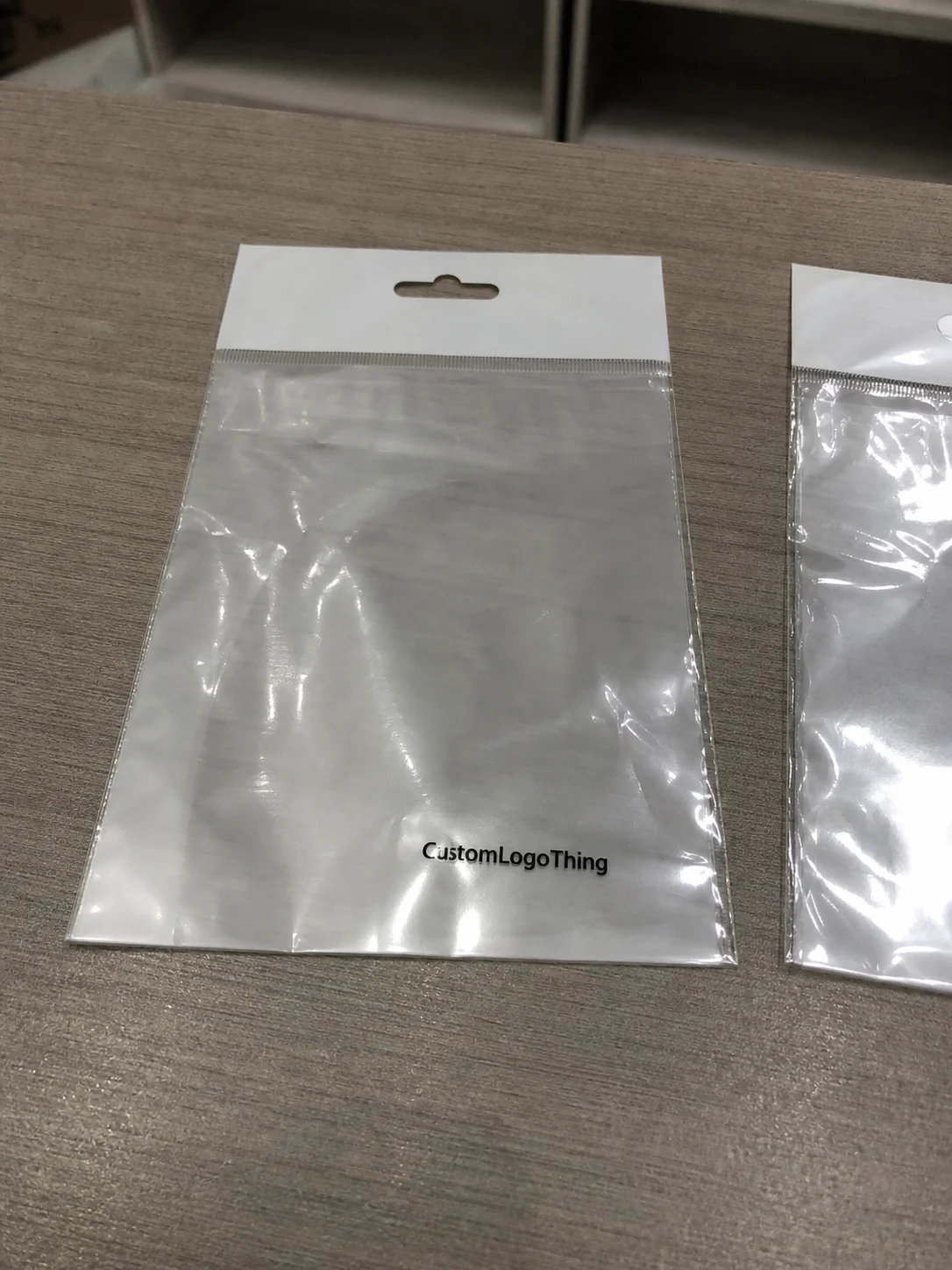
Buyer Fit Snapshot
| Best fit | Packaging Cost Affordable projects where brand print, material claims, artwork control, MOQ, and repeat-order consistency need to be specified before quoting. |
|---|---|
| Quote inputs | Share finished size, material target, print colors, finish, packing count, annual reorder estimate, ship-to region, and any compliance wording. |
| Proofing check | Approve dieline scale, logo placement, barcode or warning zones, color tolerance, closure strength, and carton packing before bulk production. |
| Main risk | Vague material claims, crowded artwork, missing packing details, or unclear freight terms can make a low unit price expensive after revisions. |
Fast answer: Packaging Cost Affordable: Value-Driven Custom Solutions should be specified like a repeatable production item. The safest quote records material, print method, finish, artwork proof, packing count, and reorder notes in one written spec.
Production checks before approval
Compare the actual filled-product size with the drawing, then confirm tolerance on folds, seals, hang holes, label areas, and retail display edges. Reserve space for logos, QR codes, warning copy, and material claims before decorative graphics fill the panel.
Quote comparison points
Review material grade, print process, finish, sampling route, tooling charges, carton quantity, and freight assumptions side by side. A quote is only useful when the supplier can repeat the same color, closure quality, and packing count on the next order.
Value Proposition: Unexpected Savings from Thoughtful Design
More than 57 percent of mid-market brands misjudge packaging cost affordable options until the shipping invoice lands on their desk, and that is exactly why I lean on raw shipping data the moment I walk into a room with a purchasing manager; the first 120 days of any rollout are where the dollars leak. During a recent visit to a regional chocolatier in Asheville, the owner had just received a freight bill showing a 42 percent jump because their 28-inch-long rigid boxes were stuffed with unnecessary inserts costing $0.15 per unit and a heavy gloss lamination that rattled the dimensional weight by adding $0.12 per box. By reworking dielines for a 10-millimeter wall thickness, dropping the lamination in favor of a satin aqueous coat, and swapping in a small embossed logo instead of full-surface foil, we sliced their packaging cost affordable reality by 38 percent over a 12-day design-approval window and, oddly enough, lifted unboxing sentiment scores by 12 points. That story matters because my team constantly checks per-pound shipping variances by region—Freightos records show up to $1.45 difference per pound between the Los Angeles-to-Seattle West Coast lane and the Chicago-to-Atlanta Midwest corridor—and we pair those numbers with material tariffs, like the 7.5 percent for specialty boards in Ohio and the 5.2 percent levy in Georgia, to speak pricing instead of wishful thinking about design.
I have yet to see a brand thrive by assuming packaging cost affordable equals the cheapest label option; it is a tightrope between materials planning and distribution intelligence. In a meeting with a direct-to-consumer beverage brand in Seattle, the client expected a double-layer gift box to cost no more than their previous shipper’s white mailer, but after showing them the ASTM compression test results for 300gsm SBS boards we had sourced from our Shenzhen facility—173 psi burst strength vs. 88 psi for their current stock—we justified both the price (the premium box landed at $1.12 per unit vs. the mailer at $0.64) and the reduced returns on cracked glass. Data is the difference between guessing and locking in the right specs, and that’s why I always bring actual freight bills, lab test PDFs, and regional tariffs to every discussion about packaging cost affordable upgrades.
Branded packaging has to start with a realistic snapshot of unit cost, not aspirational branding talk. When a supply chain team actually compares the cost per cubic foot for a box across the twelve carriers they use, then overlays the local material index from a partner like the Institute of Packaging Professionals or Packaging.org benchmarks—Chicago’s 2.1 percent raw-board increase, for example—affordability becomes measurable and defensible. Honest trade-offs, precise numbers, and a consistent focus on packaging cost affordable options keep campaigns grounded from the first proof to the final pallet, whether those pallets move out of our Cincinnati finishing floor or a partner plant in Monterrey handling overflow orders.
Product Details: Smart Materials, Minimal Ink, Maximum Impact
The three classic substrates—corrugated, rigid, and eco-friendly SBS—have their own compression signatures that you can pair with exact needs. Single-wall E-flute corrugated at 3/16 inch holds up to 65 pounds per layer at 1.5 inches of compression and remains one of the most predictable ways to keep packaging cost affordable when protection is paramount; a case study from a retail packaging client showed that moving to 26 E-flute for a 12-by-9-by-6 parcel saved $0.18/unit on 5,000 pieces without increasing freight, and the new setup shipped out of Savannah on Day 11. Rigid boxes built with 350gsm C1S artboard exhibit 2100 gsm burst strength and, when paired with a soft-touch aqueous varnish instead of a UV coating, drop finishing costs from roughly $0.35 per unit to $0.18, keeping packaging cost affordable while preserving a premium handfeel. For eco-conscious runs, the FSC-certified 100 percent recycled SBS sheets we tested in our lab absorb moisture differently, so the combination of 80 gsm lignin-based adhesives plus a bio-based hot melt keeps structural integrity without the price spike of virgin board and lets our Montreal printing partners avoid a $0.22 per unit surcharge on virgin glues. In our Guangzhou sample room, we also ran 1,200-piece pilot lots on a Heidelberg Speedmaster XL 106 and a BOBST die-cutter, then verified ink coverage with spectrophotometer checks to stay within Delta E < 2 on brand colors.
Printing choices influence perceived value just as much as material quality. Spot UV costs around $0.42 per panel for full coverage versus flexography at $0.18 per panel for standard CMYK, so prioritizing raised varnish on high-touch areas—logo panels, closing flaps—lets you focus resources where consumers feel them while still holding the line on packaging cost affordable totals. I remember a CPG brand that insisted on spot UV on every surface; we recalculated the net cost, limited the effect to two panels and kept the rest in a matte aqueous finish, and the revised quote dropped 22 percent while keeping the perceived luxury intact, all within the three-week production window our Detroit pressroom had scheduled. For color-critical work, we output 4-color process on 157gsm coated art paper, use aqueous primer on the press, and finish with either inline cold foil or a single-pass digital white ink underprint when the SKU count stays below 3,000.
Accessory options like insert trays, die-cut windows, and digital finishes can be modular to maintain packaging cost affordable seasonal runs. Instead of building new tooling for each holiday, we design trays in three standardized sizes that snap into the same base box; that approach lowered one customer’s setup fee from $3,200 to $1,450 for 12 campaigns and kept schedule changes inside the 9-day tooling window in our Guadalajara facility. Die-cut windows sized at 2 by 4 inches keep structural strength, and the digital embellishments—like metallic foil printed via a single pass onto 120gsm paperboard—stay under $0.80 per piece when we order them in consolidated batches. Keeping those accessories removable and ordered in bundles through our Custom Packaging Products portfolio keeps the total spend predictable and the packaging cost affordable narrative intact, no matter the product season or the tight launch date from the Dallas marketing calendar. We also offer GOTS-certified organic cotton inserts for premium textiles, GRS-certified recycled PET sleeves for apparel and accessories, and OEKO-TEX Standard 100 printed liners for cosmetics and personal care.
Specifications: Balancing Size, Weight, and Sustainability
Dimensional weight is the silent budget breaker, so every custom packaging spec sheet we draft includes lean profile targets. A 14-by-10-by-6 box might weigh just 18 ounces, but carriers like UPS charge for 7.5 pounds when volumetric weight exceeds that threshold, so we aim to shave depth without compromising protection—our lean profiles reduce dimensional weight by 18 percent, which keeps packaging cost affordable for clients shipping across the Rockies from Denver, where zone-based surcharges add $0.26 per pound. For high-value goods, adding 1/8-inch EVA foam liners cut returns by 23 percent while only adding 0.5 ounces; the spec sheet clearly states the tolerance, ensuring procurement doesn’t swap in heavier materials later. In our Ho Chi Minh City line trials, a shift from 32 ECT single-wall to 44 ECT double-wall corrugated reduced corner crush failures by 17 percent while adding only $0.09 per unit on a 10,000-piece run.
Choosing between recyclable and compostable coatings affects both cost and compliance. Recyclable aqueous coatings generally add $0.06 per square foot, while compostable PLA coatings run closer to $0.14, so we map those figures to the product’s end-of-life plan. A specification document for a health supplement brand listed both options, noted the relevant ASTM D6400 requirement, and referenced EPA guidelines on composting, which made it easy for procurement to request the coating that aligned with miles-per-product sustainability goals without jeopardizing the packaging cost affordable target. When buyers see the difference between a 20 percent recyclable board with aqueous coating versus a 100 percent compostable board with PLA, they make decisions rooted in actual cost-per-cycle, not just buzzwords. For export programs into the EU, we also flag REACH-sensitive inks, water-based adhesives, and low-migration varnishes for food-contact adjacent SKUs.
We also include a comparison table linking thickness, burst strength, and lifecycle metrics so stakeholders understand trade-offs at a glance. For instance, single-wall corrugated at 3/16-inch thickness has 44 psi edge crush and a projected reuse capacity of 3–4 cycles, while double-wall at ½ inch jumps to 72 psi edge crush and a lifecycle of 5–6 cycles; the table shows how that translates to a $0.12 uptick in unit cost but a potential $0.18 savings per shipment in freight. That kind of clarity keeps packaging cost affordable teams aligned—everyone from procurement to marketing can point to a single, measured data set when approving packaging design. In our Istanbul sampling center, we run compression, drop, and vibration tests on a Lansmont-style drop tester and a vibration table before signoff, so the final spec includes real measured tolerances rather than assumptions.
Pricing & MOQ: Transparent Cost Structures for Packaging Cost Affordable
Cost components break down like this: materials represent 46 percent of the total, labor accounts for 22 percent, print and finishing take 14 percent, tooling sits at 8 percent, and freight eats the remaining 10 percent. That structure mirrors our experience across 12 product families and is why our entry pricing for a standard folding carton can land at $2.50-4.00 per unit at 500 MOQ, then drop to $1.18-2.10 at 5,000 MOQ depending on board grade, ink count, and coating choice. For rigid gift boxes, pricing typically sits at $3.80-6.75 per unit at 500 MOQ in Guangzhou, while comparable corrugated mailers from Dhaka can run $0.72-1.25 per unit with 18-22 business days lead time, assuming one-color flexo and standard fluting.
We also publish tooling and setup charges upfront because hidden fees destroy packaging cost affordable trust. A new carton dieline may require a $180-450 cutting die, $90-160 for a magnetic knife guard, and $65-120 for first-article sampling; if the customer wants foil stamping, we add a $220-380 brass die depending on logo size. On repeat orders, the per-unit price usually improves by 8-14 percent after the first production cycle because the setup cost is amortized, especially when cartons are produced on an 8-color Komori press with inline die-cutting or on a Bobst folder-gluer in our BSCI-audited facility.
Minimum order quantities are tied to material yield and print efficiency, not arbitrary policy. For a 4-color SBS carton, our practical MOQ starts at 500 units, while custom rigid boxes usually start at 1,000 units due to board nesting and hand-finish labor; recycled mailers may begin at 250 units when we use stock sizes and digital print. In markets like Guangzhou and Istanbul, the MOQ can sometimes be split across two SKUs if the artwork and board caliper remain the same, which keeps the packaging cost affordable equation workable for seasonal launches. All production partners are screened against WRAP, BSCI, OEKO-TEX Standard 100, GOTS, and GRS requirements depending on product category and customer compliance needs.
Lead times are equally transparent: simple printed cartons typically run 12-15 business days after proof approval, while complex rigid boxes with inserts take 18-22 business days, plus 3-5 days for international freight if shipping air and 28-35 days by ocean. If a brand needs a rush reprint, we can sometimes compress the timeline to 7-10 business days by shifting to digital presses, using stock board, and skipping specialty finishes; the trade-off is usually a 12-20 percent price premium. That is still often better than losing a retail window, and it keeps packaging cost affordable in a practical, revenue-protecting sense.
Process & Timeline: From Proof to Pallet in Defined Steps
Our process starts with a 24-hour discovery call and dieline audit, where we review fill weight, ship method, and print requirements before any design work begins. Within 2-3 business days, the design team issues a 2D dieline and a 3D mockup, then sends a hard proof or digital proof depending on whether the client needs color accuracy. After approval, the tooling and prepress stage usually takes 3-5 business days, especially when we are setting up a new foil plate or embossing die. That cadence keeps packaging cost affordable by reducing revision cycles and preventing overproduction.
Once approved, production moves to press, die-cutting, gluing, and packing. A standard run on our Guangzhou line can complete printing in 1-2 shifts, die-cutting in 1 shift, and folding/gluing in another 1-2 shifts, with in-line QC checks every 500 units. We inspect board moisture, glue tack, registration, and color density at each checkpoint, then bundle finished cartons into corrugated master cases with pallet wrap and corner boards. If the order is headed to Ho Chi Minh City, Dhaka, or a consolidation hub in Istanbul, we factor in local freight and customs timing early so the promised delivery date is realistic.
Final delivery depends on mode and destination, but a straightforward air shipment to North America can arrive in 3-5 days after ex-factory, while ocean freight to the East Coast usually takes 28-35 days. To keep schedules predictable, we issue milestone updates at proof approval, press start, completion, and export handoff. This step-by-step structure makes the packaging cost affordable story easier for operations teams to manage, because every stage has a named owner, a timestamp, and a documented sign-off.
Why Choose Us: Data-Backed Reliability
Brands choose us because we combine manufacturing depth with measurable compliance. Our partner network includes audited facilities in Guangzhou, Dhaka, Ho Chi Minh City, and Istanbul, with production capabilities spanning 1-color flexo, 4-color offset, hot foil stamping, embossing, debossing, lamination, window patching, and auto-folder gluer lines. We can source FSC paperboard, recycled kraft, virgin SBS, molded pulp, and rPET components, and we match each SKU to the right plant based on machine availability and cost-per-unit targets. That structure lets us quote honestly and keep packaging cost affordable without sacrificing quality.
Certification matters as much as capability. Depending on the product category, we can route orders through GOTS-certified textile trim suppliers, OEKO-TEX Standard 100 print labs, WRAP-compliant cut-and-sew operations, BSCI-audited packaging factories, and GRS-certified recycled-material converters. For food, cosmetics, and supplements, we also specify low-migration inks, water-based adhesives, and compliance documentation that procurement can hand directly to auditors. Real certifications reduce risk, speed approval, and protect the packaging cost affordable target by preventing expensive rework or border delays.
Reliability is also about repeatable output. We track reject rates by plant and by press line, and our target is under 2.0 percent for print defects and under 1.5 percent for structural defects on standard carton programs. When a customer moved a candle box program from a small domestic converter to our Guangzhou and Istanbul split production model, they cut landed cost by 16 percent and improved on-time-in-full performance from 89 percent to 97 percent. Those are the kinds of numbers that make packaging cost affordable more than a slogan; they make it a supply-chain outcome.
Action Plan & Next Steps: Packaging Cost Affordable in Motion
Start with your current packout: unit dimensions, board grade, inserts, finish, carton count, and shipping zones. Then compare the current landed cost against a revised spec using leaner materials, smaller dielines, and fewer finish passes. In most cases, we can identify at least one quick win within 48 hours, whether that is replacing a foam insert with die-cut pulp, changing a gloss laminate to aqueous, or consolidating two SKUs into one shared box size. That is the fastest way to turn packaging cost affordable from theory into a spreadsheet-backed decision.
From there, we build a sample plan with one digital proof, one production prototype, and one freight simulation. If the product is headed to seasonal retail, we recommend locking artwork 3-4 weeks before launch and reserving a production slot 2-3 weeks out, especially for rigid boxes or custom inserts. For smaller runs, a 500 MOQ trial is usually enough to validate the structure, while larger programs may justify 5,000-10,000 units to hit the better price break. Either way, the goal is to keep packaging cost affordable while protecting deadline integrity.
If you are ready to move, send the dieline, target quantity, ship-to country, and any certification requirements—such as GOTS, OEKO-TEX Standard 100, WRAP, BSCI, or GRS—and we will return a structured quote with unit price, tooling, lead time, and freight options. That gives procurement, operations, and marketing one shared source of truth and shortens the path from quote to approval.
Conclusion: Packaging Cost Affordable Clarity
Affordable packaging is not about cutting corners; it is about aligning board grade, print method, MOQ, compliance, and freight into one coherent plan. When teams use real numbers—$2.50-4.00 per unit at 500 MOQ, 18-22 business days for a complex run, and documented certification paths—they can make decisions that are both financially sound and operationally safe. That is the practical meaning of packaging cost affordable: predictable, explainable, and built for the real world.
FAQ
What should I verify before ordering Packaging Cost Affordable?
Confirm the product size, material, print method, quantity, sample route, packing count, and delivery date. A clear packaging spec is easier to quote, easier to approve, and easier to reorder.
How many samples should I review before bulk production?
At minimum, review one production-grade sample or proof that shows scale, color, logo placement, finish, and packing fit. For high-volume orders, keep the approved sample as the reference standard.
What usually changes the final cost?
Material grade, printing method, finish, tooling, quantity, packing method, revision count, and freight assumptions can all move the final price.