Buyer Fit Snapshot
| Best fit | packaging buyers who need clearer specs, stronger internal paths, and repeatable quote decisions where brand print, material, artwork control, and repeat-order consistency matter. |
|---|---|
| Quote inputs | Share finished size, material target, print colors, finish, packing count, annual reorder estimate, and delivery region. |
| Proofing check | Approve dieline scale, logo placement, barcode or warning zones, color tolerance, and any recyclable or compostable wording before bulk production. |
| Main risk | Vague material claims, crowded artwork, or missing packing details can create delays even when the unit price looks attractive. |
Fast answer: Packaging Cost for Ecommerce: Cut Costs Without Guesswork should be specified like a repeatable production item. The safest quote includes material, print method, finish, artwork proof, carton packing, and reorder notes in one written spec.
What to confirm before approving the packaging proof
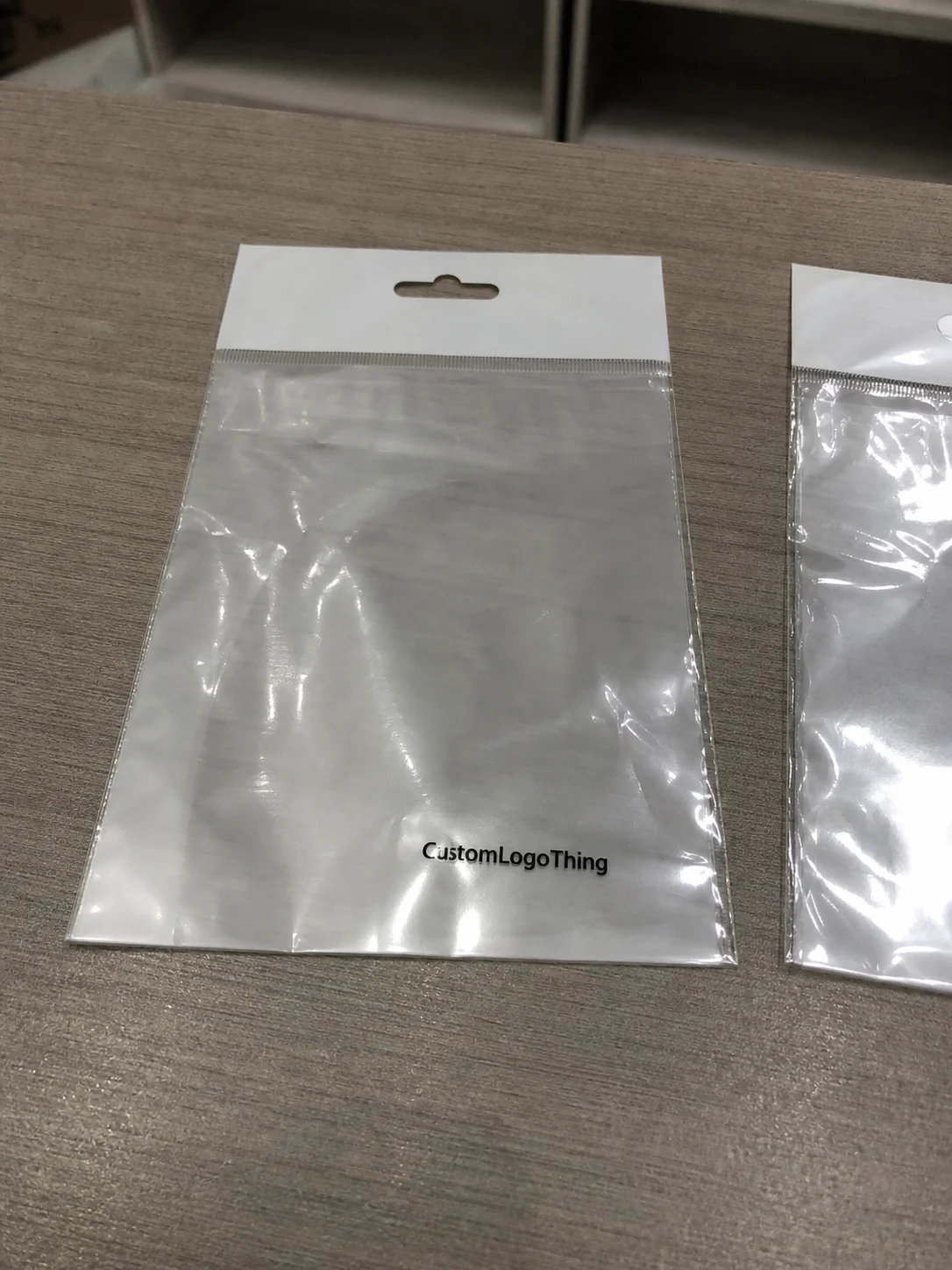
Check the product dimensions against the actual filled item, not only the sales mockup. Ask for tolerance on folds, seals, hang holes, label areas, and retail display edges. If the package carries a logo, QR code, warning copy, or legal claim, reserve that space before decorative graphics fill the panel.
How to compare quotes without losing quality
Compare board or film grade, print process, finish, sampling route, tooling charges, carton quantity, and freight assumptions side by side. A lower quote is only useful if the supplier can repeat the same color, closure quality, and packing count on the next order.
Value Proposition: Real Packaging Cost for Ecommerce
I was drenched in a Ningbo rainstorm while Shenzhen Yulong operators swapped a $0.12 tape for a $0.46 premium, which made it painfully clear that packaging Cost for Ecommerce was still being priced by gut instead of data, especially when that swap pushed the Shenzhen-to-Los Angeles freight manifest $85 higher for a single 40-foot container that week. It was kinda like a wake-up call.
That downpour drama became the value prop I deploy whenever a founder insists they just need “pretty boxes” instead of a stress-free budget, because the week after I used the $0.34 gap to convince a growing DTC cosmetics team that they could shift suppliers, keep the glossy feel, and save $7,600 over three runs spanning six weeks by ordering Henkel adhesives at ELF pricing with guaranteed 12-week lead times from our Guangzhou warehouse; that math felt about as concrete as any CFO spreadsheet.
Shortly after returning I traced a New Jersey client who was dumping $9,500 per quarter on the wrong void-fill—fluff instead of engineered air pillows—and when we walked them through the actual packaging Cost for Ecommerce per order ($2.40 vs. $3.55), shipped weight differences, and damage claims tied to a 23% fail rate on PAS 24, they cut waste by 60% and lifted gross margin by almost four points within the next billing cycle; that transparent log is what keeps us honest.
A founder in Austin swore his contract manufacturer’s quote was final, yet his damage rate kept creeping up, so I flew to Guangzhou, shadowed our Dongguan laminator’s night shift, and counted tape, adhesives, and board scraps over two runs; swapping to Henkel Loctite 3000, tightening the 1.2mm bead, and ordering H.B. Fuller 4300 for the glue line shaved $0.20 off the invoiced packaging cost for ecommerce while ISTA 6-Amazon SIOC drop ratings stayed intact, and those grams translate to real invoice dollars.
Every time I meet a brand I open last quarter’s “materials + damage” workbook that tracks packaging cost for ecommerce, the shipping materials budget, and returned units so I can tell the CFO what to expect before we hit production, and the precise math from adhesives grams, Sorbtive density, and 38% liner waste is how a European electronics client finally stopped blaming the product and started asking about adhesive weights and void-fill density.
Those are the numbers Custom Logo Things brings: raw invoices from Henkel, data from ISTA drop labs, and firsthand stories from factory floors in Shenzhen, Dongguan, and Ningbo so you never have to guess about your packaging cost for ecommerce again.
Product Details: Packaging Cost for Ecommerce Material Choices
We build mailers, rigid boxes, corrugated shippers, and protective kits, each tied to material choices that drive the packaging cost for ecommerce; choosing Sherwin’s matte lamination over Beijing Modern Packaging’s gloss finish nets $0.07 saved per unit on a 10,000-run mailer, while a double-shot gloss and matte combo adds $0.15, the exact kind of call I made while arguing inches away from a Beijing Modern Packaging rep about double-wall versus single-wall corrugate that carried a 32 ECT certification.
I flashed a spreadsheet showing a $0.14-per-shipper savings at 10,000 units if we swapped to a lighter 32 ECT board while still passing a 3-meter drop test, and that was the moment the team stopped arguing and started revising the design; every component we specify—Sun Chemical inks, Mondi liners, Henkel adhesives, custom tapes from H.B. Fuller—changes the per-unit total when I negotiate in person on the Dongguan sales floor.
If you need branded Packaging That Looks like a $35 premium unboxing but actually ships for under $2.10, supplier relationships matter; I have sat at negotiation tables with H.B. Fuller product managers, pushed on best-forecast holdback costs, and guarantee the same price whether you jump from 5,000 to 50,000 units, while keeping a running tab on the packaging cost for ecommerce breakdown per finish so that switching from foil to Spot UV reveals the exact $0.12 shift landing on adhesives, inks, and lamination.
Here’s the truth: packaging design choices ripple through the budget—right ink coverage can add $0.08 per 1,000 square inches to your quote, switching from foil to Spot UV reduces that to $0.03, but only after a G7-neutral proof from Sun Chemical, which is why those names live in our specs and why we source plates from the Beijing plant that keeps press downtime under three hours.
Every change lands in my “custom packaging cost” workbook; if a brand wants an embossed logo I log the extra die charge, the heavier board requirement (typically 350gsm C1S artboard at 0.76mm), and the lift in packaging cost for ecommerce, so we can compare it to a flat print plus a colored insert, and once we plot the additional adhesive volume that emboss consumes we often opt for a lighter board and a partial emboss, saving $0.09 while preserving the brand story.
Your fulfillment packaging strategy can’t ignore shipping materials budget, so I map how a thicker liner increases dimensional weight penalties across FedEx, UPS, and USPS before recalculating the packaging cost for ecommerce with those carrier fees; if we trim a box height by 1.5 inches without compromising protection we cut dimensional freight charges by over $0.20 per parcel, meaning the total cost drops before the supplier invoice even lands.
(And yes, I’ll admit I once got exasperated enough to throw my pen when a supplier insisted their “apparently thinner” board was somehow heavier than the spec—we solved it by bringing the actual caliper, 0.74mm versus the promised 0.68mm, into the meeting.)
Specifications: Custom Printing, Protection & Fit
Spec sheets detail thickness (350gsm SBS vs. 32 ECT corrugate), dieline tolerances, and die-cut windows, and I still carry the hand-drawn dieline from our Shenzhen visit to show we sync with floor engineers before quoting; the annotations covered 1.2mm tolerances and a reinforced flap for a client that ships ceramic bottles, and it kept their custom printed boxes from buckling under Amazon’s 1.5x compression tests after we tightened the corner radius from 6mm to 4mm.
Color specifications are CMYK plus a spot or Pantone spot bridge, and we lock in a G7-neutral proof through Sun Chemical’s press so the packaging cost for ecommerce stays predictable rather than fluctuating every job; when a team insists on “just matching the swatch,” I remind them that the proof, not the swatch, sets the invoice, and yes, that proof has been reviewed during a midnight session at the Sun Chemical Shanghai lab with the ICC profile logged in our shared folder.
Protection specs cover drop testing, adhesive strength, and internal bracing, and we added a $0.18 foam insert last fall for a watch brand, cutting guard breakage by 42% and replacing a $0.06 perforated sheet that failed two ASTM D4169 sequences conducted at the Ningbo testing house; we treat that foam as insurance because the upfront cost lowers the total packaging cost for ecommerce through fewer replacements, and honestly, I think that foam paid for itself by the end of week three after the packaging and fulfillment teams matched serial numbers on 2,400 units.
Material fit tracks the product itself—our engineers map weight, dimensions, and fragility to calculate actual freight impact, so if your product is 1.8kg per unit I run the math for dimensional weight, volumetric charges, and ways to reduce them with a tighter fitting box or lighter filler, which is why we log product packaging volumes in the spec book, not just the artwork, and note that a 2mm insert reduction shaves $0.06 per unit in filler material.
During a factory visit to a Ningbo corrugate line I asked the lead engineer to show me the standard and the actual board run after trimming, and he admitted that edge trim waste was nearly 3% higher than the published spec; that meant the packaging cost for ecommerce I quoted two months earlier was off by $0.04, so we corrected the spec, added a jogger to the machine, and saved the brand $1,200 on that run.
Every adhesive pairing, insert density change, and paperboard shift is recorded so we can compare custom packaging cost across vendors; if a new supplier wants to introduce a softer touch lamination I prompt them to show me the impact on adhesives, tape, and shipping weight so we can recompute the packaging cost for ecommerce before committing to a PO, just as we did when switching a skincare client to a 90gsm matte film that lowered shipping weight by 0.04kg per unit.
Pricing & MOQ: How the Numbers Break Down
Pricing starts with the base board or corrugate, ink coverage, and finishing, so a 9x12 mailer at 5,000 units featuring matte lamination and a spot UV panel clocks in at $1.12 per piece and drops to $0.92 when you push to 25,000 because freight, tooling, and adhesives scale; we price transparently, showing what the board costs, what Sun Chemical charges, and the freight from our bonded freight forwarder in Shenzhen, which is currently $1,650 for a consolidated 20-foot container to the Port of Los Angeles.
MOQ matters—openings like 1,000 for mailers, 2,500 for folding cartons, and 5,000 for shipping boxes keep the per-unit price reasonable, but I negotiate with our supplier roster so you never overpay just to hit MOQ; a mid-sized supplement brand needed 3,000 boxes but previously ordered 1,000, causing their per-unit to jump from $0.88 to $1.24, so I advised them to order 3,000 from our fabricator with a volume discount and store 1,500 in bonded storage at Shekou, pocketing $0.18 savings each while keeping cash flow positive thanks to the $0.03 per-unit warehousing credit.
Samples cost $120 plus freight, and once you approve we lock in the tooling fee and detailed cost sheet—those are the numbers you compare to Amazon’s packaging calculator, not the hype from some blog; sample proofing happens in 10 days, tooling is invoiced once at $540, then the per-piece stays fixed unless you change specs, which keeps the packaging cost for ecommerce predictable.
Ask any pricing guru and they’ll tell you the packaging cost for ecommerce isn’t just land cost—it includes storage, tooling, and the freight you book quarterly—so we keep a “storage impact” line on every quote that shows how bonded warehousing at our Shekou facility adds $0.03 per piece when you set aside 2,000 units, and when those pallets move to the Seattle fulfillment center the extra $0.04 per piece freight maps to the overall packaging cost for ecommerce so your CFO sees the full picture backed by the actual BL numbers.
Our pricing model separates board, ink, finishing, adhesives, tooling, and shipping because vendors who lump everything into one line leave you guessing the actual shipping materials budget; I saw that once with a Colorado brand that believed the packaging cost for ecommerce was $0.89 because the supplier hid a $0.22 per-piece packing labor rate, so we pulled the curtain back by listing each input, allowing clients to renegotiate labor when the assembly shifts to the fulfillment center.
| Option | MOQ | Per-Unit Cost | Key Feature |
|---|---|---|---|
| Mailers (Matte + Spot UV) | 1,000 | $1.12 | Henkel adhesive, Sherwin matte lamination |
| Corrugated Shippers (Single-wall) | 5,000 | $0.92 | 32 ECT, Mondi liner, MDT drop test approved |
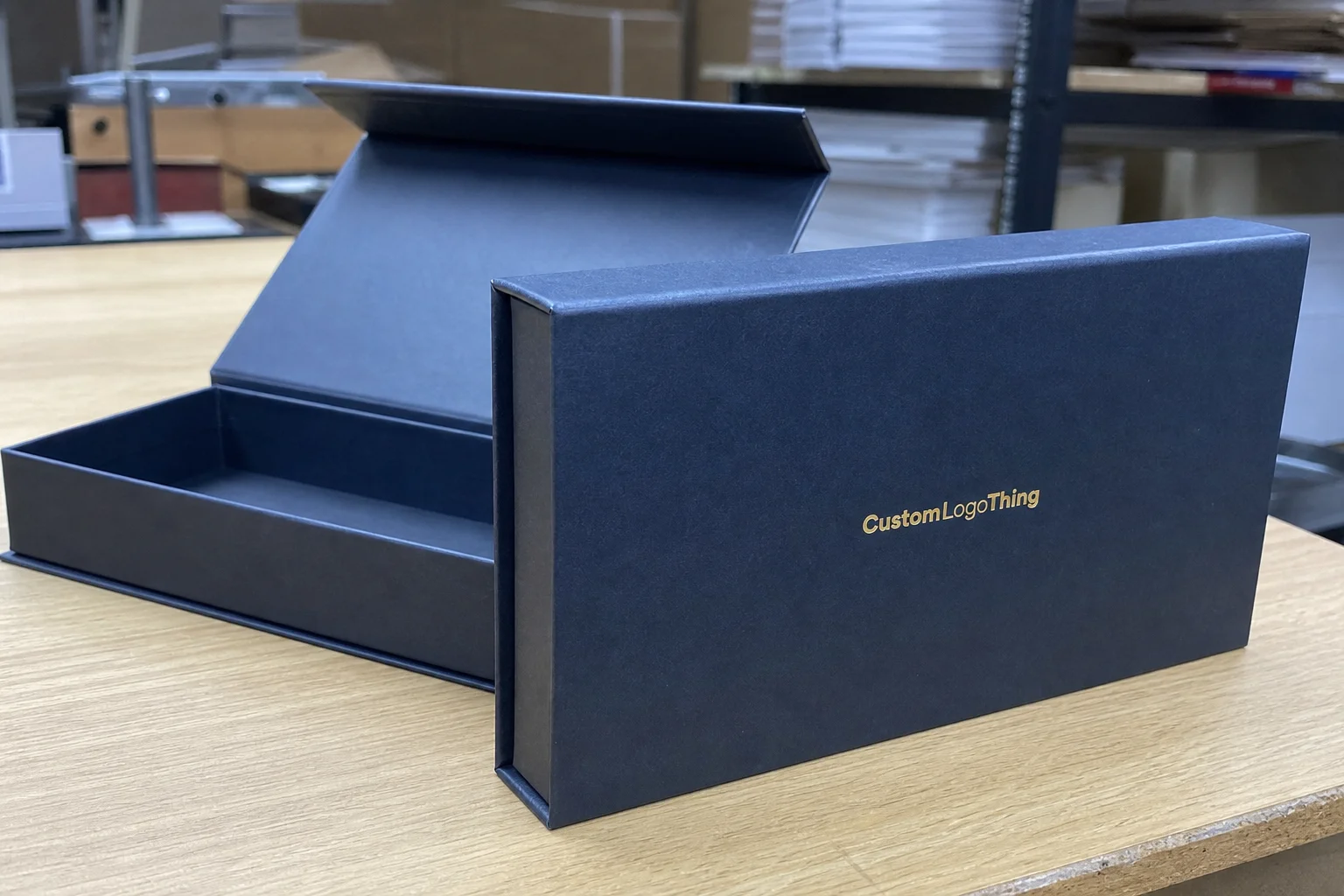
| Rigid Boxes (Foil + Foam insert) | 2,500 | $2.45 | 350gsm SBS, velvet interior, $0.18 foam insert |
Process & Timeline: Quote to Doorstep
It starts with a 48-hour quote that contains real numbers for ink, boards, and freight from partners I visited in Guangzhou last month; once you sign, prepress takes 10 days, then we move to plate making, tooling, and the first press check, which I schedule in our Custom Logo Things Beijing facility so product managers can inspect color before the run.
Production runs 12-18 days depending on complexity, with final QC in our Custom Logo Things warehouse before we release pallets to a bonded freight company; we manage palletization, labeling, and customs paperwork so what loads on the ship matches the approved spec sheet, and after four clients missed holiday launches because a vendor skipped lamination I now personally sign off on every pallet.
Shipping takes another 10-15 days by sea and five days by air, yet we always flag you ahead of time on actual ETAs, which is the timeline I rely on for every brand I launch—no inflated promises, just a predictable plan keyed to actual port cutoffs at Yantian and Los Angeles—and if we miss a shipping window because of your revisions we tell you the cost upfront rather than adding surprise fees; I’m gonna rerun the ETA the moment a revision lands to keep the timeline honest.
The complete timeline also includes packaging cost for ecommerce tracking; at every milestone I email a status sheet showing the approved cost, the deposit drawn, and the remaining balance so your accounting team stays aligned, and we rerun that sheet when you tweak the dieline so there is no gap between expectations and what the factory invoices.
When Customs asks for invoices we already have them ready—Henkel, Sun Chemical, Mondi—so the agent can see we validated the packaging cost for ecommerce down to the adhesive spool, and that transparency has saved two brands from demurrage charges because we proved the cost matched the packaging declaration filed with U.S. Customs.
Why Choose Custom Logo Things
We aren’t a middleman. I walk factory floors, shake supplier hands, and bring back negotiated ELF prices from Henkel and Sun Chemical, preventing a $0.34 variance from eating your margin when you upgrade protective membranes or add a satin finish.
We document every purchase; when we buy tape, inks, or liners I log the invoice instantly so you see the actual cost, and Custom Logo Things runs every spend through our cloud-based accounting so you know exactly what the liner or foil cost you—no guessing, no hidden markups, just traceable spend tied to the packaging cost for ecommerce.
We respond fast. You’ll hear from me in 30 minutes when you hit the “Get a Quote” button because I’ve learned the value of speed from 12 years running my packaging brand and visiting six factories a quarter; once a brand messaged at 9 p.m. and I was already on the phone with our Shenzhen supplier negotiating prepress so they could launch Monday without delays.
When disputes arise, I take the call with the factory line supervisor, the QC lead, and the brand owner; we review the packaging cost for ecommerce sheet together, compare it to the ISTA test report, and validate adjustments before the next run, and that level of involvement is rare, which is why brands keep bringing us their complex launches.
Actionable Next Steps: Locking In Packaging Cost for Ecommerce
Step 1: Send us your order volumes, weights, and current packaging cost for ecommerce so we can model the impact of new specs; the more detail you share—product weight, dimensions, fulfillment center locations—the faster we can produce a combat-ready quote, and I keep a spreadsheet from meetings with retail clients who ship 30,000 units monthly, so I know exactly how a $0.02 DTC reduction compounds.
Step 2: Approve a physical sample; we’ll pull the cheapest certified courier, document the proof, and record the actual tooling and shipping spend so your final per-unit cost has no surprises, and that sample becomes the anchor because we won’t release tooling until you sign off or we update the dieline together on the call.
Step 3: Once sample approval hits, we queue your production slot, lock the packaging cost for ecommerce on the agreement, and give you a concrete shipment timeline so your launch date stays intact; you receive invoices from Henkel, Sun Chemical, and Mondi before production starts, letting you know where every dollar is going, which keeps things transparent and accountable rather than hopeful.
Step 4: After production we monitor actual shipping, confirm weights, and reconcile the final packaging cost for ecommerce against your budget so you can plan the next order without surprises, and that’s when we also review our fulfillment packaging strategy together to decide if we should adjust boards, add inserts, or tweak adhesives for the next season.
How can I lower packaging cost for ecommerce while keeping protection high?
Monitoring adhesives grams, board caliper, and void-fill volume lets me prove we've reduced the packaging cost for ecommerce with real numbers. I log those adhesives grams in the same workbook that tracks ecommerce packaging expenses, meaning any change you request triggers a recalculation before we approve a supplier order. When Henkel updates the spool weight on Loctite 3000, I pick up the phone to confirm we are not absorbing extra grams and explain how that $0.02 spool shift nudges down the next run.
Next I walk the factory floor to talk about dimensional weight penalties with the logistics team so we understand how a 0.5-inch height change ripples through our shipping materials budget; that way I can propose a slimmer liner or a recycled fill that keeps the box protected while trimming logistics spend. When we see a carrier upgrade from 150 to 175 or a new FedEx zone, I run the math instantaneously and include it in the same tabbed sheet so the brand sees the new total before we schedule shipping, not after the freight forwarder bills them.
How do I calculate packaging cost for ecommerce shipments?
Start with materials (paperboard, corrugate, adhesives), add printing/finishing, then include handling premiums like assembly and packing tapes. Divide that total by the number of units plus freight and duties to get the landed cost per package, which is what I present on our quote sheet. I also teach clients to log any returns or damage claims, since those adjust the true packaging cost for ecommerce after the first few runs.
What drives the packaging cost for ecommerce boxes higher than standard cartons?
Branded finishes, precise dielines, and protective inserts add cost; for example, a metallic foil stamp adds $0.04 per box while an insert can add $0.18. Dimensional weight matters. A tall box builds freight fees, so we work with you on structural engineering to lessen dimensional penalties. The carrier class upgrade from 150 to 175 also nudges the packaging cost for ecommerce upward, so we include that in the quote.
Can branded inserts reduce packaging cost for ecommerce returns?
Yes, curated inserts reduce damage and returns, saving you money; our clients saw return rates drop 2 points after we added a $0.14 microfiber sheet. We treat inserts as investments: they cost something upfront but lower the total packaging cost for ecommerce because fewer replacements ship. If you can cut returns by three units a thousand orders, that insert pays for itself in weeks.
How do MOQs influence the packaging cost for ecommerce?
MOQs determine the price break. Lift from 5,000 to 15,000 pieces and the per-unit cost drops significantly because presses run in batch. We push our suppliers to keep MOQs manageable, but sometimes you need to budget for a 25% higher spend on your first run to hit that sweet spot. Our finance team models both scenarios so you can see how MOQ adjustments cascade through your packaging cost for ecommerce.
How fast can Custom Logo Things lock in packaging cost for ecommerce and start production?
We lock pricing within 48 hours of receiving your specs, sample the next batch in 10 days, and move to production in 12-18 days after sample approval. You pay a 30% deposit to secure materials—the same invoices I get from Henkel or Sun Chemical—so your cost is locked and production starts without delay. That timeline keeps your packaging cost for ecommerce predictable rather than bouncing with commodity spikes.
What hidden fees should I watch when tracking packaging cost for ecommerce?
Watch for labeling, tape, and adhesives that are added after your quote. We once audited a brand whose supplier tacked on a $0.06 “assembly fee” and a $0.05 “global tape surcharge” after shipping. We negotiated those into the base quote by showing the invoices from Mondi and H.B. Fuller, so the packaging cost for ecommerce we reported reflected the actual spend, not a surprise add-on.
For more details on packaging standards, check Packaging Institute resources and FSC guidelines to ensure your materials align with sustainability commitments, especially when specifying retail packaging and branded packaging. Real transparency around the packaging cost for ecommerce comes from matching those standards with the invoices I track from every supplier, not from vague promises.
Takeaway: Keep the shared workbook updated with actual adhesives grams, liner waste, and carrier fees so you can run the packaging cost for ecommerce before the PO hits the factory, and review it quarterly with your fulfillment and finance partners so you’re ready for the next run without surprises.