Performance golf caps Quality Control Checklist sounds like procurement paperwork until a bad run lands in the receiving area. Then it becomes the difference between a clean margin and a pallet of caps that look fine in photos but fail in hand, on head, and under a buyer’s inspection light.
Most cap problems are not dramatic. They are small, repeatable misses that add up fast: a crown that sits too tall, a visor that curves unevenly, embroidery that drifts a few millimeters off center, or a sweatband that feels rough after a minute of wear. On one sample, those flaws are annoying. On 500 pieces, they are expensive.
Golf headwear has a harder job than a basic promo cap. It has to breathe, hold its shape, manage sweat, shade the eyes, and still carry a clean brand presentation. That is a tight brief for a small product. A serious checklist keeps those demands in view before the order is cut, stitched, packed, and shipped.
What a performance golf caps quality control checklist catches first
The first thing a strong checklist catches is scale. A small defect on one cap becomes a large defect across a bulk order, especially when the same problem repeats in the same sewing operation or decoration step. A cap that looks acceptable on a flat table can tell a different story once it is worn, adjusted, and seen from normal viewing distance.
That is why the checklist has to operate like a gate, not a suggestion. It protects fit, finish, and function before the product reaches a pro shop, a tournament desk, or a retail wall.
A useful checklist looks at the details that actually change buyer approval:
- Fit - does the cap sit correctly on the head and adjust within the expected range?
- Shape - are the crown height, panel symmetry, and visor curve consistent with the approved sample?
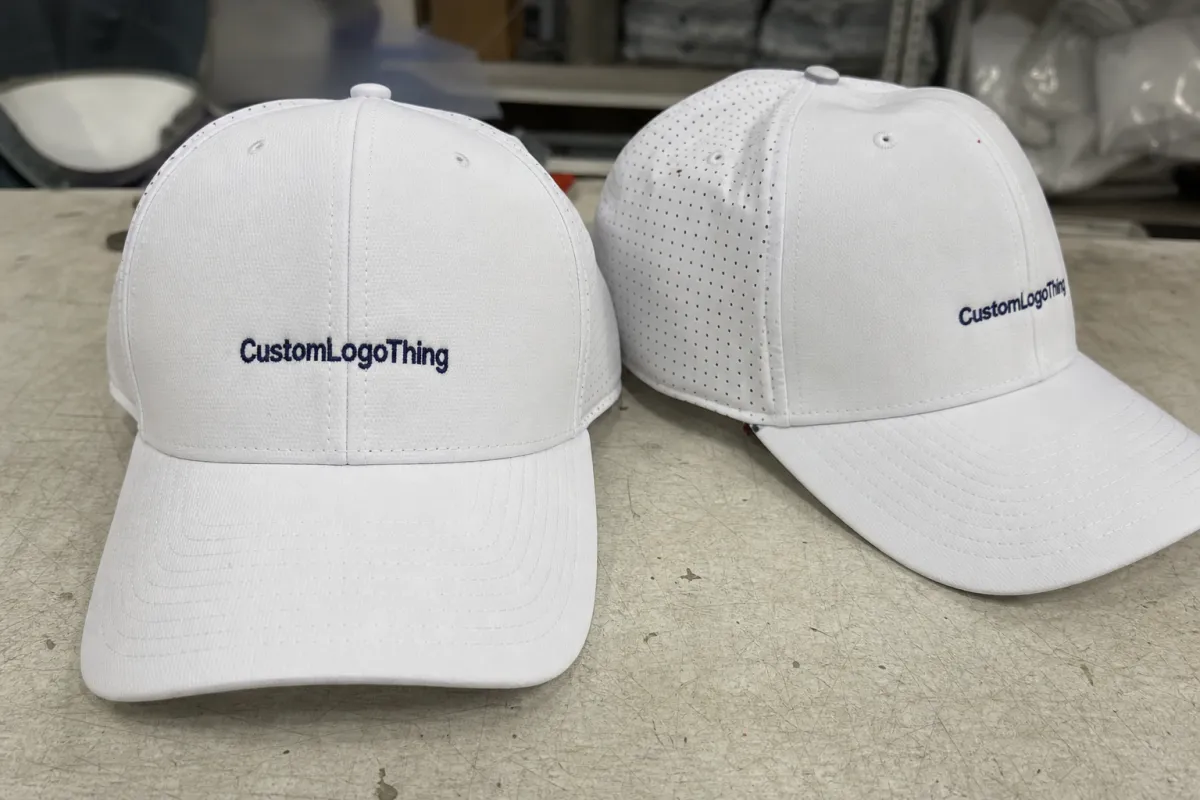
- Decoration - is the logo centered, clean, and aligned to the spec?
- Comfort - does the sweatband feel soft, and does the cap breathe as expected?
- Packing - will the cap survive transport without being crushed or flattened?
Golf buyers judge these hats in motion, not as static objects. Breathability matters on a hot course. The sweatband needs to feel soft rather than scratchy. The brim has to shade without looking distorted. If the cap is meant for a club shop, team program, or tournament resale, the branded look must hold together both up close and from several feet away.
One practical test helps here: compare the bulk run against the signed sample, not against a memory of the sample, and not against a mockup on screen. If the factory says the order is "close enough," ask close to what. The answer should be measurable.
On the production side, defects usually come from three places: material drift, machine variation, and weak final inspection. A good performance golf caps Quality Control Checklist catches all three before freight and rework make the problem harder to fix.
How the inspection flow works from sample to packed carton
The inspection flow should start with an approved reference sample. That sample is the standard. It is not a display piece, and it is not a loose idea of what the cap should become. Every later checkpoint needs to match that standard in measurements, materials, and decoration placement.
A practical flow has four stages.
- Approved sample - lock the physical reference against the spec sheet and artwork.
- Pre-production check - confirm fabric, thread, labels, closure parts, and trim before the run starts.
- In-line inspection - catch stitching, alignment, or decoration errors while there is still time to correct them.
- Final packing review - verify count, carton marks, bagging, and label accuracy before shipment.
Measurement matters at every stage. Inspectors should confirm crown depth, visor curve, panel symmetry, closure range, and logo position relative to the center line. On performance caps, even a 4 to 6 mm shift in logo placement can look sloppy once the cap is worn. The same is true for visor shape. A curve that seems harmless on a bench can look wrong the moment the cap is on a head.
Many programs use AQL sampling, often with tighter tolerance for major defects than for minor ones. The exact sampling plan should be written into the purchase spec. If a supplier cannot explain the sampling logic in plain language, that usually means the checklist is doing more work for the factory than for the buyer.
Carton-level review matters just as much as cap-level review. Confirm polybag count, size stickers, hangtag placement, barcode accuracy, carton markings, and pack-out order. A missing label can trigger a warehouse issue later. A wrong size sticker can create a sorting mess that costs time long after the shipment arrives.
Material, fit, and decoration factors that make or break approval
Material choice drives more of the approval process than buyers sometimes expect. Polyester is common because it is light, stable, and straightforward to decorate. Recycled polyester can help with sustainability targets, but it still needs to pass the same tests for handfeel, color consistency, and shape retention. Mesh panels improve airflow. Stretch performance blends can improve comfort. If the fabric feels sweaty, stiff, or flimsy, the buyer notices before the logo gets a second glance.
Fabric weight matters too. A lighter cap may feel better in heat, but it can also lose structure if the build is too soft. Heavier fabric can hold shape, but it may feel warm on humid days. There is no universal winner. The best choice depends on climate, price point, and how much structure the brand wants the cap to keep after packing and travel.
Fit is the next point where programs go off track. Structured six-panel caps wear differently than low-profile five-panel builds. Hook-and-loop closures are easy to adjust and usually cost less, but a metal buckle or fitted back can feel more premium. Snapbacks are acceptable for some audiences, but not every golf buyer wants that silhouette. The right answer depends on the target user and the brand position, not on whichever closure happened to be in stock.
Decoration is where a cap can lose approval for reasons that seem minor until the sample is worn. Embroidery density should be tight enough to read cleanly without puckering the fabric. Patches need neat edges and secure attachment. Heat-applied graphics should stay aligned and avoid shiny distortion. Thread color should match the approved shade under daylight, not just under warehouse lighting. A logo that looks fuzzy, warped, or too heavy can sink the whole order.
There are also production limits that buyers should respect. Dense embroidery on lightweight panels can cause distortion. Very large logos can pull the fabric out of shape. A low-profile crown gives less room for oversized decoration than a tall structured crown. Good vendors will flag those limits early; weak ones will say yes to everything and hope the problem shows up after the deposit clears.
For brands that need a documentation trail, ask for paper components backed by FSC where relevant, and keep any sustainability claim tied to actual materials and paperwork rather than marketing language. For shipping durability, carton checks should reflect an ISTA-style transit approach when the order is sensitive to crush damage or long-distance handling.
A simple rule holds up in practice: if the cap fails comfort, branding clarity, or shape retention, it fails the order. A polished logo does not rescue a cap that feels rough after ten seconds or collapses in storage.
Cost, pricing, MOQ, and unit-cost tradeoffs buyers should expect
Price moves with the obvious inputs: fabric grade, panel count, structured versus unstructured build, decoration method, and closure hardware. A basic one-logo cap costs less than a version with a woven patch, contrast underbrim, custom seam tape, and upgraded buckle. The surprise is usually not the direction of the price. It is how quickly each upgrade stacks on the next one.
MOQ changes the math in a real way. At 300 to 500 pieces, the unit cost is often higher because setup work is spread across fewer caps. Once an order moves past 1,000 pieces, the per-unit price often drops, but only if the specification stays stable. Multiple logo positions, extra trim choices, and several colorways can push MOQ up again or raise the unit price back toward the higher bracket.
| Order profile | Typical MOQ | Ballpark ex-factory unit price | Main cost drivers |
|---|---|---|---|
| Simple performance cap, one embroidery location | 300-500 pcs | $2.20-$3.50 | Fabric, closure, logo size, basic packing |
| Mid-level build with patch or multiple colors | 500-1,000 pcs | $3.40-$5.80 | Decoration complexity, color matching, extra setup |
| Premium performance build with recycled fabric and custom trims | 1,000+ pcs | $4.80-$7.20 | Material spec, finishing, labels, upgraded packaging |
Those prices are only useful if the quotes are built on the same assumptions. Ask whether sampling, digitizing, label changes, carton marks, and inspection photos are included. Then compare the same fabric weight, the same embroidery size, the same pack count, and the same shipping assumption. A lower quote that quietly removes half the detail is not a better quote. It is just incomplete.
Buyers also need to budget for the quality-control layer itself. Basic sample fees are usually modest, but custom embroidery, multiple revisions, third-party inspections, and special packaging checks add cost. That spend is often cheaper than replacing a bad shipment or fighting chargebacks later.
Lower pricing usually hides something. Sometimes it is the fabric. Sometimes it is the decoration. Sometimes it is the packing, which is how caps end up arriving flat and tired. A disciplined Performance Golf Caps quality control checklist makes it harder for that kind of cut corner to slip through.
Process and turnaround: from pre-production proof to final ship date
Custom cap timelines usually begin with artwork approval, then sample development, then revisions if needed, then bulk production, inspection, packing, and freight booking. A realistic sample round often takes 7 to 14 days. Bulk production for custom Performance Golf Caps often runs 20 to 35 days, depending on fabric availability, decoration complexity, and how many times the artwork changes after the first approval.
Late artwork and late spec changes slow a job more than sewing speed ever will. Color matching back-and-forth adds days. Changing logo placement after sampling adds more. Buyers who lock the tech pack early usually move faster and deal with fewer surprises. Buyers who keep changing details after approval usually create their own delays.
A production timeline is more than sewing time. It also includes sample approval, inspection, packing, and the wait for freight booking after the final sign-off.
Turnaround should always include the inspection window and the shipping method. "30 days production" is not a full delivery promise if the order still needs five days for inspection and another 10 to 18 days for ocean freight, depending on the route. If the order is tied to a seasonal launch, spell out whether the quote assumes air, sea, or split shipment. That belongs in the checklist because schedule failure can hurt a program as fast as a stitching defect.
If the packing includes paper inserts, recycled content claims, or retail labels, ask for documentation early. It is easier to verify paperwork before shipment than to explain missing inserts after the cartons arrive. The boring checks are usually the ones that save money.
Common mistakes that create rework, delays, and chargebacks
The most common mistake is approving a digital mockup and assuming the finished cap will match it exactly. It will not. A mockup hides texture, flattens curves, and makes embroidery look more even than it usually is in the real world. It is useful for direction, but it is not proof of fit, stitch quality, or panel behavior.
Skipping fit checks creates more trouble than many buyers expect. A cap can look premium on a table and still wear badly because the crown is too tall, the sweatband is too firm, or the closure range is too narrow. Golf buyers care about comfort because these caps are worn for hours in heat. If the cap pinches, rides up, or feels flimsy after ten minutes, the order has already lost ground.
Vague specs cause rework in a very ordinary way. If logo size, thread color, visor curve, label type, and packaging rules are not spelled out, the factory will fill in the blanks with its own best guess. Those guesses are rarely disastrous in isolation, but together they can create a product that is technically close and commercially wrong.
Carton strength and compression are often ignored until the shipment lands flattened. That is an avoidable problem. If the caps will travel a long distance or stack high in a warehouse, ask how the cartons are built and whether they have been checked for crush resistance and drop handling. Nobody wants a carefully sewn cap that looks like it lost a fight with a forklift.
Another common gap is the lack of acceptance criteria before production begins. If the team waits until packing to define what passes and what fails, the discussion turns into opinion. It is much better to set measurable tolerances up front and attach them to the purchase order. That keeps the process focused on the product instead of the argument.
Expert next steps: turn the checklist into a supplier scorecard
The most useful way to apply a performance golf caps quality control checklist is to turn it into a one-page supplier scorecard. Give each category a pass/fail rule for fit, crown shape, logo placement, stitching, closure quality, packaging, and carton condition. Add tolerances where they matter, and require photo evidence for anything that could be disputed later. That keeps the conversation objective, which is valuable because opinions are cheap and rework is not.
Then ask every supplier for three checkpoints: a pre-production sample, a bulk-run photo set, and final carton photos before shipment. Those three items reveal more than a polished sales email ever will. If a vendor cannot send clear photos or keeps dodging simple questions, that is useful information in itself.
When comparing vendors, rank them on consistency, communication speed, sample accuracy, and how quickly they correct mistakes without turning the process into a long argument. The lowest quote is not the best quote if every order becomes a rescue operation. A good supplier protects your schedule by holding spec, not by talking around it.
The cleanest next move is practical: send the checklist with the RFQ, compare two or three quotes against the same spec, and lock approvals before the deposit clears. Reuse the same scorecard on every reorder, because a repeat style can drift just as easily as a new one. If the goal is fewer chargebacks, less waste, and a better repeat program, the checklist belongs in the buying process every time.
What should a performance golf caps quality control checklist include?
It should cover fit, crown shape, visor curve, stitching, logo placement, color match, closure quality, and packaging accuracy. Add performance checks for breathability, sweatband comfort, and shape retention after compression. If the cap is meant for retail or team use, check carton marks and label accuracy as well, because a clean cap in the wrong box still creates problems.
How do you inspect embroidery on performance golf caps?
Check thread tension, stitch density, edge cleanup, logo alignment, and whether the embroidery distorts the cap panel. Compare the finished cap against the approved sample under natural light, not only under warehouse lighting. If the embroidery feels too stiff or pulls the fabric, that is a defect, not a style choice.
What is a realistic MOQ for custom performance golf caps?
A common starting range is 300 to 500 pieces per style or color, but decoration complexity can push that higher. Multiple logo placements, custom trims, and specialty fabrics usually raise MOQ or increase the unit cost. If a quote looks unusually low, ask what was removed from the spec to get there.
How much should buyers budget for quality control and sampling?
Sampling often runs from a modest fee for a basic sample to a higher charge for custom embroidery, color matching, or revisions. Third-party inspection, test reports, and special packaging checks add cost, so build those items into the quote early. It is usually cheaper to pay for proof than to pay for rework.
How long does production take after the checklist is approved?
After sample approval, bulk production often takes about 20 to 35 days, depending on order size and customization. Add time for inspection, packing, and freight booking so the real delivery date is accurate. A good performance golf caps quality control checklist protects the schedule as much as the product.