Ribbon handles change how a paper bag reads at retail. A plain bag looks functional; a ribbon-handle version looks giftable and more deliberate. For pet treats, that matters because the package is often part of the selling job. Pet treat ribbon Handle Paper Bags bulk order planning is not just about appearance. It is about getting the structure, print, handle, and order size aligned before you commit to a production run.
The bag has to protect the product, hold its shape on shelf, survive shipping, and support the price point. That is straightforward when the treats are dry biscuits or lightweight bundles. It gets harder when the contents are bulky, oily, or sold as a seasonal set. In those cases, the wrong paper weight or handle attachment can turn into crushed corners, scuffed print, or weak carry performance.
Buyers usually discover that a pretty sample is not enough. If the bag dents in freight, the ribbon twists under load, or the print shows wear after pack-out, the premium feel disappears fast. That is why the buying decision should start with specs, not with artwork alone.
Why Pet Treat Ribbon Handle Paper Bags Sell Through Faster
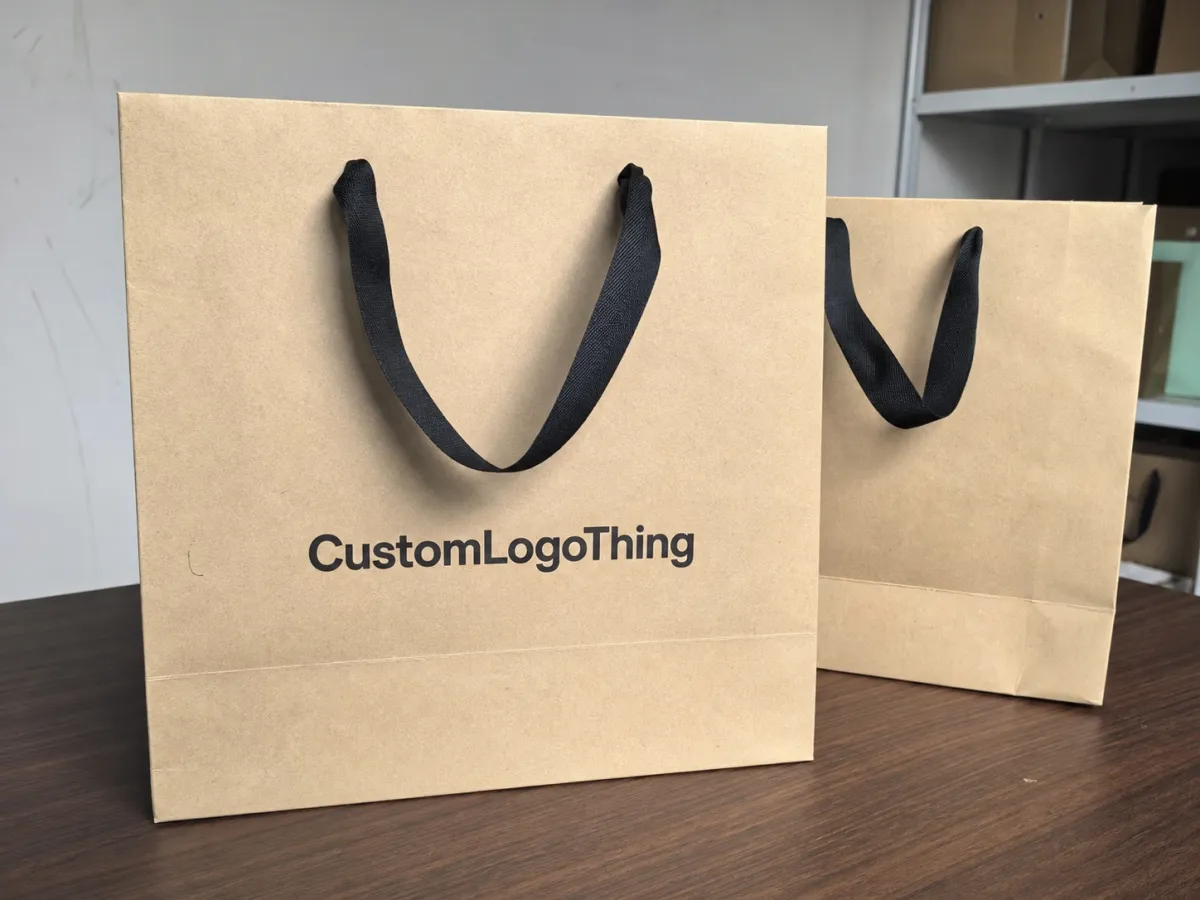
Retail customers react to presentation quickly. A ribbon handle gives the product a more finished look before anyone checks ingredients or claims. That can help in pet boutiques, holiday displays, checkout placements, and gift-oriented assortments where the package needs to carry part of the value.
Compared with a plain kraft bag or basic pouch, a ribbon-handle paper bag usually supports a more premium shelf position. It signals care and makes the contents feel suitable for gifting, which is useful for birthdays, adoption gifts, holidays, and small impulse purchases. If the product price is still accessible, that extra perceived value can help move units.
The effect only holds if the bag performs well in real use. Weak board, poor print adhesion, or loose handles make the package feel cheap the moment it is handled. Shelf recognition matters too: once shoppers learn a color system or bag shape, they can find the product faster and trust it more on repeat visits.
- Higher perceived value for premium treats, seasonal packs, and gift bundles.
- Better listing performance for ecommerce photos and social images.
- More flexible merchandising for retail shelves and display bins.
That does not remove cost pressure. It just means the packaging has to earn its place in the program. A ribbon handle is a signal; if the rest of the structure cannot support it, the signal fails.
Bag Construction, Print, and Handle Options
Construction decisions drive both price and performance. Shape, gusset depth, bottom style, closure, and handle attachment all affect how the bag looks once filled. For pet treats, the common choices are a flat paper bag, a square-bottom retail bag, or a gusseted format that stands better on shelf. Lightweight dry treats can use a simpler structure; bulkier or gift-oriented packs usually need more support.
Ribbon handles need a defined spec of their own. Width matters because a narrow ribbon can look elegant but feel flimsy under load. Widths around 10 mm to 15 mm are common for lighter retail bags, while heavier packs may need a sturdier option. Handle drop also matters because it affects the carry feel and the visual balance of the bag.
Attachment method should be confirmed early. Ribbon handles can be tied, stitched, glued, or threaded through reinforced points depending on the design and weight. For heavier assortments, ask for a pull test rather than relying on a clean sample photo. A bag can look fine in a flat lay and still fail when a customer lifts it by the handle.
Print choice changes both look and cost. Spot color usually gives a cleaner, simpler brand read. Full-color print works better when the design depends on photos, gradients, or multiple flavor cues. If brand colors matter, confirm Pantone matching before the order is set. If artwork wraps across the side panels or folds, ask for a dieline that shows the full printable area, not just the front.
Practical extras often pay back their cost:
- Grease-resistant coatings for baked biscuits and oily snacks.
- Inner liners when odor or oil control matters.
- Window cutouts when product visibility helps sell-through.
- Scuff-resistant finishes for freight and warehouse handling.
Material choice should follow the product. Dry biscuits, soft chews, and mixed gift packs do not need the same build. Trying to force one structure to fit every use case usually creates quoting errors and rework later.
Sizes, Finishes, and Structural Specs to Lock In
Dimensions should be final before a quote is treated as useful. The supplier needs width, height, gusset, handle drop, and an honest estimate of what the bag will hold. Single packs, multipacks, and seasonal bundles behave differently, and bags meant to stand on shelf need different support than bags that will mostly travel inside a shipper.
For pet treat ribbon handle paper bags Bulk Order Planning, paper weight matters more than many first-time buyers expect. Heavier board improves stiffness and helps the bag hold shape after packing. Lighter sheets can work, but they may curl or slump. For premium retail bags, 210gsm to 350gsm is a common planning range, though the right choice depends on fill weight, bag size, and finish.
Finish affects more than appearance. Matte usually photographs well and hides handling marks better. Gloss can make colors pop, but fingerprints and scuffs show sooner. Soft-touch feels premium, though it adds cost and can make abrasion more visible. Uncoated stock gives a more natural look and can suit some pet brands better than a polished surface.
The cheapest bag is rarely the lowest-cost bag. If it dents in transit, prints inconsistently, or needs a reprint because the dimensions were guessed, the real cost shows up later.
A useful spec sheet should include more than the bag size:
- Product weight and approximate fill volume.
- Bag capacity in grams or ounces.
- Storage and display method so the structure matches the real use case.
- Carton pack format if retail-ready case counts matter.
Handle drop deserves attention because it changes the whole proportion of the bag. Too short and the bag rides high and awkward; too long and it looks slack or unbalanced. Print registration across the front, side gussets, and bottom folds also needs checking. Multi-panel artwork looks sharp only when the tolerances are tight.
Pricing, MOQ, and Unit Cost by Order Size
Price is driven by size, paper grade, handle style, print coverage, finishing, and packing format. Add a window, specialty coating, or more complex artwork and the quote climbs. Simplify the structure and keep the print area focused, and the numbers usually improve.
MOQ changes the math quickly. Small runs carry more setup cost per unit. Larger runs reduce unit price, but they also require more storage, stronger forecasting, and better cash planning. For seasonal pet treat programs, that matters more than the factory quote sometimes suggests. A lower unit cost does not help if inventory sits through the wrong selling window.
Indicative pricing often falls into these ranges, though finish, handle attachment, and freight can move the numbers:
| Order Size | Typical Unit Range | Best Fit | Main Tradeoff |
|---|---|---|---|
| 5,000 pieces | $0.20-$0.34 each | Trial launches, limited seasonal programs | Higher unit cost, lower inventory commitment |
| 10,000 pieces | $0.16-$0.28 each | Established SKUs, moderate sell-through | More storage needed, better per-unit economics |
| 25,000 pieces | $0.12-$0.22 each | Core retail programs, repeat orders | More upfront cash tied to inventory |
| 50,000+ pieces | Quote-dependent | Large distribution programs | Forecast accuracy becomes critical |
Those numbers only help if buyers treat them as landed-cost planning, not just factory pricing. Freight, customs, sample fees, tooling, carton configuration, and reprint risk can change the outcome. A low print quote is not a win if handle attachment fails inspection or color drifts on later cartons.
If sustainability claims matter, ask for documentation rather than relying on a logo in the mockup. FSC chain-of-custody standards are public and specific at FSC. For transit durability, it helps if the supplier can discuss drop and shipping testing with real test language; the framework at ISTA gives a useful baseline.
Margin control usually comes from discipline. Standardize one or two sizes, keep the print count manageable, and match the order quantity to a realistic sell-through window. That is less exciting than a custom one-off, but it is how a packaging program stays healthy after launch.
Process and Lead Time for Bulk Orders
Most delays happen before production starts. A clean schedule usually runs through inquiry, specification review, quote, artwork check, proof approval, sampling if needed, production, inspection, and shipment. The order moves quickly when the spec is clear and slowly when it changes every few emails.
The usual timeline problems are predictable: unclear dimensions, missing dieline details, color changes after proofing, and revision loops that drag on longer than the production slot. A supplier can move fast on a stable spec. They cannot move fast on a project that is still being redesigned.
For planning purposes, a practical schedule looks like this:
- Specification and quote: 1-3 business days if the information is complete.
- Proof and revision: 2-5 business days, longer if artwork is still changing.
- Sampling: about 5-10 business days when a physical sample is needed.
- Production: often 12-20 business days after approval, depending on the run.
- Freight and receiving: plan separately, since transit time can vary a lot.
That is a planning model, not a promise. Holiday demand, queue position, and shipping mode can stretch the calendar. If the bags support a launch, trade show, or retailer reset, build in buffer time. Rush orders are usually more expensive and leave less room for color or finish correction.
Sampling is for more than appearance. It checks board feel, ribbon strength, balance when filled, and whether the size works with the intended product weight. One physical sample can prevent a lot of expensive guesswork later.
Approval speed matters too. The best-run orders usually have one owner who can sign off quickly instead of several people who each want a different shade of green. Slow approvals cost time in the place where time is most expensive.
What to Verify Before You Lock the Supplier
For repeat orders, consistency matters as much as unit cost. The same color, dieline, print registration, and handle behavior should carry across runs. A supplier who can reproduce the spec later is more valuable than one who only looks good on the first quote.
Ask for concrete quality-control details. Where are inspection points placed? What defect rate is acceptable? How are cartons counted and labeled? Is there a documented check for handle attachment, print alignment, board curl, and scuff resistance? In packaging, vague claims are cheap. Specific controls are useful.
For ribbon-handle bags, it is worth asking how the supplier handles glue consistency, ribbon knot security, edge crush on folds, and whether the bag still sits level after pack-out. These details are not glamorous, but they separate a good sample from a repeatable product.
Communication speed is another quality signal. A supplier who answers basic technical questions quickly usually has better internal control. If they need days to confirm a simple size or paper grade, the rest of the process often gets harder. If they can discuss board grades, finishing, and packing format without hand-waving, the order tends to move with fewer surprises.
There is also a difference between a development vendor and a reorder partner. The first helps you test. The second helps you scale. If the project matters beyond one run, ask whether the same materials and ribbon colors can be matched on reorders without rebuilding the file set.
What to Prepare Before Requesting a Clean Quote
A clean quote request is short and complete. Send the target dimensions, estimated quantity, artwork files, handle color preference, finish preference, and needed ship date. If you know the product weight, include it. If you know whether the bag must stand on shelf or ride in a shipper, include that too. Those details help the supplier recommend the right paper thickness and structure without guessing.
It also helps to be clear about sample type. A prototype checks fit and feel. A proof checks print and color. Production approval locks the order. Mixing those up slows everything down and creates unnecessary revision cycles.
If the program is still being shaped, ask for pricing at two or three quantity bands. That makes the economics visible and shows where unit cost starts improving. For a new line, that is often more useful than a single quote at one quantity. For an established line, it shows whether a larger order is worth the storage commitment.
Keep this checklist tight:
- Exact dimensions with gusset and handle drop.
- Product weight and expected fill shape.
- Artwork files in editable or print-ready form.
- Handle color and finish preference.
- Needed date for launch, display, or replenishment.
That is the practical core of pet treat ribbon handle paper Bags Bulk Order planning. The more complete the first request, the cleaner the quote, the fewer surprises later, and the less time everyone wastes on avoidable back-and-forth.
FAQ
What quantity counts as a bulk order for pet treat ribbon handle paper bags?
Bulk usually means the order is large enough to trigger tiered pricing and scheduled production, though the exact MOQ depends on bag size, print method, handle style, and finish. Ask for price bands at several quantities so you can see where the unit cost starts improving. If the product is likely to reorder, plan the first run with that in mind rather than aiming for the smallest possible buy.
Which specs matter most in pet treat ribbon handle paper bags bulk order planning?
The most important inputs are dimensions, paper weight, handle style, print coverage, and whether the bag needs a liner or coating. Product weight and fill shape matter too because they affect bottom support and handle durability. A clear spec sheet reduces quote errors and shortens the approval cycle.
How can I lower unit cost without making the bags look cheaper?
Use a standard size, keep the print area focused, and skip specialty finishes unless they support the retail price point. Consolidating colors and simplifying artwork usually reduces production complexity. Ordering one larger run instead of several smaller runs often improves the per-bag rate, but only if storage and sell-through are realistic.
How long does production usually take after artwork approval?
Lead time depends on the factory schedule, print method, and whether a sample is required before production. A typical plan includes proof approval, manufacturing, inspection, and shipping as separate steps. If the bags are tied to a launch date, share that deadline early so the schedule can be set with enough buffer.
Can I reorder the same pet treat ribbon handle paper bags later?
Yes, if the supplier keeps the artwork, dieline, and approved specifications on file. Reorders move faster when the original spec sheet is complete and unchanged. Ask whether the same paper stock and ribbon color can be matched for future runs, because small material differences can make the second order look off even when the size is identical.

