Why Pet Treat Brands Use Beanies as Low-Waste Walking Media
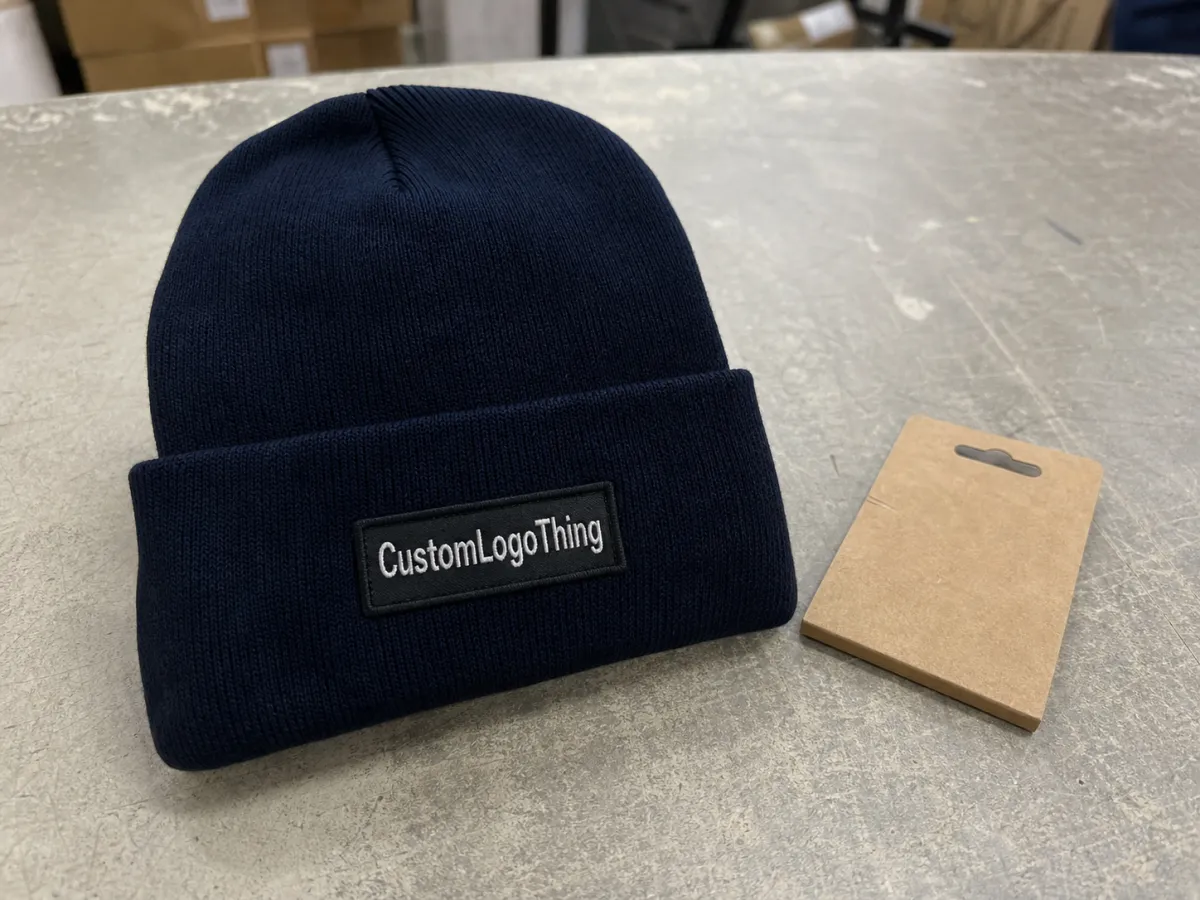
A pet treat Logo Patch Beanies unit cost review should begin with a plain buyer question: who will wear the beanie, where will they wear it, and what should it do for the brand after the first handoff? Without that answer, the beanie is only a more expensive giveaway.
Pet treat brands often work in places where small, visible brand signals matter. Staff stand behind sampling tables. Trainers meet clients in cold parking lots. Rescue volunteers move between crates, tents, and adoption paperwork. Retail buyers see brand reps in showrooms and booth aisles. A pouch of treats may get seconds of attention on a shelf, while a clean cuffed beanie can show up repeatedly at dog parks, farmers markets, specialty pet stores, and weekend trailheads.
That longer exposure window is the reason beanies remain useful. They are not the cheapest promotional item. Flyers cost less. Stickers can work beautifully when the design is strong. Sampling bags are still necessary for trial. But those items usually have a short life, and waste is easy to see. A logo patch beanie costs more per unit, yet it has a better chance of staying in rotation if the fit, material, and artwork feel intentional.
Buyer test: if the beanie has no planned recipient, channel, or use case, it is probably expensive clutter. If it supports staff uniforms, retailer kits, cold-weather events, or field visibility, the math changes.
Visual consistency matters here. A natural pet treat brand using kraft-toned pouches, soft greens, and a hand-drawn dog mark should not hand out a glossy cap that feels unrelated to the packaging. A playful training treat brand with bright color blocks and a cartoon mascot can take a different route. The beanie does not need to copy every detail from the bag, but it should belong to the same brand system.
The mistake is asking for “cheap beanies” before defining the job. Cheap is not a specification. Useful quoting starts with the audience, the quantity, the patch style, the deadline, and the packaging expectation. Only then can the unit cost be judged fairly.
Pet Treat Logo Patch Beanies Unit Cost Review: What Buyers Are Really Paying For
A credible pet treat Logo Patch Beanies Unit Cost review breaks the price into parts. The blank beanie comes first: yarn type, knit weight, cuff structure, color availability, stretch recovery, and fit. The patch adds another layer through material, size, shape, edge finish, stitch count, deboss detail, or PVC mold complexity. Attachment, packing, freight, and rush timing can move the final number more than buyers expect.
For general planning, a straightforward logo patch beanie program may land around $6.50-$14.00 per unit at moderate quantities, depending on specifications. Smaller runs often price higher because setup charges are spread across fewer pieces. Larger programs can lower the unit cost, but not automatically. Special colors, oversized patches, premium packaging, and compressed deadlines can absorb the savings.
The lowest quote is not always the least expensive order. A price that excludes artwork prep, patch setup, tooling, individual polybagging, domestic freight, or carton labeling is incomplete. Packaging buyers already know the pattern: a printed pouch quote without plates, freight, or case packing does not tell the whole story. Beanies work the same way.
| Patch option | Best use | Typical cost behavior | Buyer watchout |
|---|---|---|---|
| Embroidered patch | Bold logos, color, tactile texture | Moderate; stitch count can raise cost | Tiny type and fine ingredient icons may fill in |
| Woven patch | Small lettering, mascot detail, crisp lines | Often comparable to embroidery, varies by size | Less raised texture than embroidery |
| Faux leather patch | Premium natural, rustic, or boutique branding | Can be efficient for simple debossed artwork | Limited color expression compared with thread |
| PVC rubber patch | Outdoor, weather-resistant, active pet audiences | Tooling can affect smaller runs | Complex molds and many colors increase cost |
Quantity tiers deserve careful reading. At 100 pieces, setup may represent a large share of the unit price. At 250 or 500 pieces, fixed costs usually spread more efficiently. At 1,000 pieces or more, bulk pricing may improve and sourcing options may widen, especially if the brand can use standard colors and a repeatable patch format. That does not mean every brand should order 1,000. Overstock has a cost too, particularly when the design includes a seasonal message, limited campaign name, or retailer-specific detail.
Evaluate cost by intended recipient, not by unit alone. A $10 staff beanie worn at 30 winter demos may be stronger value than a $3 item that disappears into a junk drawer. Retail partner gifts need better finish and presentation than broad event giveaways. Influencer or VIP kits may justify upgraded packaging if the beanie is part of a larger unboxing moment. The same item can be a bargain or a waste depending on its assignment.
Ask for line items. The blank, patch, setup charges, packaging, freight, and any rush fee should be visible. If the price is high, those details show what can be adjusted: smaller patch, simpler artwork, standard beanie color, fewer packaging extras, or a different quantity tier.
Beanie Styles, Patch Materials, and Logo Fit for Pet Brands
Beanie style changes the signal before anyone reads the logo. A cuffed knit beanie is the safest choice for most retail staff and demo teams because the cuff gives the patch a stable branding panel. Ribbed beanies add texture and can suit winter sampling crews. Pom beanies bring a lighter event feel, useful for rescue fundraisers or outdoor holiday markets. Fisherman-style beanies sit shorter and work best when the brand already has a clean, apparel-forward identity.
Audience should drive the choice. A premium freeze-dried treat line with muted pouch colors may look right in charcoal, oatmeal, or forest green with a faux leather patch. A cheerful dog biscuit brand might use a brighter knit and a woven patch that holds mascot detail. A trainer-focused product may prefer PVC because it reads as tougher and more weather-resistant. The best answer is not always the loudest one.
Logo shape deserves attention early. Round badges work well for mascot faces, seal marks, and short claims. Rectangles suit wordmarks and horizontal pouch logos. Shields, bones, house shapes, and arched labels can connect apparel back to packaging, though custom shapes may add setup time or tooling cost. Readability from several feet away is the test. If the mark only works in a close-up proof, it may not work on a person walking through a market.
Artwork translation is where budgets and schedules often slip. Tiny ingredient icons, thin type, paw pads, gradients, watercolor illustrations, and complex farm scenes may need to be simplified before patch production. A treat pouch can carry feeding instructions, certifications, a barcode, flavor copy, and a nutrition panel. A beanie patch cannot. It needs hierarchy, contrast, and restraint.
- Use the main brand mark when recognition matters more than storytelling.
- Add one visual cue such as a dog silhouette, paw, bone, biscuit, or treat shape.
- Limit small wording unless a woven patch is selected for fine detail.
- Check contrast between the beanie color, patch base, and logo color before approval.
Color control is practical, not cosmetic. Thread, yarn, leatherette, and PVC do not interpret brand colors in identical ways. A warm kraft background may become tan leatherette. Deep navy can shift slightly in thread. Cream ink on a pouch may look cleaner than cream thread on a textured patch. Digital proofs are useful, but for higher-stakes programs, ask for a physical sample or at least comparable production photos in the same material family.
Brands with strict packaging guidelines should provide them at the quoting stage. Pantone references, acceptable one-color logo versions, minimum clear space, and approved secondary marks all help prevent expensive redesign work later. If the only available artwork is a low-resolution PNG from a website header, build time into the schedule for cleanup.
Specifications That Change Comfort, Durability, and Shelf Perception
Specifications decide whether the beanie feels like merchandise or leftover promo. Confirm yarn type, knit weight, cuff height, beanie depth, stretch recovery, patch size, backing, edge finish, and attachment method before approving the order. These are small fields on a quote, but they are not small in use.
Acrylic is common in promotional beanies because it balances warmth, color range, durability, and unit cost. Recycled acrylic blends or recycled polyester blends may support brands with stronger sustainability goals, although availability, minimums, and pricing can vary. Cotton blends can feel softer, but they may behave differently in stretch, drying time, and shape retention. For any sustainability claim, stay precise. “Recycled blend” is not the same as fully recycled, and textile claims follow different rules than paper packaging claims.
If responsible packaging is part of the wider brand system, standards from organizations such as the Forest Stewardship Council can provide useful context for paper-based materials, hangtags, or inserts. Beanie textiles need their own substantiation. Do not borrow a packaging claim and apply it to apparel unless the material data supports it.
Cuff height is both a fit detail and a branding variable. A 2.5-inch cuff may look clean but limit patch size. A 3-inch to 3.5-inch cuff usually gives better real estate for a 2-inch or 2.5-inch patch. Taller cuffs also photograph better for staff shots, booth images, and retailer launch posts. If the patch is too large, it can buckle or wrap awkwardly around the cuff. If it is too small, the logo disappears.
Durability should be judged against actual pet-category use. Dog walkers handle leashes, treat pouches, water bowls, waste bags, and damp tennis balls. Trainers work outside. Rescue volunteers unload crates and stand in parking lots. Event teams pack and unpack quickly, often in cold or wet weather. A patch must tolerate handling, moisture, abrasion, and repeated wear.
Sewn attachment is common because it gives a secure edge and a traditional apparel finish. Heat application can suit certain materials, but compatibility matters, especially with textured knits or heavier patches. PVC and thicker faux leather patches may need reinforced stitching or a specific placement approach to sit flat. Ask how the patch will be attached rather than assuming every decoration method works on every beanie.
Packaging changes perception too. Individual bags protect the beanies during transit and make counting easier. Hangtags, branded insert cards, and retailer-kit case packs can make a promotional beanie feel closer to merchandise. Carton labeling matters if the order feeds a fulfillment center, multi-store rollout, or subscription box packing line. A clean beanie thrown loosely into an unmarked carton can still arrive wrinkled, dusty, or hard to sort.
Practical rule: if the beanie will sit beside premium treat bags, custom boxes, labels, or influencer inserts, do not treat packing as an afterthought. The first handling moment can support the brand or cheapen it.
Ask for photos or samples of comparable beanies before bulk approval. That request is not fussy; it is basic risk control. Industry groups such as ISTA focus on transport packaging performance, and the same discipline applies here: define the handling conditions before deciding whether the specification is adequate.
MOQ, Pricing Tiers, and Quote Inputs to Prepare Before Ordering
MOQ exists because production work starts before the first beanie ships. Patch setup, machine time, material ordering, proofing, production handling, packing, and quality checks all create fixed costs. A buyer may want 36 beanies for a small launch team, and that may be possible in some programs, but the unit cost will often look high because the same setup logic applies to a small base.
Prepare the quote packet before asking for pricing. Include order quantity, target budget, beanie color, patch type, patch dimensions, number of logo colors, artwork file, packaging needs, ship-to ZIP code, and required in-hand date. Vector artwork is preferred: AI, EPS, or editable PDF. If only a PNG or JPEG exists, artwork cleanup may be needed before production can be quoted accurately.
Pricing tiers tend to follow a pattern. The first meaningful break reduces pressure from setup charges. Mid-size runs improve unit economics. Very large runs may create better sourcing options, especially if the brand can accept longer lead times or a narrower color palette. Buyers often ask for 100, 250, 500, and 1,000 piece options to see the curve. The goal is not to chase the largest number; it is to see whether the savings justify the inventory.
Do not compare mismatched quotes. A woven patch on a heavier cuffed beanie is not the same product as a thin acrylic beanie with a tiny printed patch. A quote that includes individual polybags and freight is not equivalent to one that stops at production cost. The assumptions behind the number matter as much as the number itself.
Allocation affects the right quantity. Staff uniforms may require 25-75 units. Retail partner gifts could need 100-300. Event giveaways may call for 250-1,000, depending on booth schedule, season, and expected foot traffic. Subscription box inserts can move into several thousand units if the beanie is part of a seasonal campaign. Seasonal customer incentives sit between those categories and should be planned around real demand, not optimism.
- Staff: choose comfort and durability first because the beanies will be worn repeatedly.
- Retail partners: prioritize logo finish and packaging because the item represents the relationship.
- Events: balance cost per piece against visibility and expected qualified conversations.
- Influencer or VIP kits: consider hangtags, insert cards, and better patch materials.
Request two or three quantity options using the same specification. That reveals whether moving up a tier meaningfully reduces the unit cost. It also prevents a common quoting problem: one supplier prices a basic build at 250 pieces while another prices a better build at 500, leaving the buyer with numbers that look comparable but are not.
Production Steps, Lead Time, and Approval Timeline
The production path is straightforward, but each step has a failure point: inquiry, artwork review, specification selection, formal quote, digital proof, sample or pre-production approval if needed, bulk production, quality check, packing, and shipping. For many custom logo beanie programs, production after proof approval may take roughly 10-20 business days, with variation by patch type, quantity, stock position, and packaging.
Timelines expand for predictable reasons. Incomplete artwork can add one to three business days. Late proof approvals stop the clock. Color changes after proofing can restart part of the process. Custom patch shapes, special beanie colors, added hangtags, individual bagging, or split shipments can add time. Freight is another blind spot. Production time is not the same as the in-hand date.
Build the schedule backward from the activation date. A trade show booth needs beanies before staff travel, not on the morning the expo opens. A winter adoption event may require internal distribution to volunteers. A holiday retail campaign may need store kits packed weeks before the first consumer promotion. Warehouse receiving, carton inspection, and repacking can all consume time.
Rush options may be available depending on stock, patch type, and quantity. Rush fees can change the cost equation quickly, and they may limit choices. A standard black cuffed beanie with an embroidered patch will usually be easier to move quickly than a custom-colored fisherman beanie with a molded PVC badge. Speed narrows the menu.
Proof approval deserves a slow read. Check logo spelling, patch placement, beanie color, patch dimensions, thread or material colors, shipping address, carton labels, and in-hand date. Compare the proof against packaging or brand guidelines if available. A misspelled flavor claim, wrong rescue campaign name, or off-brand color on 500 beanies is not a small problem.
Quality-control expectations should be clear before production. Reasonable checks include patch alignment, loose threads, stitch security, color consistency, cuff shape, odor, stains, carton count, and packaging accuracy. Apparel decoration can have small tolerances, but buyers should still define what matters most. If every patch must sit centered on a cuff for retail photography, say so before the order is built.
The process is not only about speed. It is risk control. Specific inputs protect the budget, the calendar, and the final product.
Build a Quote Packet That Prevents Cost Surprises
The fastest route to a useful quote is a complete packet. Upload vector artwork. Choose one or two beanie styles. Select a preferred patch material. Estimate quantity by audience. Define packaging needs. Provide the in-hand date, not just the event date. Add the delivery ZIP code so freight is not guessed.
Include photos of existing pet treat packaging, retail displays, shipper boxes, labels, or brand guidelines. Those assets show how the patch should fit the larger visual system. A premium jerky-style treat should not use the same design logic as a cartoon-forward training bite. Both can work, but they need different restraint.
Ask for visible line items: setup charges, unit cost, packaging, freight, rush fees if applicable, and optional quantity breaks. A bundled number hides the cost drivers. If the price is too high, line items show where to adjust the build without damaging the purpose of the order.
Use a simple decision framework. Choose the lowest acceptable specification for broad giveaways where reach matters most. Choose the best logo reproduction for retailer-facing programs where presentation affects buyer confidence. Choose the strongest material story for premium, natural, or sustainability-led brands, especially if the beanie sits beside upgraded custom boxes, flexible bags, labels, or inserts.
Custom Logo Things brings packaging-manufacturer discipline to branded apparel decisions: artwork review, specification matching, cost visibility, and production coordination. Pet treat merch should not feel disconnected from the rest of the brand. The beanie, pouch, shipper, insert card, and booth display all send signals. Buyers do not need hype; they need the right specs, a defensible price, and an item people will wear.
A pet treat logo patch Beanies Unit Cost Review becomes useful when it turns into a specification-ready quote request with artwork, quantity, patch choice, packaging needs, freight details, and deadline already defined.
FAQ
What affects pet treat logo patch beanies unit cost the most?
The biggest cost drivers are order quantity, beanie quality, patch material, patch size, artwork complexity, packaging, freight, and deadline. Setup fees matter more on small runs because fixed production costs are spread across fewer units. A line-item quote is the best way to see whether the beanie, patch, packaging, or shipping is driving the final price.
What is a practical MOQ for custom logo patch beanies for a pet treat brand?
MOQ depends on beanie style, patch type, sourcing method, and decoration process. Smaller runs can work for staff, retailer gifts, or VIP kits, while larger runs usually improve unit cost for events and seasonal promotions. Ask for multiple quantity tiers so you can compare the real savings from ordering more.
Which patch type is best for pet treat logo beanies?
Embroidered patches work well for bold logos and textured branding. Woven patches are better for small lettering or finer mascot details. Faux leather patches fit premium natural treat brands, while PVC patches suit outdoor, weather-resistant positioning.
How long does the custom beanie production timeline usually take?
Timeline depends on artwork readiness, patch type, quantity, proof approval speed, packaging needs, and shipping distance. Many programs take roughly 10-20 business days after proof approval, but buyers should plan backward from the in-hand date, not the event date alone. Rush production may be possible, though it can add cost and limit material or color options.
What files should I send for a pet treat logo patch beanie quote?
Send vector artwork when available, such as AI, EPS, or editable PDF files. Include brand colors, preferred beanie style, patch material, target quantity, delivery ZIP code, and deadline. Photos of packaging or retail displays help align the beanie patch with the rest of the brand system.


