The first thing buyers usually miss in a Pet Treat Poly Mailers material guide is that most failures have nothing to do with the artwork. They come from weak seams, grease bleed, or a film that looked fine in a quote and then showed its limits during packing, shipping, or storage. If you are sourcing for dry snacks, crunchy treats, or shelf-stable chew packs, the material spec matters more than one more round of design polish.
The right build has to match the product, not the mood board. A light shipping mailer, a retail pouch, and a barrier bag solve different problems. Mix those up and the result is usually the same: odor loss, punctures, or a package that feels flimsy before the customer even opens it.
Pet Treat Poly Mailers Material Guide: What Actually Works
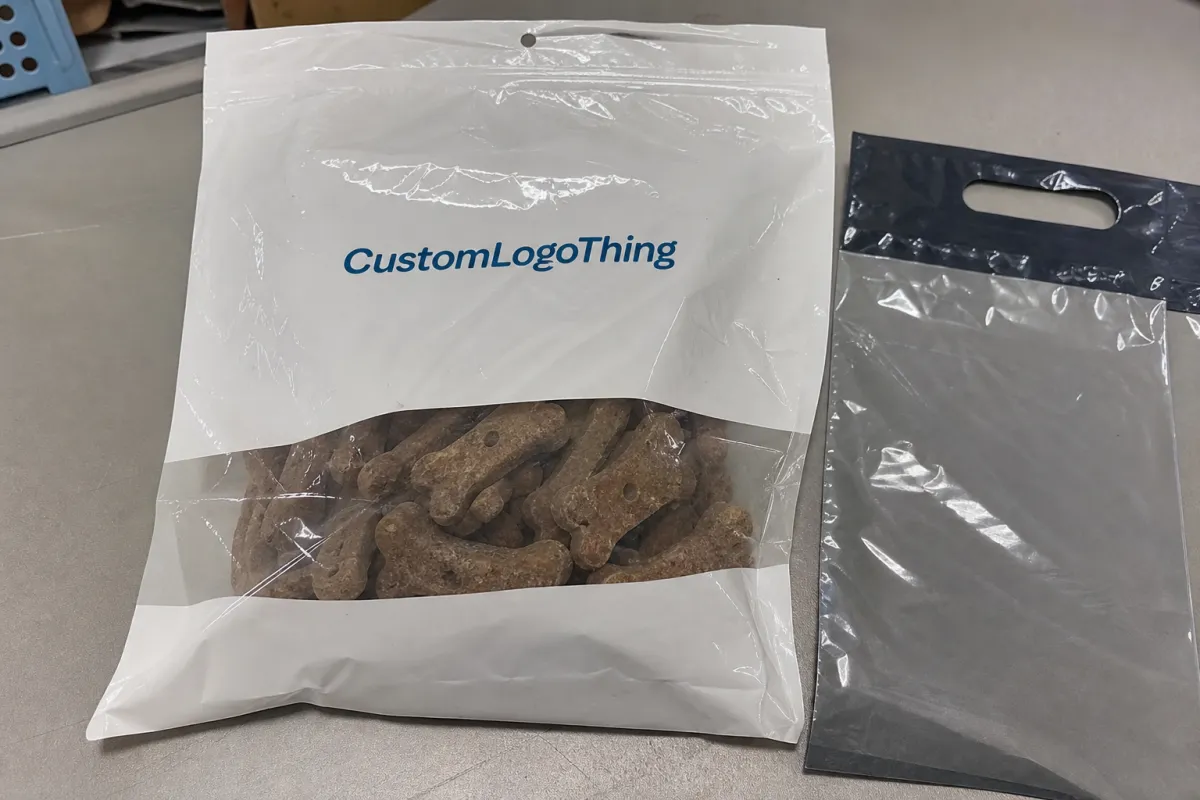
For dry, low-oil pet treats, poly mailers can work well if the film, seal, and closure are matched to the fill. That is the practical heart of a pet treat Poly Mailers Material guide. The goal is not to make the package look premium on a screen. It is to keep the treats intact, control odor, and keep the package presentable after a rough trip through fulfillment and transit.
Most buyers end up in three groups. The first is dry and crunchy treats, like biscuits or baked training snacks. These often do fine in a 2.5 to 3.5 mil co-ex mailer if the product has no sharp corners and the seal is clean. The second group is slightly oily or aromatic treats, such as jerky pieces or freeze-dried formulas with higher fat content. These need better seal consistency and more attention to barrier performance. The third group really wants a pouch rather than a mailer because freshness and odor retention matter more than shipping simplicity.
Here is the plain version: if a treat leaves oil on your fingers, a basic film should not be treated as a safe bet. A co-ex structure with solid puncture resistance and a seal that does not creep open under pressure is usually the safer route. If the brand also ships in Custom Poly Mailers for ecommerce, keep the structure honest and do not pretend every format can do every job.
A useful way to frame the spec is by what the package must resist:
- Puncture from corners, clipped seals, or cartons rubbing in transit.
- Grease migration that darkens the film or weakens print adhesion.
- Odor loss that makes the product feel stale before the date on the label.
- Seal contamination from crumbs, powder, or oil at the closure area.
- Shelf presentation that still looks clean after handling and carton transfer.
For many dry treat SKUs, a poly mailer is enough. For softer treats or anything with a strong aroma, move quickly toward better barrier film or a pouch structure. The package should earn its keep, not just carry a logo and hope for the best.
There is also a sustainability reality here. If your brand story uses recycled materials, ask what portion is post-consumer recycled content, whether the outer carton is FSC certified, and how the package performs after the recycled content is added. A nice claim on a sales sheet is not the same thing as a package that survives shipping. And biodegradable packaging is not a fix if the product still needs barrier, shelf life, and seal integrity.
| Film structure | Best fit | Main strength | Main tradeoff |
|---|---|---|---|
| LDPE | Light, low-risk dry treats | Low cost, easy sealing | Less puncture resistance |
| LLDPE | Shipping-heavy orders | Better stretch and abuse resistance | Softer feel, sometimes less rigid |
| Co-ex film | Most custom treat mailers | Balanced strength and seal performance | More complex sourcing and pricing |
| Barrier-enhanced co-ex | Oily or aromatic treats | Better freshness and odor control | Higher unit cost |
How the Film Stack, Seams, and Closures Work
A good mailer is a system, not just a sheet of plastic. The outer film carries print and resists abrasion. The seal layer does the actual bonding. When needed, a barrier layer slows moisture transfer, aroma loss, and grease migration. That stack matters more than the headline thickness on a quote.
LDPE is common because it seals well and keeps costs under control. It feels soft, which helps with folding and packing, but it does not offer the strongest puncture resistance. LLDPE brings more stretch and better abuse resistance, so it is a better choice if the product has rough edges or if cartons get stacked hard in the warehouse. Co-ex films are the workhorse choice for most custom runs because they let you balance print quality, sealing, and toughness without jumping straight to a premium barrier spec.
Closure choice matters too. A heat seal gives the cleanest tamper-resistant finish, which is useful for retail or for any treat pack that must hold aroma. A pressure-sensitive adhesive strip is easier for fulfillment, but it adds a failure point if crumbs or oil get onto the lip. A tear notch improves the opening experience, though it should never be treated as a substitute for a proper seal. That mistake comes up often. A neat notch on a weak bag still leaves you with a weak bag.
For food-adjacent products, the issue is not only the base film. Grease migration can affect print adhesion and make the surface feel tacky. Aroma loss can make a shelf-stable snack seem old even if it is still within date. Seal contamination can create microscopic leaks that do not show up until the package has already left the building. If you are paying for custom packaging, the seal has to survive the real world, not just the sample table.
Transit testing should reflect how the product actually moves. Packages that ride inside corrugated cardboard cartons need different abuse resistance than SKUs that ship as loose ecommerce mailers. Ask for transit checks based on ISTA methods and basic seal strength data. For tensile and seal performance, suppliers often reference ASTM-style testing as well. That is the language buyers should ask for, not vague promises about durability.
One more practical point: if your fulfillment team loads mailers fast, a well-placed heat seal can reduce labor later. If they need reclose options for retail samples or bundle packs, the closure spec should be built into the film design, not patched on afterward. The cleaner the structure, the fewer surprises in production.
Brands that also use Custom Packaging Products across multiple SKUs should keep material decisions consistent where possible. Not identical. Just consistent enough that buying, storage, and QC do not become a guessing game.
Key Specs That Decide Performance and Shelf Life
Thickness is the number people ask for first, because it is easy to compare. It is also the number people overtrust. A 3 mil film with a poor seal can fail faster than a 2.5 mil film with a better structure and smarter closure. Still, thickness matters, and the common range for custom pet treat mailers sits around 2 to 4 mil, with heavier structures used when puncture risk or fill weight climbs.
For small sample packs or light crunchy treats, 2 to 2.5 mil can work if the treat shape is gentle and the product is not being tossed around in large cartons. For standard ecommerce units, 2.5 to 3.5 mil is usually a safer starting point. Once the product gets bulky, oily, or sharp-edged, moving closer to 4 mil or shifting to a better co-ex layer can be smarter than simply adding more plastic and hoping for the best.
Size choice is tied to fill weight, not just dimensions. A compact 4 oz bag may fit nicely in a 5 x 8 or 6 x 9 mailer, while larger family packs may need 8 x 12 or 9 x 14. If the product is a mixed assortment, leave room for the bulkiest piece, not the average one. Undersized mailers look efficient on a quote and messy in production.
Finish affects both feel and scuff resistance. Gloss usually prints sharper and pops more on shelf. Matte can feel more premium, but some matte coatings scuff faster unless they are paired with the right overprint or laminate. If the mailers ride in shipping cartons with other items, scuff testing is worth the time.
Print coverage also changes the build. Heavy ink coverage can affect friction, seal behavior, and cost. A simple one- or two-color design is often the most efficient if the budget is tight. If the brand needs full-bleed artwork, expect the price and the proofing time to move up.
For compliance, ask for written confirmation on food-contact or food-adjacent suitability, plus any migration concerns involving inks or adhesives. The bag itself is only one part of the story. A supplier should be able to tell you what was tested, under what standard, and what the limits are. If the answer sounds fuzzy, keep asking.
FSC certification matters when the overall pack includes paper components, master cartons, or promotional inserts. It does not make a plastic mailer magical. It does, however, help brands align the package story, especially if the product ships with kraft paper inserts or outer cartons that carry the sustainability claim.
Cost, MOQ, and Unit Pricing for Custom Mailers
Packaging buyers usually want a clean number. Fine. Here is the practical version: custom pet treat mailers can range widely depending on film construction, size, print count, and order volume. For a straightforward build at around 5,000 units, expect roughly $0.18 to $0.40 per unit for simple Custom Poly Mailers, with the lower end tied to lighter film, fewer print colors, and less complex finishing. Heavier structures, tighter tolerances, or richer print push that up quickly.
At 10,000 to 20,000 pieces, a good flexo run can become attractive if artwork is stable and the size does not change. Gravure may make sense at higher volumes if the brand needs very consistent color and plans to reorder repeatedly, but the cylinder or plate cost can make a small order look expensive. A low unit price is not a win if the upfront tooling bill damages the inventory plan.
Here is a simple buying view:
| Print method | Typical sweet spot | Strength | Watch-out |
|---|---|---|---|
| Digital | Small to mid runs | Fast setup, easier artwork changes | Higher unit cost at volume |
| Flexo | Mid to larger runs | Good cost balance | Needs stable art and clear colors |
| Gravure | Large recurring orders | Strong consistency | Higher tooling commitment |
MOQ matters because it shapes storage, freight, and risk. If the minimum is 10,000 pieces and you only sell 2,000 a month, you are parking cash on a shelf. If the MOQ is too low, unit pricing may rise enough that you end up paying more over the year anyway. The right answer depends on reorder cadence, not pride.
Landed cost matters too. Freight, warehouse space, and spoilage from a spec that is too weak or too large can erase savings from chasing the cheapest quote. A package that fails in transit is not affordable. It is expensive in a slower, more annoying way.
If you are comparing suppliers, ask for side-by-side pricing at two or three volumes. Also ask for a version with recycled content where possible, then compare it against the standard film. Sometimes the recycled option is only slightly higher. Sometimes it is not. That is why buyers should ask before they assume.
Process and Timeline: From Spec Sheet to Shipment
A clean order starts with a decent brief. Give the supplier the product weight, dimensions, target shelf life, print area, annual volume, and delivery window. If those are missing, the quote may arrive faster, but the revisions will eat the time you thought you saved. A precise spec sheet is boring. It also works.
The usual workflow is straightforward:
- Brief and quote — share product details, quantity, and target build.
- Artwork and dieline — confirm the printable area and seal margins.
- Proof review — check colors, copy, barcode placement, and warnings.
- Sample approval — test with filled product before mass production.
- Production — run the approved spec at the agreed quantity.
- Shipment — confirm carton pack, pallet pattern, and freight method.
Realistic timing helps keep everyone honest. Proofs often take 1 to 3 business days. Samples usually take 5 to 10 business days, depending on structure and print method. Production often lands in the 2 to 4 week range after approval, with first orders taking longer if the dieline, colors, or film spec are still moving. Air freight shortens the wait, but it can erase the savings from a good unit price.
Two things slow orders down more than buyers expect: unfinished artwork and indecisive material selection. If the supplier is still waiting for the final logo file or a decision between LDPE and co-ex, nothing really starts. The same goes for carton pack. If the outer shipping format is not locked, the final pallet count and freight quote can wobble at the worst possible time.
Testing should happen before the full run, not after. Fill a sample with the real product. Drop it. Stack it. Let it sit for a day. Check whether the seal creeps, whether the print scuffs, and whether the package fits the shipping carton without being crushed. Brands that also use kraft paper inserts or outer cartons should test the whole system, not just the mailer by itself.
If your line includes both treats and branded shipping materials, it can help to review the broader Custom Packaging Products lineup at the same time. That way the mailer, insert, and shipper all support the same unglamorous but necessary job: arriving intact.
Common Mistakes Buyers Make With Treat Packaging Specs
The most common mistake is chasing a bag that looks sturdy and assuming it will act sturdy. Film thickness is not the whole story. A mailer can feel thick and still fail if the seal layer is weak, the closure is contaminated, or the corners of the product punch through during transit. Buyers feel reassured by touch. Packages do not care.
The second mistake is overbuilding barrier. Not every dry treat needs high-end aroma retention. If the product has a normal shelf life and low grease, paying for extra barrier is just padding the quote. On the flip side, if the treats are oily or strongly scented, skimping on barrier is a fast way to create stale-smelling inventory. Balance beats guesswork.
The third mistake is skipping filled-product testing. A flat sample tells you very little. You need the package loaded with the actual treat, because real shape and weight change everything. Seal behavior changes. Shipping abuse changes. Carton fit changes. Even the print can scuff differently once the bag is under tension.
The fourth mistake is assuming any custom film is automatically suitable for food-adjacent products. It may be, or it may not. Ask for written confirmation on food-contact or food-adjacent claims, plus the status of inks, adhesives, and any migration testing. That paperwork is not a nuisance. It is the part that saves you from a buyer complaint later.
And here is a quieter mistake: ignoring the outer pack. If the mailer goes into corrugated cardboard for shipping, then a weak mailer can still fail even if the carton is fine. If the brand leans on kraft paper or FSC certified cartons for sustainability messaging, the mailer spec should fit that story instead of fighting it. The package system should feel intentional, not stitched together from random parts.
“Ask for samples filled with the real product. A flat bag tells you almost nothing. A loaded bag tells you what the customer will actually receive.”
If the supplier cannot explain the structure in plain English, keep looking. A good partner should be able to say why a certain film, closure, and thickness make sense for your treat type. If they cannot do that, they probably cannot support a clean reorder either.
Expert Tips and Next Steps for a Clean Buy
Ask for two or three material options with side-by-side pricing. One should be the lean spec, one should be the balanced spec, and one should be the safer premium option. That comparison does more for decision-making than a single quote ever will. It shows what you gain, what you lose, and where the price jumps are actually happening.
Request samples filled with the real treat. Not a dummy fill. The actual product. Then check three things: seal strength, scuff resistance, and odor performance after a few days in a closed carton. If the bag smells fine on day one and flat on day three, the structure is wrong for the job.
Use a simple spec sheet so your vendor is not guessing:
- Product weight and approximate dimensions.
- Target shelf life and expected storage conditions.
- Print area, color count, and finish preference.
- Annual volume and first-order quantity.
- Delivery window and shipping method.
- Any recycled content target, FSC requirement, or outer-carton preference.
If your brand is balancing sustainability claims with performance, say that clearly. A smart buyer does not ask for miracle materials. They ask for a package that performs, looks good, and fits the claim structure without making the sourcing team miserable. That usually means selecting the right mix of recycled materials, paper components, and film performance rather than forcing one material to do everything.
For brands that need a practical starting point, the safest path is usually a co-ex film in the 2.5 to 3.5 mil range, tested with the real product, quoted at two or three volumes, and checked against your shipping carton. From there, you can decide whether to step up barrier or trim cost. That is how a pet treat poly mailers material guide should work: as a buying tool, not as packaging theory for its own sake.
If you want the short version, here it is: choose the lightest structure that still passes real-product testing, verify food-adjacent claims in writing, and compare pricing across MOQ levels before you place the order. That is the clean way to buy pet treat mailers without buying avoidable headaches.
What material is best for pet treat poly mailers?
For soft or greasy treats, a co-ex LDPE/LLDPE structure with a stronger seal layer is usually the safest starting point. For dry crunchy treats, a lighter build can work if puncture testing passes with the filled product. Ask for barrier data in writing instead of assuming every poly film performs the same.
How thick should pet treat poly mailers be?
Start around 2 to 4 mil for lighter, non-sharp products and move up when seams or corners fail. Test with the actual product because thickness alone does not fix poor seal design. Higher thickness improves abuse resistance more than freshness control.
Are pet treat poly mailers food safe?
They can be food-contact compliant or food-adjacent, but the supplier must confirm it in writing. Verify inks, adhesives, and migration claims, not just the base film. If the treats touch the bag, documentation matters more than sales language.
What affects custom pet treat poly mailers pricing the most?
Film structure and size usually move price more than small artwork changes. MOQ, print coverage, and finish can shift the unit cost quickly. Freight and inventory losses matter too if the spec is overbuilt or too large.
How long does custom production usually take?
Proofs are often 1 to 3 days, samples about 5 to 10 days, and production 2 to 4 weeks after approval. First runs can take longer if artwork or dielines are still changing. Air freight is faster, but it can erase savings from a lower unit price.


