restaurant PVC Garment Bags bulk order planning works best when it starts in the back of house, not in a product catalog. The bag has to protect chef coats, banquet jackets, aprons, and event uniforms while they move through laundry, storage, and service. If the spec does not match that reality, the order will look fine on paper and feel wrong everywhere else.
The usual mistakes are not dramatic. They are small, annoying, expensive. The hanger head binds at the top. A zipper catches on the seam. An embroidered shoulder pushes the bag just enough that staff stop using it the way procurement intended. Then the purchase that was supposed to simplify storage becomes one more thing people work around.
A clean bulk order does a few simple things well: it fits the garment, survives daily handling, stays consistent across reorders, and does not force the team to relearn the packaging every six months. That is the standard worth aiming for.
Restaurant PVC Garment Bags Bulk Order Planning Starts With Back-of-House Reality
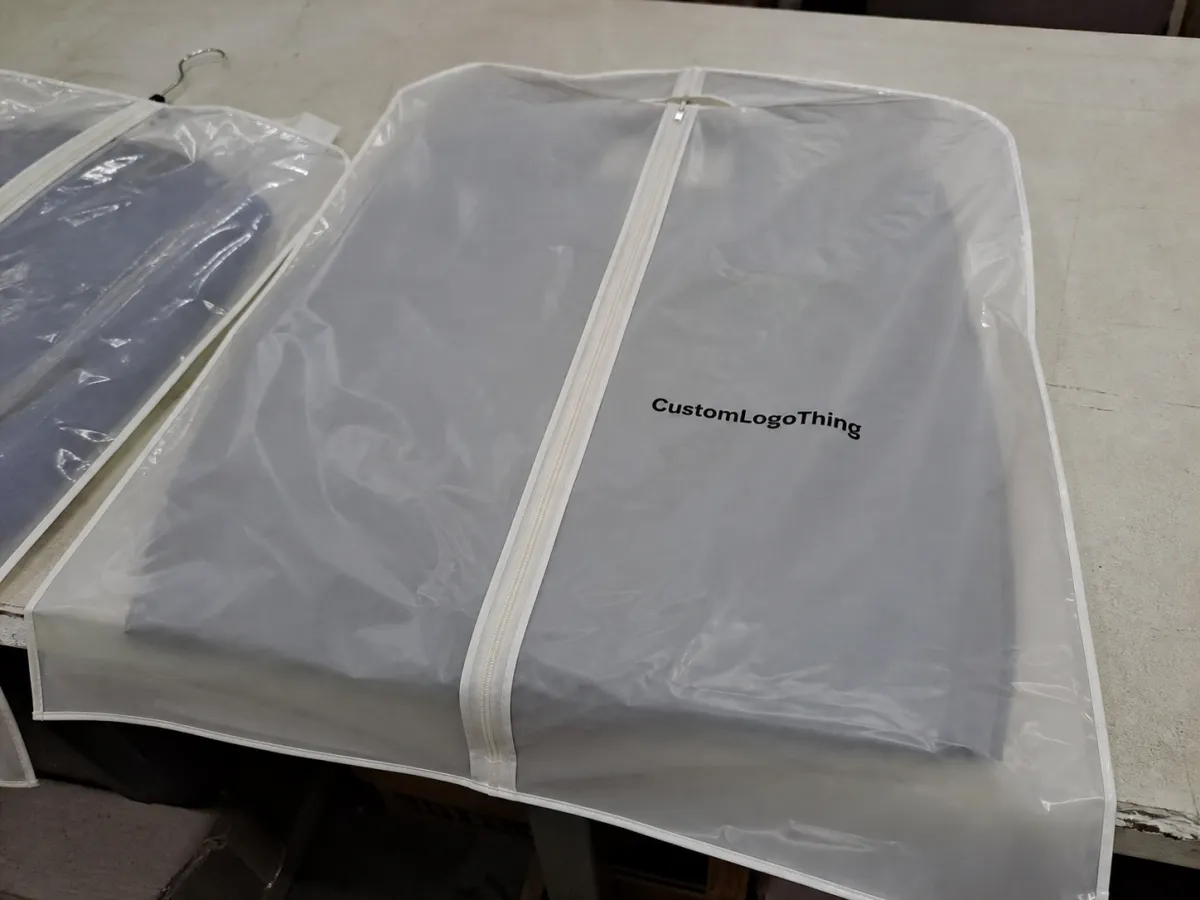
Start with movement, not merchandise. Count what actually passes through the system in a normal week. Include service uniforms, laundry turns, backups, repairs, and the inevitable surge from banquet events or seasonal staffing. If the operation is small, a 10% to 15% buffer is usually enough. Multi-location programs or catering teams often need more because the demand spikes are less polite than the spreadsheet.
Next, map the bag's path. Does it stay in a closet? Ride in and out of delivery bins? Hang on a rolling rack? Get stacked in a laundry cage? Each path changes the bag spec. A garment bag that only lives on site can be lighter and simpler than one that moves with vehicles and crates every week.
A bag can look generous in a mockup and still fail the first time a hanger hook, embroidered collar, or thick shoulder seam hits the closure. The real test is not the drawing. It is the load path.
Three questions usually separate a workable order from a headache:
- How often is the bag opened? Daily use pushes you toward better closure strength and smoother zipper travel.
- Where is it stored? Shelf storage, hanging racks, and transport totes need different footprints.
- What is being protected? A single chef coat behaves very differently from a lined banquet jacket with embroidery and a wide hanger profile.
The hidden cost in this category is not the unit price. It is the time staff lose every day if the bag is awkward. A bag that loads easily, closes without fighting back, and stacks cleanly pays for itself in fewer replacements and fewer complaints.
Sizing and Capacity Details That Prevent Wrinkled, Overcrowded Storage
Use usable inside dimensions, not just the outside footprint. PVC seams, hems, zipper tape, and reinforcement strips take up real space. That space disappears faster than most buyers expect. If the spec says 24 x 40 inches outside, the usable interior will be smaller once the bag is sewn and packed.
For restaurant uniforms, the usual starting points are straightforward: 24 x 40 inches for a single jacket or coat, 24 x 54 inches for longer outerwear, and 26 x 60 inches for heavier garments or full-length pieces. Those are not universal sizes. They are practical reference points. If the garment is bulky, has structured shoulders, or needs to hang from a wide hook, the bag usually needs extra width and more top clearance.
Capacity should be written in plain language. Say whether the bag holds one garment on a hanger, several folded items, or a mixed set with accessories. That one line helps the supplier set the width, gusset depth, zipper length, and reinforcement points. It also avoids the classic procurement problem where everyone agrees on the word "fit" and nobody agrees on what fits.
Top clearance matters more than most people think. Hanger hooks, neck loops, and stiff shoulder construction can crowd the opening and make a bag feel too short even when the body length is fine. If the closure sits too close to the hanger head, staff start forcing it shut. That is how zipper tracks wear out and seams split early.
The quickest way to avoid that mistake is to test with actual garments before the bulk order is approved. Hang the real coat. Close the bag. Lift it. Set it down. Slide it onto a shelf. If the garment pushes hard against the bottom seam or the opening bows under pressure, the size needs adjustment. Mock-up time is cheap. A warehouse full of awkward bags is not.
Shelf space matters too. A bag that fits the garment but eats up every inch of storage creates a second problem: staff begin folding it sideways or stacking it badly, which brings wrinkles back into the picture. Good sizing balances the garment, hanger, and storage method. That balance is what keeps restaurant pvc garment bags Bulk Order Planning from turning into a cleanup project later.
Closure, Finish, and Print Specs to Lock Before Pricing
Pick the closure first. A zipper, snap, or hook-and-loop closure changes how the bag is used, how long it takes to make, and how much it costs. For restaurant environments, the closure needs to be easy with gloved or damp hands, but still strong enough for repeated handling and transport. A smooth-pull zipper is usually the safest choice for uniforms that move often. Snap closures can work for lighter storage, but they are less forgiving when the load gets bulky.
Then define the finish. Clear PVC makes inspection easy. Frosted PVC hides wrinkles a little better. An opaque panel can create a cleaner visual if the bag is visible in staging or near guest-facing areas. A smooth surface is easier to wipe down, which matters in kitchens where dust, starch, and condensation show up whether you invited them or not. Thicker material can feel more stable, but thickness alone does not fix poor handling. The film still has to flex without cracking at the fold lines.
Most restaurant programs land somewhere around 0.18 mm to 0.25 mm for lighter handling. Frequent loading, transport, or heavier garments can justify something thicker, often closer to 0.28 mm or a reinforced build. The exact spec depends on the garment and the abuse it sees each week. There is no prize for overbuying material you do not need, and there is no medal for saving a few cents on a film that splits by month three.
If branding matters, lock down the print area before pricing. A one-color logo is easier to repeat across reorders than a multi-color design. Fixed placement matters too. Without it, the second run can drift just enough to look off compared with the first. That is the kind of detail people notice immediately, even if they never say it out loud.
Small structural details deserve a decision before the quote goes out:
- Hanger hole reinforcement reduces tearing at the top opening.
- Seam style affects both strength and the way the bag sits on a rack.
- Zipper pull shape matters when staff move fast or wear gloves.
- Label pocket or ID panel helps separate departments or locations.
- Carton pack count changes how easy the bags are to receive and store.
If the supplier cannot confirm those details in writing, the order is not ready for pricing. Restaurant pvc garment bags Bulk Order Planning gets cleaner when the specification is complete before the first quote. Otherwise, every revision shows up later as cost, delay, or both.
Pricing, MOQ, and Quote Variables That Move Unit Cost
Unit cost is driven by more than the film price. Size, thickness, closure style, logo count, packing method, and carton efficiency all matter. A low headline quote can look great until the spec gets wider, the zipper gets stronger, the print adds another color, and the "simple" bag stops being simple. Then the cheapest line item is just the one with the fewest details listed.
MOQ planning should follow usage, not only supplier thresholds. If the order is too small, setup costs eat the value. If it is too large, inventory sits too long and design changes become harder to manage. For most restaurant buyers, the right order size sits between the first test run and the larger replenishment order that follows after the spec is proven.
| Order profile | Example volume | Typical unit price | Best fit | What to watch |
|---|---|---|---|---|
| Trial run | 300-500 pieces | $1.35-$2.10 | Single location, spec check, or first logo sample | Higher setup share; confirm fit, closure, and print before scaling |
| Standard bulk | 1,000-3,000 pieces | $0.78-$1.35 | Most restaurant groups and uniform programs | Usually balances inventory risk and pricing |
| Stocking order | 5,000+ pieces | $0.48-$0.92 | Franchise rollouts, seasonal demand, or multi-site programs | Best price, but only if the spec will stay stable |
Those numbers are working ranges, not promises. Final pricing depends on sample charges, print coverage, carton pack, freight terms, and whether the supplier is building from a standard size or a fully custom configuration. Ask for a quote that spells out tooling, overrun tolerance, packing format, and any split-shipment fees. If those items are left vague, the landed cost can change after approval.
A simple comparison sheet helps more than a dozen half-finished email replies. Put every vendor on the same lines: size, thickness, closure, print count, MOQ, sample cost, lead time, and freight assumptions. Once those fields match, the lowest quote is no longer a guessing game. Often the safer choice is the supplier that keeps the spec tight and the reorders predictable.
Process, Timeline, and Lead Time From Sample to Shipment
A good production timeline follows a sane order: brief, spec confirmation, quote, sample or proof, approval, production, quality check, packing, and shipment. If the order starts with back-and-forth changes, the schedule slips before the factory even cuts material. The cleanest projects are the ones where dimensions, print art, and carton count are approved early and then left alone unless there is a real reason to change them.
For bulk restaurant orders, separate sample time from production time and production time from transit time. A sample may take a few business days. The mass run may take 12 to 18 business days after approval, depending on the spec and the supplier's workload. Freight adds its own clock. If procurement needs a firm opening date for a new location, all three pieces need to be visible at the start.
Internal approvals are often the slowest part. Uniform managers, operations, and procurement may all need to sign off, especially if the logo has to match a house style or the packaging needs to work across multiple locations. That timing belongs in the schedule. It is not a side issue. It is part of restaurant PVC Garment Bags bulk order planning on the buyer side.
It also helps to ask what gets checked before shipment. Good suppliers usually inspect film thickness consistency, seal strength, print alignment, zipper function, and carton pack count. Those checks are not fancy. They are basic. Still, they catch the problems that matter, and they matter more than a polished product photo.
If transit performance matters, ask for the packaging standard used for shipping cartons and whether drop or compression testing is available for heavier runs. A garment bag can survive production and still arrive crushed if the carton spec is weak. The bag is only as useful as the box that gets it there.
Once the first order is approved, keep a signed reference sample and a final spec sheet. That sounds boring because it is boring. It also saves time on every reorder. No one wants to rebuild the same decision because someone changed the zipper pull by accident six months later.
How to Compare Suppliers on Consistency, Compliance, and Reorder Ease
Consistency across runs matters more than buyers usually expect. PVC film thickness and clarity can drift if the supplier does not control the material tightly. That drift is obvious in a restaurant group, where every location expects the same look and the same feel. If one batch is softer, another is glossier, and a third runs short by a few millimeters, the program starts looking sloppy even if the bags still function.
Ask how the supplier verifies seam strength, zipper performance, and carton packing. Bulk orders rarely fail because the idea is bad. They fail because execution is uneven. A supplier that can explain its checks in plain language usually has a better handle on repeatability than one that only talks about price. Request sample photos, packing notes, and a written spec sheet that can be reused without translation.
Compliance should be practical, not theatrical. If a buyer needs restricted-substance declarations, material safety data, or packaging documentation, those requests belong in the quote stage, not after approval. Restaurant teams do not need a speech. They need the paperwork that lets purchasing, operations, and, if needed, a corporate compliance team move without extra drama.
Reorder ease matters just as much as the first quote. The best vendor is usually the one that can reproduce the same size, same print file, same carton count, and same closure without making procurement rebuild the whole project from scratch. That is what keeps a custom packaging program manageable after the first purchase.
For a fast supplier comparison, focus on three questions:
- Can they repeat the same spec without drift?
- Do they explain tradeoffs clearly when budget and durability conflict?
- Can they support reorders without a new round of clarification every time?
What I like about that filter is how quickly it removes noise. Price still matters. Of course it does. But in this category, the cheapest option is often the one that creates the most work later. A bag that looks fine once and inconsistent forever is not a bargain.
Actionable Next Steps for a Cleaner Bulk Order and Easier Reorder
Build one spec page before you ask for final quotes. Include inside dimensions, closure type, thickness target, print requirements, carton pack count, and a target quantity range. If you want to cut down on sizing mistakes, add a photo of the actual garment the bag has to hold. One photo can save three rounds of bad assumptions.
Then count real usage by location or department. If the program is new, set the first order at a level that allows a small test plus a safety margin. If the program is established, size the order around normal consumption plus event demand. The quantity should match how the bags are actually used, not just the lowest number on a quote.
It also helps to set a reorder trigger. That might be a minimum on-hand count, a monthly consumption threshold, or a point tied to uniform refresh cycles. Once that trigger exists, the next purchase becomes planned instead of rushed. Warehouse staff notice the difference immediately.
Here is the shortest practical version:
- Confirm the real garment size and hanger profile.
- Lock the closure, print, and thickness before pricing.
- Request a written quote with MOQ, sample cost, and lead time.
- Save the approved sample and spec sheet for the next reorder.
Do that well and restaurant PVC Garment Bags bulk order planning stops being guesswork. It becomes a repeatable sourcing process that protects uniforms, keeps storage tidy, and makes the next approval faster than the first.
How do I estimate the right quantity for a restaurant PVC garment bag bulk order?
Start with weekly usage by location, department, or uniform type, then add buffer stock for laundering cycles, events, and damaged bags. If the program is new, order enough for a small operational test plus a safety margin so you can adjust before a larger replenishment.
What size and thickness are best for restaurant uniform storage?
Choose the smallest usable size that still allows hanger clearance and easy loading, because oversized bags waste shelf space and can be awkward to handle. Thickness should match handling frequency: lighter use can stay economical, while heavy daily movement usually needs a sturdier gauge and reinforced seams.
Can bulk restaurant PVC garment bags be custom printed with our logo?
Yes, but the best result comes from locking print size, color count, and placement before quoting so the price reflects the actual setup work. Simple one-color branding is usually the easiest path for repeat orders, especially when the bags need to stay consistent across multiple locations.
What affects MOQ and unit cost the most on PVC garment bags?
The biggest drivers are size, material thickness, closure style, print complexity, and carton packing efficiency. MOQ can also shift with tooling, sample requirements, and whether the order uses a standard spec or a fully custom configuration, so restaurant pvc garment bags bulk order planning should be written around those items before quotes go out.
How long does production usually take for a restaurant bulk order?
Lead time depends on whether you need sampling, artwork approval, and a custom production run, so the timeline should be confirmed in writing. The fastest orders are the ones with final specs approved early, because late changes to size or print can add days or weeks.

