Pet Treat Rigid Boxes Cost: Order Specs and Lead Time
Pet Treat Rigid Boxes cost more than a folding carton, and that is exactly why the conversation has to be a little more honest than a simple price check. A rigid build carries more board, more hand work, and more finishing steps, but it also brings the kind of structure that makes a premium product feel finished rather than merely packed. For biscuits, training treats, holiday assortments, and gift sets, the box is not just a container. It is part of the product story, and that means pet treat rigid boxes cost should be judged against shelf impact, damage control, and the experience of opening the pack.
Most packaging buyers I speak with are not trying to buy the cheapest box on the market. They are trying to Buy the Right box at the lowest total cost for the result they need. That difference changes the whole frame of the project. Pet treat rigid boxes cost is easier to defend when the box helps reduce returns, keeps the treats intact, and gives the brand a stronger first impression. A flimsy package can look fine on a spreadsheet and still cost more in the real world once you account for crushed corners, repacks, and poor display performance.
Rigid packaging makes the most sense when the product has to feel giftable, dependable, and worth keeping around after the treats are gone. Premium biscuits, sampler kits, seasonal sets, and limited-edition collections all benefit from a package with real presence. If you are comparing construction options, our Custom Packaging Products line is a practical place to study structure choices before requesting a quote.
Pet Treat Rigid Boxes Cost: Why Rigid Builds Outsell Thin Cartons
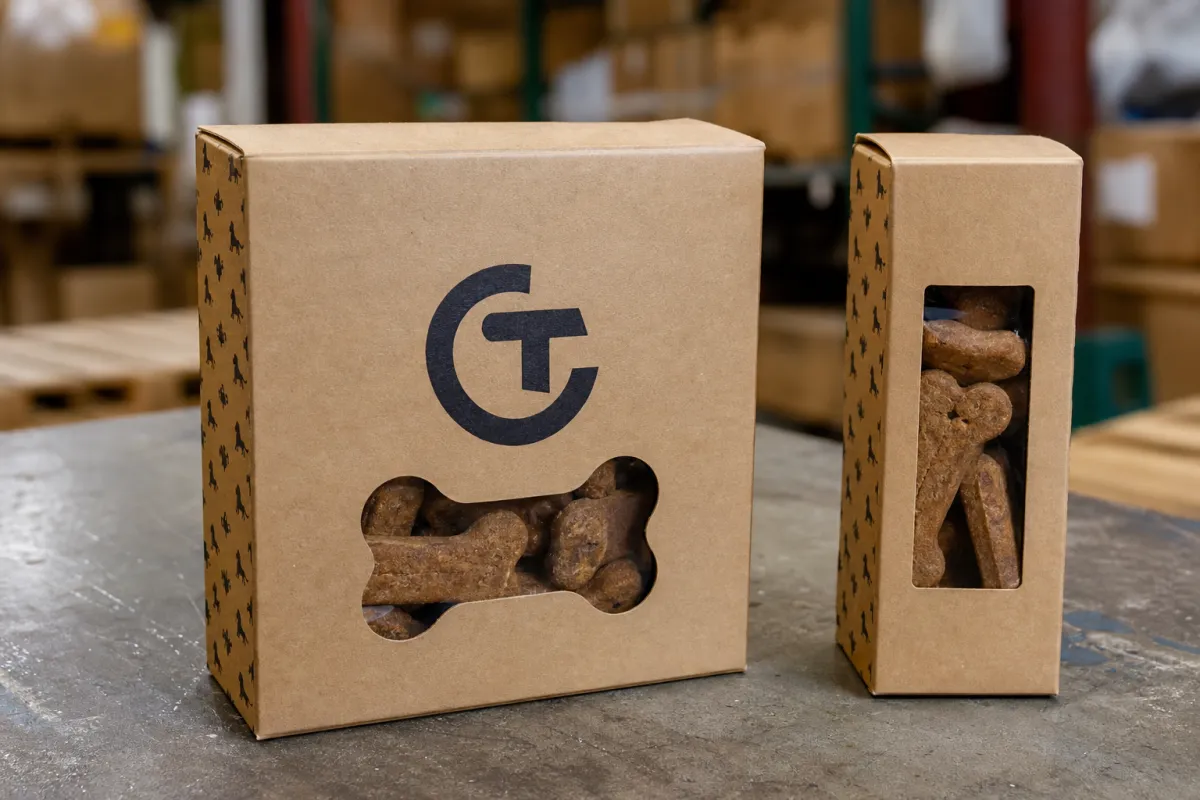
Pet treat packaging gets judged quickly, sometimes before the customer even notices the flavor or ingredient list. That first touch matters. A rigid box holds its edges, keeps its corners square, and gives the product a heavier, more composed feel that thin cartons often lose after a few days of handling. That is one reason pet treat rigid boxes cost can still be the smarter move even when the board price sits above a standard folding carton.
Protection does more work than people expect. Treats can be brittle, oily, crumbly, or arranged in shapes that hate pressure. I have seen good-looking snack packs ruined by a soft carton that bowed in transit, and once the package comes in scuffed or crushed, the savings disappear pretty fast. A rigid outer shell gives the pack enough strength to protect a pouch, a tray of baked pieces, or a multi-flavor assortment so it reaches the shelf in the same condition it had in packout. At that point, pet treat rigid boxes cost is no longer the main issue; trust is.
Presentation carries equal weight. Retail buyers notice how the box stands, how the lid closes, and whether the pack reads as premium or merely functional. A two-piece rigid box, a magnetic closure box, or a shoulder-neck structure can lift the perceived value enough to support a better shelf price. That is usually where pet treat rigid boxes cost starts to make practical sense: the box is doing sales work, not just holding product.
A polished package that arrives bent or rubbed up loses most of its premium value before a shopper ever touches the product. A rigid box that opens cleanly, closes neatly, and keeps the treat in place does more for the brand than decoration alone.
Rigid boxes also fit programs built around gifting and repeat purchase. Seasonal gift sets, boutique bakery-style treats, and sampling programs all benefit from packaging that feels ready to hand over as a present. In those cases, pet treat rigid boxes cost should be compared against the value of the whole presentation, not just the board and wrap.
One mistake I see often is comparing rigid packaging against the cheapest possible carton and calling that the benchmark. That misses the point. A more useful comparison includes shelf price, damage rate, packing time, and what the package says about the brand. If the box helps move product faster or hold margin better, the spend can be well justified.
Pet Treat Rigid Boxes Cost Drivers: Materials, Print, and Inserts
The biggest swings in pet treat rigid boxes cost usually start with the material stack. Most rigid boxes use greyboard or chipboard as the structural core, then wrap that core with printed paper, specialty paper, or laminated art stock. A common build might use 1200gsm to 1500gsm greyboard with a 157gsm wrap sheet, though the exact stack depends on the box size, shipping weight, and the feel the brand wants in hand. Thicker board increases stiffness and gives the package a firmer profile, but it also raises material spend and can make corner wrapping a little trickier.
Print coverage comes next. Full-bleed color, dense backgrounds, fine text, and tight registration between graphics all add setup effort and can push pet treat rigid boxes cost higher. Foil stamping, embossing, debossing, spot UV, and soft-touch lamination add another layer of handling. None of those finishes are wrong; they simply require more steps in press and finishing. A quiet, natural brand may only need a clean wrap and a restrained logo treatment. A premium gift set may need more decoration, and the budget should reflect that honestly rather than pretending the finish is free.
Structure changes the labor profile too. A basic lid-and-base rigid box is usually quicker to make than a magnetic closure box, a shoulder-neck rigid box, or a book-style box with concealed magnets. More complex structures demand extra assembly, tighter tolerances, and more quality checks. They also create more points where a rushed dieline or a poorly thought-out insert can cause problems. Pet treat rigid boxes cost can climb sharply when the structure changes, even if the footprint stays the same. That part tends to surprise first-time buyers.
Inserts matter just as much. A paperboard tray, EVA foam nest, molded pulp insert, or custom divider keeps treats from rattling and helps organize assortments or sample sets. Inserts also matter when the pack includes a pouch, jar, or inner bag that needs to stay centered. The right insert protects the product and keeps the opening experience tidy, but every added component affects labor, materials, and sometimes tooling. A fair comparison of pet treat rigid boxes cost has to include the insert spec in the same quote.
Finishing choices deserve a careful look because they often get approved a little too quickly. Soft-touch lamination feels upscale, but repeated handling can mark it up. Matte lamination cuts glare and suits natural-looking pet brands well. Foil can highlight a logo, but broad foil coverage raises cost and can look heavy if the artwork already carries a lot of detail. A practical rule helps here: choose the finish that supports the product first, then add decoration only where it improves sell-through. That keeps pet treat rigid boxes cost tied to function instead of excess.
For buyers comparing materials and structure before asking for pricing, the details in our Custom Packaging Products catalog can narrow the field quickly. A tighter brief usually means fewer revision rounds, and fewer revision rounds usually make the pet treat rigid boxes cost conversation a lot easier to read.
For shipping and certification context, I tend to point buyers toward the same references I use when checking packout risk. ISTA offers transport-test guidance that helps determine whether the box can survive vibration, drops, and handling. For sourcing and fiber questions, FSC is a useful reference when the brand wants certified paper options.
Product Details: What Pet Treat Rigid Boxes Need to Protect
The package has to do more than look refined. Pet treat rigid boxes need to protect the product from crushing, control movement in transit, and keep the presentation neat when the customer opens the lid. That sounds simple until the product mix gets real: crumbly biscuits, oily chews, mixed-size training treats, resealable pouches, and gift assortments all need different internal support. Pet treat rigid boxes cost is easiest to justify when the box solves those actual problems instead of guessing at them.
Fragile or crumbly treats need less empty space and better internal restraint. Any movement inside the box can lead to scuffs, breakage, or a package that sounds cheap when handled. A fitted tray or divider can prevent that, especially in assortments where each cavity holds a specific flavor or shape. For premium lines, a close-fit insert usually works better than a loose cavity because it makes the whole pack feel deliberate. That kind of precision can increase pet treat rigid boxes cost a bit, but it often lifts perceived value a lot more than the extra spend suggests.
Oily treats and soft chews create different concerns. The rigid box is usually secondary packaging, which means the actual food-contact barrier should come from an inner pouch, sealed bag, or liner. If the product sits against an interior component, the supplier needs the full packout method because the right adhesive, coating, or liner may change. Buyers sometimes focus only on the outer box, yet the better pet treat rigid boxes cost decisions come from understanding the whole system: outer shell, inner barrier, and shipping carton.
Seasonal gift packs bring another layer of expectations. The box may be opened and closed several times before the treats are gone, so the closure needs to feel secure without becoming annoying. A magnetic flap, ribbon pull, or two-piece lid can work well, provided the fit is clean and the board thickness is balanced. A sloppy lid line or a weak wall panel can drag the whole experience down. Pet treat rigid boxes cost should account for how the package will be handled over time, not only how it looks on day one.
Retail display changes the brief too. A box that sits on shelf for weeks needs scuff resistance and solid corner integrity. A box that ships direct to consumers may need a stronger master carton, better cushioning, or a structure that passes transport testing such as ISTA 3A style distribution simulation. Not every project needs the same test level, but direct-to-consumer pet treats usually deserve more scrutiny than a simple counter display. That is another reason pet treat rigid boxes cost has to be tied to the channel, not a generic packaging assumption.
The useful buyer lesson is simple: product details drive package details. Light and uniform treats may only need a straightforward rigid build. Delicate, heavy, or assorted products need more thought around inserts and closures. The clearer the product story, the easier it becomes to balance protection and presentation without inflating pet treat rigid boxes cost for features the package does not need.
Specifications That Shape Fit, Durability, and Brand Impact
Good quoting begins with clear specifications. Before asking for pricing, define internal dimensions, board caliper, wrap material, finish, closure style, insert type, and whether the box must support retail display, e-commerce shipment, or both. A quote built on vague size assumptions almost always changes later. Clear specs reduce back-and-forth and make pet treat rigid boxes cost easier to compare across suppliers.
Dimension accuracy matters more than many teams expect. If the box is too tight, packing slows down and the product can get compressed. If it is too loose, the contents shift, the box bulges, or the lid line looks uneven. A difference of only a few millimeters can change how the box closes, how the insert sits, and how premium the package feels in hand. Buyers should measure the packed product, not only the treat itself. A pouch, label, zipper seal, and headspace all affect pet treat rigid boxes cost because they shape the finished fit.
Durability should be written into the brief, not assumed. Corner strength, surface scuff resistance, and board stiffness matter when boxes are stacked, shipped, or touched repeatedly on shelf. A soft-touch wrap may look elegant, yet if the package is handled often, it makes sense to ask about scuff tolerance and whether a matte film or another coating makes more sense. I have seen brands save a little on finish and then lose more later because the boxes marked up too fast. In that sense, pet treat rigid boxes cost is partly a durability decision.
Retail compliance and transport behavior belong in the same conversation. A box that sits in a club store may need to fit display trays or shelf footprints. A box that ships in bulk should have the outer carton planned alongside the rigid unit so the total packout stays efficient. For e-commerce, some brands add a paper wrap or sleeve around the rigid box to cut abrasion during shipping. That kind of system thinking keeps pet treat rigid boxes cost from drifting upward through preventable damage.
Better specs can lower total cost, which surprises some buyers. A size that nests efficiently on board sheets reduces waste. A simple insert can cut assembly time. A closure that avoids hidden hardware can speed production. Even a cleaner artwork layout can reduce setup charges and proofing time. A premium package usually costs more than a basic one, but the smartest spec set is often the one that controls unit cost without weakening the brand message.
Here is a practical buyer checklist I recommend before requesting a quote:
- Product size: packed dimensions, not only raw treat size.
- Quantity range: a realistic MOQ target and a growth estimate.
- Finish level: matte, soft-touch, foil, embossing, or plain wrap.
- Insert needs: tray, divider, foam, molded pulp, or no insert.
- Channel: retail shelf, gift set, subscription, or direct-to-consumer.
Pet Treat Rigid Boxes Cost: Pricing, MOQ, and Unit Cost
Rigid packaging pricing usually falls as quantity rises, but only when the structure and finish stay the same. If the design changes halfway through quoting, the assumptions around tooling, setup, labor, and material usage all shift. That is why pet treat rigid boxes cost should always be reviewed as a complete spec set. A low quote on the wrong build is not a good deal; it becomes a later problem.
MOQ deserves a direct answer. Rigid packaging often carries a higher minimum order quantity than a folding carton because the job can include hand assembly, wrapping, quality checks, and a custom insert. The exact MOQ depends on size, structure, and finish, but buyers should expect more than they would for standard paperboard packaging. Sharing a target range instead of a guess helps a supplier give a better response and gives a more realistic pet treat rigid boxes cost picture from the start.
To make the buying math more concrete, here is a simple comparison of common rigid box styles. These are illustrative ranges only, but they show how structure and finishing choices usually move the conversation.
| Structure | Typical Use | Main Cost Drivers | Illustrative Unit Cost at Moderate Volume | Relative Price Pressure |
|---|---|---|---|---|
| Two-piece lid and base | Premium treats, simple gift packs, retail display | Greyboard thickness, printed wrap, basic insert | $0.95-$1.85 each | Lower |
| Magnetic closure rigid box | Higher-end assortments, subscription sets, seasonal gifts | Magnets, extra assembly, soft-touch or foil finishes | $1.75-$3.40 each | Medium to high |
| Shoulder-neck rigid box | Luxury presentation, layered reveal, premium sampling | Extra board components, tighter tolerances, more labor | $2.20-$4.80 each | High |
| Rigid box with custom insert set | Mixed treats, fragile pieces, multi-compartment layouts | Insert tooling, cavity layout, product separation | $1.40-$3.60 each | Medium to high |
Those ranges move with quantity. A 1,000-piece run may sit much higher per box than a 5,000-piece run, especially if the artwork stays simple and the structure stays fixed. Bulk pricing only makes sense when the box spec is stable. Change the finish, shift the insert, or widen the size, and the unit cost can climb again. Cost per piece should always be measured against the same dimensions, same board, same wrap stock, and same assembly method.
Buyers also need to separate one-time charges from running costs. Tooling fees may apply for custom inserts, special cutters, or unique structural elements. Setup charges may appear when the print layout or finishing sequence needs dedicated prep. Those costs do not always repeat on every reorder, so the first order can look higher than the second one. Smart buyers ask what is one-time and what is recurring, because that is the only way to judge pet treat rigid boxes cost accurately over the life of the program.
A useful rule of thumb keeps the decision grounded: if a more premium box raises sell-through, reduces damage, or supports a higher shelf price, the unit cost may still be the better business choice. If the finish is expensive but invisible to the customer, or the structure is overbuilt for the product, the spend may not be justified. Pet treat rigid boxes cost should reward clarity, not decoration for its own sake.
For brands still shaping the project, compare the box against other packaging options in our Custom Packaging Products range, then request quotes using the same size, insert, and finish assumptions. That is the fastest way to turn a fuzzy estimate into a number that can actually be used.
Process, Timeline, and Turnaround for Custom Production
A clean production process saves time and keeps surprises out of the schedule. The standard workflow usually starts with a brief, then a quote, dieline confirmation, artwork setup, proofing, sampling, production, finishing, assembly, packing, and shipment. Each step can move quickly when specs are final, while a weak brief can add days or weeks. Pet treat rigid boxes cost is not only a price question; it is also a timing question, because delays often create indirect costs that never show up on the quote.
Proofing is where many schedules slow down. If the box needs custom inserts, layered graphics, foil, or a closure that has to line up precisely, the sample stage matters a great deal. A hard proof can expose fit issues before full production starts, which is far better than discovering them after thousands of boxes have been assembled. In many programs, a sample can take several business days, and production can take another couple of weeks after approval, depending on quantity and finish complexity. More involved builds naturally stretch the lead time.
Timeline also depends on how quickly the approval path moves. Fast feedback on artwork, dimensions, and proof changes keeps the schedule alive. Slow approvals, repeated design changes, or unclear sign-off authority can push delivery much farther out than anyone wants. I have seen a simple rigid box project drift because five people each had a different opinion on insert height. The cost of that delay is rarely listed as pet treat rigid boxes cost, but it belongs in the buyer's total picture all the same.
Shipping method matters too. Bulk shipping cartons are usually more efficient than retail-ready packed units, but the packout has to protect the boxes during transit. For domestic or cross-border shipments, the master carton spec should be checked against pallet count, carton weight, and handling requirements. A premium box wrapped in a weak shipper can still arrive damaged, which defeats the point. If the product goes direct to consumers, ask about transit testing and packout recommendations early, not after the samples are approved.
For food-adjacent packaging projects, the inner product format has to be clear. If the treats are sealed in a pouch, the rigid box can focus on presentation and impact. If there is any direct contact with the interior components, the supplier needs to know the materials involved so the right wrap, adhesive, and insert choices can be made. That is the practical side of keeping pet treat rigid boxes cost aligned with the actual use case instead of a generic packaging assumption.
Many buyers save money without sacrificing quality by keeping the package design stable from first sample through reorder. Repeated changes raise setup charges, extend lead time, and make the per-box numbers harder to trust. A finished spec sheet, a single approval path, and realistic quantity planning usually do more for pet treat rigid boxes cost than chasing the lowest first quote. A packaging partner should be able to speak plainly about board strength, material behavior, and the tradeoff between premium features and lead time.
Before requesting a quote, gather the basics in one place: target dimensions, product weight, finish preferences, insert needs, quantity range, shipping destination, and timing target. If you also know whether the box needs retail display, subscription handling, or seasonal gift appeal, the quote will be sharper and the production plan will be easier to trust. That is the point where pet treat rigid boxes cost stops feeling vague and starts becoming a workable purchase decision.
If you want to move from research to a real buying conversation, start with the best-fit structure in Custom Packaging Products, then ask for a specification-based quote. With the right brief, pet treat rigid boxes cost becomes much easier to compare, justify, and approve.
For brands that care about presentation and protection in equal measure, the smartest order is rarely the cheapest one on paper. It is the one that fits the product cleanly, runs efficiently, and holds up in the channel where it will actually be sold. That is the practical answer to pet treat rigid boxes cost, and it is the one that tends to hold up after the first reorder.
What affects pet treat rigid boxes cost the most?
Board Thickness, Wrap stock, print coverage, and specialty finishes usually drive the biggest swings in unit price. Complex structures like magnetic closures or custom inserts add labor and material cost. Higher quantities usually lower the per-box price if the design stays consistent, which is why pet treat rigid boxes cost should always be reviewed against the same spec set.
What is the typical MOQ for pet treat rigid boxes?
MOQ depends on size, structure, and finish, but rigid packaging usually starts higher than folding carton orders. Custom inserts, specialty wraps, and hand assembly can raise the minimum order threshold. The best quote comes from sharing your target quantity range instead of guessing a number, because that gives a more useful pet treat rigid boxes cost estimate.
How can I lower pet treat rigid boxes cost without hurting quality?
Simplify the structure, reduce special finishes, and keep dimensions efficient for board usage and packing. Use a single insert style and limit artwork changes across versions. Choose the materials that support the product first, then add premium details only where they improve sell-through. That is usually the most reliable way to control pet treat rigid boxes cost.
Do pet treat rigid boxes need food-safe materials?
The outer rigid box usually protects presentation, while the product still needs an appropriate inner barrier or pouch if direct food contact is involved. Food-contact requirements depend on how the treats are packaged and handled. Share the full pack-out method so the supplier can recommend the right construction and keep pet treat rigid boxes cost tied to the correct material stack.
How long does production usually take for pet treat rigid boxes?
Timing depends on sample approval, quantity, finishes, and whether the order includes custom inserts or complex assembly. Simple builds move faster than premium boxes with multiple decorative steps. A complete brief and fast proof approvals help keep lead time under control, and that also keeps pet treat rigid boxes cost from creeping up through avoidable delays.
If you approach the project with clear dimensions, a realistic MOQ, and the right finish choices, pet treat rigid boxes cost becomes much easier to defend and easier to repeat on reorder. The buying path I recommend is straightforward: specify the product properly, compare like for like, and choose the box that protects the treats, supports the brand, and fits the lead time you can actually live with.

