Pet treat trucker caps Digital Proof Checklist matters because small cap artwork fails in predictable ways: a logo that looked crisp on screen turns muddy on a 2.5-inch front panel, thread colors drift against mesh, or text becomes too small to read once the cap shape is taken into account. Pet treat brands feel this more than most categories because the artwork often has to do several jobs at once: identify the brand, hint at flavor or function, and still survive production on a curved, limited surface.
A digital proof is the first real test of whether the design can be manufactured. On a trucker cap, especially a foam-front or structured style, the usable area is tighter than buyers expect. Seams, curves, and decoration limits all reduce the space available. A strong proof shows what the factory can actually build, not just what looks good in a flat mockup.
Why the pet treat trucker caps digital proof checklist matters before production
A proof is a production document first and a visual document second. It should show artwork placement, decoration method, color notes, sizing, and any adjustment needed to make the design manufacturable. If those details are missing, the proof is not really doing its job.
That matters because trucker caps are less forgiving than most buyers assume. Embroidery has stitch-density limits. Printing has edge and ink limitations. Patches have trim and border constraints. Even the blank cap changes the result: foam fronts hold shape differently than cotton twill, and mesh panels can make colors feel lighter or harsher depending on contrast.
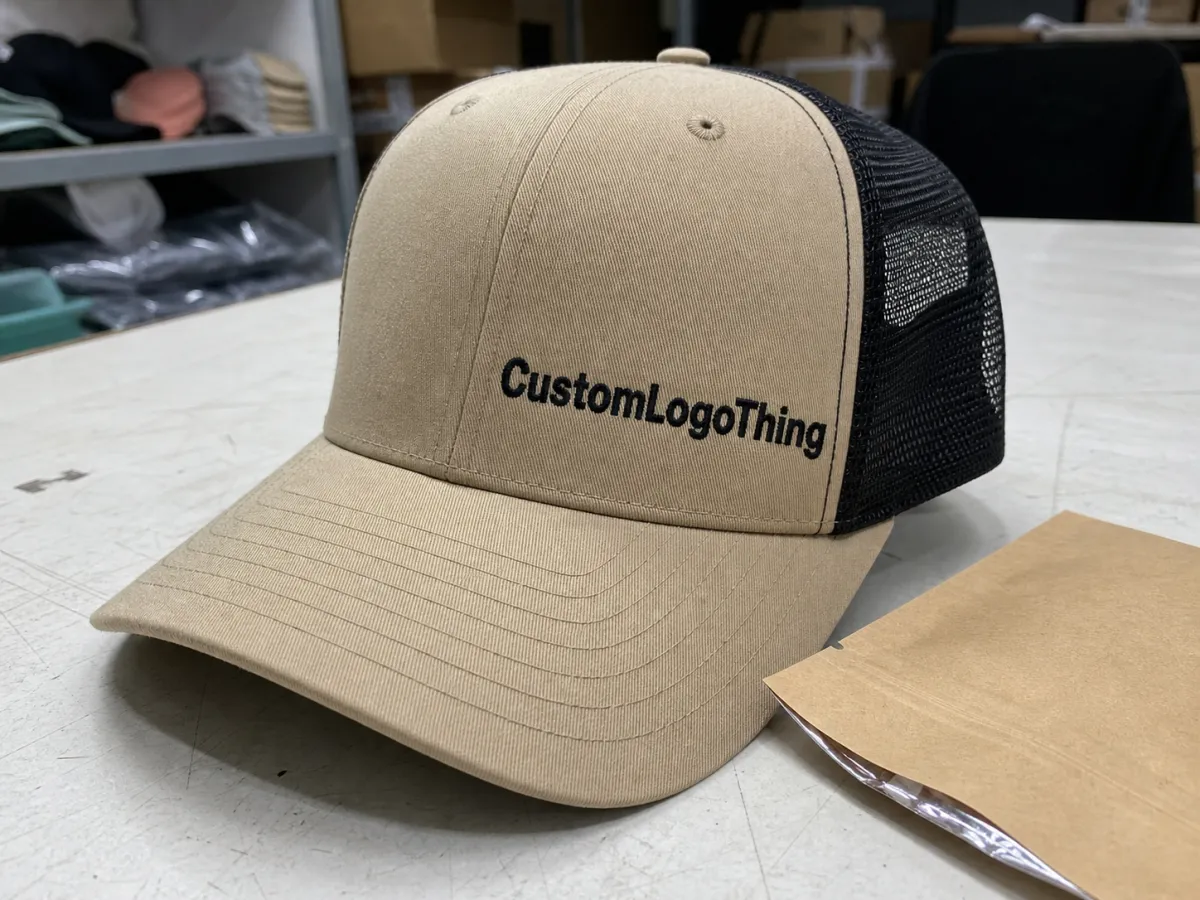
Pet treat brands also tend to have crowded logos. A paw icon, a food silhouette, a short slogan, and a product line name can all fight for the same small space. If the proof only shows the design floating on a large artboard, that is not enough. The buyer needs to know how it will land on the cap front and whether the smallest text can survive the decoration method.
Buyer rule: if the proof does not clearly show logo size, placement, and decoration method, treat it as unfinished.
If you are comparing cap decoration with other branded items in the same order, the broader sourcing picture matters too. The Manufacturing Capabilities page can help match cap specs with labels, inserts, or other retail pieces so the full package feels coordinated instead of assembled from separate guesses.
How the proofing process works from artwork to approval
The proofing process usually starts with the buyer sending logo files, a cap color, a target quantity, and the decoration method. A supplier then returns a digital layout showing front-panel placement, approximate size, thread colors or print notes, and any production constraints. If a logo is too detailed for embroidery or too wide for the available panel, the proof should show the adjusted version instead of pretending nothing changed.
The factory review is practical. Art files are checked for resolution, vector quality, line thickness, stitch density, and how the design interacts with the cap construction. A clean vector file usually gets faster responses than a compressed JPG pulled from a website. That is not fussiness; it is a way to avoid preventable failure. A low-resolution file can hide jagged edges, broken outlines, and weak text until production is already underway.
One round of questions is normal and often useful because it catches unclear details before money gets spent. What slows a job down is repeated back-and-forth caused by incomplete instructions. Color references are missing. The final cap shade is not confirmed. The approved logo is still under internal review. None of those are technical problems, but they all show up as schedule problems.
The best proof review uses three references side by side: the original artwork, the spec sheet, and the order notes. That is the fastest way to spot a mismatch before production starts. The checklist is really just a way to enforce that discipline.
What drives cost, MOQ, and quote accuracy
Pricing for Custom Trucker Caps is driven by quantity, cap style, decoration method, number of colors, setup complexity, and finishing requirements. A simple logo on a stock cap is one thing. A layered patch, Custom Woven Label, or multicolor embroidery sequence is something else entirely. Each added step raises labor or setup time, and the price moves accordingly.
Low quantities cost more per unit because setup costs do not shrink just because the run is small. Someone still has to prep the artwork, set the machines, confirm thread or print colors, and inspect the first pieces. Spread those costs across 100 caps and the unit price looks very different than if the same setup is spread across 1,000.
As a rough planning range, a straightforward cap with simple decoration might land around $1.80-$3.50 per unit at higher quantities, while smaller runs can move into the $3.50-$6.00 range depending on the blank cap and the decoration method. Specialty patches, custom labels, or extra color changes can push higher. Those numbers are not a quote; they are an expectation check.
| Decoration option | Typical look | Cost impact | Best use case |
|---|---|---|---|
| Embroidery | Textured, durable, clean from a distance | Moderate setup; often strongest at mid to higher quantities | Simple logos, strong marks, repeated wear |
| Woven or printed patch | Sharper detail and better edge control | Usually higher setup, especially for custom shapes | Tiny icons, text-heavy graphics, premium retail finishes |
| Screen print or heat transfer | Flat graphic look with less texture | Can be efficient on larger runs; detail limits vary | Bold artwork, simpler shapes, lighter hand feel |
MOQ is the other piece that shapes quote accuracy. Some cap styles require minimums because blank stock, trims, and setup time make very small runs inefficient. A request for 50 units with five logo colors and a specialty patch is possible in some cases, but it usually carries a steep unit cost. It is better to ask for the minimum on the exact style you want than to guess based on a different cap with easier specs.
Quote quality improves when the buyer sends the final logo file, a realistic quantity range, the target ship date, and any packaging requirements up front. If the order needs to be bundled with other branded items, line those up early. A broader scope is often easier to price accurately than a partial request that leaves the factory guessing.
Production steps and turnaround: what happens after approval
Once the proof is approved, the order usually moves through a clear sequence: confirmation of materials, decoration scheduling, production, quality control, packing, and shipment booking. Nothing happens in one blur. Each stage depends on the previous one being complete. If a cap color is still unconfirmed or a logo revision sneaks in late, the queue shifts.
Delays usually come from ordinary things rather than dramatic failures. A brand guide is missing a Pantone reference. The buyer has not locked the cap color. Someone outside the original review wants to take another look. The order is approved, but the shipping address is still under discussion. These are small decisions individually. Together they can push a job back by days.
For a simple stock cap with straightforward decoration, a realistic production window is often 12-18 business days after proof approval. More involved decoration can add time, and tight seasonal demand can stretch schedules further. Rush work may be possible, but only if the blank cap is available, the artwork is clean, and approvals are immediate. Fast turnaround still needs actual inputs.
Quality control usually includes checking the first decorated pieces against the proof, confirming size and placement, inspecting stitch or print quality, and reviewing packaging counts. If the order is going into retail or multiple destinations, carton labels and pack counts deserve attention too. Shipping cartons may also be worth checking against transit expectations such as those outlined by ISTA, especially if the shipment will move through more than one handling point before it reaches shelves or a warehouse.
The fastest jobs are the ones where the decision set is complete before production starts: final art, final quantity, final cap color, final ship-to. That is what keeps the schedule intact.
Specs that change the look of pet treat trucker caps
The cap body affects the result almost as much as the artwork does. Foam-front trucker caps create a classic promotional look and give the decorator a flatter surface for bold graphics. Structured crowns hold their shape better and usually look sharper on shelf. Low-profile or unstructured caps feel softer, but the front panel can be trickier if the logo needs visual punch.
Mesh color changes the visual temperature more than most buyers expect. Black mesh makes bright colors feel harder-edged. White mesh can soften contrast and make mid-tone art look washed out if the logo is not designed for it. Khaki, navy, charcoal, and white remain common because they are dependable backgrounds and do not fight the art.
Decoration method matters in a similar way. Embroidery reads well from a distance and wears well, but it can lose tiny details. Patches are better for small text, sharper edges, or a more retail-ready appearance. Printing can handle thinner lines, but it needs a suitable surface and clear boundaries. If the logo depends on tiny type, embroidery is usually the first method to reconsider.
Closure style is a smaller detail that still affects the final impression. Snapback remains common because it is adjustable and easy to distribute across mixed head sizes. Curved bills, contrast stitching, and crown height all change how the cap sits on the head and how premium it feels in hand.
Finishing options matter if the caps are going to retail or bundled kits. Individual polybags, size stickers, hang tags, and carton labels all add handling steps. Paper components may need different sourcing considerations if the brand wants an FSC-certified option for inserts or tags. Those details do not always change the cap itself, but they affect the package the customer receives.
- Foam front: best for bold art and a classic trucker profile.
- Structured crown: keeps shape better and reads more premium.
- Mesh color: changes contrast more than buyers usually anticipate.
- Closure style: snapback gives the most flexible fit range.
- Packaging: matters for retail readiness and shipment handling.
Common proof mistakes that slow down approval
The biggest mistake is approving a proof built from weak source art and then acting surprised when the output looks rough. If the logo file is fuzzy, the proof can only be so accurate. Send vector art or a high-resolution file whenever possible. It gives the decorator enough information to preserve edges, spacing, and line quality.
Scale errors come next. A logo can look balanced on a laptop and still become unreadable once it lands on a small cap front. Real cap space is reduced by seams, curves, and decoration margins. If the proof shows the logo larger than the usable area allows, ask for a revised layout instead of assuming the production team will make it work.
Color is another frequent source of delays. Vague direction like “make it pop” does not tell production much. Neither does a memory of what the logo looked like on a different product six months ago. A Pantone reference, approved brand guide, or matching sample gives the proof team something real to work from. Color expectations are hard to fix after production starts and easy to clarify before it does.
Internal approval gaps cause their own trouble. One person signs off. Another person sees the proof later and asks for changes. By then the run may already be scheduled. The order is not late because the factory was slow; it is late because the review process was incomplete.
The most useful habit is also the least exciting one: compare the proof to the order notes line by line. If something is unclear, ask for a revised proof. It is cheaper to spend one more email on clarification than to remake a run because a line break or patch size was misunderstood.
Practical fix: treat every unclear note as a production risk, not a design preference.
Final checks before you approve and place the order
Before approval, run the same checklist every time. Confirm spelling. Check logo size and placement. Verify the cap color, decoration method, quantity, and ship-to address. Make sure any packaging notes are included, especially if the order needs individual polybags, retail stickers, hang tags, or carton labels. Those small details can change the production flow and the cost.
Keep the approved proof with the quote and the order notes. That creates a clean reference if there is a question later about count, color, or delivery timing. It also gives the production team one source of truth instead of a trail of half-related emails. In a category with small artwork and visible branding, documentation is not bureaucracy. It is protection against avoidable mistakes.
A solid buyer routine looks like this: gather final art, confirm budget range, lock quantity, review the decoration method, compare the proof against brand standards, and approve only when the details match the plan. If the caps are part of a retail launch or a bundle, verify the packaging and labeling notes as well. The same logic applies if paper inserts or hang tags need FSC-certified stock.
Frequently asked questions
What should I check in a pet treat trucker caps proof before approving?
Start with spelling, logo size, placement, cap color, and decoration method. Then confirm that the proof matches the quantity and any packaging notes. If color accuracy matters, compare the proof with approved brand references instead of relying on memory or a previous order.
How many revisions are normal for a trucker cap digital proof?
One revision is common when the artwork is clean and the instructions are complete. More rounds usually point to missing files, unclear color direction, or decision-makers who were not included early. Fast approvals depend more on clear inputs than on luck.
What affects the unit cost for pet treat trucker caps?
Quantity, decoration method, and setup complexity drive most of the cost. Complex logos, specialty patches, and extra packaging raise the unit price. Lower quantities almost always cost more per cap because the same setup is spread across fewer pieces.
How long does the process usually take after proof approval?
Timing depends on stock availability, decoration method, and order size. Clean approvals move faster than orders with artwork changes or missing details. For many stock styles, a simple run can land in the 12-18 business day range after approval, but rush work only makes sense when every detail is already locked.
Can I use a low-resolution logo for the digital proof?
You can, but it is risky and it usually slows things down. Low-resolution files make it harder to judge edges, sizing, and print quality. Vector art or a high-resolution file gives a much more accurate proof and reduces the chance of a bad surprise in production.