For bulk buyers, the Poly Mailer Bags unit cost breakdown is rarely a single line on a quote sheet. The number shifts with film thickness, bag size, adhesive style, print coverage, packing method, and freight terms. A change of only a few cents per bag may look minor in isolation. Across 20,000 or 100,000 units, it becomes the part of the budget everyone notices.
The mistake many teams make is comparing quotes as if they were identical. One supplier may be pricing a heavier gauge, a wider flap, and cartonized shipping. Another may be quoting a thinner film, a shorter adhesive area, and ex-works pickup. Both can look competitive until the specs are aligned. The right comparison is landed cost on the same bag, not a headline factory price.
That is especially true for branded shipping supplies. If the mailer is part of a broader packaging system, it helps to compare it against the rest of the line rather than treat it as a one-off item. A clear spec sheet keeps pricing honest and makes repeat ordering easier, whether the order is for Custom Poly Mailers or a wider mix of Custom Packaging Products.
Poly Mailer Bags Unit Cost Breakdown: What Drives the Price
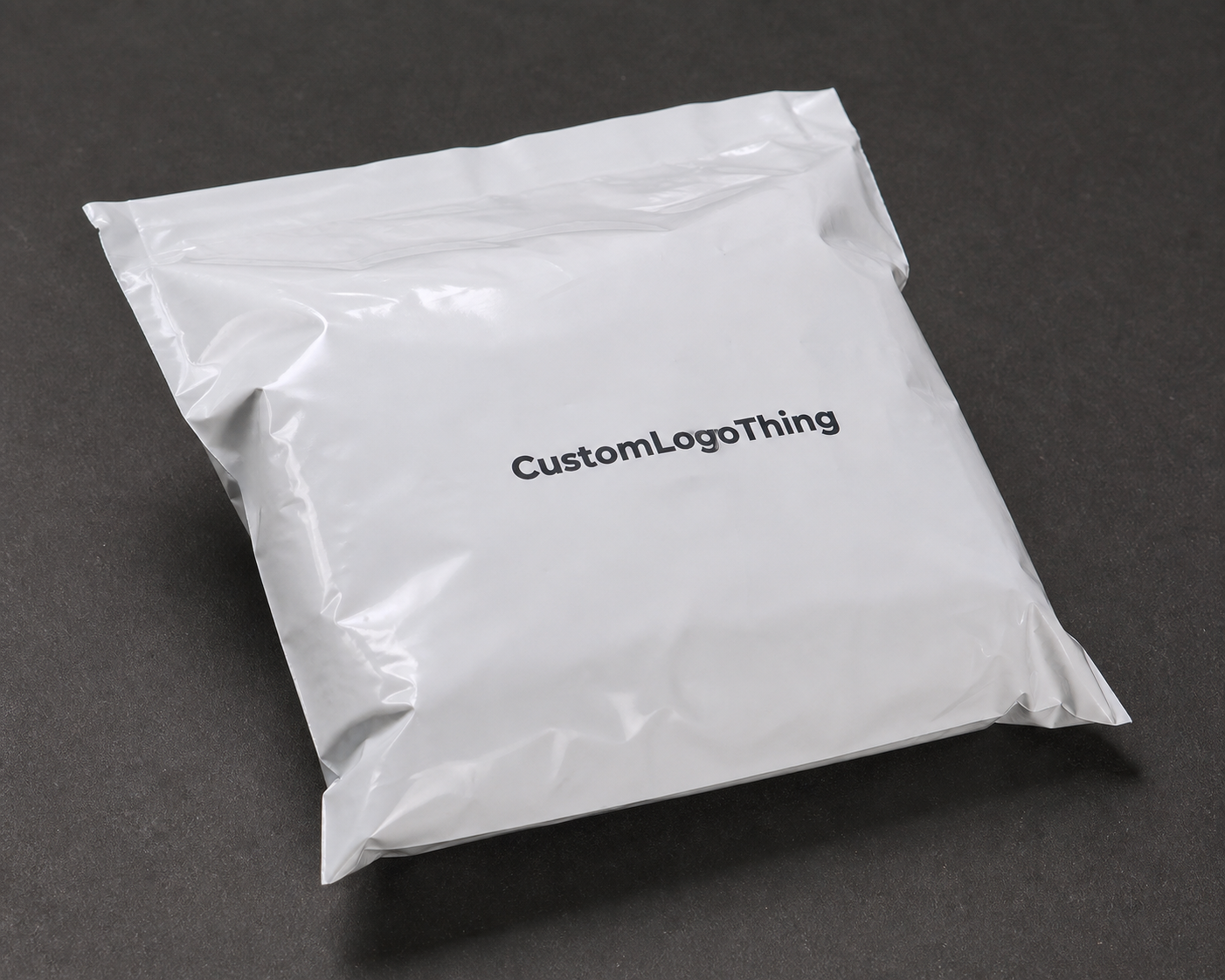
A poly mailer quote is built from several layers. Resin affects film cost. Film extrusion sets the base sheet quality. Converting turns that sheet into a bag. Printing, sealing, packing, and freight each add another piece. The finished unit price reflects the whole chain, not just the raw material in the bag.
Size is one of the most visible drivers. A bag that is wider, longer, or built with a deeper flap uses more film. That extra surface area is easy to ignore on paper and easy to feel in the final invoice. Thickness matters just as much. A lighter gauge saves material, but it can reduce puncture resistance and make the mailer feel weak during packing and transit. A heavier gauge increases protection and opacity, but it also raises material use and often shipping volume.
Closure style changes the quote in quieter ways. A standard peel-and-seal flap is usually the simplest option. Tamper-evident closures, double adhesive strips, and specialty seals require more material and tighter process control. If two suppliers give you different prices for what sounds like the same mailer, the first question should be whether the flap construction is actually the same.
Print is another major variable. A simple one-color logo on a limited area is easier to produce than full-coverage art, flood coats, or dense graphics that wrap across the surface. More colors usually mean more setup time, more registration checks, and more risk of waste during press make-ready. Short runs feel that cost more sharply because the setup is spread over fewer bags.
“Most quote disputes disappear once the bag size, gauge, closure, print area, carton count, and freight terms are placed side by side. The low number often belongs to a different spec.”
That is why the useful question is not “What is your unit price?” It is “What exactly is included in that price?” A clean quote should spell out material, dimensions, thickness, printing method, pack count, sample terms, and shipping basis. Standards from groups such as ISTA and the Institute of Packaging Professionals can help buyers frame performance expectations before they start asking for numbers.
Material, Size, and Print Specs That Change the Quote
Most poly mailers are made from LDPE or a coextruded polyethylene film. The blend matters because it affects stiffness, clarity, puncture resistance, and seal behavior. Recycled-content options can be useful in sustainability programs, but they are not automatically cheaper, and they can introduce variation in appearance or feel. If the mailer must protect soft goods, accessories, or products with sharp edges, the film choice should be driven by performance rather than habit.
Thickness is usually listed in mils or microns. Thinner film lowers cost, but not every product can tolerate that tradeoff. A thin mailer can tear at the corners, stretch during packing, or crease badly in transit. Heavier film gives more protection and a more premium hand feel, though it adds resin usage and can increase freight cost because the shipment carries more bulk per carton. There is no universal “best” gauge. The right answer depends on the product, the route, and how much damage risk the buyer can accept.
Size affects more than material consumption. A mailer that is too large wastes film and takes up more carton space. One that is too tight makes packing awkward and can strain the seal area. Finished width, length, and flap depth should all be checked together. A larger flap can improve closure confidence, but it also uses more material and may slow the packing line if the adhesive release liner is difficult to handle.
Print coverage can move pricing faster than many teams expect. A small logo on one side is usually straightforward. Full-bleed artwork, dark flood coats, metallic inks, or multiple color passes require more attention. Color matching adds another layer, especially if a brand wants a repeatable shade across several production runs. On low-volume jobs, setup and proofing can cost more than the ink itself.
Some buyers ask for extra features such as static resistance, recycled content, or improved puncture performance. Those are legitimate requests, but each one should be tied to a use case. Electronics need different protection than apparel. A mailer for soft goods does not need the same construction as one shipping hard accessories or items with exposed corners. A good spec is selective. It spends where risk is real and stays plain where it is not.
- Film type: standard LDPE, coextruded film, or recycled-content blends.
- Gauge: lighter film for lower cost, heavier film for better puncture resistance.
- Size: finished width, length, and flap depth all change material usage.
- Print: one-color logo, multi-color branding, or full-coverage art.
- Closure: standard peel-and-seal, tamper-evident, or specialty adhesive.
Pricing, MOQ, and Where Unit Cost Drops
MOQ is one of the strongest levers in the poly mailer bags Unit Cost Breakdown. Setup costs do not disappear on a small order. Artwork prep, plate or screen setup, line changeover, material staging, and packing all have to be covered somewhere. Spread those fixed costs across 100,000 bags and the impact fades. Spread them across 2,000 bags and the unit price jumps quickly.
The savings usually come in steps. The first jump from a tiny run to a mid-volume order often brings the largest drop in cost per piece. After that, the curve flattens. A buyer might see only modest improvements as quantities rise further unless the supplier is gaining major gains in material purchasing or packing efficiency. That is why the best quote is not always the one with the lowest quantity break.
Small orders need extra scrutiny. A quote that looks attractive can hide a thinner gauge, a smaller bag, a more limited print area, or a packing format that makes freight expensive. A larger order can do the opposite: a better factory price, but a poor carton size that wastes pallet space. The unit cost only makes sense after the packaging format is clear.
For a fair comparison, every supplier should be quoting the same finished dimensions, the same thickness, the same print method, and the same pack configuration. If one price is based on 500 pieces in retail-style packs and another is based on 5,000 pieces in bulk cartons, the numbers are not equivalent. The same problem appears when carton count, master carton size, or pallet pattern differs. Freight often moves more on cubic volume than on weight for this kind of product.
| Order Size | Typical Cost Structure | What Usually Helps the Price | Buyer Watchout |
|---|---|---|---|
| Small MOQ | Higher unit cost because setup charges are concentrated | Standard size, plain film, limited print | Freight, samples, or packaging fees may be excluded |
| Mid-volume | Better balance of setup and material cost | More efficient packing and longer production runs | Confirm carton and pallet specs before comparing |
| Large bulk order | Lowest cost per piece, often best freight efficiency | Repeatable spec across a larger run | Watch storage space and lead time on your side |
When suppliers offer tiered pricing, ask for both factory unit price and landed unit price. A slightly higher factory quote can still win if it packs better, ships more efficiently, or avoids surprise charges later. A low number that leaves freight and cartons out of the picture is not a bargain. It is incomplete.
Production Steps, Proofing, and Lead Time Expectations
Good pricing depends on a stable production path. Most custom orders move from spec confirmation to artwork review, then proof approval, then production scheduling, and finally packing and shipment. If the order changes late, the supplier may need to stop the line, adjust materials, or recheck print setup. That usually adds time and sometimes adds cost. The quote itself may stay the same, but the schedule will not.
Artwork is a common source of delay. Files with low resolution, poor color separation, or unclear placement often need cleanup before production can begin. That does not always mean the file is unusable; it means the printer needs clearer instructions. If the buyer sends press-ready artwork, the process is shorter. If the buyer sends a rough logo and expects the factory to solve the layout, proofing takes longer.
Sampling and final production also follow different clocks. A digital mockup can be useful for layout approval, but a physical sample is safer when print placement, seal strength, or bag behavior matters. That is especially true for branded packaging with tight visual standards. Once the sample is approved, the full run usually moves more predictably because the supplier is no longer guessing.
Lead time depends on three practical constraints: material availability, press capacity, and shipping method. Standard custom mailers often need a few weeks from approval to dispatch. Simple stock-style runs can move faster. Special colors, recycled-content films, or busy peak-season schedules can extend the timeline. Rush jobs are possible, but they tend to cost more because the order has to fit around existing production and freight schedules.
For shipping performance, the useful checks are simple. Seal integrity should hold under normal handling. Puncture resistance should match the product being mailed. Cartons should survive compression without deforming. If recycled content is part of the sourcing brief, sustainability claims should be matched with actual spec documentation rather than left as marketing language.
Quality Checks, Freight, and Cost-Saving Choices
A low unit price does not help if the mailers arrive with weak seals, crooked print, or inconsistent dimensions. Those defects slow packing lines and create returns risk. Basic quality checks should cover seal strength, dimensional tolerance, ink adhesion, odor, and carton compression. Buyers do not need laboratory theater, but they do need enough verification to know the bags will survive the route they are about to take.
Freight is where many buyers lose the savings they thought they negotiated. Poly mailers are light, but they are bulky. That means cubic space matters. A shipment can fill a carton or a truck long before it gets heavy. If cartons are oversized or packed loosely, freight cost rises. Better cartonization can lower the delivered unit cost even if the factory price never changes. That is why the full Poly Mailer Bags unit cost breakdown has to include logistics, not only production.
There are ways to save without damaging performance. Standardize sizes across multiple SKUs. Reduce print colors where the brand can tolerate it. Choose the lightest gauge that still protects the product. Avoid special finishes unless they solve a real packaging problem. A bag for apparel does not need the same build as one for rigid accessories. Overbuilding is just another way to spend money twice, once in resin and again in freight.
In practice, the best cost cuts are usually the boring ones:
- Fewer print colors: lower setup cost and simpler press work.
- Standard dimensions: easier repeat ordering and less tooling complexity.
- Balanced gauge: enough strength without paying for unused material.
- Efficient cartonization: lower cubic volume and better freight efficiency.
One caution matters on the packing floor. A mailer that is too thin may pass a quote review and still fail in daily use. Operators notice weak film, and customers notice damaged packaging. The cheapest option is not always the one with the lowest factory number. The right target is the one that protects the product with the least waste.
How to Request an Accurate Quote and Compare Suppliers
Accurate quoting starts with a good spec sheet. Send finished dimensions, thickness, color, print count, quantity, artwork files, target ship-to location, and any performance requirements such as tamper evidence or puncture resistance. If those details are missing, every supplier fills in the blanks differently. The result is a stack of prices that look comparable but are not.
Ask for the assumptions in writing. Request carton pack count, master carton dimensions, lead time, sample cost, and shipping terms. Clarify whether the price is ex-works, FOB, or delivered. That one step removes a lot of hidden variation. Two quotes may differ by only a small amount at the factory level, but once freight and packaging are added, the winner can change.
Comparing suppliers by factory price alone is a common mistake. A cheaper quote can come with thinner film, less stable print, less efficient packing, or extra charges for proofing and shipping. A slightly higher quote may be the better buy if the supplier is cleaner on spec control and better at keeping orders on schedule. That is especially true for repeat programs where consistency matters more than squeezing out one more cent.
A practical sourcing process usually looks like this:
- Lock the spec before asking for price.
- Send the same artwork and quantity to each supplier.
- Ask for written assumptions on cartons, freight, and samples.
- Compare landed unit cost, not just factory unit price.
- Choose the quote that fits the product, the route, and the packing line.
That process keeps the conversation grounded in real numbers. It also makes negotiations easier because the comparison is based on the same inputs. Once the buyer and supplier are pricing the same mailer, the Poly Mailer Bags Unit Cost Breakdown becomes a decision tool instead of a guessing game.
For most teams, the next move is simple: prepare a clear spec, request two or three like-for-like bids, and make each supplier show the same quantity break, freight basis, and packing assumptions in writing. That is usually where the meaningful savings appear.
What affects poly mailer bags unit cost the most?
Film thickness, bag size, print coverage, and order quantity usually have the biggest effect because they change both raw material usage and setup cost. Freight and cartonization can matter almost as much, especially on bulky shipments moving long distances.
How does MOQ change poly mailer bag pricing?
A higher MOQ usually lowers unit cost because setup, printing, and production prep are spread across more bags. Small orders tend to carry a heavier per-piece burden because those fixed costs sit on fewer units.
Is printed packaging much more expensive than plain poly mailers?
Printed mailers cost more because of artwork setup, press preparation, and ink use, but the gap depends on the design. One-color logos are usually much cheaper than full-coverage graphics or multi-color layouts.
What do I need to request an accurate unit cost breakdown?
Provide finished size, thickness, color, print count, quantity, artwork files, and ship-to location. Also ask for carton count, freight terms, and sample costs so the final comparison reflects the true landed cost.
How long does production usually take after approval?
Lead time depends on whether the order is stock or custom printed, but a clean file and a clear spec usually shorten the process. Standard custom runs often take a few weeks after proof approval, while special materials or busy seasons can push that longer.